
Reviewed · ORSAY MUSEUM TOURS
Paris: Orsay Museum Daily Entry Ticket
The best thing about this ticket is the freedom it gives you inside one of Paris’s most atmospheric museums. You enter the former Gare d’Orsay through Entrance C1, then set your own route among Renoir, Van Gogh, Degas, Cézanne, Monet, sculpture, photography, and decorative arts.
I like the open visiting window, which makes it easier to fit the museum around a Paris day. I also like that temporary exhibitions are included, so you do not need to buy another ticket once inside. The catch is important: open entry is not the same as a guaranteed timed entry. At busy periods, especially holidays and afternoons, the queue can still be long.
In This Review
- Key points before you book
- Why the former train station matters
- What you see inside Musée d’Orsay
- The open ticket and the real meaning of skip-the-line access
- Using Entrance C1 without confusion
- How long should you stay?
- The best time to plan your visit
- Is $24.14 a good value?
- Who will enjoy this museum most?
- A practical plan for your visit
- Should you book the Musée d’Orsay open ticket?
- FAQ
- What are the opening hours for this ticket?
- Does the ticket include the permanent collection?
- Are temporary exhibitions included?
- Which entrance should I use?
- Is an audio guide included?
- How long does a visit usually take?
- Can I cancel for a full refund?
Key points before you book
- Enter through Entrance C1: The dedicated entrance is the one to look for, and the ticket instructions should direct you there.
- Visit from 9:30am to 6pm: The open ticket lets you choose your arrival time during opening hours.
- See temporary exhibitions too: Admission covers both the permanent collection and the temporary exhibition.
- Allow two to four hours: You can make a short visit, but the museum rewards a slower look.
- Expect possible queues: Pre-booking often makes entry easier, but it does not remove every wait.
- Bring your phone ticket: QR codes have worked smoothly for many people, though unclear vouchers have caused confusion for some.
Why the former train station matters
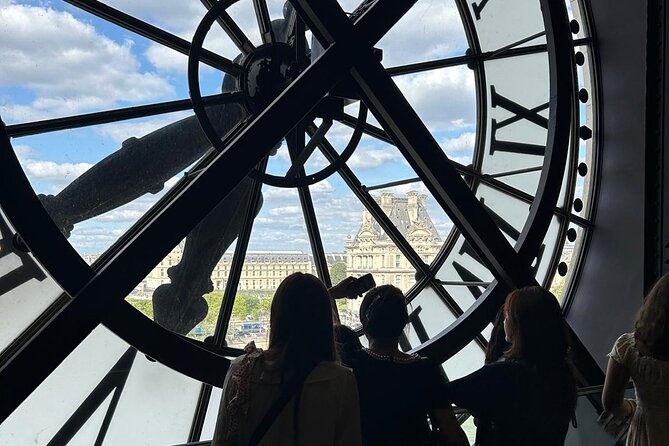
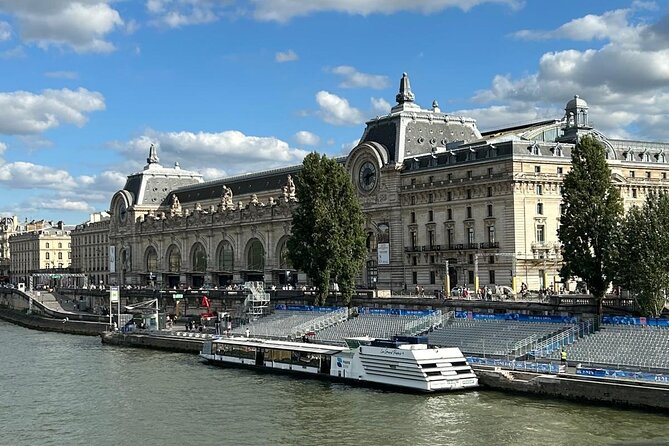
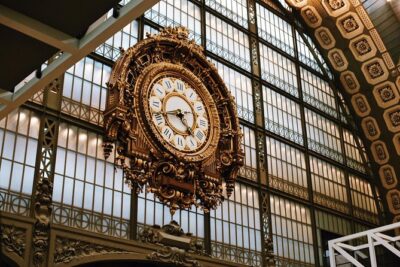
The Musée d’Orsay is not simply a box filled with paintings. It occupies the old Gare d’Orsay, and the building gives the visit much of its character. The great clock, broad interior, and railway-station structure make the museum feel different from the grand, palace-like Louvre.
I find this useful when planning your day. You are not signing up for a lecture or a fixed route. You are entering a large but manageable collection in a memorable building, then choosing how much art you can comfortably take in.
The museum’s size is one of its strengths. It is possible to see major sections in two hours, though three or four hours will give you more time with the temporary exhibition, sculptures, photographs, and decorative arts. If you have only a short opening in your schedule, this is easier to manage than Paris’s biggest museum.
The building also provides good visual pauses. Even when a gallery becomes crowded, the station architecture and large clock offer something to look at besides another painting. You will still need patience at peak times, but the setting helps keep the visit from feeling like a simple march from room to room.
More Paris museums and collections:
- Paris: Louvre Museum Timed-Entrance Ticket
★ 4.6 · 71,977 reviews - Louvre Museum Masterpieces Guided Tour with Access
★ 4.5 · 12,023 reviews - Paris: Louvre Museum Entry Ticket With Host and River Cruise
★ 4.6 · 9,926 reviews
What you see inside Musée d’Orsay
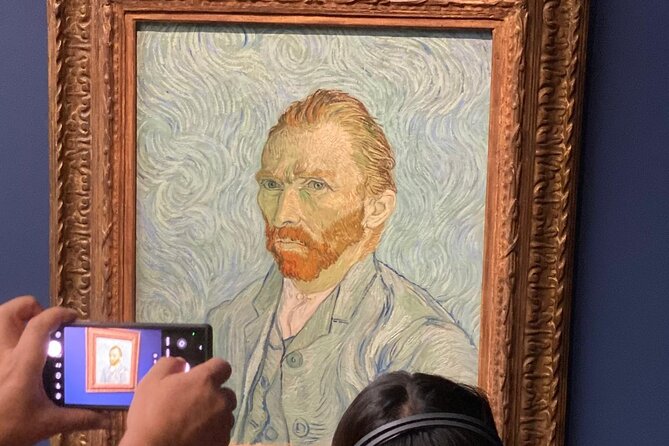
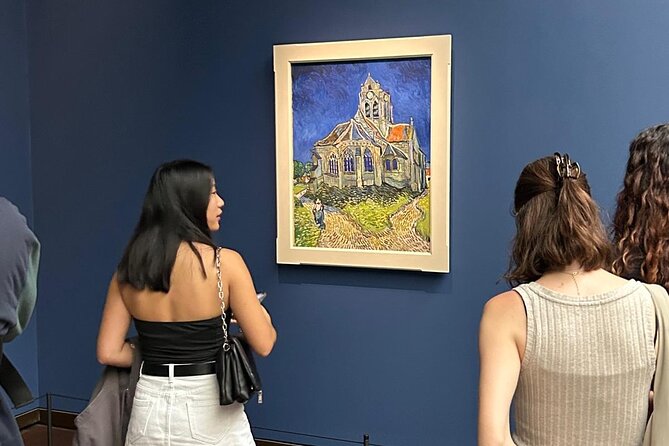
The museum is best known for Impressionist and Post-Impressionist painting, and that reputation is deserved. This is where you can come face to face with works by Van Gogh, Renoir, Degas, Cézanne, Monet, and other major artists of the period.
Several named works give the visit a clear focus:
- Renoir’s Dance at le Moulin de la Galette
- Cézanne’s Apples and Oranges
- Several self-portraits by Van Gogh
- Sculptures by different artists
- The famous clock overlooking the Right Bank
If Impressionism is your main reason for coming, plan to spend serious time on the fifth floor. That area is a favorite for good reason, with famous paintings and a strong sense of how late nineteenth-century art changed direction.
Still, you should not treat the museum as an Impressionist-only stop. Sculpture, photography, and decorative arts broaden the visit. The Art Nouveau displays can be especially rewarding, and some less crowded sections may hold your attention as long as the famous paintings.
I like this variety for mixed groups. One person can linger over Van Gogh, another can focus on sculpture, and someone else can enjoy the building, furniture, or photography. Families can also keep the visit moving more easily because the collection changes from room to room.
The open ticket and the real meaning of skip-the-line access
The ticket is advertised as open entry during the museum’s 9:30am to 6pm opening hours. That flexibility is handy. You can visit in the morning, fit it between other sights, or decide on the same day that you want to see the collection.
But do not read open entry as a promise of instant access. The most useful distinction is between a shorter dedicated line and a timed reservation. Entrance C1 can be much quicker than the general queue, yet waits of about 30 minutes have occurred during holiday periods. At especially busy times, the wait has reached an hour or more.
This matters most if you are planning around a train, restaurant booking, or another timed attraction. A ticket that says you can enter at any point still requires you to leave room for security and crowd control.
Go early when possible. Tuesday mornings have been relatively easy for entry, while afternoons and the days around New Year’s Eve have produced severe waits. Conditions can change, but the pattern is practical: arrive near opening rather than assuming your pre-booked ticket removes all delay.
You may also find a queue when leaving. This sounds odd, but crowd movement and exit procedures can slow things down. Give yourself a little extra time if you need to meet someone outside.
Using Entrance C1 without confusion
The dedicated entrance is Entrance C1. Follow the directions attached to your booking carefully, and have the QR code ready on your phone. Many people have walked directly to the correct door, passed through security, and entered without trouble.
There is one practical weakness in the ticket format. Some bookings provide a voucher rather than a conventional museum ticket, and that has caused confusion at the entrance. In a few cases, museum staff had trouble recognizing the document, or the QR code was not easy to locate in the booking app.
I would check the ticket before leaving your hotel. Make sure the QR code is visible, confirm that the entrance listed is C1, and save the confirmation in a form you can access without depending on a weak mobile signal. If something is unclear, resolve it before you are standing in the queue.
Security comes first. Lockers and a coat check are available, which is useful in cold weather or when you have a small bag. Food and transportation are not included, so you arrange those separately.
More Paris trips worth a second look
- Disneyland® Paris 1-Day Ticket
★ 4.6 · 49,412 reviews - Paris: Versailles Palace and Gardens Full Access Ticket
★ 4.6 · 41,579 reviews - Paris: Eiffel Tower Entry Ticket with Optional Summit Access
★ 4.4 · 20,035 reviews - Paris: Moulin Rouge Cabaret Show Ticket with Champagne
★ 4.7 · 16,088 reviews
How long should you stay?
The suggested duration is two to four hours, and that range is sensible.
For a quick visit, spend about two hours on the most famous collection. Head for the major Impressionist and Post-Impressionist galleries, then make time for the clock and a few sculptures. This works well if you are fitting the museum into a packed Paris schedule.
With three hours, you can slow down. Add the decorative arts, photography, and more of the sculpture collection. You can also pause at the café or restaurant inside rather than losing time searching for lunch outside.
Four hours suits an art lover who wants to see a temporary exhibition properly. It also gives you time to revisit paintings instead of trying to remember everything in one pass. The museum has cafés and a gift shop, so you have places to rest or browse, though seating inside the galleries can feel limited.
That shortage of benches is worth noting. The collection is physically demanding if you try to see every room without a pause. Wear comfortable shoes, take breaks when you find a seat, and do not measure success by the number of galleries you finish.
The best time to plan your visit
The open ticket makes timing easier, but the time you choose still affects the experience.
Morning is the safest choice if you want a calmer entrance. A Tuesday morning has worked well, and arriving early gives you a better chance of getting through C1 before the largest crowds form.
Holiday periods are less predictable. Even a dedicated or skip-the-line entrance may involve a wait, and the museum itself can become very crowded. The days around Christmas and New Year’s Eve are particularly poor choices if you dislike standing outside in the cold.
Afternoon entry can work, but it is the riskiest option when your schedule is tight. A queue of two hours would consume most of a three-hour museum plan. If afternoon is your only option, keep the rest of your day flexible.
The museum’s open hours are listed as 9:30am to 6pm. Plan to arrive with enough time to clear security and see what you want before closing. The ticket does not include transportation, so factor in your route to the museum separately.
Is $24.14 a good value?
At $24.14 per person, this ticket is not a bargain-basement museum admission. Its value comes from access and flexibility, not from a guided experience. There is no guide, transportation, meal, or included audio guide.
For a planned museum visit, the price can make sense when ordinary museum tickets are sold out. The open ticket has also helped with last-minute decisions, allowing entry when direct tickets were unavailable. That is a real advantage if the Musée d’Orsay is high on your list and you do not want to gamble on same-day availability.
The value is weaker if you assume the ticket guarantees immediate entry. During quiet periods, the benefit may be a simple, dedicated route into the museum. During holidays, the ticket can still leave you waiting outside. Compare the price with the museum’s direct availability and pay attention to whether a timed option is offered for your date.
I would also factor in what you plan to see. If you love Impressionism, Van Gogh, Renoir, Degas, or Cézanne, a two-to-four-hour visit gives the ticket a strong purpose. If you are only mildly interested in art and have a short Paris stay, a long queue could make the purchase poor value.
Who will enjoy this museum most?
This experience suits you best if you want to explore independently. You receive admission, not a guided tour, so you can linger at Dance at le Moulin de la Galette, move quickly through rooms that do not interest you, or focus on the fifth floor without following a group.
It is particularly good for:
- Impressionist and Post-Impressionist art lovers
- First-time Paris visitors seeking famous works
- Families who need freedom to set their own pace
- People who want temporary exhibition access included
- Last-minute planners facing sold-out direct tickets
- Anyone who prefers a museum visit without a fixed guide
It may not suit you if you need a guaranteed entry time or dislike queues. The ticket is also less useful if you want detailed explanations from a guide or an included audio tour. An audio guide can be purchased at the museum, but it is not part of this admission.
The collection has enough variety for a group with different interests, but art specialists may want more time than a short stop allows. Casual visitors can enjoy the building and famous works without trying to see everything.
A practical plan for your visit
Before you go, save your confirmation and QR code to your phone. Check that the document clearly points you to Entrance C1, and arrive early enough to handle security.
Once inside, get your bearings before chasing the most famous paintings. If you head straight to the best-known works, you may spend your first half hour in the thickest crowd. A slower route through sculpture or decorative arts can make the visit more comfortable, then you can return to your priorities.
Give the fifth floor proper attention if Impressionism is your goal. Look for Renoir, Cézanne, Van Gogh, Degas, Monet, and the period’s changing styles. Then make time for the clock, which offers one of the museum’s most memorable views toward the Right Bank.
Plan a rest stop. Cafés and a restaurant are available, but gallery seating can be scarce. If you have children or anyone with limited stamina, two focused hours may be better than four tiring ones.
Finally, leave spare time at the end. Security may slow entry, and the exit can also take longer than expected. The museum is near public transportation, but your transport costs and route are your responsibility.
Should you book the Musée d’Orsay open ticket?
I would book it if the museum is a priority, direct tickets are unavailable, or you value the freedom to choose your arrival time. The collection is outstanding, the former station adds real atmosphere, and admission includes temporary exhibitions as well as the permanent collection.
I would not book it while assuming skip the line means no wait. Choose an early arrival, avoid the busiest holiday periods if you can, and look for timed entry when your schedule is tight. At $24.14, it is a sensible convenience purchase for an art-focused Paris day, but a poor fit for anyone unwilling to risk a queue.
The strongest plan is simple: reserve ahead, use Entrance C1, arrive near opening, allow two to four hours, and keep your route flexible once inside.
FAQ
What are the opening hours for this ticket?
The ticket is open for visits during the museum’s listed opening hours, from 9:30am to 6pm.
Does the ticket include the permanent collection?
Yes. Admission includes access to the Musée d’Orsay’s permanent collection.
Are temporary exhibitions included?
Yes. This admission includes access to the temporary exhibition, so you do not need to book a separate temporary exhibition ticket.
Which entrance should I use?
Use the dedicated Entrance C1. Your booking instructions should identify this entrance.
Is an audio guide included?
No. An audio guide is not included, but it can be purchased at the museum.
How long does a visit usually take?
The approximate visit lasts two to four hours, depending on how much of the collection and temporary exhibition you want to see.
Can I cancel for a full refund?
Yes, if you cancel at least 24 hours before the experience start time. Cancellations made less than 24 hours in advance are not refundable, and late changes are not accepted.
Recently reviewed around Paris
- Louvre Private Tour – The Essentials and More with Expert Guide★ 5.0 · 227 reviews
- 2CV tour by night★ 5.0 · 55 reviews
- Eiffel Tower Second or Summit Floor Access by Elevator with Views★ 3.5 · 161 reviews
- The only Paris Wine Tasting experience you need to do – 2 hours★ 5.0 · 265 reviews
- 2 Hour Street-art Walk and Space Invaders Hunt in Paris★ 5.0 · 27 reviews
- 2 hour outdoor group activity in Paris: SAINT GERMAIN★ 5.0 · 48 reviews
- Private 2 – Hour Paris Landmarks Tour by Golf Cart Mini Moke★ 5.0 · 38 reviews
- Orsay Museum Private or Small-Group Guided Tour★ 4.0 · 381 reviews
Orsay Museum Tours, compared.

Paris in a Day: Louvre or Orsay, Eiffel Tower, City Walk & Cruise
Read our review →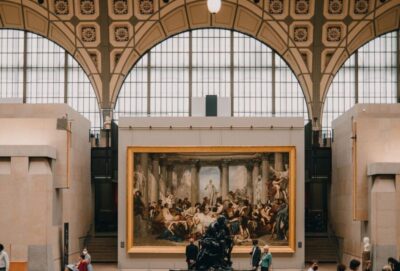
Musée d’Orsay Entry Ticket and Seine River Cruise
Read our review →
Musée d’Orsay Skip-the-Line Tour with Expert Guide
Read our review →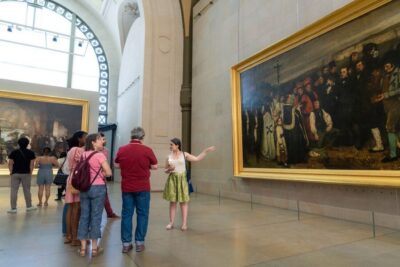
Musée d’Orsay Skip-the-Line Tour with Expert Guide
Read our review →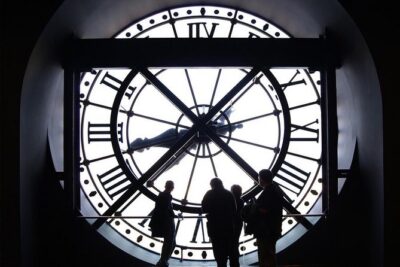
The Musée d’Orsay Guided Tour Orsay Museum Semi-Private 6ppl Max
Read our review →
Louvre & Musée d’Orsay Guided Museum Tour Semi-Private 6ppl Max
Read our review →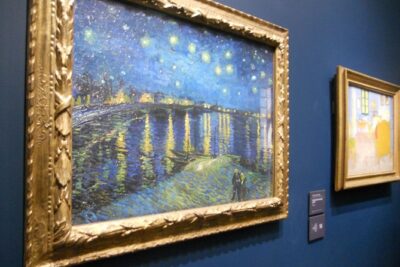
Orsay Museum – Exclusive Guided Tour (Reserved Entry Included)
Read our review →Browse the lists this tour appears in