
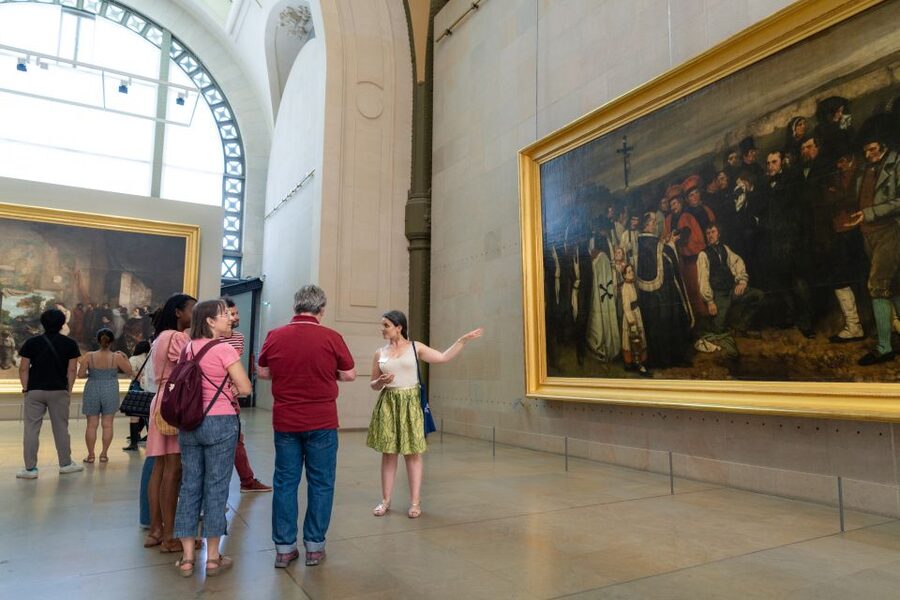
Reviewed · ORSAY MUSEUM TOURS
Musée d’Orsay Skip-the-Line Tour with Expert Guide
The old railway station is the star before the first painting even appears. The Musée d’Orsay occupies a grand Beaux-Arts station built for the World’s Fair, and this skip-the-line entrance gets you past the ticket queue and into one of Paris’s most rewarding collections.
I like two things right away: the guide gives the paintings a social story, not just a name and date, and you can remain in the museum after the guided portion ends. The main concern is time. The tour lasts about 90 to 150 minutes, with the guided portion listed at 1 hour 45 minutes, and that can feel quick in a crowded museum.
- The railway-station setting gives the museum a memorable sense of place before you reach the art.
- Impressionist scandals and rivalries make Monet, Manet, Renoir, Degas, and Van Gogh easier to understand.
- Skip-the-ticket-line access saves useful time, especially during busy periods.
- Guides such as Anthony, Avi, Sarah, and Perrine are praised for clear explanations, warmth, and strong crowd control.
- Headsets may be provided so you can hear the guide in noisy galleries.
- Post-tour freedom lets you continue through the collection after the group portion finishes.
In This Review
- Why the Musée d’Orsay works so well for a guided visit
- Meeting your guide outside the main entrance
- What the first 20 minutes add to the visit
- Following the artists who broke the rules
- Seeing the major works without losing the thread
- Crowd control and the value of the headsets
- How the guides shape the experience
- The final Van Gogh section and what comes after
- Is $82 a fair price?
- Who should book this Musée d’Orsay tour?
- Final call: book it for context, not just entry
- FAQ
- How long does the Musée d’Orsay tour last?
- What language is the tour conducted in?
- Does the tour include museum admission?
- Does the tour skip the museum ticket line?
- Where do I meet the guide?
- How do I identify the guide?
- Should I join the museum queue before meeting the guide?
- Are headsets provided?
- Can I stay in the museum after the tour?
- Can I bring luggage or a large bag?
- Is the tour suitable for wheelchair users?
- Can I cancel for a refund?
Why the Musée d’Orsay works so well for a guided visit
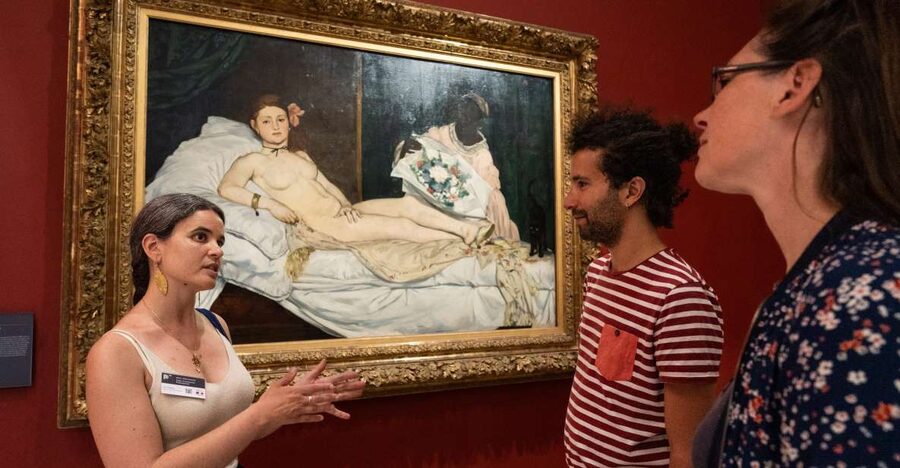
The Musée d’Orsay is not the biggest museum in Paris, but it can feel large when you first enter. Its collection covers a period when artists were arguing with old rules and inventing new ways to paint modern life.
That makes a guide especially useful. You are not simply looking at attractive scenes of gardens, streets, dancers, and countryside. You are seeing artists challenge the official art world, experiment with color and brushwork, and respond to a changing society.
I like this tour because it gives you a route through that change. Instead of wandering from one famous canvas to another, you follow a story: tradition begins to crack, new artists push against it, and Impressionism changes what a painting can be.
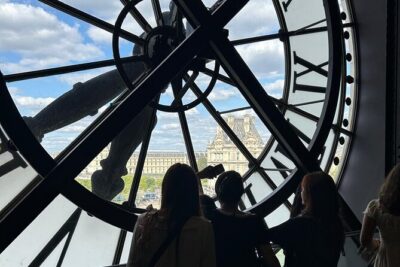
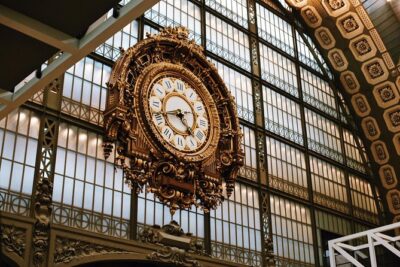
The museum building adds another layer. The former station’s huge interior and clock-filled architecture make the visit feel different from a standard gallery stop. Even if you arrive mainly for the paintings, the setting helps explain why the Orsay feels so distinct from the Louvre.
Meeting your guide outside the main entrance
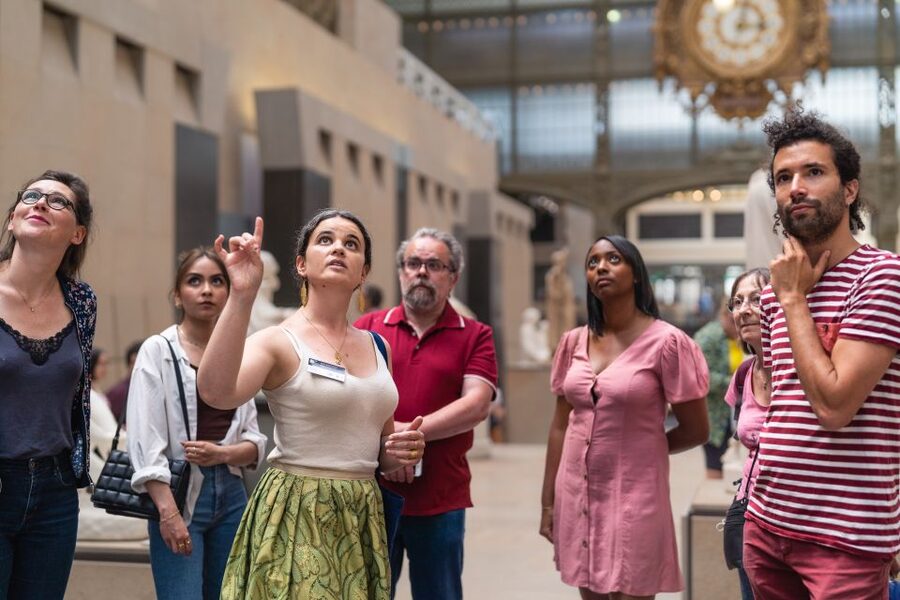
The meeting point is opposite the Musée d’Orsay’s main entrance, next to the entrance of the Legion d’Honneur Museum. Look for a guide wearing an official guide badge on an orange lanyard.
This detail matters because you should not join the museum lines. Go directly to the meeting point and find the guide. The dedicated entrance is one of the clearest practical benefits of booking this experience instead of arriving without a plan.
The nearest public transport stops are RER Musée d’Orsay on Line C and Solferino Metro on Line 12. Hotel pickup and drop-off are not included, so you make your own way to the meeting point.
Give yourself enough time to get there. A delayed arrival is costly because refunds are not available for missed tours. You can cancel up to 24 hours before departure for a full refund, and the reserve-now, pay-later option gives you some flexibility while your Paris plans are still taking shape.
More Paris trips worth a second look
- Versailles: Skip-the-Line Tour of Palace with Gardens Access
★ 4.7 · 9,778 reviews - Versailles: Skip-the-Line Guided Palace Tour and Full Access
★ 4.6 · 5,214 reviews - Louvre Museum: Skip-the-Line Small Group Guided Tour
★ 4.6 · 3,960 reviews
What the first 20 minutes add to the visit
The opening section sets the museum in time and place. Your guide explains the former railway station and the era it represents, then frames the artistic conflict that runs through the collection.
This is more useful than it may sound. Without context, a painting with loose brushwork and bright color can look simply pleasant. The guide helps you see why those choices once appeared bold, careless, or even offensive to established critics.
The tour also gives you a way to read the artists as people working among other artists. The guides have used stories about friendships, tensions, private lives, and social behavior to show how ideas passed between painters. Those details are not just gossip when handled well. They help explain why one artist adopted a new approach and why another resisted it.
Guides including Anthony, Avi, and Sarah have been especially praised for making this material easy to follow. Sarah also adjusted the route for a family whose young daughter was especially interested in Van Gogh, beginning with the Impressionist rooms before the crowds became heavier. That suggests some flexibility is possible, though you should not assume every tour will be reshaped around one personal interest.
Following the artists who broke the rules
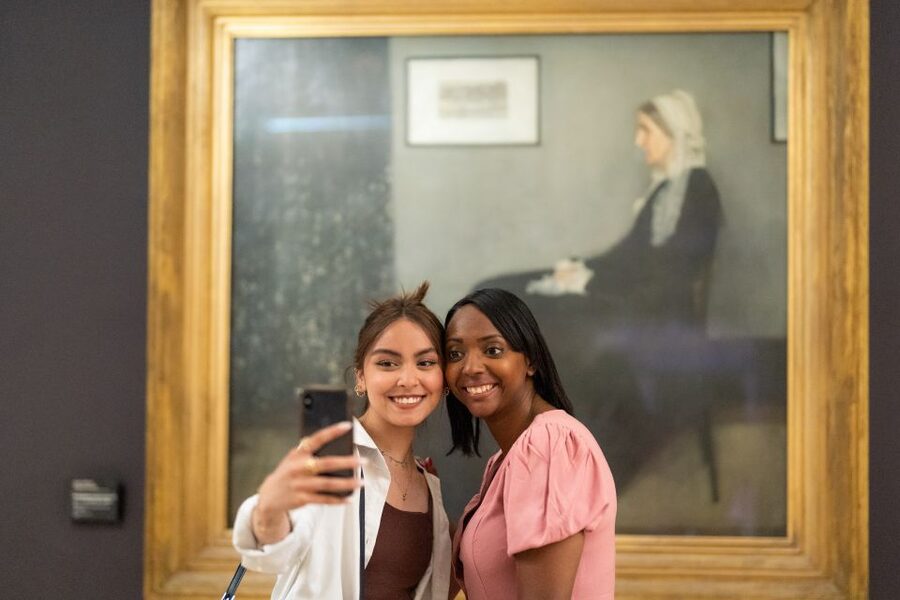
The central part of the tour focuses on the shift from academic tradition to modern painting. Monet, Manet, Renoir, and Degas appear as part of a wider artistic movement, while Van Gogh brings a later and highly personal force to the story.
Your guide explains how peaceful subjects and scenes from daily life could provoke outrage. The issue was not only the subject. Bright colors, visible brushstrokes, and a less polished surface challenged accepted ideas about what serious art should look like.
I find this approach more useful than memorizing artist names. You begin to notice the choices inside a painting. Why does the scene feel immediate? Why does the surface look unfinished? Why might an everyday moment matter to an artist who once would have been expected to paint history, mythology, or formal portraits?
The strongest part of the route is likely to be the way the guide connects works rather than treating each one as an isolated masterpiece. You see influence, disagreement, humor, irony, and social commentary. One painting helps sharpen your view of the next.
Several guides have been praised for putting the art into the political and daily setting of the period. That is a good fit if you want more than a quick list of famous names. It is also useful if you have seen Impressionist paintings before but never felt sure what made them revolutionary.
Seeing the major works without losing the thread
The tour is designed to cover the museum’s major highlights while also pointing out less familiar works. That is a sensible balance for a first visit.
The advantage is efficiency. Your guide knows where the key works are and can move you through the museum without leaving you to guess which rooms deserve your limited time. In a busy gallery, that can make the difference between seeing a painting clearly and merely passing its frame.
The disadvantage is that efficiency can become speed. One participant found the tour rushed and felt the guide spoke too quickly. Another suggested slowing down while walking between rooms so there was more time to notice the surrounding works.
That criticism is worth taking seriously. A guided overview is not the same as a slow museum afternoon. You may spend only a few minutes with a major work before moving on. If you want to study every canvas, sketch, or sculpture at length, the tour will not replace independent time.
The good news is that the ticket lets you stay afterward. I recommend treating the guided section as your orientation. Listen closely, mark the rooms and artists that interest you, then return to those areas once the group portion is finished.
A different way to spend the day, same corner of France:
- Paris: Louvre Museum Timed-Entrance Ticket
★ 4.6 · 71,977 reviews - Disneyland® Paris 1-Day Ticket
★ 4.6 · 49,412 reviews - Paris: Versailles Palace and Gardens Full Access Ticket
★ 4.6 · 41,579 reviews - Paris: Evening River Cruise with Music
★ 4.4 · 22,721 reviews
Crowd control and the value of the headsets
The Musée d’Orsay can be extremely crowded, especially around its most famous works. A strong guide does more than deliver facts. The guide finds a workable viewing position, keeps the group together, and helps you hear the explanation over the general museum noise.
This practical skill received repeated praise. Guides including Anthony, Avi, Sarah, Sophia, Perrine, and Matilde have been recognized for moving groups through crowded galleries while keeping the presentation clear.
The supplied headsets can help, particularly if you have difficulty hearing in a busy room. One older couple specifically found them useful. They also let you stand a little farther from the guide while still following the explanation, though you will still need to keep an eye on the group.
Crowds remain a real limitation. Skip-the-line access gets you past the ticket queue, but it does not create empty galleries for the whole tour. The best possible conditions may occur early in the day, and one family happened to enter before the main gallery filled up. That kind of quiet start is a pleasant bonus, not something to count on.
How the guides shape the experience
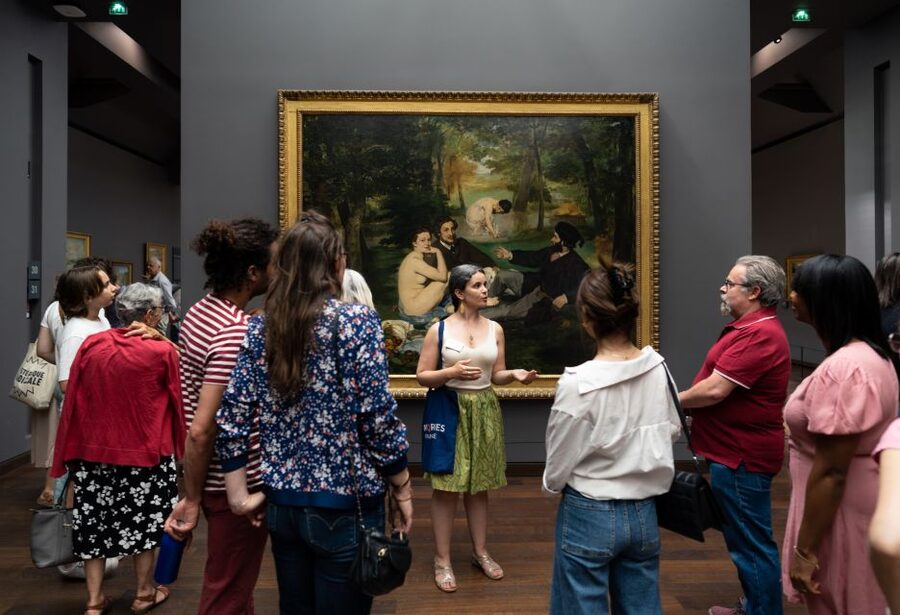
The assigned guide varies, so you cannot choose a particular person from the information provided. Names associated with this tour include Anthony, Antony, Avi, Sarah, Sophia, Perrine, Pauline, Fanny, Sara, Matilde, Marjolein, Carolina, Christina, and others.
The strongest pattern is clear communication paired with enthusiasm. Anthony is often described as warm, funny, patient, and passionate. Avi is noted for presenting art history in a personable way. Sarah has been praised for adapting to a child’s interest and keeping the family engaged. Perrine is remembered for her energy and detailed explanations.
That variety matters because art tours depend heavily on the person holding the microphone. A guide who can answer questions and explain an artist’s motives will make the same gallery feel alive. A guide who speaks too fast can make the same 90 minutes feel crowded.
The tour is conducted in English. Several guides have been praised for clear, easy-to-understand English, which is important when a presentation includes names, dates, artistic terms, and complicated social context.
The experience also appears suitable for a broad age range. One group included people from their late teens to their late seventies and found the presentation easy to follow. Still, anyone who prefers a silent, self-paced museum visit may find the group format less comfortable.
The final Van Gogh section and what comes after
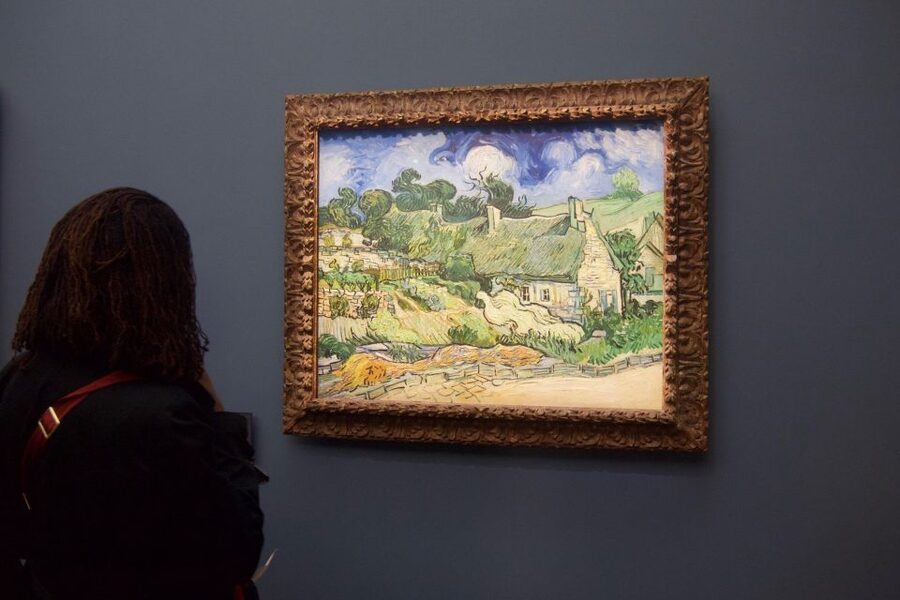
Van Gogh is part of the broader artistic story, and the route may lead you toward his section. One guide accompanied the group up to that area before allowing independent exploration.
This is a useful point in the visit. Van Gogh’s work can attract heavy attention, and the guide’s background helps you see it within the larger changes already discussed. You are better prepared to consider how personal style, emotional force, and visible technique operate in the paintings.
After the guided portion, you can remain in the museum as long as you like. Use that time carefully. Return to the works that moved too quickly during the tour, revisit an artist whose work you want to compare, or continue through rooms the guide could not cover in detail.
The option to visit a temporary exhibition is also included in the stated post-tour access, though the amount of time available and the exhibition schedule will depend on your visit. The key point is that you are not forced out when the guide says goodbye.
Is $82 a fair price?
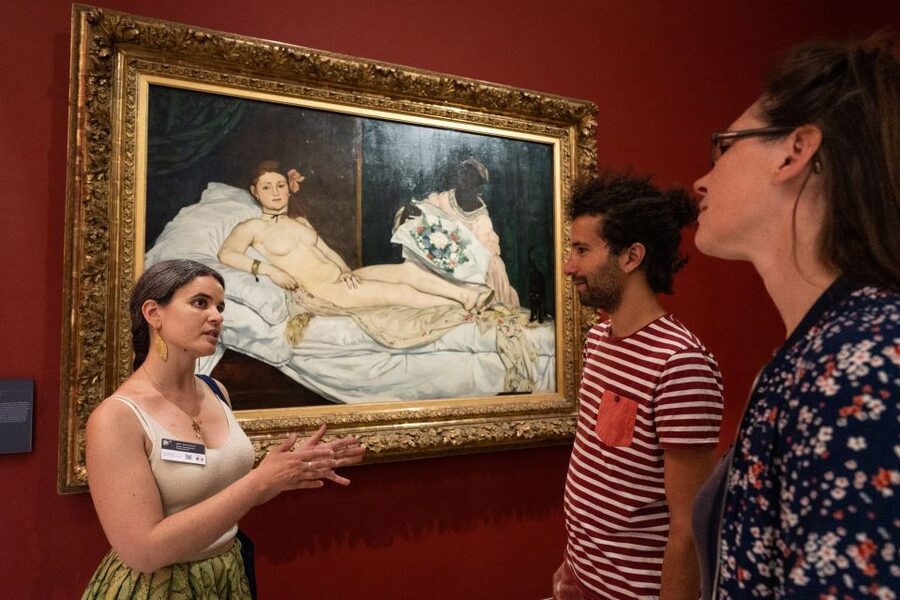
At $82 per person, this is not the cheapest way to enter the Musée d’Orsay. You are paying for more than admission: a dedicated entrance, entrance fees, an accredited local guide, headsets when appropriate, and a guided route lasting roughly 1 hour 45 minutes.
I think the price makes sense if you want structure and art history. A good guide can help you understand why Impressionism mattered, point out important works efficiently, and save you from spending your first hour orienting yourself in a crowded building.
The value is weaker if you already know the collection well or want to sit with a small number of paintings for a long time. In that case, the tour’s pace may feel restrictive, even with the option to stay afterward.
For a first visit, the combination of skip-the-ticket-line access and expert interpretation gives the fee a reasonable purpose. I would book it for a short Paris stay, a first visit to the Orsay, or a family group that wants an engaging introduction rather than a silent stroll through galleries.
Who should book this Musée d’Orsay tour?
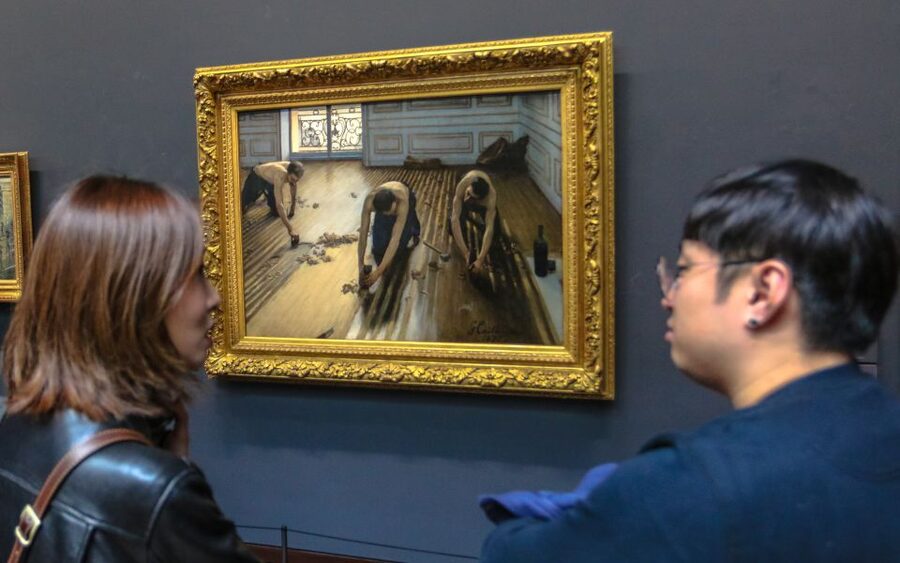
This tour suits you best if:
- You want to understand the ideas behind Impressionism, not just identify famous painters.
- You have about two hours for a guided introduction and can stay longer afterward.
- You prefer an English-speaking guide who can answer questions and connect art with social history.
- You are visiting during a busy period and want help finding good viewing positions.
- You are traveling with family members who need a clear route and lively explanations.
- You want a quick overview before exploring the museum alone.
You may want another format if you use a wheelchair, since the activity is not suitable for wheelchair users. Large bags and luggage are not allowed, so arrive with only what the museum permits.
I would also avoid booking this as your only museum time if you want a slow, scholarly examination of the collection. The tour covers a lot, and some presentations may move quickly. Plan to use the remaining museum access for a second pass.
Final call: book it for context, not just entry
I would book this tour if the Musée d’Orsay is high on your Paris list and you want the paintings to make sense in their own time. The strongest features are the fast entry, the story of artistic rebellion, and the guides’ repeated ability to explain difficult ideas in a friendly way.
Book with realistic expectations. The museum may be crowded, the guide may set a brisk pace, and you will not study every room in detail. But with the freedom to stay afterward, this is a smart first look at the Orsay, especially for anyone who wants Monet, Manet, Renoir, Degas, and Van Gogh presented as artists who changed the rules rather than names on a wall.
FAQ
How long does the Musée d’Orsay tour last?
The activity is listed as lasting 90 to 150 minutes. The guided portion is specified as 1 hour 45 minutes.
What language is the tour conducted in?
The live tour guide speaks English.
Does the tour include museum admission?
Yes. Entrance fees are included.
Does the tour skip the museum ticket line?
Yes. The experience includes a dedicated entrance and skip-the-ticket-line access.
Where do I meet the guide?
Meet opposite the main entrance to the Musée d’Orsay, next to the entrance of the Legion d’Honneur Museum.
How do I identify the guide?
The guide will be near the entrance and will wear a guide badge on an orange lanyard.
Should I join the museum queue before meeting the guide?
No. Go to the meeting point and do not get in the museum lines.
Are headsets provided?
Headsets are provided when appropriate so you can hear the guide.
Can I stay in the museum after the tour?
Yes. You can remain in the museum after the guided tour and continue exploring.
Can I bring luggage or a large bag?
No. Luggage and large bags are not allowed.
Is the tour suitable for wheelchair users?
No. The activity is listed as not suitable for wheelchair users.
Can I cancel for a refund?
You can cancel up to 24 hours before departure for a full refund. Refunds are not available for missed tours.
Recently reviewed around Paris
- Louvre Private Tour – The Essentials and More with Expert Guide★ 5.0 · 227 reviews
- 2CV tour by night★ 5.0 · 55 reviews
- Eiffel Tower Second or Summit Floor Access by Elevator with Views★ 3.5 · 161 reviews
- The only Paris Wine Tasting experience you need to do – 2 hours★ 5.0 · 265 reviews
- 2 Hour Street-art Walk and Space Invaders Hunt in Paris★ 5.0 · 27 reviews
- 2 hour outdoor group activity in Paris: SAINT GERMAIN★ 5.0 · 48 reviews
- Sainte-Chapelle, Conciergerie & Palais de Justice Private Tour★ 5.0 · 72 reviews
- Private 2 – Hour Paris Landmarks Tour by Golf Cart Mini Moke★ 5.0 · 38 reviews
Orsay Museum Tours, compared.

Paris in a Day: Louvre or Orsay, Eiffel Tower, City Walk & Cruise
Read our review →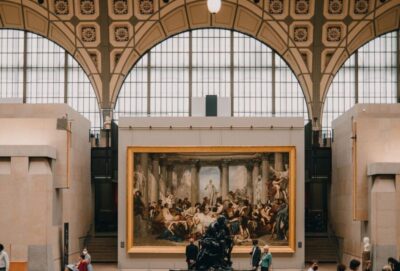
Musée d’Orsay Entry Ticket and Seine River Cruise
Read our review →
Musée d’Orsay Skip-the-Line Tour with Expert Guide
Read our review →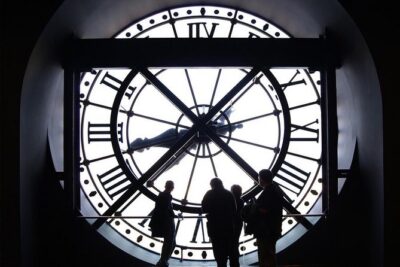
The Musée d’Orsay Guided Tour Orsay Museum Semi-Private 6ppl Max
Read our review →
Louvre & Musée d’Orsay Guided Museum Tour Semi-Private 6ppl Max
Read our review →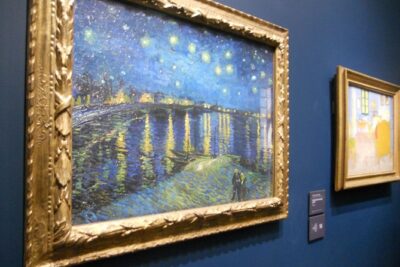
Orsay Museum – Exclusive Guided Tour (Reserved Entry Included)
Read our review →Browse the lists this tour appears in