
Reviewed · ORSAY MUSEUM TOURS
Paris: Musée d’Orsay Skip-the-Line Tour with Expert Guide
The Musée d’Orsay holds one of Paris’s finest collections of Impressionist and Post-Impressionist art, but its long galleries and busy rooms can make a first visit feel scattered. This 1-hour-45-minute guided tour gives you a clear route through the major works, with the former railway station’s grand architecture as part of the experience.
I like the reserved entry through a special entrance, which saves time, and I like the way the guide links paintings to the artistic battles of 19th-century France. The tour also ends inside the museum, so you can stay on to revisit favorites or find works the guide did not cover.
The main consideration is pace. You will see selected highlights rather than the whole museum, and the group can include as many as 20 people. If you want quiet time with every gallery, plan to spend extra time in the museum after the guided portion.
In This Review
- Key points to know before booking
- Why the Musée d’Orsay works so well with a guide
- Meeting at 2 Rue de la Légion d’Honneur
- Entering the former railway station
- The first hour: learning how Impressionism began
- The final 45 minutes: masterpieces with context
- Staying inside after the guide leaves
- What the $67.60 price buys you
- Who will get the most from this tour
- Practical tips for a smoother visit
- Should you book the Musée d’Orsay guided tour?
- FAQ
- How long does the Musée d’Orsay tour last?
- Is museum admission included?
- Can I stay in the museum after the guided tour?
- What language is the tour offered in?
- How large can the group be?
- Where does the tour meet?
- Can I cancel for a refund?
Key points to know before booking
- The tour follows Impressionism’s story: You learn how artists such as Manet, Monet, Renoir, Degas, and Van Gogh challenged older rules.
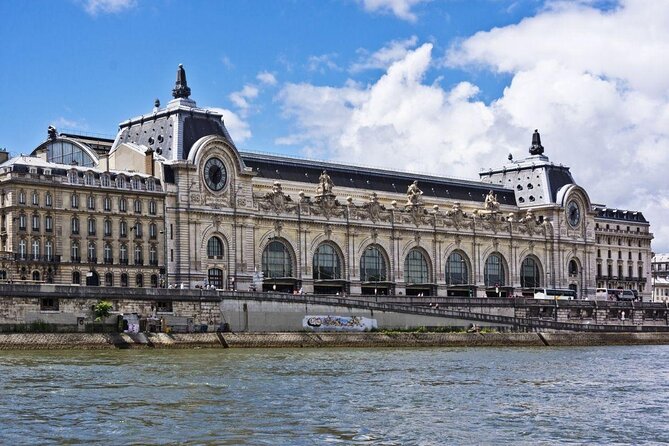
- The old railway station is part of the attraction: The Beaux-Arts building, giant clock, and open central hall add plenty to see beyond the paintings.
- You keep exploring afterward: The tour ends inside the Musée d’Orsay, giving you time to continue alone.
- Entry is pre-reserved: Ticket costs and admission through a special entrance are included.
- Guides bring personality: Past departures have included Cecilia, Claire, Stephanie, Ivan, Caroline, Julie, Anthony, Christina, and others.
- Allow for crowds: The museum can become difficult to navigate later in the day, so arrive early and do not cut the meeting time close.
Why the Musée d’Orsay works so well with a guide
I find the Musée d’Orsay easier to enjoy than the Louvre, but it is still not a small museum. Thousands of works are displayed across several levels, and the collection covers painting, sculpture, decorative art, photography, and more. Without a plan, you can spend a lot of time walking and still miss the works you most wanted to see.
This tour provides a useful backbone. Rather than stopping at every famous name, the guide selects paintings that explain how French art changed from the formal traditions of the early 19th century to the freer brushwork and modern subjects associated with Impressionism.
That approach matters. A painting can be famous and still leave you cold if you do not know what made it startling in its own time. The guide explains why visible brushstrokes, bright colors, scenes of ordinary life, and outdoor light caused such a stir. You get the social and artistic setting without having to read long labels in every room.
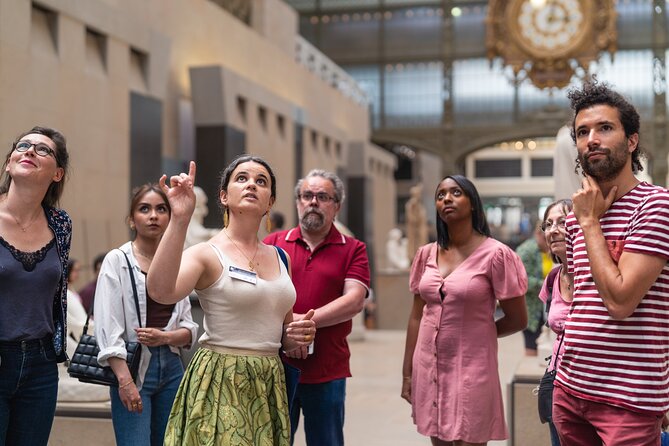
The experience is offered in English and uses headsets, which should make it easier to follow when the museum is noisy. The maximum group size is 20. That is not a private tour, but it is small enough for questions and a more personal feel than a large guided crowd.
More Paris trips worth a second look
- Versailles: Skip-the-Line Tour of Palace with Gardens Access
★ 4.7 · 9,778 reviews - Versailles: Skip-the-Line Guided Palace Tour and Full Access
★ 4.6 · 5,214 reviews - Louvre Museum: Skip-the-Line Small Group Guided Tour
★ 4.6 · 3,960 reviews
Meeting at 2 Rue de la Légion d’Honneur
The meeting point is at 2 Rue de la Légion d’Honneur, outside the museum. Your guide meets you there before taking the group inside.
Give yourself a generous margin. The tour information specifically warns that taxis in Paris can take time to find and that traffic can make a short-looking ride surprisingly slow. If you are coming by taxi, do not aim to arrive at the exact starting time.
The museum is near public transportation, which makes that a better choice for many visitors. Your confirmation arrives when you book, and the mobile ticket is convenient for a day when you are already carrying museum maps, train tickets, and restaurant reservations.
The tour begins outside, but the experience itself takes place inside the Musée d’Orsay. There is no hotel pickup or drop-off, so you handle your own route to the meeting point.
Entering the former railway station
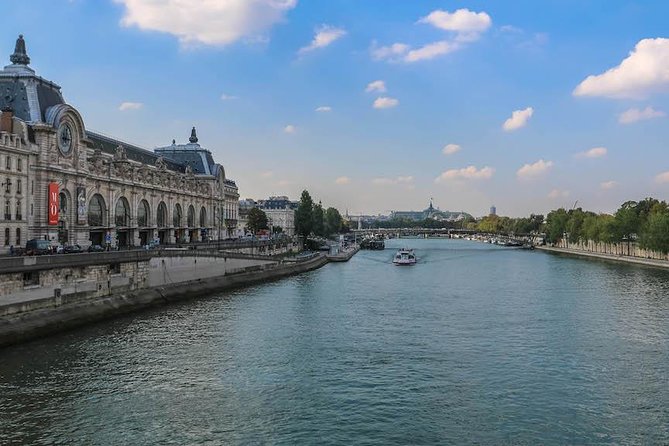
The building deserves your attention before you reach the first painting. The Musée d’Orsay occupies a grand Beaux-Arts railway station, and its original scale helps explain the museum’s broad central hall and long sightlines.
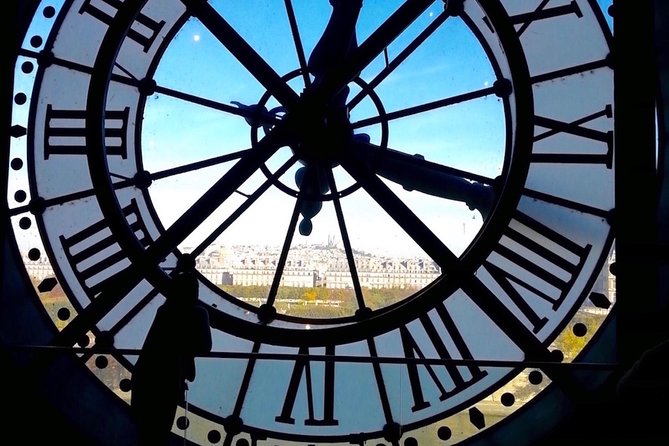
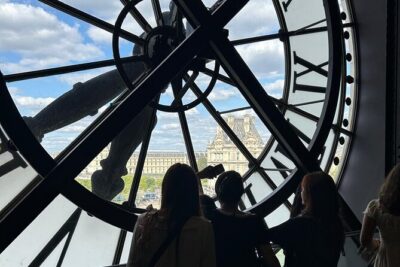
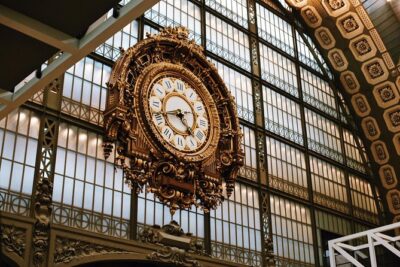
One of the most memorable features is the giant clock. It is a favorite photo spot, but it also gives the museum a strong sense of place. You are not simply entering a collection in a neutral white box. The architecture reminds you that this building began with another purpose and later became one of Paris’s major art spaces.
Your guide includes the building’s story as part of the visit. That is useful because the museum’s layout can otherwise seem confusing. A guide can help you understand where you are and why the galleries are arranged as they are, leaving you more attention for the art.
The building can also be crowded. A full museum makes it harder to stand directly in front of a painting, especially at the most famous works. The guide’s job is not to remove the crowds, but to help you reach the important rooms and make the most of the time available.
The first hour: learning how Impressionism began
The first part of the tour lasts about an hour and focuses on the museum’s major works and the road toward Impressionism.
A strong tour here should not treat Impressionism as a sudden invention. The artists were responding to earlier academic traditions, changing urban life, new ways of seeing, and arguments about what deserved to be painted. The guide explains this progression through selected examples instead of asking you to absorb every room.
That selection is one of the tour’s best features. You see representative works that show the transition from older styles to a freer, more immediate form of painting. The goal is not to count masterpieces. It is to understand why the movement mattered.
The guide may discuss artists including Monet, Manet, Renoir, Degas, and Van Gogh. Their careers were different, and the tour uses their lives, rivalries, and ambitions to make the collection easier to remember.
You might study Monet’s approach to changing light, Manet’s challenge to accepted subjects, Renoir’s pleasure in social scenes, Degas’s interest in movement and performance, and Van Gogh’s intense use of color. These artists did not all paint alike, and the point is not to flatten them into one style. It is to see how each pushed against expectations in a different way.
Several named guides associated with this experience have been praised for their clear explanations and humor. Cecilia, Claire, Stephanie, Ivan, Caroline, Julie, Anthony, Christina, Sylviane, and Elisabeth are among the guides named in tour feedback. Your guide will vary, but the experience is designed around an art specialist who can explain both the famous works and less familiar pieces.
A different way to spend the day, same corner of France:
- Paris: Louvre Museum Timed-Entrance Ticket
★ 4.6 · 71,977 reviews - Disneyland® Paris 1-Day Ticket
★ 4.6 · 49,412 reviews - Paris: Versailles Palace and Gardens Full Access Ticket
★ 4.6 · 41,579 reviews - Paris: Evening River Cruise with Music
★ 4.4 · 22,721 reviews
The final 45 minutes: masterpieces with context
The second part lasts about 45 minutes and continues the story through celebrated Impressionist and Post-Impressionist works.
You may see paintings such as Monet’s Water Lilies and Manet’s Olympia, while learning why these works could seem bold or even scandalous when first shown. The guide also places the artists within the social world of 19th-century France, where questions of class, public morality, prostitution, and changing city life were closely tied to what painters put on canvas.
That frankness is worth noting for families. The collection includes nude figures and works connected with sexual exploitation of minors and prostitution. The tour does not promise a sanitized version of the period, though guides can adjust their discussion for younger listeners when needed. Parents should decide in advance how much context suits their children.
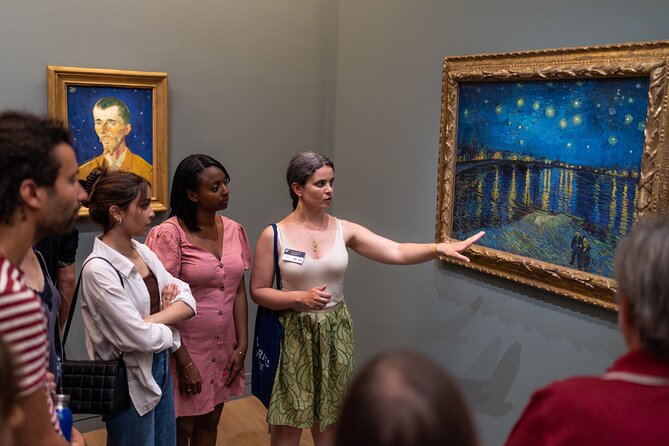
Van Gogh’s Starry Night Over the Rhône is another possible highlight. Its reflections of stars on water give the painting an emotional force that is easy to miss if you only glance at it in a crowded room. Renoir’s dance scenes offer a different mood, filled with movement and social pleasure.
The guide’s value is clearest at moments like these. You are not only told the title and artist. You learn what to look for, how the work relates to the period, and why the artist’s choices were unusual.
The pace is described as relaxed by the operator, though one practical comment gives a more useful picture: the tour moves quickly enough to cover its selected works, and you should use the free time afterward to return to paintings you want to study longer. That is normal for a museum highlights tour. You get an organized introduction, not a complete survey.
Staying inside after the guide leaves
The tour ends inside the Musée d’Orsay, at the Esplanade Valéry Giscard d’Estaing. This is a real advantage.
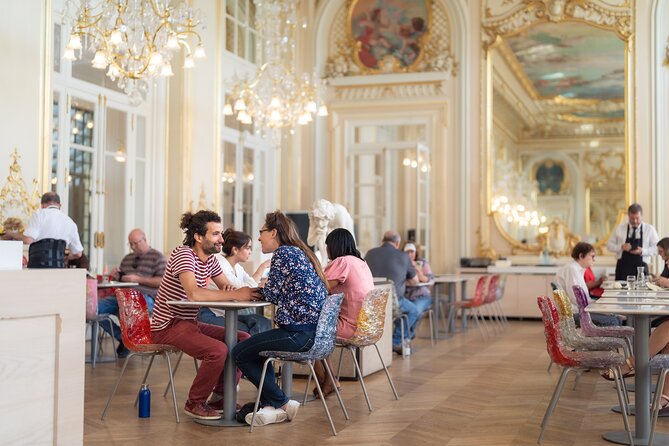
You can revisit the paintings you saw with the guide, look for artists not included in the route, or simply spend time with the building. You are not pushed back outside after the final explanation. If the guided portion helps you understand the collection, the independent time lets you follow your own interests.
I suggest deciding in advance what you want from this extra time. If you are drawn to sculpture, decorative art, or lesser-known painters, use the guide’s route as a starting point and then change direction. If you are visiting with children, the free time gives you more flexibility than a fully scheduled museum visit.
Do not expect the guide to cover every important room. That would be impossible in 1 hour 45 minutes, especially when the group needs to move together and pause for explanations. The best way to use the tour is to treat it as an introduction that helps you make better choices afterward.
What the $67.60 price buys you
At $67.60 per person, this is more expensive than entering a museum alone, but the comparison is not quite even. Your price includes admission, pre-reserved entry through a special entrance, an English-speaking art expert, headsets, and the guided visit.
The strongest value comes from combining time savings with interpretation. If the museum is crowded, getting through the entrance without waiting can protect a useful part of your day. The guide then helps you spend your first 1 hour 45 minutes on works that explain the collection rather than wandering without direction.
The price makes more sense for a first visit, a short stay in Paris, or anyone who wants the art explained in person. It is less compelling for a repeat visitor who already knows the museum well and prefers to move independently.
The tour has a 4.7 rating from 1,145 ratings, with 92 percent of customers recommending it. The most consistent strengths are clear explanations, strong choices of paintings, easy meeting arrangements, and guides who keep both older visitors and teenagers involved.
There is one warning in that strong record: guide quality can vary from one departure to another. Most feedback describes the guides as engaging and well prepared, but one person found the presentation disorganized and below the expected standard. That is a normal risk with any scheduled group tour, even one with a strong overall record.
Who will get the most from this tour
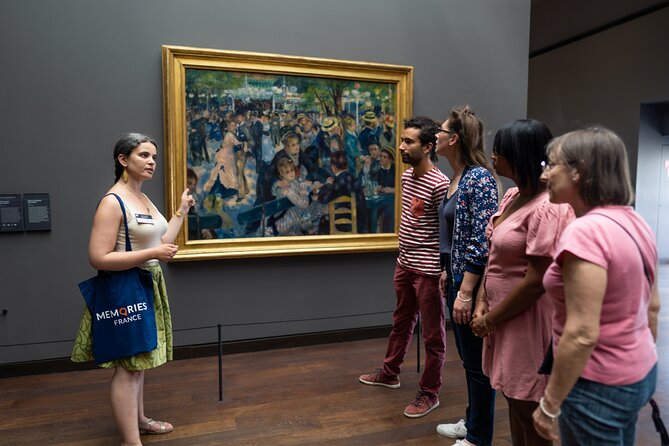
I would choose this experience for:
- First-time Musée d’Orsay visitors who want a clear starting point.
- Art lovers who want to understand the movement rather than only photograph famous paintings.
- Families with older children or teenagers who benefit from stories, humor, and a moving route.
- Short-stay visitors who cannot spend half a day figuring out the museum alone.
- Repeat visitors seeking context, especially if a previous visit felt like a long list of names and rooms.
- Painters and creative visitors, since the discussion can connect the works with the places and subjects that inspired them.
I would think twice if you dislike group tours, need a very slow pace, or want to examine each painting in silence. The group can reach 20 people, and the museum itself may be crowded. You can stay afterward, but the guided section follows a set route.
Practical tips for a smoother visit
Arrive early. The museum becomes harder to navigate as crowds build, and late arrival can mean missing the opening explanation or losing the group entirely.
Wear shoes suitable for standing and walking through galleries. The tour lasts less than two hours, but the museum visit can easily continue much longer once you begin exploring alone.
Bring your mobile ticket and check the meeting address carefully. The starting point is outside at 2 Rue de la Légion d’Honneur, while the end point is inside the museum. That difference matters if you have another appointment afterward.
Use the guide’s route as a map for your free time. Make a note of two or three paintings you want to revisit, then add rooms that match your own interests. You will get more from the museum by returning to a few works than by rushing through everything.
If you must cancel, free cancellation is available up to 24 hours before the start time for a full refund. Missed tours and changes made within 24 hours are not refundable, so allow extra time for transport.
Should you book the Musée d’Orsay guided tour?
Book it if you want the museum’s Impressionist collection to make sense quickly. The combination of reserved entry, an expert-led route, and free time inside gives you both structure and independence.
Skip it if you already know the Orsay well or prefer an entirely self-guided visit. For most first-time visitors, though, $67.60 is a fair price for a focused introduction to Monet, Manet, Renoir, Degas, Van Gogh, and the artistic arguments that made their work revolutionary.
FAQ
How long does the Musée d’Orsay tour last?
The experience lasts approximately 1 hour and 45 minutes. The itinerary includes about one hour for the first museum visit and another 45 minutes focused on Impressionist and Post-Impressionist works.
Is museum admission included?
Yes. The price includes the admission ticket and pre-reserved entry through a special entrance.
Can I stay in the museum after the guided tour?
Yes. The tour ends inside the Musée d’Orsay, so you can continue exploring independently after the guide finishes.
What language is the tour offered in?
The tour is offered in English.
How large can the group be?
The maximum group size is 20 travelers.
Where does the tour meet?
The meeting point is outside the museum at 2 Rue de la Légion d’Honneur, 75007 Paris, France.
Can I cancel for a refund?
You can cancel at least 24 hours before the scheduled start time for a full refund. Cancellations, changes, and missed tours within 24 hours are not refundable.
Recently reviewed around Paris
- Louvre Private Tour – The Essentials and More with Expert Guide★ 5.0 · 227 reviews
- 2CV tour by night★ 5.0 · 55 reviews
- Eiffel Tower Second or Summit Floor Access by Elevator with Views★ 3.5 · 161 reviews
- The only Paris Wine Tasting experience you need to do – 2 hours★ 5.0 · 265 reviews
- 2 Hour Street-art Walk and Space Invaders Hunt in Paris★ 5.0 · 27 reviews
- 2 hour outdoor group activity in Paris: SAINT GERMAIN★ 5.0 · 48 reviews
- Sainte-Chapelle, Conciergerie & Palais de Justice Private Tour★ 5.0 · 72 reviews
- Private 2 – Hour Paris Landmarks Tour by Golf Cart Mini Moke★ 5.0 · 38 reviews
Orsay Museum Tours, compared.

Paris in a Day: Louvre or Orsay, Eiffel Tower, City Walk & Cruise
Read our review →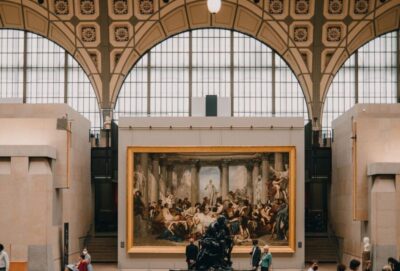
Musée d’Orsay Entry Ticket and Seine River Cruise
Read our review →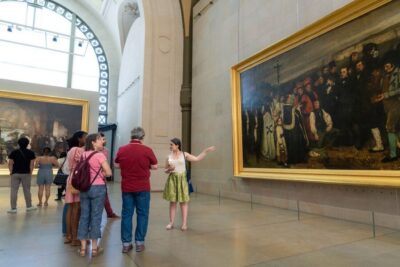
Musée d’Orsay Skip-the-Line Tour with Expert Guide
Read our review →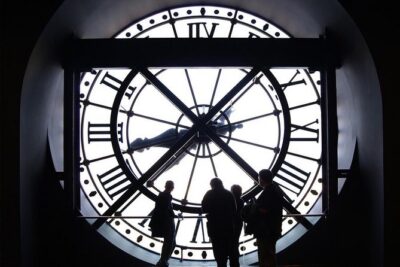
The Musée d’Orsay Guided Tour Orsay Museum Semi-Private 6ppl Max
Read our review →
Louvre & Musée d’Orsay Guided Museum Tour Semi-Private 6ppl Max
Read our review →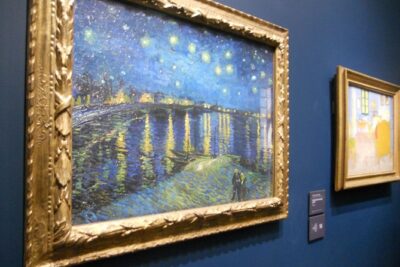
Orsay Museum – Exclusive Guided Tour (Reserved Entry Included)
Read our review →Browse the lists this tour appears in