

Reviewed · LOUVRE MUSEUM TOURS
Paris: Skip-the-Line Louvre Highlights Guided Tour
The smartest thing about this Louvre tour is that it turns an enormous former palace into a manageable visit. With nearly 10 miles of galleries, the museum can swallow a whole day before you find the Mona Lisa. A guide leads you straight to major works, then adds the stories and visual clues that make them worth seeing.
I like the small group of no more than six, which makes it easier to hear and ask questions. I also like the mix of famous sights and lesser-known works, from Egyptian antiquities and Michelangelo sculpture to the French Crown Jewels and Napoleon III’s lavish apartments. The main caution is that skip-the-line entry does not mean an empty museum. Security checks and crowds, especially around the Mona Lisa, can still slow you down.
In This Review
- Key points at a glance
- Why a guided Louvre visit helps
- Meeting at the Arc de Triomphe du Carrousel
- The Louvre’s essential masterpieces
- Royal apartments and Napoleon III’s grand rooms
- A 1.5-hour visit or a longer three-hour route
- What the small group changes
- Is $137 a fair price?
- Crowds, waiting, and realistic expectations
- Who should book this Louvre tour?
- Should you book it?
- FAQ
- How long is the Louvre guided tour?
- What works of art will I see?
- Is the ticket included?
- How large is the group?
- What language is the tour in?
- Can I stay in the Louvre after the tour?
- What should I bring, and what cannot I bring inside?
Key points at a glance
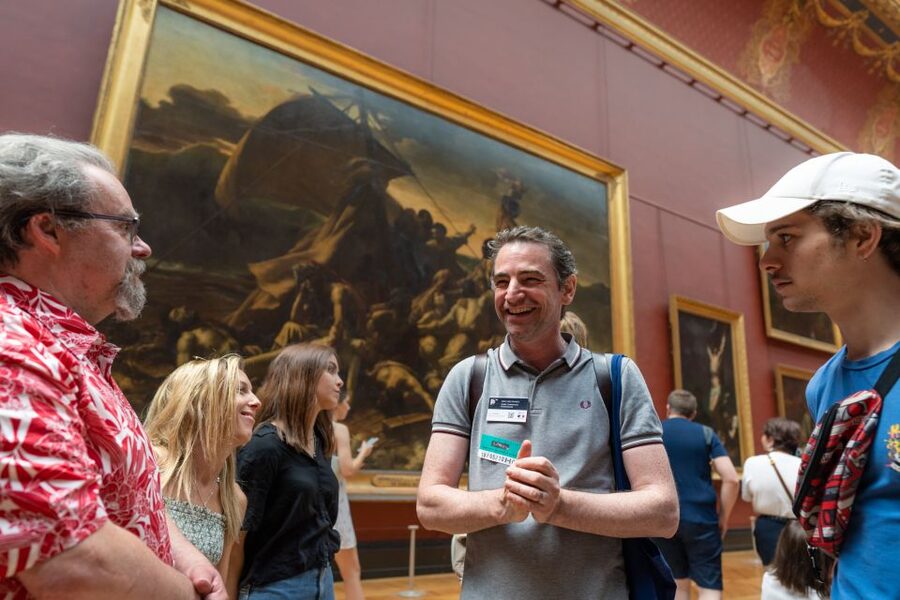
- A six-person maximum: You get a more personal tour than with a large museum crowd.
- The great Louvre checklist: Expect the Mona Lisa, Venus de Milo, Winged Victory, Liberty Leading the People, and the Coronation of Napoleon.
- More than paintings: The route can include Egyptian antiquities, royal jewels, Michelangelo sculpture, and Second Empire salons.
- A guide who handles the maze: Guides such as John Edward, Claire, Will, Astrid, Christina, and Herve have led engaging, art-focused visits.
- Choose your pace: The experience is offered as a 1.5 or 3-hour guided tour, with time to continue inside afterward.
- Bring identification, not luggage: A passport or ID card is required, and bags larger than 55 by 35 by 20 centimeters are not allowed.
Why a guided Louvre visit helps
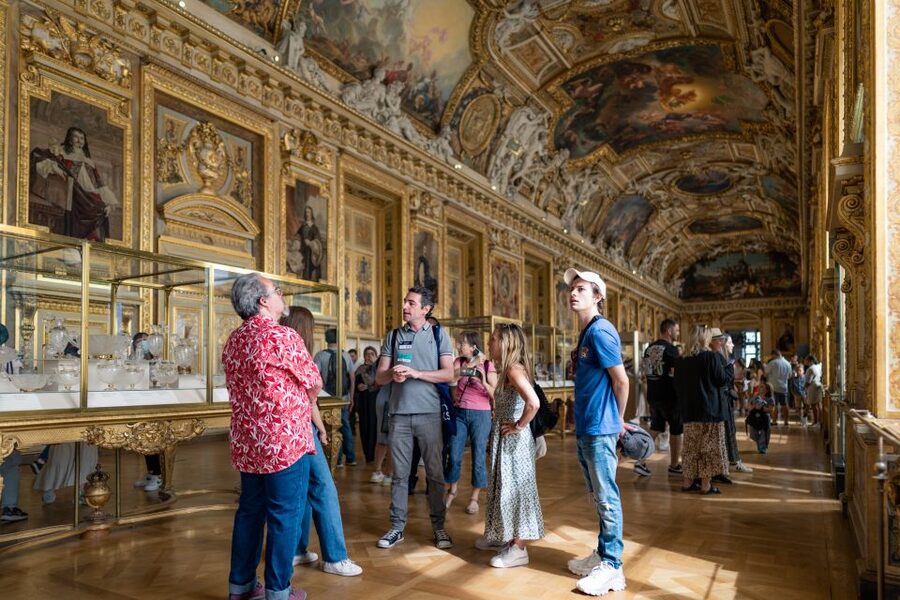
The Louvre is not a museum designed around a neat visitor route. It grew from a fortress and royal residence into a sprawling palace, then became one of the world’s great museums. The result is magnificent but confusing. Corridors turn into galleries, staircases lead to different wings, and major works are separated by long stretches of art you may not recognize.
That is where this tour earns its keep. You do not need to spend your first hour figuring out the floor plan or wondering if you have missed the Venus de Milo. Your guide takes charge of the route and explains what you are seeing along the way.
I especially like this approach for a first visit. The guide gives you a basic sense of the Louvre’s layout and history while pointing out pieces you might otherwise pass without a glance. You still see the headline works, but the visit is not reduced to a frantic hunt for three famous objects.
The strongest part of the experience is the interpretation. A good guide can explain how a painting was made, what a sculptor wanted you to notice, or why a royal room looks so extravagant. Guides named in the feedback include John Edward, Megan, Claire, Caroline, Will, Christina, Astrid, Humberto, Carolina, and Herve. Their styles differ, but the recurring strength is clear: the tour depends heavily on the guide’s ability to tell a good story and keep the group moving.
More Paris trips worth a second look
- Versailles: Skip-the-Line Tour of Palace with Gardens Access
★ 4.7 · 9,778 reviews - Versailles: Skip-the-Line Guided Palace Tour and Full Access
★ 4.6 · 5,214 reviews - Louvre Museum: Skip-the-Line Small Group Guided Tour
★ 4.6 · 3,960 reviews
Meeting at the Arc de Triomphe du Carrousel
The tour begins at the Arc de Triomphe du Carrousel, at 75001 Paris. This is a useful starting point because you meet near the Louvre rather than spending time on hotel transfers. There is no hotel pickup or drop-off, so plan your route to the meeting point before tour day.
Arrive with your passport or ID card. It is not a visit where you should bring a large suitcase, an oversize backpack, or a day bag packed for the rest of your trip. The museum does not permit items exceeding 55 by 35 by 20 centimeters.
After meeting your English-speaking guide, you enter with a pre-reserved ticket. The practical benefit is time and less uncertainty at the ticket line. Still, security measures can create lines, and the skip-the-line promise should not be read as instant passage through every checkpoint.
The activity ends back at the meeting point. After the guided portion, you may remain in the Louvre until closing time, which adds useful flexibility. You can follow the guide’s route, then return to a room you liked or continue into another collection at your own speed.
The Louvre’s essential masterpieces
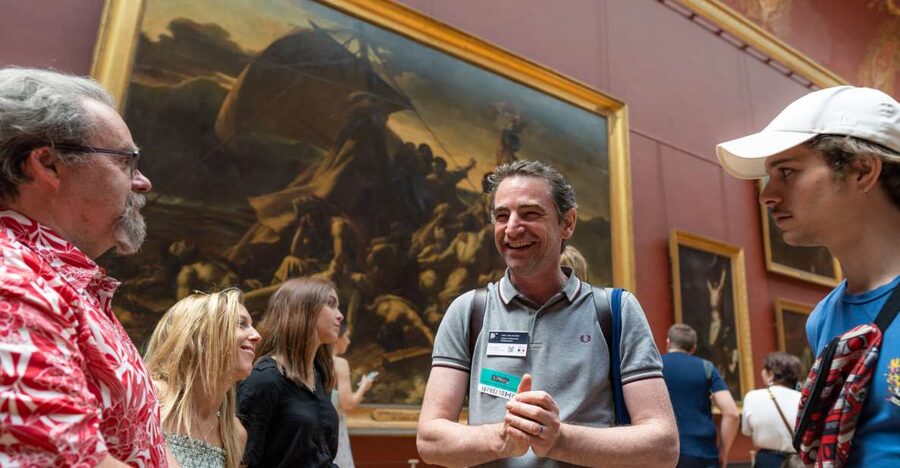
The exact order can change according to museum conditions and crowd levels, but the tour is built around the Louvre’s most important sights. The Mona Lisa is the obvious draw, yet it makes more sense when you have some context first.
Leonardo da Vinci’s painting is small, protected, and viewed by a constant stream of people. You may wait for a clear view, and you should not expect a quiet private moment with it. The guide can use that time to explain the painting’s expression, composition, reputation, and place in art history.
That is a better use of the Mona Lisa stop than simply taking a quick photo and moving on. You will still have limited viewing time, but you leave with a clearer idea of why the painting matters beyond its fame.
The Winged Victory of Samothrace is another major stop. Its position at the top of a grand staircase gives it a powerful sense of movement, even though the sculpture is missing its head and arms. A guide can help you notice how the drapery and wings create the impression of wind and forward motion.
The Venus de Milo offers a different lesson. Its missing arms have become part of its identity, but the sculpture’s balance, pose, and surface are just as important. The guide can give you a way to look at it rather than leaving you with only the familiar name.
You may also see large French canvases such as Liberty Leading the People and The Coronation of Napoleon. These works are useful reminders that the Louvre is not only a place for ancient objects and Italian Renaissance masterpieces. French painting, politics, ceremony, and national identity occupy a major part of the museum.
The tour also includes works that many people do not put on their first Louvre checklist. You might see sculptural works by Michelangelo, ancient Egyptian objects, and the French Crown Jewels. These stops broaden the visit and help you understand the Louvre as a collection of civilizations, not just a building containing three famous artworks.
Royal apartments and Napoleon III’s grand rooms

One of the most enjoyable contrasts is the visit to the sumptuous apartments of Napoleon III. These rooms preserve the lavish decoration of the Second Empire, the last period when the Louvre served as a royal residence.
Here, the walls, furniture, chandeliers, mirrors, and decorative details become part of the story. The rooms show you how power was displayed through ceremony and luxury. After the intense focus required by paintings and sculpture, the apartments offer a visual change of pace.
I would not treat these salons as filler between masterpieces. They explain what the Louvre was before it became a museum. You see a palace built for rulers, court life, and formal display, not a clean, purpose-built gallery with an easy visitor flow.
This is also the kind of section where a guide’s personal interest matters. A guide who can point out small details in the furnishings or explain how the rooms functioned can make the visit feel more immediate. Without that help, you might admire the gold and chandeliers but miss the political message behind them.
A different way to spend the day, same corner of France:
- Paris: Louvre Museum Timed-Entrance Ticket
★ 4.6 · 71,977 reviews - Disneyland® Paris 1-Day Ticket
★ 4.6 · 49,412 reviews - Paris: Versailles Palace and Gardens Full Access Ticket
★ 4.6 · 41,579 reviews - Paris: Evening River Cruise with Music
★ 4.4 · 22,721 reviews
A 1.5-hour visit or a longer three-hour route
The shorter 1.5-hour option suits you if you have limited time in Paris or want a first orientation before exploring alone. It should give you a brisk look at the major highlights, but you should expect a focused route rather than a full survey of the Louvre.
The three-hour option is the better choice if you want more explanation and a wider selection of rooms. One especially strong account describes a well-paced three-hour visit that worked even for a returning Louvre visitor. That makes sense: after your first visit, a guide can help you notice things you missed rather than simply repeating the standard checklist.
Three hours is still not enough to see everything. The museum is too large, and art takes time. Think of the longer tour as a carefully chosen introduction, not an attempt to conquer the entire collection.
The short tour may work better for families with limited attention spans, too. A guide named Will was praised for keeping children interested while moving a family through the museum. Another guide, John Edward, was noted for using waiting time efficiently and adding historical context around each major work.
After the tour, you can stay inside and continue on your own. This makes the time options less restrictive. You can take the guided route for orientation, then return to a favorite gallery or seek out another department without paying for a second museum entry.
What the small group changes

A maximum of six participants is a meaningful advantage in a museum as crowded as the Louvre. You are more likely to hear explanations without constantly straining toward a guide’s voice. You can also ask a quick question about a painting or request clarification when something is not clear.
The small size helps the group move through narrow spaces and busy rooms. It does not remove the crowds, but it reduces the feeling of being one person in a large moving cluster. Guides can also adjust their explanations more easily for adults, teenagers, or people seeing the Louvre for the first time.
Several guides are described as friendly, patient, and approachable. Megan was especially praised for making the visit feel personal and for sharing an additional favorite work after the planned tour time. You should not count on extra time, but that example shows the value of a guide who treats the group as people rather than as a timetable to process.
There is one practical limit. Six participants is a maximum, not a promise that you will receive a private tour. You share the experience with other people, and the group must keep moving through a public museum.
Is $137 a fair price?
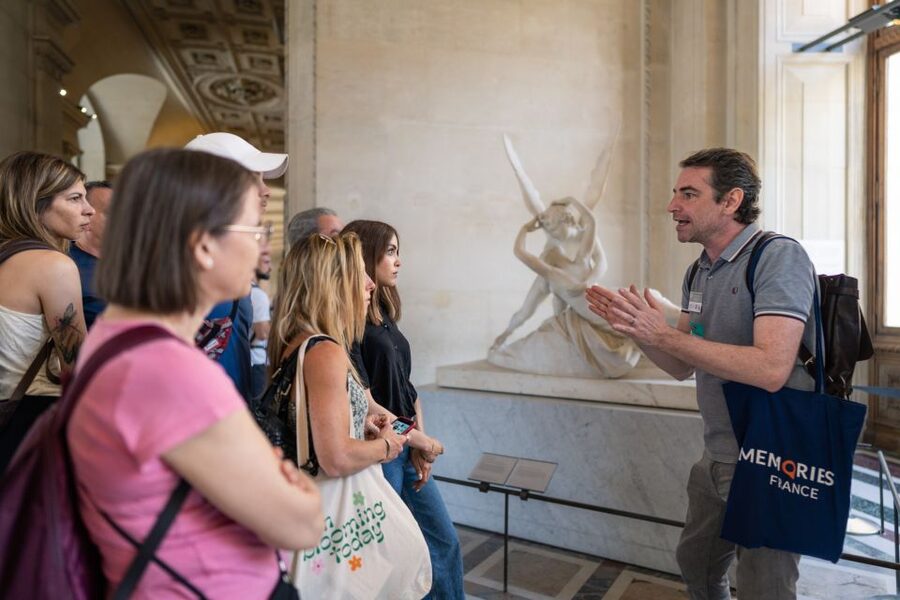
At $137 per person, this is not a bargain museum ticket. You are paying for a pre-reserved entry, a fully guided visit, and the convenience of a trained English-speaking guide in a group capped at six.
The value depends on how you use your Paris time. If you have only one chance to see the Louvre and feel uneasy about finding the major works alone, the cost can be justified. Losing an hour to the wrong wing, missing a famous gallery, or wandering without context can cost more in time than the ticket price suggests.
I would be less enthusiastic if you already know the Louvre well, prefer to move slowly, or want to spend half a day studying a single collection. The guide’s route is designed to show highlights efficiently, so independent visitors may get more from a standard museum entry and their own plan.
The price also buys confidence. You have a clear meeting point, reserved entry, and someone who knows how to move through the building. That matters most during a short Paris stay, when you cannot easily return another day.
Crowds, waiting, and realistic expectations
Skip-the-line entry helps at the ticket stage, but the Louvre remains a heavily visited museum. Security checks can affect the queue, and the galleries around the Mona Lisa can be crowded even after you enter.
This is not a flaw unique to the tour. It is simply the reality of seeing one of Paris’s most famous sights. A skilled guide can choose a sensible route, position the group well, and use waiting time for explanation, but no tour can make the museum empty.
You should also wear comfortable shoes and be ready to walk through a large building. The tour lasts 1.5 or 3 hours, and the museum’s size means the experience involves steady movement. You will get more from it if you accept that the goal is a well-chosen introduction, not a leisurely inspection of every room.
The group meets and finishes at the same location, so plan any later activity with that in mind. Since you may stay inside after the tour, avoid booking something immediately afterward if you want time to explore independently.
Who should book this Louvre tour?
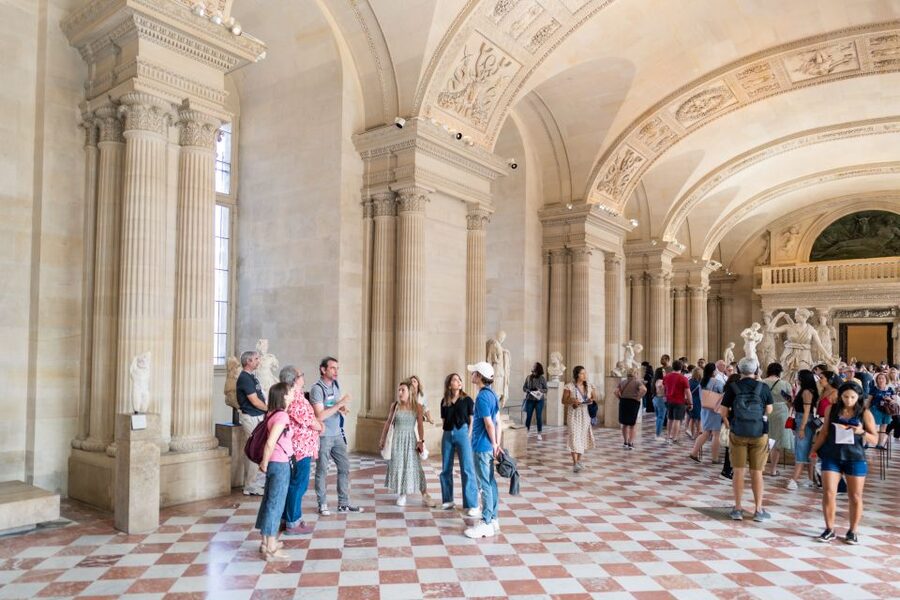
I would recommend it most strongly to first-time Louvre visitors, families, and anyone with a tight Paris schedule. It is also a good choice if art history feels intimidating and you want explanations in clear English instead of trying to absorb wall labels while navigating the building.
Teenagers can benefit from the storytelling and shorter route. A guide who connects the art to politics, personalities, and dramatic events has a better chance of keeping young people engaged than a silent march from painting to painting.
Returning visitors may also enjoy the three-hour version if they want fresh context. One returning visitor learned much more with a guide, which is a useful reminder that familiarity with the Louvre does not mean you have understood it.
I would skip it if you want complete freedom to linger, sketch, photograph, or change direction whenever you like. You should also think carefully about the price if your main goal is simply to see the Mona Lisa and leave.
The accessibility information needs care. One part of the activity details lists the tour as wheelchair accessible, while another says it is not suitable for wheelchair users. Because those statements conflict, contact the provider before booking if you use a wheelchair or have mobility requirements.
Should you book it?
Book this tour if you want a clear route through the Louvre, expert explanations, and the comfort of a group no larger than six. The guide is the main reason to choose it, and the strongest guides described here, including John Edward, Claire, Will, Christina, Astrid, and Herve, bring art history to life without making the visit feel like a classroom.
Choose the three-hour option if the Louvre is a major part of your Paris plan. Choose 1.5 hours if you want the essential works and intend to continue alone. At $137, it is a premium choice, but the combination of reserved entry, a focused route, and personal guidance can be good value when your time is short.
FAQ
How long is the Louvre guided tour?
You can choose a 1.5-hour or 3-hour fully guided tour. Check availability for the starting times offered on your date.
What works of art will I see?
The tour includes major sights such as the Mona Lisa, Winged Victory, Venus de Milo, Liberty Leading the People, and the Coronation of Napoleon. You might also see Michelangelo sculpture, Egyptian antiquities, the French Crown Jewels, and Napoleon III’s apartments.
Is the ticket included?
Yes. The experience includes a pre-reserved Louvre entry ticket and a fully guided small-group tour.
How large is the group?
The group is limited to six participants.
What language is the tour in?
The live tour guide speaks English.
Can I stay in the Louvre after the tour?
Yes. You may continue exploring the museum at your leisure after the guided portion, until closing time.
What should I bring, and what cannot I bring inside?
Bring a passport or ID card. Luggage and large bags are not allowed, and items larger than 55 by 35 by 20 centimeters cannot enter the museum.
Recently reviewed around Paris
- Louvre Private Tour – The Essentials and More with Expert Guide★ 5.0 · 227 reviews
- 2CV tour by night★ 5.0 · 55 reviews
- Eiffel Tower Second or Summit Floor Access by Elevator with Views★ 3.5 · 161 reviews
- The only Paris Wine Tasting experience you need to do – 2 hours★ 5.0 · 265 reviews
- 2 Hour Street-art Walk and Space Invaders Hunt in Paris★ 5.0 · 27 reviews
- 2 hour outdoor group activity in Paris: SAINT GERMAIN★ 5.0 · 48 reviews
- Sainte-Chapelle, Conciergerie & Palais de Justice Private Tour★ 5.0 · 72 reviews
- Private 2 – Hour Paris Landmarks Tour by Golf Cart Mini Moke★ 5.0 · 38 reviews
Louvre Museum Tours, compared.


Louvre Guided Tour with Reserved Access & Boat Cruise
Read our review →
Louvre Museum Masterpieces Guided Tour with Access
Read our review →
Louvre Museum Entry Ticket With Host and River Cruise
Read our review →
Priority Access Louvre with Host -Direct to Mona Lisa
Read our review →
Mona Lisa & Louvre Masterpieces Tour with Reserved Access
Read our review →
Louvre Museum – Exclusive Guided Tour (Entry Included)
Read our review →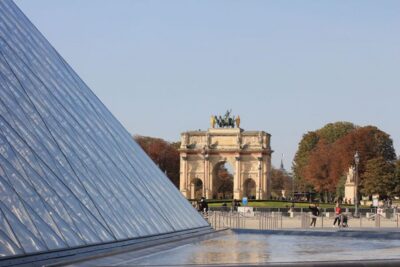
Louvre Reserved Ticket and River Cruise Combo
Read our review →Browse the lists this tour appears in