
Reviewed · HISTORICAL TOURS
Rouen: Guided Tour of the Historic Center
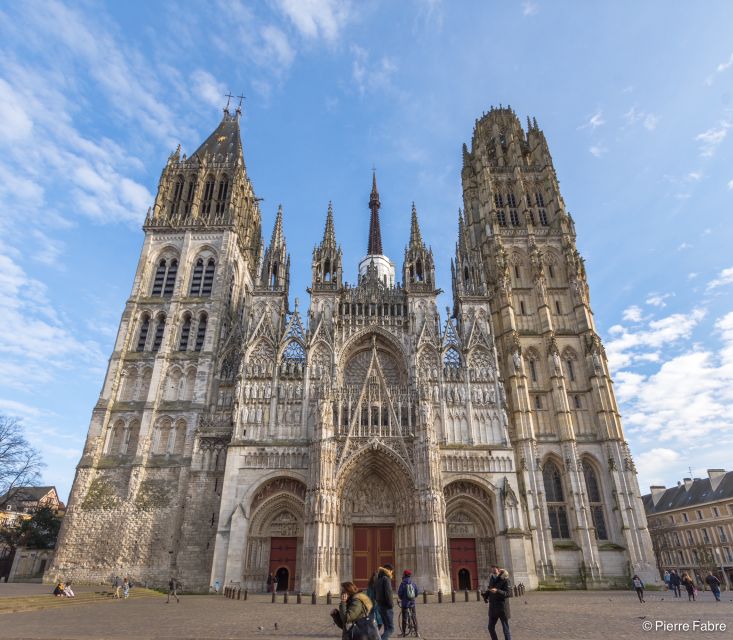
Rouen’s old center reads like a history book left open in the rain: Joan of Arc’s final days, a 14th-century clock, half-timbered streets, Gothic churches, and a cathedral with a spire rising more than 150 meters. This 90-minute walk gives you a useful first look at the city without asking you to spend a full day indoors.
I like the clear route through Rouen’s major sights and the way local guide Elodie connects buildings to stories, legends, and daily life. I also like the pace. At 3 kilometers, you cover plenty of ground, but the walk remains short enough to fit into a busy Normandy stop.
The main consideration is that this is an exterior walking tour. Monument entry is not included, and the tour runs rain or shine, so bring sensible shoes, water, and weather protection.
In This Review
- Key points at a glance
- Why this short walk works well in Rouen
- Starting at Place de la Pucelle
- Joan of Arc at Place du Vieux Marché
- The Gros-Horloge and its Renaissance arch
- The Rouen courthouse and the city’s public face
- Rouen Cathedral and three towers from three eras
- Saint-Maclou and the details of Flamboyant Gothic
- Saint-Ouen and the final walk through Martainville
- What the guide adds to the experience
- Is $28 a fair price?
- Who should book this Rouen walk?
- Should you book it?
- FAQ
- How long is the Rouen historic center tour?
- Where does the tour begin?
- Where does the tour finish?
- Which languages are available?
- Are monument admission tickets included?
- Can children join for free?
- What should I bring?
Key points at a glance
- Joan of Arc’s final chapter: Begin at Place de la Pucelle and walk to Place du Vieux Marché, where the story of her last moments comes into focus.
- The Gros-Horloge clock: See Rouen’s 14th-century astronomical clock set in a Renaissance arch between old half-timbered buildings.
- Three cathedral styles: Study Rouen Cathedral’s three towers, built in different architectural styles, and its soaring spire.
- Saint-Maclou’s Flamboyant Gothic: Visit one of France’s finest examples of this ornate Gothic style from the outside.
- Medieval life in Martainville: End by looking beyond grand churches and into the living conditions of ordinary people.
- Local guidance in English or French: Elodie leads the walk, and Alexandra has also guided some departures.
Why this short walk works well in Rouen
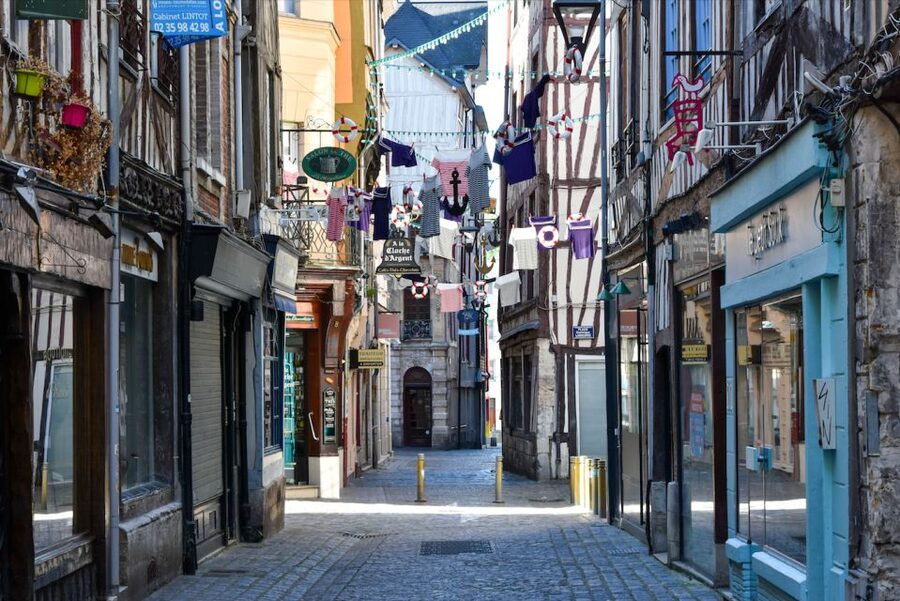
Rouen rewards wandering, but its old center can feel like a maze of narrow lanes, church towers, and grand façades. A guide helps you connect the pieces. You will not just see the Gros-Horloge and cathedral as attractive photo stops. You will hear how they fit into Rouen’s long civic, religious, and commercial story.
The route is especially useful at the start of your visit. Thomas from the United States described it as a good way to get the lay of the land, and that is exactly right. After 90 minutes, you should know where the main sights sit and which streets deserve a second look on your own.
The tour also benefits from its local voice. Elodie lives in Rouen and brings an obvious affection for the city to the walk. Several outings have been praised for her enthusiasm, clear English, and ability to keep historical material moving. One family found that even a 12-year-old stayed interested, which is a useful sign for parents planning a day of old churches and architecture.
You should still set realistic expectations. This is an overview, not a museum visit or a detailed architectural course. The walk is designed to show you the city’s essential sights and explain their importance from the street.
More Historical Tours in Normandy
- Historic Bayeux Daily Group City Tour In English 2 hrs (Apr-Sept)
★ 5.0 · 220 reviews - Mont Saint Michel: Village History and Legends Walking Tour
★ 4.8 · 96 reviews - Small Group Guided Tour of the Secret History of Rouen
★ 5.0 · 68 reviews
Starting at Place de la Pucelle
Meet your guide at 4 Place de la Pucelle, in front of the Public restaurant. Look for a green or orange badge around the guide’s neck. This detail matters because the starting square can be busy, and spotting the badge is easier than searching for a face in a crowd.
Place de la Pucelle is a fitting beginning. The name refers to Joan of Arc, the young French heroine who was tried and executed in Rouen in 1431. From here, the tour turns toward the old center and follows the city’s story through streets shaped by medieval trade, religion, war, and rebuilding.
Rouen is not presented as a collection of isolated monuments. The point is to see how the buildings sit together. Half-timbered houses, later Renaissance work, Gothic churches, and more recent repairs all share the same compact center.
Wear shoes with a firm sole. The route covers about 3 kilometers, and cobbled streets can make a short walk feel longer than the distance suggests. A hat, umbrella, and water are also sensible choices because the tour operates in all weather.
Joan of Arc at Place du Vieux Marché
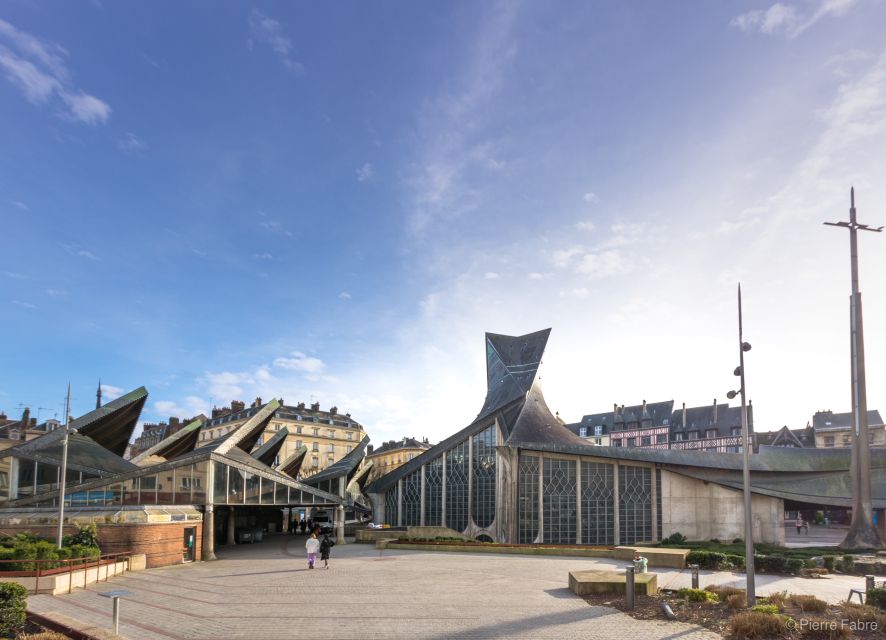
The first major stop is Place du Vieux Marché, the Old Market Square. This is where the tour deals with the final moments of Joan of Arc’s life. The square also gives you one of Rouen’s most striking mixtures of old and new, with historic structures and later additions gathered around an open public space.
The subject is heavy, but the setting helps explain why Joan remains so closely tied to Rouen. Her trial and execution are not distant events mentioned in passing. They are part of the city’s physical memory.
I like this stop because it gives the tour an emotional center early on. You begin with a person and a dramatic episode, rather than a list of dates. That makes the later churches, courts, and civic buildings easier to understand.
Do not expect a long private examination of every detail connected with Joan. The tour keeps moving, and the square is one part of a larger route. If Joan of Arc is your main reason for visiting Rouen, you may want extra time afterward to explore the subject on your own.
The Gros-Horloge and its Renaissance arch
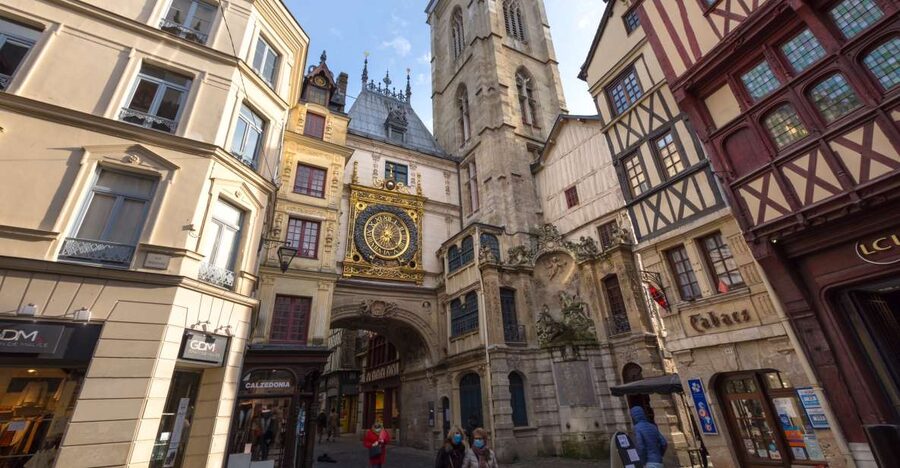
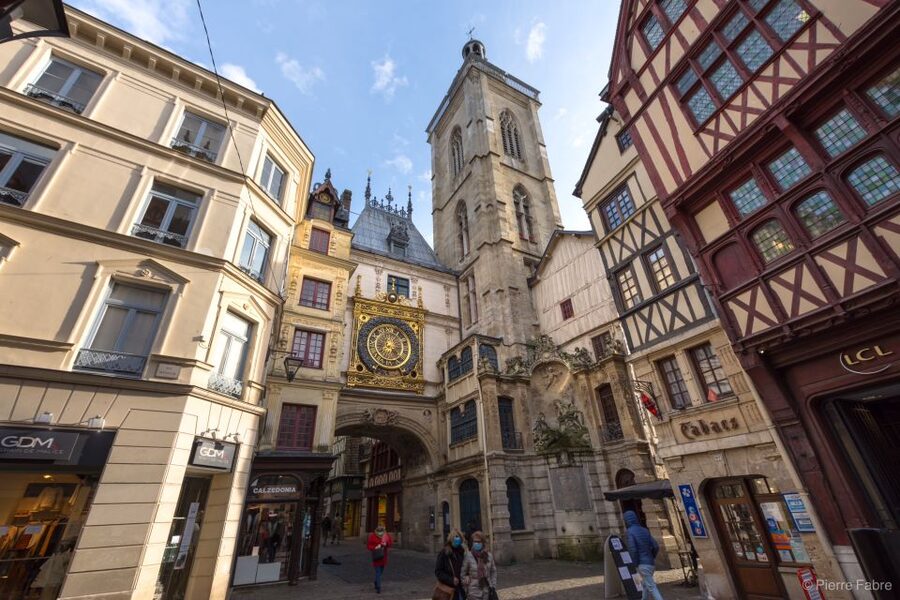
From the market square, the route continues to Le Gros-Horloge, the proud centerpiece of Rouen’s old center. The astronomical clock dates from the 14th century and is built into a Renaissance street arch. Half-timbered houses frame the passage, giving you one of the most recognizable views in the city.
This is not simply a clock hanging on a wall. Its age, design, and position show how public time once shaped urban life. A large clock placed over a major street carried practical value, but it also projected civic confidence. Rouen wanted its wealth and importance seen.
The guide’s role is particularly useful here. From street level, you can admire the clock, but it takes explanation to understand why the structure matters and how the medieval mechanism relates to the later Renaissance setting.
The stop is also a good example of the tour’s value. You get the sight, the setting, and the background in one compact visit. Since monument entry is not included, you will view the Gros-Horloge from outside during this walk. That is enough for an introduction, though visitors who want to study the mechanism or climb inside would need to arrange a separate visit.
More history-led days around Normandy:
- Private Walking Guided Tour of Historic Bayeux English or French
★ 5.0 · 36 reviews - Group Visit to Mont Saint-Michel: A Shared Historic Journey
★ 4.4 · 31 reviews - Paris: Louvre Museum Entry with History of Mona Lisa
★ 3.9 · 2,823 reviews - Paris: Dark History and Ghostly Guided Walking Tour
★ 4.7 · 1,000 reviews
The Rouen courthouse and the city’s public face
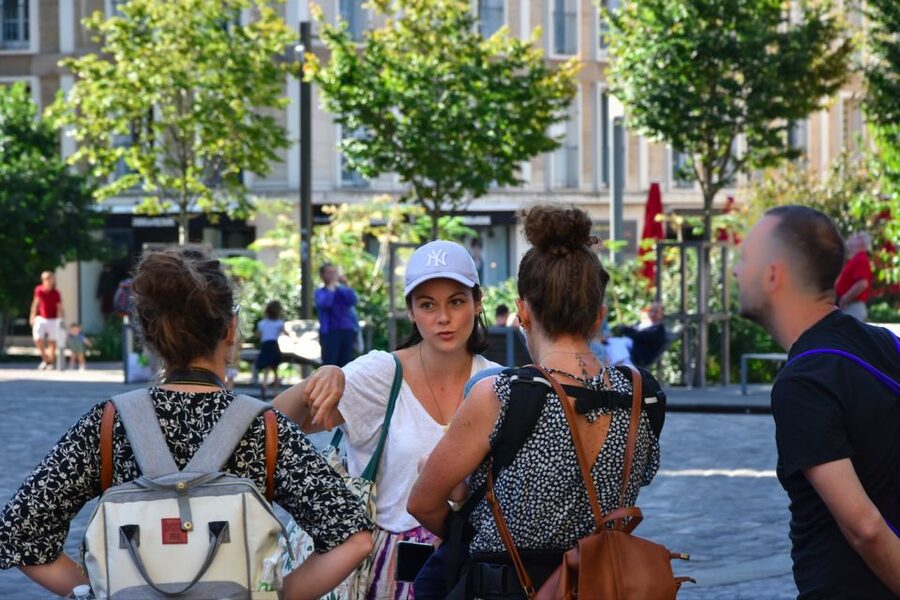
A short walk brings you to the Rouen courthouse. It is an important change of mood after the clock and market square. Here, the focus shifts toward law, civic authority, and the buildings that represent public power.
The courthouse is one of the places where Rouen’s architectural variety becomes clear. The old center is not frozen in a single medieval moment. Different periods have left their mark, and the guide helps you read those layers instead of treating every old-looking façade as part of the same era.
This stop may be less instantly familiar than the cathedral, but it adds useful balance. You are seeing more than churches and picturesque houses. Rouen was also a place of courts, administration, commerce, and political life.
Keep your camera ready, but listen before taking too many pictures. The strongest part of a guided walk is often the explanation of why an ordinary-looking civic building belongs in the city’s main story.
Rouen Cathedral and three towers from three eras
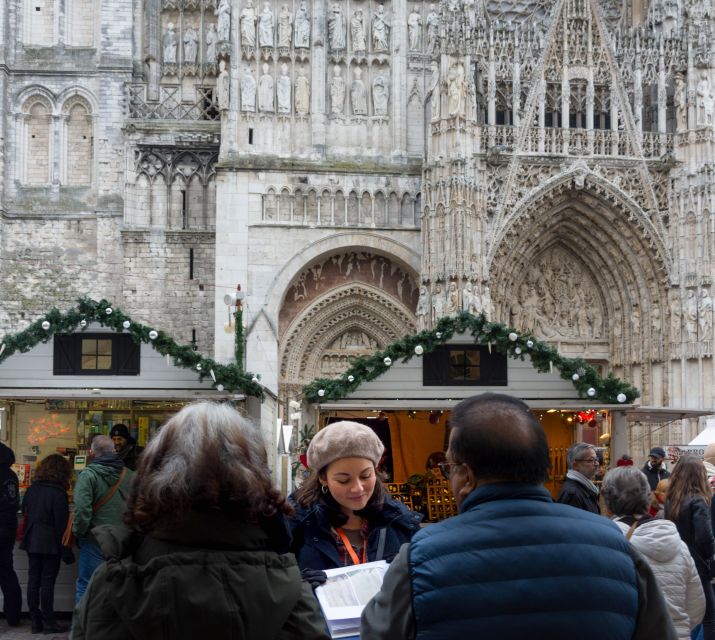
Rouen Cathedral is the grand visual high point of the route. The monument was constructed in two main phases, and its three towers each show a different architectural style. That variety gives you a quick lesson in how churches changed as building campaigns stretched across generations.
Look up at the spire. It rises to more than 150 meters, making the cathedral one of the defining features of Rouen’s skyline. From the street, its height can be hard to judge until you stand close and let the stonework rise above you.
The cathedral also links two very different periods. Its medieval fabric connects you with the city’s religious past, while its later fame ties it to 19th-century Impressionism. Claude Monet painted the cathedral façade repeatedly, studying how changing light altered the same stone surface.
That connection is valuable even if you are not an art specialist. You can look at the building first as a place of worship, then as a subject that changed the way people thought about seeing and painting architecture.
The trade-off is time. A 90-minute route cannot provide a full interior visit, a detailed explanation of every portal, or a long discussion of the Impressionist paintings. You will get a strong introduction from outside, then can return later if the cathedral becomes a priority.
Saint-Maclou and the details of Flamboyant Gothic
The walk then leads toward Saint-Maclou Church, a showcase of Flamboyant Gothic architecture. This style is known for elaborate, flame-like tracery and decorative stonework. Even without a specialist vocabulary, you can see that the design is more animated and ornate than the simpler forms associated with earlier Gothic buildings.
Saint-Maclou is a rewarding stop because it shifts your attention from scale to detail. Rouen Cathedral impresses through height and mass. Saint-Maclou asks you to inspect its façade, windows, and carved decoration more closely.
The church is described as one of the best French examples of the Flamboyant style. That makes the guide’s comments worthwhile, since a quick glance may not reveal why the building matters. Elodie’s architectural explanations have been a repeated strength of the experience, and this is the sort of stop where clear interpretation adds real value.
Again, the tour does not include entry to monuments. You should treat Saint-Maclou as an exterior viewing stop unless you make a separate plan to go inside.
Saint-Ouen and the final walk through Martainville
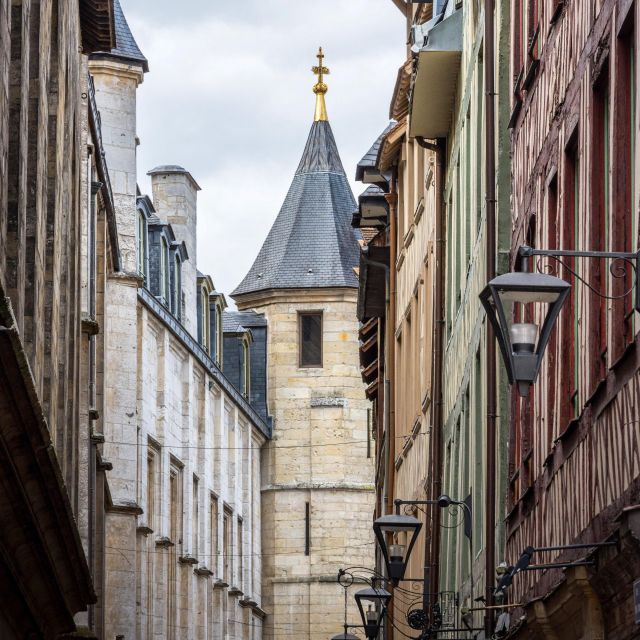
The route ends at Saint-Ouen Abbey Church, passing through the Martainville district. Along the way, you hear the legend of the Abbey of Saint-Ouen and see how this part of Rouen adds another layer to the city’s story.
Martainville is important because it brings the tour down to the level of everyday life. Grand cathedrals and clocks tell you about institutions and civic pride. Martainville helps you picture how people lived, worked, and occupied the medieval city.
That change in scale is one of the best features of the route. You move from Joan of Arc and public monuments to houses, streets, and living conditions. The result is a more human picture of Rouen.
The finish at Saint-Ouen Abbey Church gives the walk a fitting endpoint. Like the cathedral, it carries religious and architectural weight, but the route has prepared you to see it as part of a wider urban setting rather than a single isolated attraction.
Check the ending before planning your next activity. The walk finishes at Saint-Ouen Abbey Church, not back at the starting point. That is convenient if you want to continue exploring the old center, but you should allow time to orient yourself afterward.
What the guide adds to the experience
The strongest praise for this tour centers on the guides’ delivery. Elodie is described as enthusiastic, charming, and deeply attached to Rouen. Her English tours have been especially well received, with clear explanations for people who do not speak much French.
That matters in a city where the visual details can blur together. A guide can point out the difference between medieval and Renaissance work, explain why a tower belongs to a later building phase, and turn a legend into a clue about local identity.
The walk also seems adaptable in pace. One outing ran longer than the planned 90 minutes, and the extra time was appreciated. Still, you should plan around the stated duration rather than count on an extension.
Alexandra has also led departures and received praise for her involvement and explanations. The named guide may vary, but the advertised languages are French and English. If you need a particular guide, confirm availability when booking rather than assume Elodie will lead every departure.
Is $28 a fair price?
At $28 per person, the tour is priced as a modest orientation walk rather than a full attraction package. You are paying for a live guide and 90 minutes of focused commentary, not admission to the cathedral, clock, courthouse, or churches.
I consider that fair if you want context and an efficient route through the old center. Rouen has enough monuments to fill a day, and a good introduction can help you spend the rest of your time wisely. The tour is also free for children under 14, with no booking required for them, which improves the value for families.
The price is less compelling if you prefer to wander silently, read signs, and spend long periods inside monuments. In that case, you may get more from visiting selected sites independently, provided you are comfortable finding your way through the center.
The overall score is 4.8 from 145 reviews, and the praise is notably consistent around the guides’ explanations, English ability, pace, and storytelling. That does not remove the practical limits, but it supports the idea that the human guidance is the main thing you are buying.
Who should book this Rouen walk?
I would choose this tour for a first visit, a short stay, or a day when you want the city explained without committing to a half-day program. It suits adults interested in architecture and medieval history, but the route is also short enough for families.
It works well for cruise or train-stop planning only if your schedule comfortably allows 90 minutes plus time to reach the meeting point. You should not squeeze it into a tight connection, since the walk covers 3 kilometers and runs outdoors in all weather.
Bring comfortable shoes, a hat, an umbrella, and water. The cobbles and weather are the only real physical considerations stated for the route, but they are worth taking seriously.
Should you book it?
Book this walk if you want a friendly local explanation of Rouen’s essential sights rather than a string of photo stops. Elodie’s clear English, strong storytelling, and sense of place are the central reasons to go.
Skip it if you mainly want interior access or long, quiet time at one monument. For most first-time visitors, though, $28 buys a useful introduction to Joan of Arc, the Gros-Horloge, the cathedral, Saint-Maclou, and Martainville, with enough time left to explore further on your own.
FAQ
How long is the Rouen historic center tour?
The walking tour lasts 90 minutes and covers about 3 kilometers, or 1.8 miles.
Where does the tour begin?
Meet at 4 Place de la Pucelle, in front of the Public restaurant. The guide wears a green or orange badge around the neck.
Where does the tour finish?
The walk finishes at Saint-Ouen Abbey Church.
Which languages are available?
The live tour is offered in French and English.
Are monument admission tickets included?
No. The activity includes the guide and walking tour, but entry to the monuments is not included.
Can children join for free?
Yes. Children under 14 are free, and no booking is required for them.
What should I bring?
Bring comfortable shoes, a hat, an umbrella, and water. The tour takes place rain or shine.
Recently reviewed around Normandy
- Découverte Bénédictine★ 4.0 · 138 reviews
- Le Havre Shore Excursion: Private Day Tour with Omaha Beach & American Cemetery★ 5.0 · 57 reviews
- Immersive tour DISTILLERIE PERE MAGLOIRE★ 5.0 · 314 reviews
- From Cherbourg: D-Day Beaches Shore Excursion★ 5.0 · 28 reviews
- Normandy Victory Museum admission ticket★ 5.0 · 58 reviews
- Mt St. Michel Private Tour with Abbey tickets and tour guide★ 5.0 · 45 reviews
- Mont-St-Michel: Private Walking Tour “Abbey Ticket Included”★ 5.0 · 28 reviews
- Airborne Museum Admission Ticket★ 5.0 · 424 reviews
Historical Tours, compared.

Louvre Museum Entry with History of Mona Lisa
Read our review →

Toulouse Food & History Tour with a Chef (in English)
Read our review →
Small-Group Full-Day Tour of Côte de Nuits, Côte de Beaune Vineyards and Beaune Historical District
Read our review →
Le Marais/Paris – The Historic, Trendy, Jewish, LGBT district
Read our review →Browse the lists this tour appears in