
Reviewed · LE MARAIS WALKING TOURS
Le Marais/Paris – The Historic, Trendy, Jewish, LGBT district
Le Marais packs several chapters of Paris into a compact walk: royal squares, grand town houses, Jewish culture, LGBT history, food shops, and narrow lanes where the city feels more local than monumental. The tour begins at Saint-Paul Saint-Louis Church and finishes near the National Archives.
I like the small maximum group of 10, which makes questions and route changes realistic. I also like the guides’ habit of asking what interests you, then giving extra attention to architecture, Jewish Paris, LGBT culture, family history, or food.
The main drawback is that the $48.39 price covers guiding only. Snacks, coffee, and tea are not included, and the walk takes place outdoors, so cold or rain can affect your comfort. One reported technical failure led to a missed tour, so confirm the meeting details before setting out.
In This Review
- Key points to know before booking
- Why Le Marais rewards a walking tour
- Starting at Saint-Paul Saint-Louis Church
- Place des Vosges and Victor Hugo
- Aristocratic mansions in the narrow streets
- The Jewish quarter and its food shops
- LGBT culture and modern Le Marais
- Why the guide matters here
- Is $48.39 a fair price?
- Who should book this walk?
- Should you book the Le Marais walking tour?
- FAQ
- Where does the Le Marais tour start?
- Where does the tour end?
- How long does the walking tour last?
- What language is the tour offered in?
- What is included in the price?
- Are food and drinks included?
- How large is the group?
- Is the tour close to public transportation?
- Can I cancel for a full refund?
Key points to know before booking
- Place des Vosges begins the story: See one of Paris’s most elegant squares and the former home of Victor Hugo.
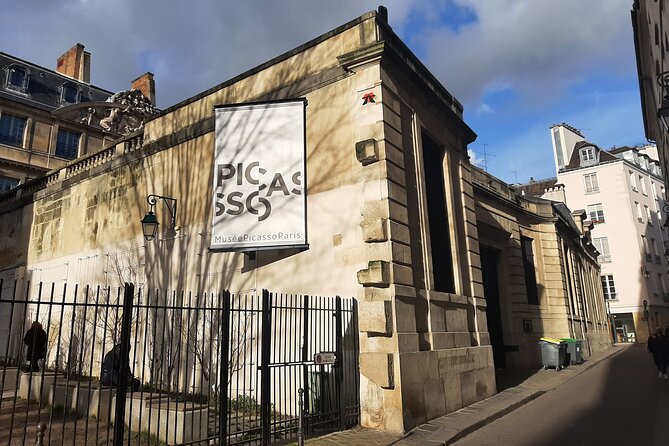
- The route connects old and new Le Marais: Aristocratic mansions now sit near galleries, vintage shops, cafés, and contemporary culture.
- Jewish Paris gets real attention: Expect food shops, pastry stores, courtyards, and historical context beyond the main tourist streets.
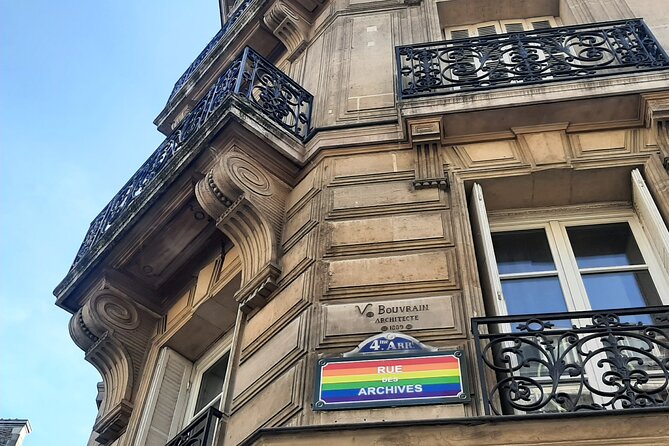
- LGBT history is part of the walk: The tour treats the district as a living neighborhood, not just a collection of façades.
- Jill and Eric personalize the experience: Jill is especially noted for adapting the walk, while Eric has led families and Jewish-focused routes.
- Small groups make a difference: With no more than 10 people, the guide can answer questions and adjust the pace.
Why Le Marais rewards a walking tour
Le Marais is easy to wander through on your own, but it is not always easy to understand. A handsome stone building may be a former aristocratic town house, a courtyard may reveal a vanished convent or private residence, and a food shop may point to a community that shaped this part of Paris over generations.
That is where a guide earns the fee. You are not simply crossing from one pretty street to the next. You are being shown how monarchy, revolution, immigration, religion, war, art, and modern identity overlap in a relatively small area.
I would choose this walk early in a Paris stay if you want your bearings quickly. The route gives you places to return to later, including restaurants, pastry shops, museums, galleries, and shopping streets. It is also a good choice near the end of a trip, when you may prefer a slower neighborhood walk to another major monument.
The tour is offered in English and usually lasts between 90 minutes and two hours. That range matters. A brisk group may finish closer to the shorter time, while a small group with many questions may spend longer in the district. Several accounts describe extra time or a longer route when the group was small, but you should not assume that every departure will run beyond the stated duration.
More Historical Tours in Paris
- Paris: Louvre Museum Entry with History of Mona Lisa
★ 3.9 · 2,823 reviews - Paris: Dark History and Ghostly Guided Walking Tour
★ 4.7 · 1,000 reviews - Paris City of Fashion History Private Guided Walking Tour
★ 5.0 · 221 reviews
Starting at Saint-Paul Saint-Louis Church
The meeting point is Paroisse Saint-Paul Saint-Louis at 99 Rue Saint-Antoine. This puts you at the edge of the neighborhood, close to the historic core and near public transportation.
Starting here is practical because the church provides a clear reference point. Still, give yourself enough time to find the exact meeting location. A guide-led walk works best when you arrive ready to begin, rather than trying to locate the group at the last moment.
The end point is the Musée des Archives Nationales, Hôtel de Soubise, at 60 Rue des Francs Bourgeois. That is a useful finish because you can continue exploring Le Marais, visit nearby museums, or stop for food without crossing the city.
The tour does not include entry to monuments or museums. Think of it as an outdoor neighborhood walk with historical interpretation, not a museum tour with reserved admission.
Place des Vosges and Victor Hugo
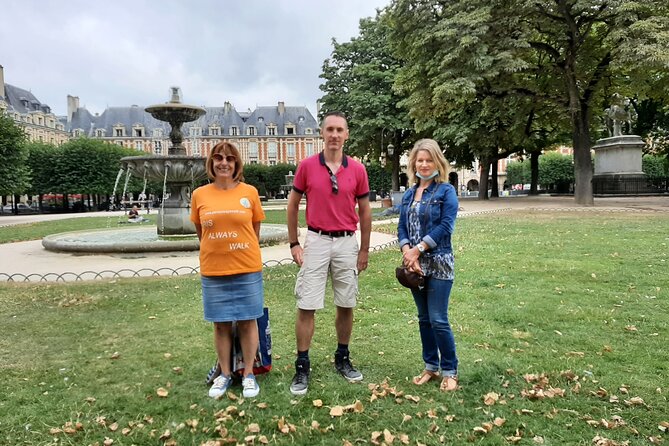
The first major stop is Place des Vosges, formerly Place Royale. The square is known for its regular architecture and arcaded edges, which give it a calm, ordered feel unlike many of Paris’s more chaotic streets.
You have about 20 minutes here. That is enough to take in the layout, look around the surrounding galleries, and hear why the square matters to French history and literature. The guide also points out the residence associated with Victor Hugo, the French writer who lived and wrote here.
This stop gives the tour a strong opening because it links architecture with personal stories. Victor Hugo is not presented as a distant name on a plaque. His connection to the square helps you picture Le Marais as a place where writers, artists, nobles, and political figures lived close together.
Place des Vosges is also a good photography stop, although the square’s beauty can make it easy to rush through the explanation. Listen for the details about how the buildings relate to one another. The value here is not simply seeing a famous Parisian plaza, since you can do that independently. The guide helps you read its design and place it in the wider story of the district.
Aristocratic mansions in the narrow streets
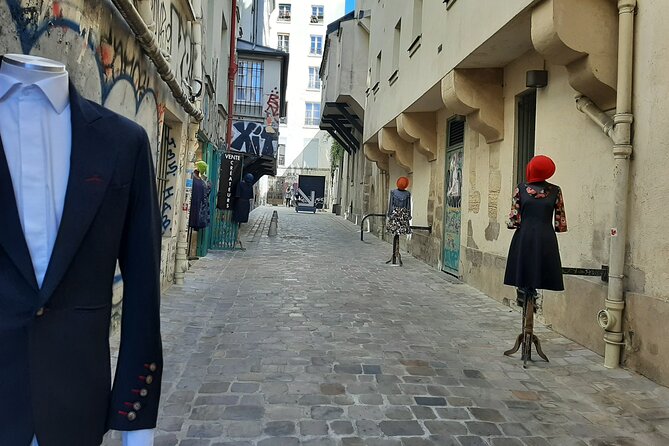
From the square, the walk turns into the narrower streets of Le Marais. This is where the district’s former wealth becomes easier to spot.
You will see French hôtels particuliers, or private urban mansions built for the aristocracy and wealthy residents. The word hôtel can confuse first-time visitors, since these were not ordinary hotels. They were large private homes, often arranged around courtyards and designed to provide both status and privacy.
The stated time for this section is about 15 minutes, though the actual pace may depend on questions and group size. The guide’s role is useful here because many of these buildings do not announce their past in an obvious way. You might notice a doorway, façade, courtyard, or garden without understanding what it reveals about social life in old Paris.
I would pay close attention if you enjoy architecture. One architectural visitor described the building, plaza, and street details as a major strength of the walk. Families can also benefit, since the guide has been praised for explaining difficult history in a way that held the attention of a 10-year-old.
This part is less about ticking off individual sights and more about learning how to look. Afterward, you may notice the difference between an ordinary apartment building and a former mansion tucked behind a quiet entrance.
More history-led days around Paris:
- Paris: Le Marais & Montmartre Jewish History Walking Tour
★ 4.8 · 170 reviews - Explore the Marais: Culture, History & Hidden Gems of Paris
★ 4.6 · 100 reviews - Historic Paris Walking Tour in English
★ 4.9 · 78 reviews - The historic district of Montmartre
★ 4.9 · 66 reviews
The Jewish quarter and its food shops
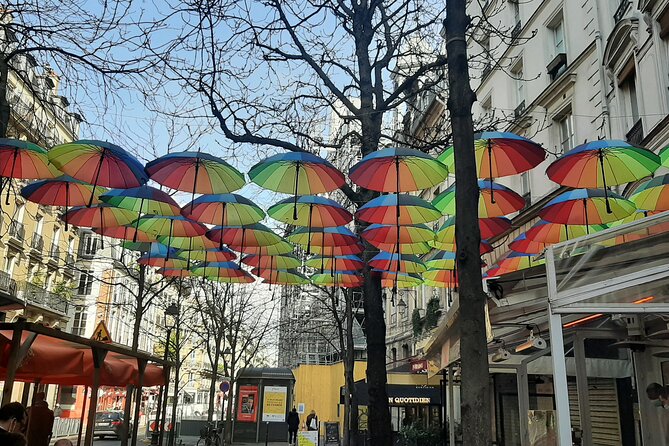
The Jewish section is one of the most distinctive parts of the route. The walk leads into less tourist-focused streets, courtyards, and gardens, then toward food stores and kosher pastry shops.
The scheduled time here is about 20 minutes. That is enough for an introduction, but not enough to cover every part of Jewish Paris or the full history of Jewish life in France. Keep your expectations sensible. This is a neighborhood walk with cultural context, not a specialized academic seminar.
The food stops add a useful everyday layer. Instead of treating the quarter only as a historical subject, the guide connects it with the shops and bakeries you can see today. You may want to buy a snack, but remember that food and drinks are not included in the $48.39 fee.
The guide also discusses Jewish immigration and the impact of World War II, according to the information provided about the walk. Those subjects can be difficult, but they help explain why this neighborhood matters beyond its attractive streets.
If Jewish history is your main reason for booking, say so at the start. Jill is described as asking about interests and adapting the route, and Eric has also adjusted a family walk to focus more strongly on the Jewish area. That flexibility may be the difference between a general overview and a more useful visit for you.
LGBT culture and modern Le Marais
Le Marais is also closely associated with LGBT life in Paris. This tour includes that side of the neighborhood alongside its royal, aristocratic, and Jewish stories.
That combination is important. You are not being shown a district frozen in the past. The walk connects old buildings and historic events with the people, businesses, and communities that shape Le Marais now.
If you want a detailed specialist tour devoted only to LGBT history, check the exact departure description before booking. The supplied information confirms that LGBT culture and history are part of the experience, but it does not promise a separate route or a fixed number of LGBT-focused stops.
For many visitors, the strength is the broader picture. You see how the same streets have carried different identities over time, rather than treating the neighborhood as one single theme.
Why the guide matters here
The strongest part of this experience is the human element. Jill is the primary guide named in the information, and Eric also leads some departures. Jill is repeatedly described as energetic, warm, responsive, and able to adjust the walk to a group’s interests. Eric is described as a good fit for families and as someone who can connect Le Marais with French kings, revolutions, and the creation of the Republic.
Those descriptions point to a particular kind of tour. It is not a silent stroll from landmark to landmark. You should expect conversation, questions, and interpretation. Jill has even brought small Christmas cookies on a cold-weather walk, though that was a personal gesture and not an advertised inclusion.
A small group improves this format. With a maximum of 10 people, you have a fair chance to ask about a building, a family connection, food, religion, architecture, or modern Paris. Several accounts also describe the guide spending extra time with very small groups, including one private walk after other bookings canceled.
The high rating, 4.9 from 341 ratings, and 99 percent recommendation figure suggest strong consistency overall. Still, one serious service failure is part of the record: a guide did not appear after a technical cancellation problem. The operator apologized and explained that the booking had not been canceled in time. This appears to be an isolated incident rather than a comment on the walk itself, but I would still save the confirmation and verify the meeting point on the day.
Is $48.39 a fair price?
At $48.39 per person, this is not the cheapest way to walk Le Marais. You can explore the streets for free, visit public squares without paying admission, and find food on your own.
The fee makes sense if you want context and personal attention rather than a self-guided wander. You are paying for an English-speaking guide who can explain architecture, connect events across centuries, identify the Jewish and LGBT districts, and point out places you might pass without noticing.
The value improves if your group asks questions or wants a tailored route. It is less compelling if you prefer to move independently, stop constantly for shopping, or spend most of your time eating. Snacks, coffee, and tea cost extra, and there are no included museum tickets.
I see this as a good value for a first visit, especially if you want one compact tour to introduce several sides of Paris. Repeat visitors may also enjoy it because the walk focuses on details and lesser-known corners rather than only the city’s most famous monuments.
Who should book this walk?
I would recommend it to adults interested in architecture, French political history, Jewish Paris, LGBT culture, literature, and local food traditions. It also suits families, since the guides have experience adjusting explanations for children and teens.
It is a sensible choice for a small private group, couples, solo visitors, and anyone who prefers asking questions instead of listening to a large crowd. The route may also suit you if rain or cold does not ruin your day, since one account describes a successful walk in rain and another in very cold weather.
You may want something else if you need step-free details, indoor shelter, guaranteed food tastings, or a tightly timed 90-minute route. The supplied information says service animals are allowed, the tour is near public transportation, and most people can participate, but it does not provide a detailed surface or step assessment.
Wear comfortable shoes and leave room in your schedule after the tour. The finish near the National Archives gives you a good base for continuing through Le Marais, and the guide’s food and shopping suggestions may tempt you to linger.
Should you book the Le Marais walking tour?
Book it if you want a story-filled neighborhood walk rather than a parade of famous sights. Place des Vosges, Victor Hugo, aristocratic mansions, Jewish food shops, LGBT history, and modern Paris all fit into a short route, and the small group format gives the guide room to shape the experience.
I would be especially inclined to book if Jill is leading and you want a flexible, conversational guide. If Eric is assigned, he appears well suited to families and groups seeking broad French history with a Jewish-quarter focus.
Skip it if you want included tastings, museum admission, or a completely self-directed afternoon. For everyone else, the mix of architecture, culture, and practical neighborhood orientation makes this one of the more useful ways to spend two hours in central Paris.
FAQ
Where does the Le Marais tour start?
It starts at Paroisse Saint-Paul Saint-Louis, 99 Rue Saint-Antoine, 75004 Paris, France.
Where does the tour end?
The tour ends at Musée des Archives Nationales, Hôtel de Soubise, 60 Rue des Francs Bourgeois, 75003 Paris, France.
How long does the walking tour last?
The stated duration is approximately one hour and 30 minutes to two hours.
What language is the tour offered in?
The tour is offered in English.
What is included in the price?
A tour guide is included.
Are food and drinks included?
No. Snacks, coffee, and tea are not included.
How large is the group?
The tour has a maximum of 10 participants.
Is the tour close to public transportation?
Yes. The meeting information states that it is near public transportation.
Can I cancel for a full refund?
Yes. You can cancel at least 24 hours before the local start time for a full refund. Changes or cancellations made less than 24 hours before the start are not accepted for a refund.
Recently reviewed around Paris
- Louvre Private Tour – The Essentials and More with Expert Guide★ 5.0 · 227 reviews
- 2CV tour by night★ 5.0 · 55 reviews
- Eiffel Tower Second or Summit Floor Access by Elevator with Views★ 3.5 · 161 reviews
- The only Paris Wine Tasting experience you need to do – 2 hours★ 5.0 · 265 reviews
- 2 Hour Street-art Walk and Space Invaders Hunt in Paris★ 5.0 · 27 reviews
- 2 hour outdoor group activity in Paris: SAINT GERMAIN★ 5.0 · 48 reviews
- Sainte-Chapelle, Conciergerie & Palais de Justice Private Tour★ 5.0 · 72 reviews
- Private 2 – Hour Paris Landmarks Tour by Golf Cart Mini Moke★ 5.0 · 38 reviews
Le Marais Walking Tours, compared.

Award-Winning Paris French Bakery Experience — Le Marais, 4th Arr
Read our review →
Paris Le Marais Food Tour With 10+ Tastings, Cheese, Wine & More
Read our review →
Paris Le Marais District Original Food and Wine Tasting Tour
Read our review →
Paris Bike Tour Hidden Secrets in the Latin Quarter & Le Marais neighborhoods
Read our review →
Food and Wine Tasting Walking Tour in Le Marais
Read our review →

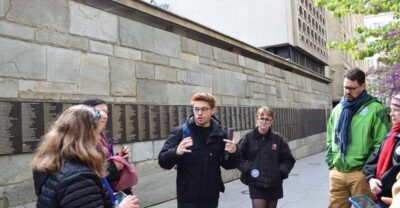
Le Marais & Montmartre Jewish History Walking Tour
Read our review →Browse the lists this tour appears in