
Reviewed · WINE TASTINGS
Saint-Émilion: 2 hours – Visit of the vineyard, the cellar and tasting
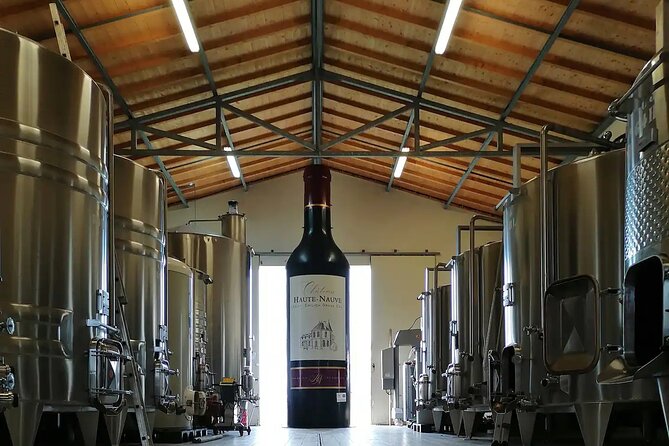
At Château Haute-Nauve, wine becomes much easier to understand when you see it from vine to barrel. Florent or his mother, Marie-Anne, leads you through a fourth-generation family estate near Saint-Laurent-des-Combes, explaining vineyard work, fermentation, aging, and the pressures facing modern winegrowers. The six-meter wine bottle and wind turbine add a memorable twist to an otherwise hands-on visit.
I like two things especially: the tour connects the wine to the work in the fields, and the tasting includes four house wines, with two from the Saint-Émilion Grand Cru appellation. The main consideration is location. You meet at the château rather than in central Saint-Émilion, so you need to arrange your own way there.
In This Review
- Key points at a glance
- Why this two-hour château visit works
- Walking the vines with a fourth-generation family
- From grapes to wine in the winery
- The barrel cellar and the quiet part of winemaking
- Four wines, including two Grand Cru pours
- Florent’s role and the small-group feel
- How this compares with a more polished wine attraction
- Practical details before you book
- Who should book Château Haute-Nauve
- Should you book this two-hour wine experience?
- FAQ
- Where does the tour begin?
- Where does the activity end?
- How long does the experience last?
- Is the tour offered in English?
- Who leads the visit?
- How many wines are included?
- What does the vineyard portion cover?
- What is the maximum group size?
- Can I cancel for a full refund?
Key points at a glance
- A fourth-generation family estate: Florent and Marie-Anne share the family story and the daily realities of running the château.
- A year-round look at vineyard work: You learn how pruning, growth, harvest, and weather shape the work across the seasons.
- A practical winery visit: Fermentation, pumping, pressing, tanks, and barrel aging are explained in the places where they happen.
- Four wines at the finish: The tasting includes a rosé, one Saint-Émilion, and two Saint-Émilion Grand Cru wines.
- A small-group format: The maximum group size is 15 people, which suits travelers who prefer questions and conversation.
- A modern side to Bordeaux wine: A wind turbine, crop-freeze challenges, sustainability, diversification, and new wines show that tradition is not the whole story.
Why this two-hour château visit works
Many wine tours rush straight to the tasting. This one takes a more useful route: first the vineyard, then the production rooms, then the glass. I like that order because it gives you a framework for understanding what you taste later.
The setting is Château Haute-Nauve, at 1 Haute Nauve in Saint-Laurent-des-Combes, France. The estate is connected to the Saint-Émilion appellation, one of Bordeaux’s best-known wine areas, but the experience stays focused on one working family property rather than trying to cover several estates in a short time.
Florent leads the English-language visit when he is your guide, and the family connection is central to the tone. You are not simply shown a polished tasting room. You hear how four generations have worked the land and how the estate is adapting to weather, market demands, and changing wine production methods.
At about two hours, the timing is manageable. You can fit it into a day exploring the Saint-Émilion area without giving up half your schedule. At the same time, this is long enough to explain the production process properly, rather than offering only a quick look around the cellar.
More France food and drink outings:
- Paris: Seine Cruise & Crepe Tasting near the Eiffel Tower
★ 4.4 · 11,231 reviews - Authentic Parisian Gourmet Food Tour with 10 Local Dishes & Wines
★ 5.0 · 4,754 reviews - Bordeaux: Cité du Vin Entry Ticket and Wine Tasting
★ 4.6 · 3,885 reviews
Walking the vines with a fourth-generation family
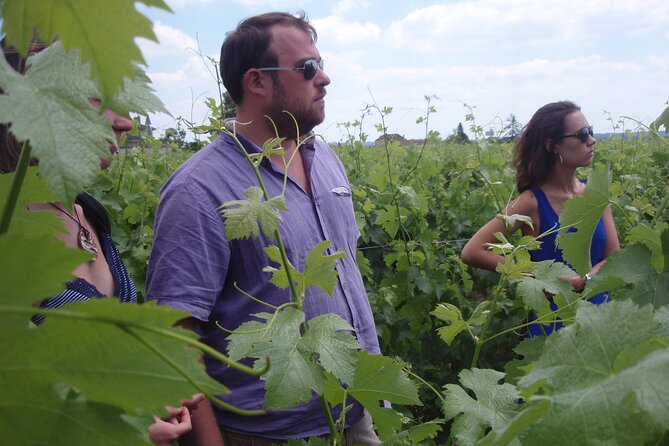
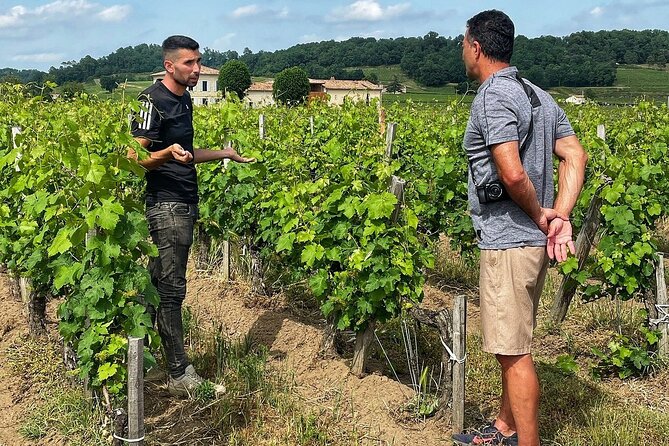
The visit begins outdoors in the vineyard. This is where the estate’s family story meets the practical work of growing grapes.
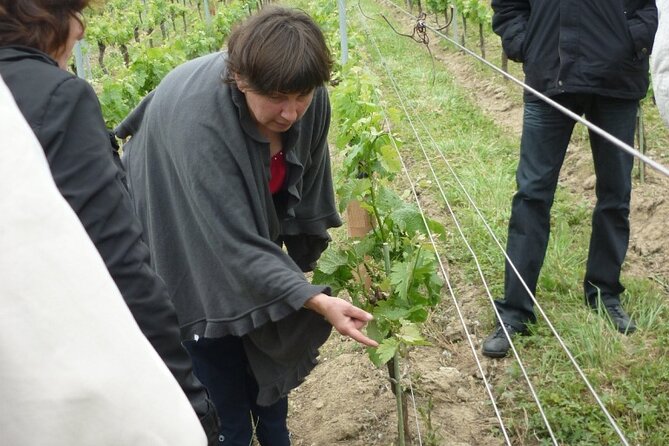
You learn about the specific features of the Saint-Émilion appellation and see different plots of vines. The guide explains how work changes during the year, so you get a better sense of the calendar behind each bottle. Vineyard work is not limited to picking grapes in autumn. It changes with the season, the condition of the plants, and the weather.
That seasonal view is one of the strongest parts of the experience. If you already know a little about wine, it gives you a closer look at decisions that affect quality. If you are new to wine, it helps explain why two bottles from the same area can still differ.
The tour also addresses difficult conditions, including crop freezes. This matters because winegrowing is not a simple matter of planting vines and waiting for harvest. A freeze can threaten an entire crop, and the estate is working on ways to meet those risks while giving more attention to sustainability and diversification.
I also like the signs of experimentation. The wind turbine and the enormous six-meter-high wine bottle are unusual details that help break up the technical material. You will also hear about the château’s plans for new wines. That gives you a picture of a property that respects its past but is not treating tradition as a reason to stop changing.
The outdoor portion may feel more weather-dependent than the cellar sections. You are spending part of the visit among the vines, so practical shoes and clothing suited to the conditions make sense. The supplied information does not specify the walking distance or terrain, so anyone with particular mobility concerns should ask the provider before booking.
From grapes to wine in the winery
After the vineyard, you move into the winery and follow the production process. This is the section that turns broad vineyard explanations into something concrete.
The guide covers fermentation, pumping, and pressing, as well as the equipment used after harvest. You see the large tanks and machinery needed to turn harvested grapes into wine. For many people, this is the part that makes the tasting more meaningful. A wine is no longer just a regional product with a label. You have seen some of the decisions and machinery behind it.
The explanations are aimed at regular visitors, not only wine professionals. The experience includes enough detail to show the stages of production while keeping the atmosphere relaxed. Florent has been praised for using humor and for making people feel at ease, an advantage when you are asking basic questions about wine.
The winery visit is also useful for understanding scale. A family estate may have a strong personal identity, but it still depends on careful equipment, timing, and technical choices. Seeing the tanks and production tools helps you appreciate the work that takes place between harvest and the finished bottle.
You also hear about the marketing of the wines. That may sound less romantic than walking among the vines, but it is part of how a modern château operates. The family is responsible not only for growing grapes and making wine, but also for presenting and selling the finished product.
The barrel cellar and the quiet part of winemaking
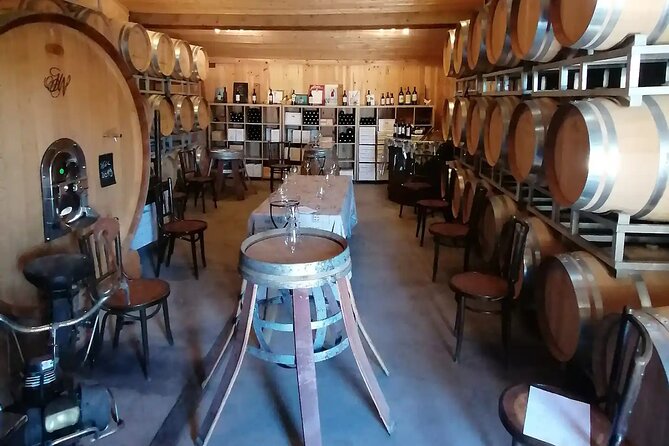
The final production stop is the barrel cellar. Here, the pace changes. Instead of watching active fermentation or examining large tanks, you see how the wine is aged.
The guide explains the methods used to mature the wine in barrels. This is an important step because aging affects the final character of the wine. Even if you do not remember every technical term, you will understand that the wine is not finished when fermentation ends.
The barrel cellar also gives the visit a traditional feel after the more practical discussion of wind power and new wine development. That contrast is valuable. Château Haute-Nauve is presented as a working estate balancing established methods with newer responses to weather, sustainability, and changing demand.
The information supplied does not promise a particular vintage or a set barrel-aging period. Your visit is therefore about learning how the process works at the estate, not about being guaranteed a particular cellar sight or tasting a specific unreleased wine.
More France trips worth a second look
- The Père Lachaise Cemetery: Guided 2-Hour Small-Group Tour
★ 4.7 · 1,065 reviews - Paris: 2-Hour Perfume Creation Workshop
★ 4.8 · 731 reviews - La Rochelle: 2-Hour Sunset Sailing Cruise
★ 4.8 · 652 reviews - 2-Hour Strasbourg Euro Tour by Segway
★ 5.0 · 642 reviews
Four wines, including two Grand Cru pours
The visit ends with a guided tasting of four Château wines:
- A rosé
- A Saint-Émilion wine
- Two Saint-Émilion Grand Cru wines
This is a good lineup for a two-hour introduction. The rosé gives you a different style from the red wines, while the Saint-Émilion and Grand Cru pours let you compare wines within the same broad regional identity.
The guided format matters. You are not simply handed four glasses and left to make guesses. The tasting follows the vineyard and cellar explanations, so you can connect the wine in your glass with the work you have just seen.
The two Grand Cru wines add value to the $30.04 price, especially if you want more than a basic introduction. The cost includes the four alcoholic wine tastings, and the tour also provides the estate visit and instruction. Prices can change, but at the stated rate, the experience is reasonably priced for a small-group château visit in the Saint-Émilion area.
You should still keep your expectations sensible. This is a tasting of four Château wines, not a broad comparison of several famous Bordeaux producers. If your main goal is to sample many estates or rare bottles, another type of wine day may suit you better. If you want to understand one family property and taste its range, the focused approach works well.
The tasting can also make the visit appealing to a mixed group. Wine enthusiasts get production details and appellation context, while newer wine drinkers have a clear introduction without needing specialist knowledge before arriving.
Florent’s role and the small-group feel
The guide can be Florent or Marie-Anne, the mother-and-son team behind the visit. English is offered, and Florent has led English tours with small groups.
That personal connection is more than a pleasant extra. Family-run estates can explain decisions in a way that feels direct because the guide is connected to the property’s past and present. You can ask about vineyard work, equipment, weather problems, or the wines without the visit feeling like a generic script.
The maximum group size is 15 people. That is not a private tour, but it is small enough to keep the visit manageable. A smaller group also gives you a better chance to hear explanations outdoors and ask questions during the winery walk.
The tone appears informal but professional. Florent is described as humorous, kind, and easy to talk with, while the family welcome is part of the appeal. That suits you if you prefer a human guide to a recorded presentation.
One practical point: confirmation is sent within 48 hours of booking, subject to availability. The experience is often booked about 12 days in advance, so reserving ahead is sensible if your dates in the Saint-Émilion area are fixed.
How this compares with a more polished wine attraction
Château Haute-Nauve is best understood as a working estate visit. The emphasis is on the vineyard, production spaces, family history, and the wines made there.
You should not expect a grand museum, an elaborate meal, or a full-day tour of several properties. Those are not weaknesses unless they are what you came for. The compact format gives the visit a clear purpose and leaves room in your day.
The unusual sights, such as the wind turbine and oversized bottle, also suggest that the estate is not trying to preserve a picture-book version of Bordeaux. You see the practical side of farming, including frost risk and the need to develop new products.
For a first visit to the region, this is a useful way to learn the basics without committing to a long itinerary. For a seasoned Bordeaux enthusiast, it offers a closer look at one producer, though you may want to pair it with other estates or a visit to Saint-Émilion itself.
Practical details before you book
The meeting point is Château Haute-Nauve, 1 Haute Nauve, 33330 Saint-Laurent-des-Combes, France. The tour ends back at the meeting point. Transportation to and from the château is not listed as included, so plan that part yourself.
The activity is offered in English. The available information says most people can participate, and service animals are allowed. It does not provide detailed accessibility information about the vineyard or cellar, so contact Château Haute-Nauve directly if you need precise information about surfaces, steps, or walking conditions.
The group limit is 15 people. The price is listed at $30.04 per person and includes tastings of four château wines. No meal is included in the stated package.
Free cancellation is available if you cancel at least 24 hours before the local start time. A cancellation inside that window is not refunded, and late changes are not accepted. The experience also requires a minimum number of participants. If that minimum is not reached and the provider cancels, you are offered another date or experience, or a full refund.
Who should book Château Haute-Nauve
I would choose this visit if you want a clear introduction to Saint-Émilion wine without spending a full day on a large tour. It suits couples, families with adult children, and small groups who enjoy meeting the people behind a product.
It is especially useful if you want to see more than a tasting room. The vineyard walk, tanks, machinery, and barrel cellar give you a full path from grape to bottle. The family history and discussion of freezes, sustainability, and new wines add substance to the visit.
You may want another option if you need hotel pickup, a meal, a private setting, or a broad tasting of unrelated Bordeaux producers. You should also check the meeting point carefully, since Saint-Laurent-des-Combes is not the same as meeting in central Saint-Émilion.
Should you book this two-hour wine experience?
Yes, if you value a personal, practical look at winemaking and want four wines included at a moderate price. The combination of a fourth-generation family estate, an English-speaking guide, a small group, and two Saint-Émilion Grand Cru tastings makes this a strong choice for a short visit.
Book it with the right expectations: you are visiting one working château, not touring the whole wine region. If that focused approach sounds appealing, Château Haute-Nauve gives you a useful, friendly introduction with enough detail to make the final tasting count.
FAQ
Where does the tour begin?
The tour begins at Château Haute-Nauve, 1 Haute Nauve, 33330 Saint-Laurent-des-Combes, France.
Where does the activity end?
The activity ends back at the Château Haute-Nauve meeting point.
How long does the experience last?
The tour lasts approximately two hours.
Is the tour offered in English?
Yes. The experience is offered in English.
Who leads the visit?
The visit is led by Florent or his mother, Marie-Anne, from the fourth-generation family estate.
How many wines are included?
The tasting includes four Château wines: one rosé, one Saint-Émilion, and two Saint-Émilion Grand Cru wines.
What does the vineyard portion cover?
You learn about the family history of the estate, the Saint-Émilion appellation, different vine plots, and how vineyard work changes throughout the year.
What is the maximum group size?
The activity has a maximum of 15 participants.
Can I cancel for a full refund?
Yes, if you cancel at least 24 hours before the experience start time. The cancellation cut-off is based on local time.
Recently reviewed around France
- Louvre Private Tour – The Essentials and More with Expert Guide★ 5.0 · 227 reviews
- Eiffel Tower Second or Summit Floor Access by Elevator with Views★ 3.5 · 161 reviews
- 2CV tour by night★ 5.0 · 55 reviews
- The only Paris Wine Tasting experience you need to do – 2 hours★ 5.0 · 265 reviews
- 2 Hour Street-art Walk and Space Invaders Hunt in Paris★ 5.0 · 27 reviews
- 2 hour outdoor group activity in Paris: SAINT GERMAIN★ 5.0 · 48 reviews
- Sainte-Chapelle, Conciergerie & Palais de Justice Private Tour★ 5.0 · 72 reviews
- Private 2 – Hour Paris Landmarks Tour by Golf Cart Mini Moke★ 5.0 · 38 reviews
Wine Tastings, compared.

Montmartre Hill French Gourmet Food and Wine Tasting Walking Tour
Read our review →
Loire Valley Castles Day Trip With Wine Tasting
Read our review →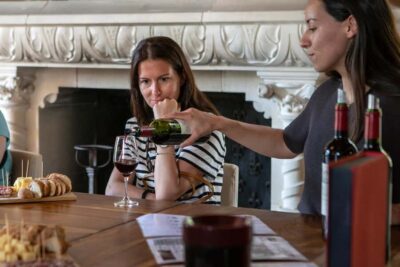
Afternoon Saint-Emilion Wine Tasting & snack
Read our review →
Medoc or Saint Emilion Wine Tasting and Chateau from Bordeaux
Read our review →
Saint Emilion Half-Day Trip with Wine Tasting & Winery Visit from Bordeaux
Read our review →
Champagne Day Trip with 6 Tastings, Reims and Winery from Paris
Read our review →Browse the lists this tour appears in