
Reviewed · LOUVRE MUSEUM TOURS
Skip-the-Line Louvre Museum Tour with Artist
The clever part of this Louvre tour is not simply getting inside faster. It is having a working artist as your guide, someone who can explain how a painting or sculpture was made, not just recite its date and title. In two hours, you move from Greek Antiquity to the Italian Renaissance and focus on the museum’s essential works.
I like the small group limit of six and the way the guide can adjust the visit to your interests. I also like the reserved entry, since the Louvre can swallow a large part of a Paris day before you even reach the galleries. The main drawback is the price: at $246 per person, this is a serious splurge for a two-hour visit.
In This Review
- Key points to know before booking
- Why an artist changes the Louvre visit
- Meeting at the Kiosque des Noctambules
- Reserved entry and the first minutes inside
- The Mona Lisa without losing the rest of the Louvre
- Greek sculpture, flowing marble, and movement
- From Antiquity to the Italian Renaissance
- A two-hour pace that suits a first visit
- What the guide brings to the experience
- Is $246 per person a fair price?
- Who should book this Louvre tour?
- Practical details to keep in mind
- Should you book it?
- FAQ
- Where does the Louvre tour meet?
- Do I meet the guide at the Louvre?
- How long does the tour last?
- Is entry to the Louvre included?
- How large is the group?
- Which languages are offered?
- What should I bring?
- Is the tour suitable for wheelchair users?
Key points to know before booking

- Meet outside the Louvre: Find the Kiosque des Noctambules near the Comédie Française, not the museum entrance.
- Expect a certified artist-guide: Blerta has led many of the strongest reported visits, while other guides have included Arianna and Assgan.
- See the essential works efficiently: The route focuses on the Mona Lisa, Venus de Milo, Nike, and major examples of Western art.
- Keep the group tiny: Tours are limited to six people, with a private option available.
- Bring identification and good shoes: A passport or ID card is required, and the museum involves plenty of walking.
- Allow for a brisk two hours: This is an introduction to the Louvre’s major works, not a full museum visit.
Why an artist changes the Louvre visit
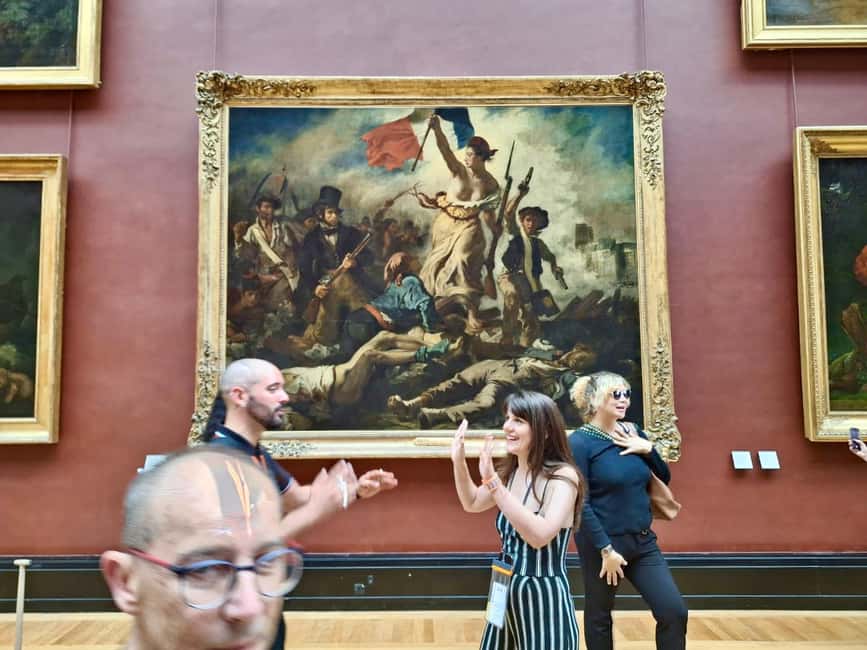
The Louvre is not hard to enter only because of crowds. The larger problem is scale. With more than 35,000 works on display, you can spend an hour wandering and still feel as if you have barely begun.
A guide who paints can give you a useful way to look. Instead of stopping at a famous canvas only to hear who painted it, you learn to notice choices: the direction of light, the use of dark and pale colors, the way fabric falls, or how a figure’s pose creates movement.
That approach is especially helpful at the Mona Lisa. The painting is famous enough to become a quick photo stop, but the guide can help you consider its expression, composition, and visual language. You may not leave with one fixed answer about the sitter’s smile, but you should have more tools for looking at the picture.
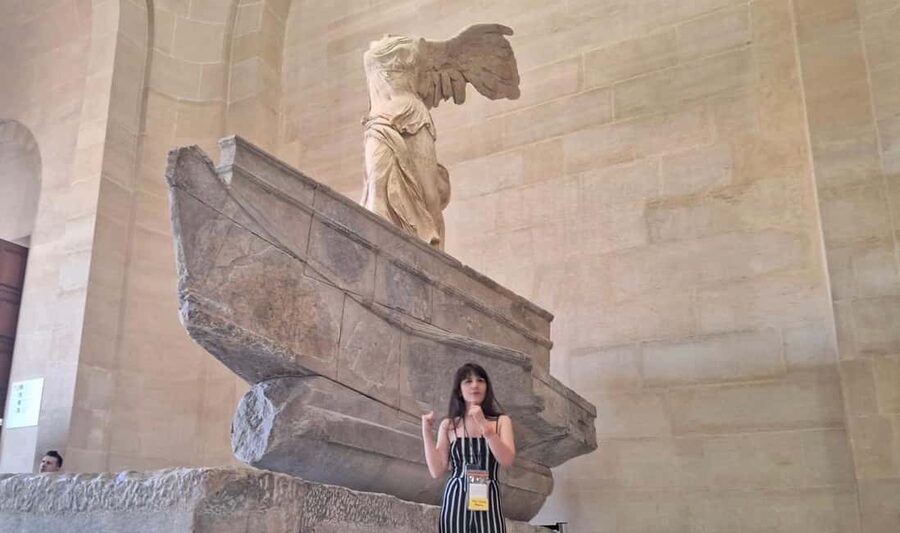
The same applies to sculpture. Nike of Samothrace is not just a winged figure placed dramatically at the top of a staircase. The flowing folds and implied wind give the marble a sense of motion. Venus de Milo raises different questions about balance, proportion, and the power of a damaged statue to command attention.
This is the tour’s strongest feature. It helps you read art rather than simply collect famous sights.
More Paris museums and collections:
- Paris: Louvre Museum Timed-Entrance Ticket
★ 4.6 · 71,977 reviews - Louvre Museum Masterpieces Guided Tour with Access
★ 4.5 · 12,023 reviews - Paris: Louvre Museum Entry Ticket With Host and River Cruise
★ 4.6 · 9,926 reviews
Meeting at the Kiosque des Noctambules
You do not meet at the Louvre. The meeting point is the Kiosque des Noctambules, the colorful glass-bead sculpture by Jean-Michel Othoniel, across from the Comédie Française.
That location is practical, but you need to find it before your start time. The nearest metro stop is Palais Royal, Musée du Louvre, and you should use the Place Colette exit. This arrangement keeps the group together before approaching the museum and avoids the common confusion of trying to locate a guide among the crowds beneath the Louvre Pyramid.
I would save the meeting point in your phone and arrive early. The sculpture is distinctive, but the area has several busy streets, entrances, and landmarks competing for your attention. Do not assume that seeing the Pyramid means you are already at the correct meeting place.
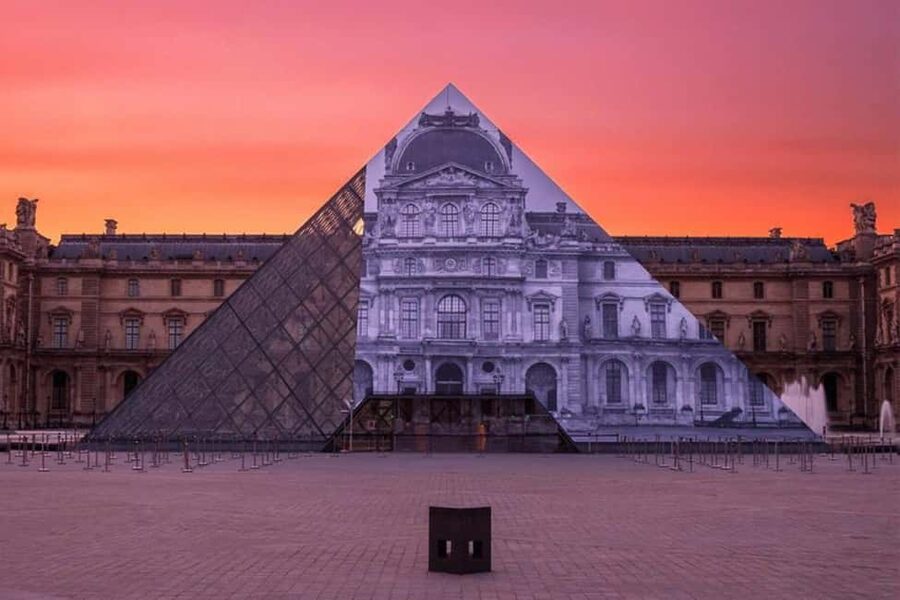
The first stop is the Louvre Pyramid. Here, the guide begins setting the museum in context before leading you through the entry process. The Pyramid is more than a photo backdrop. It marks the modern entrance to a former royal complex, and it gives you a useful visual cue: this visit links old European power and art with a modern museum system built to handle enormous crowds.
Reserved entry and the first minutes inside
The reserved ticket is a major part of the tour’s value. You use a separate entrance rather than joining the ordinary public line, which can be especially useful during busy periods or heightened security checks.
Skip-the-line does not mean you should treat the schedule casually. You still need to arrive at the right meeting point, pass through museum security, and follow the tour’s entry time. Sharp objects and weapons are not allowed, and food and drinks cannot be taken into the museum. Carry a reusable water bottle for before or after the visit, but do not expect to bring it into the galleries if museum rules prohibit it.
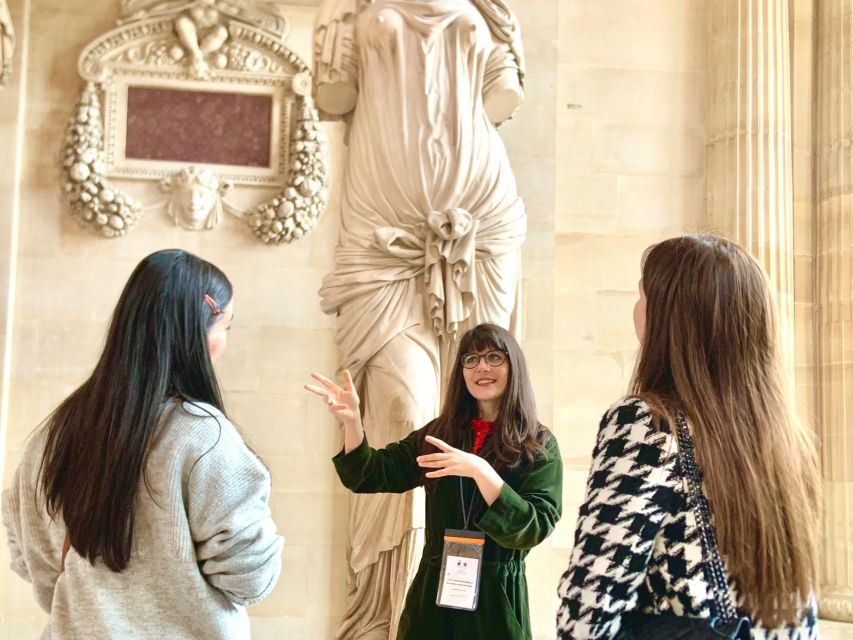
Once inside, the artist-guide takes responsibility for the route. That matters at the Louvre because the building can feel like a maze of wings, stairways, corridors, and grand rooms. You are not left to guess which direction leads to the Mona Lisa or which of the museum’s many galleries deserves your limited time.
Audio headsets are provided when available. In a crowded room, this can make a real difference. You can keep your eyes on the art instead of leaning toward the guide or losing the explanation when another group passes nearby.
The Mona Lisa without losing the rest of the Louvre
The Mona Lisa is the picture most people want to see, and the tour makes room for it. Expect a busy viewing area, with many people hoping for the same close look. The guide’s role is useful here because you can get more from the painting than a quick glance and a photograph.
You will likely study the sitter’s expression, the balance of the composition, and the techniques that help create the painting’s unusual effect. The guide can explain the visual decisions in plain language, making the work easier to approach for adults and children alike.
Several families found the art explanations worked well for children and teenagers. That is worth noting if you are visiting with young people who might otherwise lose patience in a huge museum. One family with children aged 13 to 16 particularly valued the guide’s ability to answer questions and add stories around different pieces. Another family said that ideas about light and dark colors in religious paintings continued to interest their teenagers after the tour.
The tour does not turn the Mona Lisa into the whole point of the Louvre. That is a good thing. You get the famous portrait, then place it beside other works that show how artistic ideas developed across time.
More Paris trips worth a second look
- Versailles: Skip-the-Line Tour of Palace with Gardens Access
★ 4.7 · 9,778 reviews - Versailles: Skip-the-Line Guided Palace Tour and Full Access
★ 4.6 · 5,214 reviews - Louvre Museum: Skip-the-Line Small Group Guided Tour
★ 4.6 · 3,960 reviews - From Paris: Versailles Skip-the-Line Tour & Gardens Access
★ 4.7 · 3,011 reviews
Greek sculpture, flowing marble, and movement
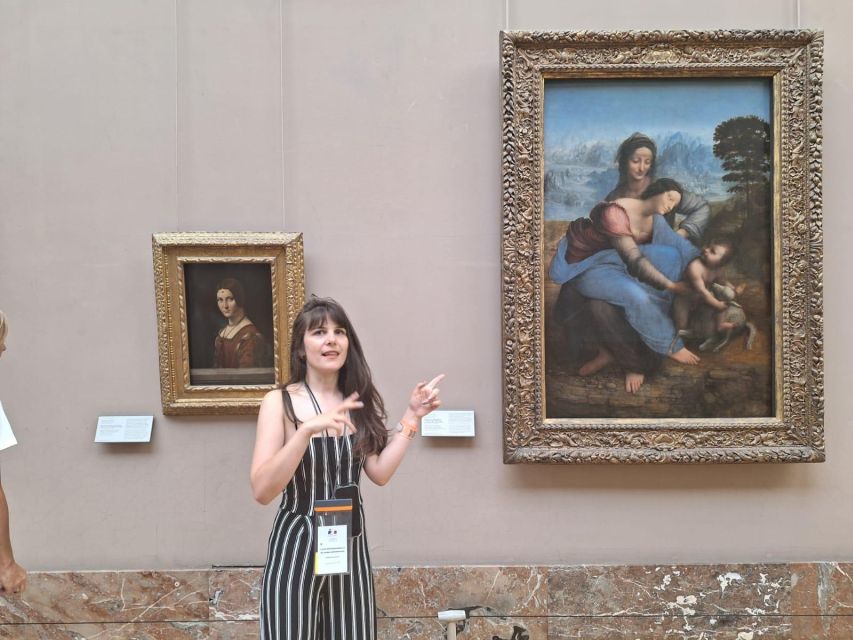
The route includes Greek Antiquity, with special attention to works such as Venus de Milo and Nike of Samothrace.
Venus de Milo offers a lesson in proportion and the ideal human form. Her missing arms are part of the viewing experience, but the guide can help you look past the damage and consider the pose, the turn of the body, and the way the sculpture holds its space.
Nike gives you a different kind of lesson. The sculpture appears to push forward into wind, even though it is made from stone. The folds of the clothing cling, billow, and break across the body. A guide with an artist’s eye can point out how the sculptor created movement without actual motion.
These stops are valuable because they slow you down. It is easy to rush through the Louvre and record the names of major works. It is harder, and more rewarding, to understand why a marble figure can feel as if it is walking, flying, or turning.
You should expect other people around these major works. The small group helps because the guide can gather you close enough to hear and can keep the explanation focused. It does not make the galleries private.
From Antiquity to the Italian Renaissance
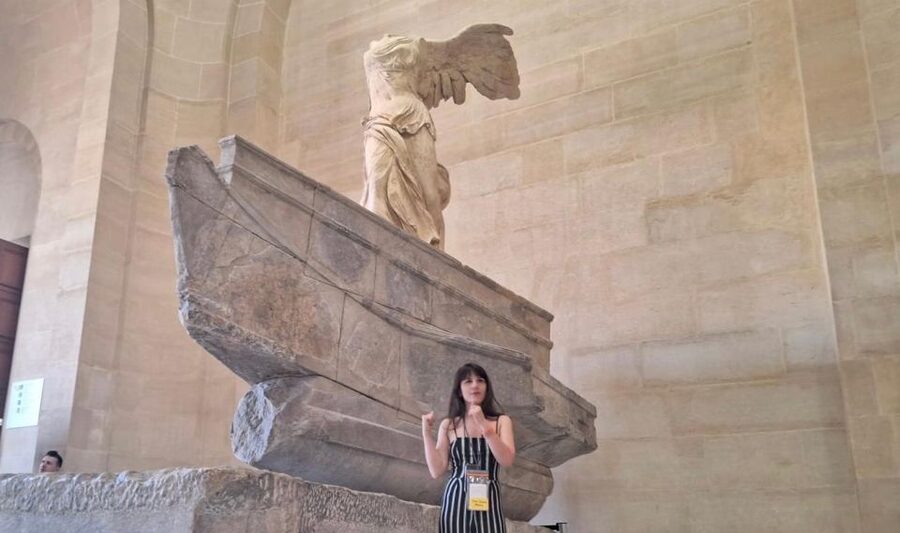
The tour traces a broad path through Western art, from Greek Antiquity to the Italian Renaissance. In two hours, this means you cover a large amount of ground and see a selection rather than every important room.
That is the right plan for a first visit. The Renaissance galleries can be hard to read without context, particularly when several religious paintings look similar at first glance. The guide can draw your attention to changes in perspective, lighting, gestures, color, and the treatment of the human body.
The emphasis is not only on historical facts. You learn how artists solved visual problems. How do you make a flat surface feel three-dimensional? How do you lead the eye across a crowded religious scene? How do you use a bright area against a dark one to shape emotion?
One guide, Arianna, was praised for adapting a family’s visit around its interests and for explaining religious art in a way that made the ideas accessible to teenagers. That gives you a good sense of the tour’s potential strength: it can move beyond a standard list of masterpieces and spend time on a theme that catches your group’s attention.
Still, customization has limits. With only two hours, a request for many specific works may mean less time at the headline sights. Tell the guide what matters most to you early in the visit.
A two-hour pace that suits a first visit
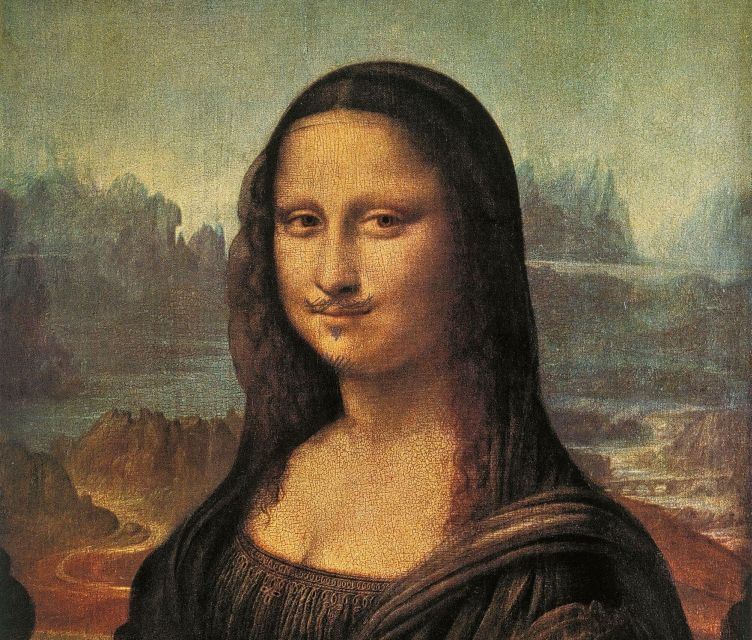
Two hours is long enough to create a clear map of the Louvre in your mind, but short enough to fit into a busy Paris itinerary. You should expect a focused, fairly active visit rather than a slow afternoon in one wing.
The pace has been praised for covering a large amount of art and physical space without feeling rushed. That balance depends partly on the group. A family that wants to stop for every question will move differently from a couple focused on the main works.
The small size helps. With no more than six people, the guide can check that everyone has heard the explanation, answer questions, and adjust the route when possible. A private group is also available if you want more control over the pace or subject matter.
You should wear comfortable shoes. The museum is large, and the visit involves walking and likely some stairs. One guide made an effort to reduce stairs for people with mobility concerns, but the experience is not suitable for wheelchair users. If stairs or long distances are a concern, raise that before booking rather than assuming the route can be changed.
What the guide brings to the experience
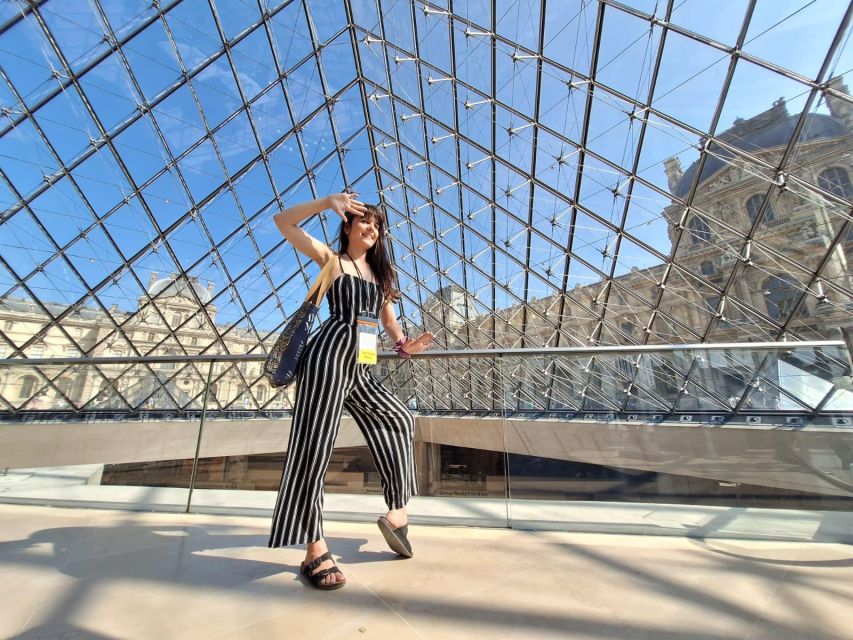
The guide is the tour’s main variable, and the available guide information points to several names, including Blerta, Arianna, and Assgan. Blerta receives especially strong praise for her art background, humor, English, and ability to make people feel included.
The best guide behavior described is quite specific. The guide asks about your interests, answers questions about individual works, explains art at an understandable level, and helps locate an artwork a child or parent particularly wants to see. That is more useful than a memorized speech delivered at every group in the same way.
Blerta has also worked well with mixed-age families, from children around 11 to teenagers. If you are visiting with young people, ask them to bring questions. A question about a face, color, or strange detail can turn a famous painting into a personal discovery.
The tour is offered in Albanian, English, and French. If you need a language other than these, this is not the right choice.
Is $246 per person a fair price?
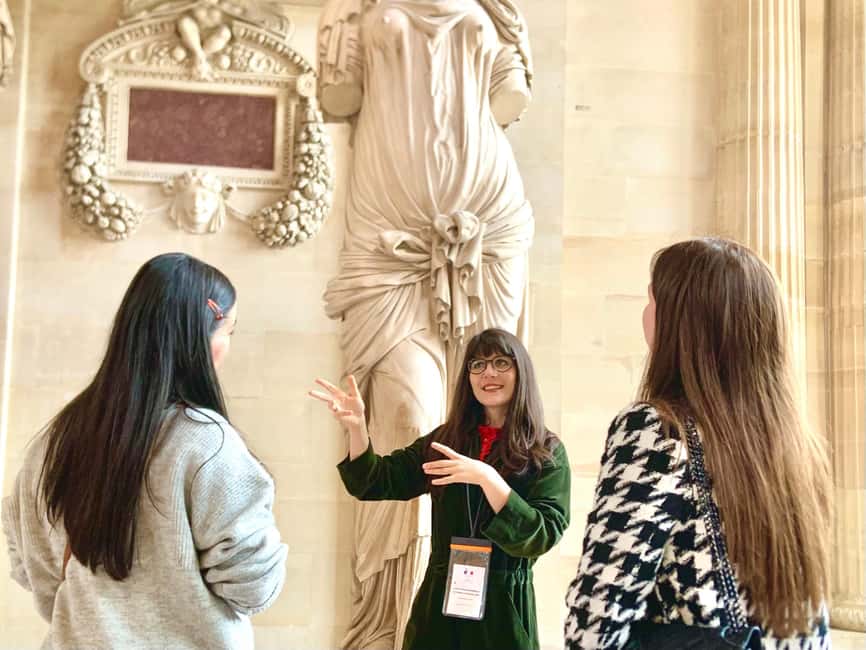
At $246 per person, this is expensive for two hours. You are paying for reserved entry, a certified artist-guide, a very small shared group, and a planned route through one of the world’s largest museums.
The price makes more sense if you have limited time in Paris, strongly dislike museum crowds, or want help understanding art rather than simply seeing it. It can also be good value for a family, since a clear explanation may keep children engaged and prevent the visit from becoming an exhausting march through unfamiliar rooms.
The price is harder to justify if you already know the Louvre well, prefer to wander alone, or have several days to return at your own pace. The museum ticket alone does not provide the same personal guidance, but independent visitors can spend far less.
The reserved entry may also save you valuable time. One recent visit took place during a period of extra security and could have involved a very long wait in the public line. Conditions change, so no skip-the-line ticket can promise a completely delay-free entrance, but avoiding the standard queue is a meaningful benefit.
Who should book this Louvre tour?
I would recommend it most strongly for first-time Louvre visitors, families with older children, and people who want art explained without an academic lecture. It also suits anyone with only a short window in Paris and a firm list of must-see works.
You will get the most from it if you arrive with two or three interests in mind. Perhaps you want Renaissance painting, Greek sculpture, or a child’s favorite artwork. Tell the guide at the start, and the small group format gives the visit a chance to feel personal.
I would hesitate if you need a wheelchair-accessible tour, want a relaxed half-day museum visit, or find the $246 price too high for a guided introduction. Two hours cannot cover the Louvre in full, and the famous rooms may be crowded.
For the right visitor, the benefit is not simply speed. You leave with a way to look at art, which can make the rest of your Paris sightseeing more rewarding.
Practical details to keep in mind
The tour includes museum entry, the shared guided visit, the artist-guide, and audio headsets when available. Pickup and drop-off are not included, so plan your own way to the Kiosque des Noctambules.
Bring a passport or ID card. A copy is accepted, according to the tour information. Wear comfortable shoes, and keep sharp objects, weapons, food, and drinks out of your bag.
You can cancel up to 24 hours before the tour for a full refund, and the reserve-now, pay-later option allows you to hold a place without paying immediately. Starting times vary, so check availability for your date.
Should you book it?
Book this tour if you want the Louvre’s major works to make sense, not just appear in your camera roll. The combination of reserved entry, a six-person limit, and an artist-guide such as Blerta gives you a focused introduction with room for questions.
Skip it if you prefer solitary museum wandering or need full wheelchair access. At $246, it is not a bargain ticket, but for a first Louvre visit with limited time, the guidance and saved waiting time can make the splurge worthwhile.
FAQ
Where does the Louvre tour meet?
The meeting point is the Kiosque des Noctambules by Jean-Michel Othoniel, across from the Comédie Française. It is near the Palais Royal, Musée du Louvre metro station, using the Place Colette exit.
Do I meet the guide at the Louvre?
No. You meet the group at the Kiosque des Noctambules before going to the Louvre together.
How long does the tour last?
The guided Louvre experience lasts two hours.
Is entry to the Louvre included?
Yes. The tour includes entry tickets to the Louvre Museum and reserved access through a separate entrance.
How large is the group?
The shared tour is limited to no more than six visitors. A private group option is available.
Which languages are offered?
The tour is offered in Albanian, English, and French.
What should I bring?
Bring a passport or ID card, with a copy accepted, comfortable shoes, and a reusable water bottle. Weapons, sharp objects, food, and drinks are not allowed.
Is the tour suitable for wheelchair users?
No. The experience is not suitable for wheelchair users. One guide has worked to reduce stairs for visitors with mobility concerns, but this should not be treated as wheelchair access.
Recently reviewed around Paris
- Louvre Private Tour – The Essentials and More with Expert Guide★ 5.0 · 227 reviews
- 2CV tour by night★ 5.0 · 55 reviews
- Eiffel Tower Second or Summit Floor Access by Elevator with Views★ 3.5 · 161 reviews
- The only Paris Wine Tasting experience you need to do – 2 hours★ 5.0 · 265 reviews
- 2 Hour Street-art Walk and Space Invaders Hunt in Paris★ 5.0 · 27 reviews
- 2 hour outdoor group activity in Paris: SAINT GERMAIN★ 5.0 · 48 reviews
- Sainte-Chapelle, Conciergerie & Palais de Justice Private Tour★ 5.0 · 72 reviews
- Private 2 – Hour Paris Landmarks Tour by Golf Cart Mini Moke★ 5.0 · 38 reviews
Louvre Museum Tours, compared.


Louvre Guided Tour with Reserved Access & Boat Cruise
Read our review →
Louvre Museum Masterpieces Guided Tour with Access
Read our review →
Louvre Museum Entry Ticket With Host and River Cruise
Read our review →
Priority Access Louvre with Host -Direct to Mona Lisa
Read our review →
Mona Lisa & Louvre Masterpieces Tour with Reserved Access
Read our review →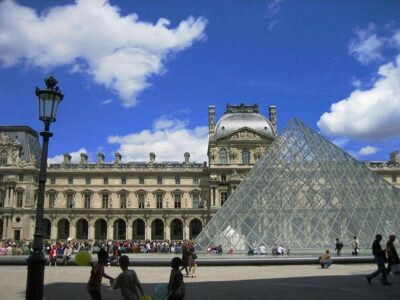
Louvre Museum – Exclusive Guided Tour (Entry Included)
Read our review →
Louvre Reserved Ticket and River Cruise Combo
Read our review →Browse the lists this tour appears in