
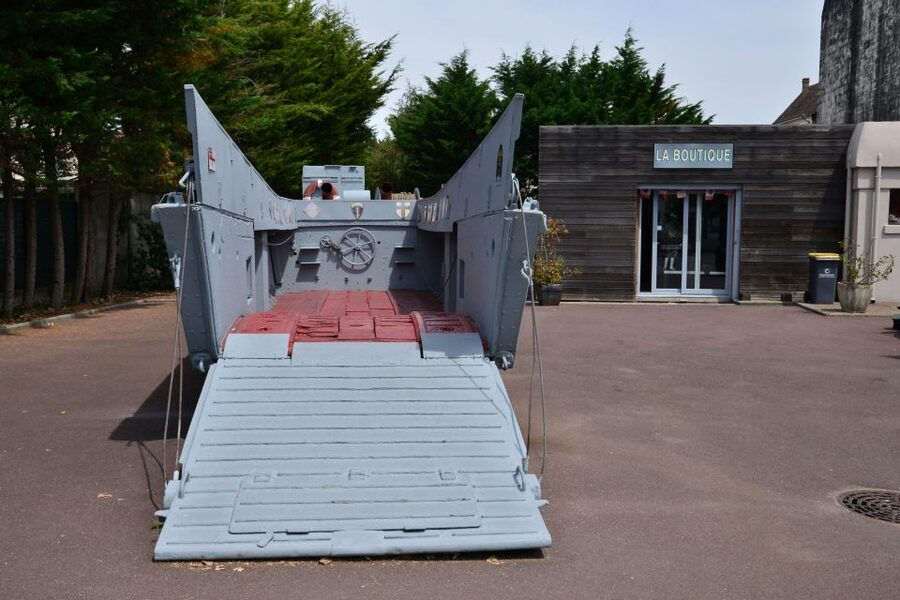
Reviewed · NORMANDY D-DAY TOURS
Small-Group Canadian Normandy D-Day Juno Beach from Paris
Juno Beach is not just a name on a map. It is a broad stretch of sand where more than 14,000 Canadians landed or parachuted into France on June 6, 1944. This small-group D-Day tour lets you walk that shore, visit the Canadian Cemetery, and connect the battle to the villages and buildings inland.
I like the maximum of eight participants, which gives your guide room to answer questions and adjust the pace. I also like the mix of solemn places and practical battlefield detail, from the Juno Beach Centre to Hell’s Corner and Abbey d’Ardenne. The drawback is the long day: 13 hours, with roughly three hours each way in the minibus, and no food included.
In This Review
- Key points to know before booking
- Why Juno Beach matters
- Leaving Paris at 7:00 AM
- Walking Juno Beach
- The Juno Beach Centre
- The Canadian Cemetery at Beny-sur-Mer
- Hell’s Corner and the inland advance
- Abbey d’Ardenne and the human cost of war
- The guides make the difference
- What the $283 price gets you
- Who should take this tour?
- Practical advice for a smoother day
- Should you book the Juno Beach day trip?
- FAQ
- Where does the tour meet in Paris?
- What time does the tour leave?
- What time does the tour return to Paris?
- How many people are in the group?
- Is lunch included?
- What language is the tour conducted in?
- What happens if it rains?
Key points to know before booking
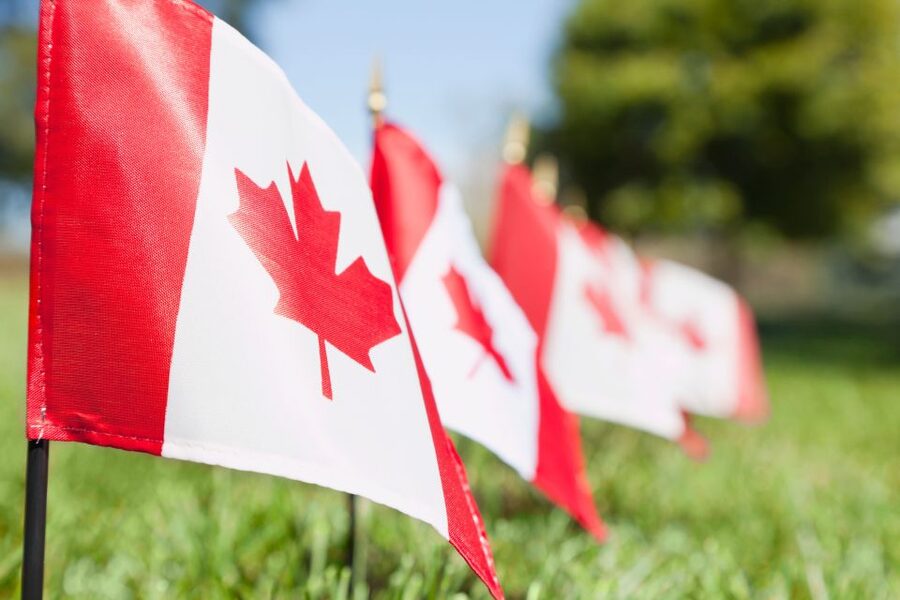
- Walk on the actual Juno Beach shore: You can stand on the same sand where Canadian troops came ashore in 1944.
- Travel with no more than eight people: The small vehicle makes conversation and personal questions much easier than on a large coach.
- Visit the Canadian Cemetery at Beny-sur-Mer: The quiet rows of graves bring a human scale to the military story.
- See the inland reach at Hell’s Corner: This marks the furthest advance made by Canadian troops on D-Day, about five miles from Caen.
- Expect an early start and late return: Departure is at 7:00 AM, with arrival back in Paris around 8:00 PM depending on traffic.
- Prepare for changing weather: The tour runs rain or shine, and the coast can feel cold and windy even in spring.
Why Juno Beach matters

The Canadian role in the Normandy invasion can get less attention than the better-known American and British sectors. That makes this tour especially useful if you want to understand what Canadian forces were asked to do, how far they advanced, and what happened after the first landing.
On D-Day, Allied troops attacked German positions protected by bunkers and other coastal defenses. The fighting was confused, dangerous, and costly. At Juno Beach, Canadian troops faced strong resistance but pushed inland farther than many units had managed by the end of the day.
Your guide places the beach within that wider military plan. The value is not simply hearing dates and unit names. You get a sense of distance, direction, and terrain. A map or photograph can show where troops moved, but walking from the shore toward the inland sites makes the scale easier to grasp.
I find this kind of visit most effective when you allow time for silence. Juno Beach is still a public shore, not a preserved battlefield frozen in place. The tide changes, people walk along the water, and the beach looks peaceful. That contrast is part of the experience.
Other Paris days travellers weigh against this one:
- Paris: Louvre Museum Timed-Entrance Ticket
★ 4.6 · 71,977 reviews - Disneyland® Paris 1-Day Ticket
★ 4.6 · 49,412 reviews - Paris: Versailles Palace and Gardens Full Access Ticket
★ 4.6 · 41,579 reviews
Leaving Paris at 7:00 AM
The meeting point is Café Dada Ternes. You should arrive at least 15 minutes before departure, and you need to be ready to leave on time. The grey minibus arrives about 10 minutes before the scheduled start, but latecomers cannot be accommodated.
The early departure is necessary. Normandy is far from Paris, and this is a full-day outing rather than a quick excursion outside the capital. You spend much of the morning on the road, but the minibus format makes the ride more personal and less impersonal than a large tour bus.
The vehicle is described as comfortable, and the small group limit is a real advantage during a long drive. Guides such as Mathieu have been praised for safe driving as well as clear explanations, while other guides have used the journey to point out villages, roads, and local landmarks.
The exact route can vary. One guide may take a scenic detour through smaller towns and country roads instead of staying entirely on the highway. That can give you a better look at rural France, though it may also add time to an already long day.
Bring water and plan to buy food during the day. Lunch is not included. Some guides have stopped at a bakery or arranged a meal at a local restaurant, but you should not assume that a particular restaurant or bakery stop is guaranteed.
Walking Juno Beach
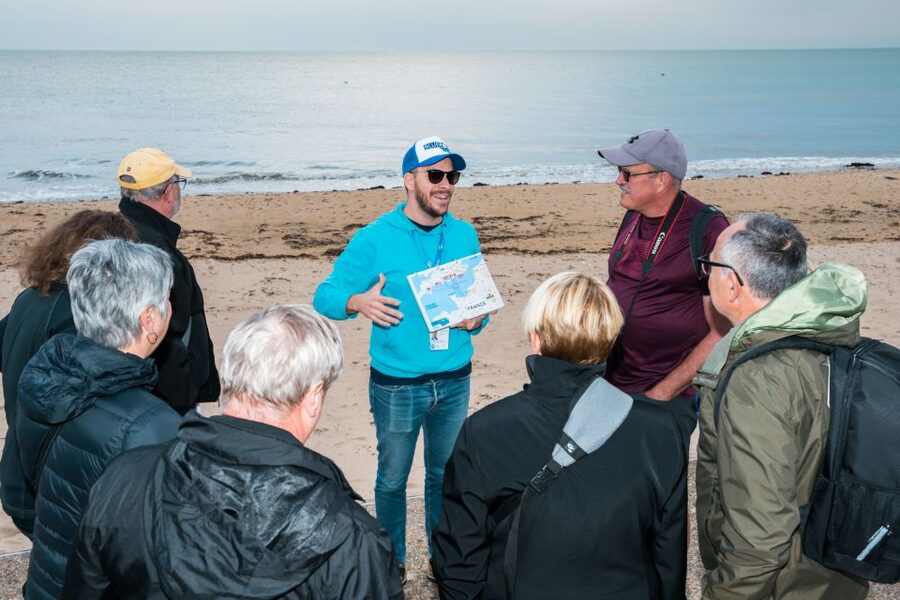
The central moment is your walk along Juno Beach. You are not viewing the landing area only from behind a museum window. You can step onto the sand and look back toward the shore, the seawall, and the land beyond.
The beach itself is open and exposed. That makes comfortable shoes useful, but the bigger concern is weather. A visitor in late April found the coast cold and windy, so a warm jacket and hat are sensible even when Paris feels mild. Rain gear is also worth packing because the tour operates in all weather.
Your guide explains what happened at this specific sector and helps you connect the present-day setting with the attack. The beach may look simple, but that is exactly why explanation matters. Without guidance, you see sand and water. With maps, photos, and spoken detail, you begin to understand the obstacles facing the troops and the distance they had to cover.
Some guides also make time for nearby bunkers and buildings. The amount of time at each spot can vary with weather, traffic, and the group’s interests. A few people have found the schedule slightly rushed, especially when they wanted more time to browse or explore a bunker in greater detail.
That is a fair limitation. This tour covers several places in one day, so it cannot offer the slow pace of a private, single-site visit. The benefit is that you gain a much wider picture of the Canadian advance.
The Juno Beach Centre
The Juno Beach Centre is the main museum stop and the most direct place to learn about the Canadian landings. Entrance is included, and the tour uses a separate entrance to help you avoid the standard line.
Plan to spend meaningful time inside. The museum gives the military events a Canadian frame, covering the soldiers, the attack, and the country behind the force. It is a useful counterpoint to standing outdoors, where the physical setting can be powerful but incomplete.
The museum also helps with context. You can move from the broad story of D-Day to the decisions, equipment, and personal cost behind it. A guide can point out details that are easy to miss and explain how the museum material fits with the beach and inland stops.
Time inside is one area where expectations matter. Some people have felt they wanted longer to browse, while others found the available time adequate. If you enjoy reading every panel and examining each display, you may need to move at a steady pace. If you prefer a guided overview followed by the key exhibits, the stop should work well.
The best approach is to listen closely to the guide, then use your free time for the parts of the museum that interest you most. You will not be able to see every detail at leisure, but you will have a useful framework for understanding the rest of the day.
A different way to spend the day, same corner of France:
- Paris: Evening River Cruise with Music
★ 4.4 · 22,721 reviews - Paris: Eiffel Tower Entry Ticket with Optional Summit Access
★ 4.4 · 20,035 reviews - Paris: Eiffel Tower Summit or Second Floor Access
★ 4.3 · 17,248 reviews - Paris: Louvre Guided Tour with Reserved Access & Boat Cruise
★ 4.3 · 16,353 reviews
The Canadian Cemetery at Beny-sur-Mer
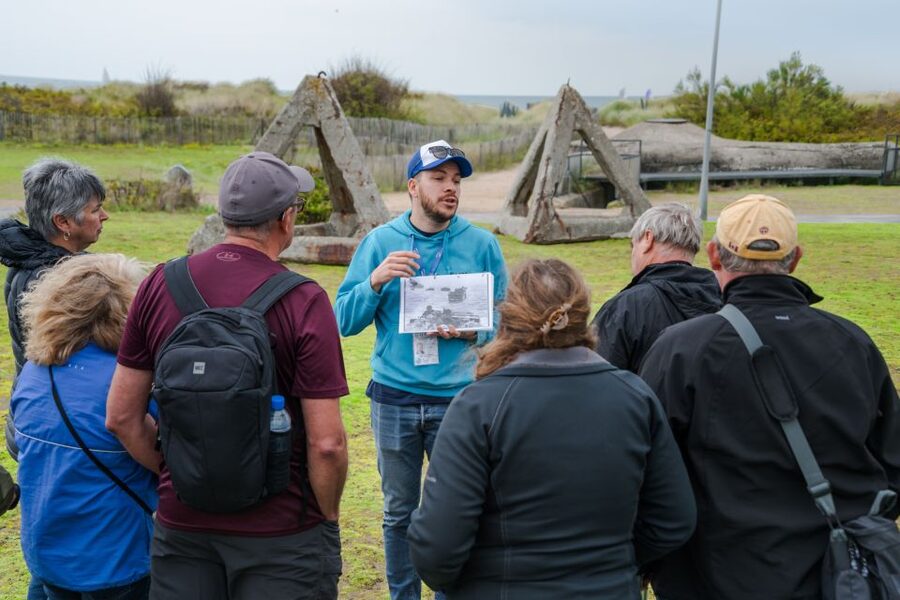
The Canadian Cemetery at Beny-sur-Mer changes the tone of the visit. The beach explains the operation. The cemetery shows its cost.
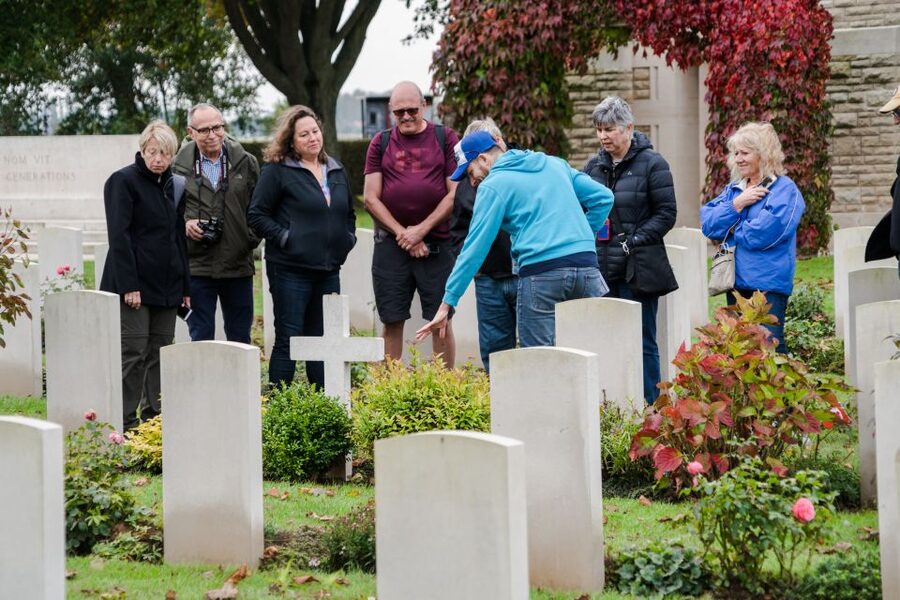
Here, you walk among the graves of Canadian soldiers who died during the Normandy campaign. The setting is carefully maintained and quiet, with rows of headstones that make the scale of the losses hard to ignore.
This is not a place for a rushed photo stop. Give yourself time to read names and reflect. Many Canadians visit Juno Beach because a relative served in Normandy, and the cemetery can be especially personal for families tracing a parent, grandparent, or other relation.
Even without a family connection, the cemetery gives the day a human focus. Military maps show advances and objectives. Headstones show individual lives. Your guide can add context, but the most respectful part of the visit may simply be walking quietly.
Hell’s Corner and the inland advance
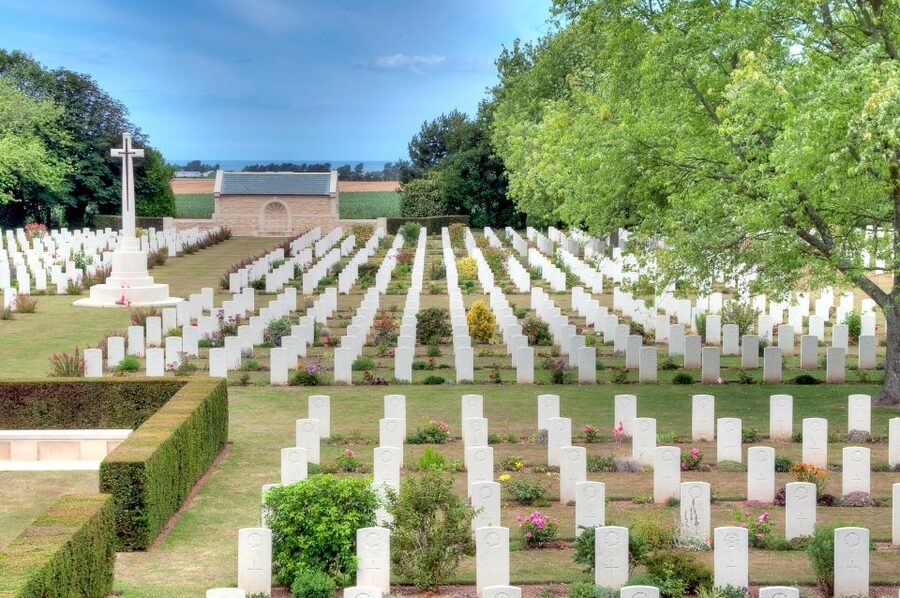
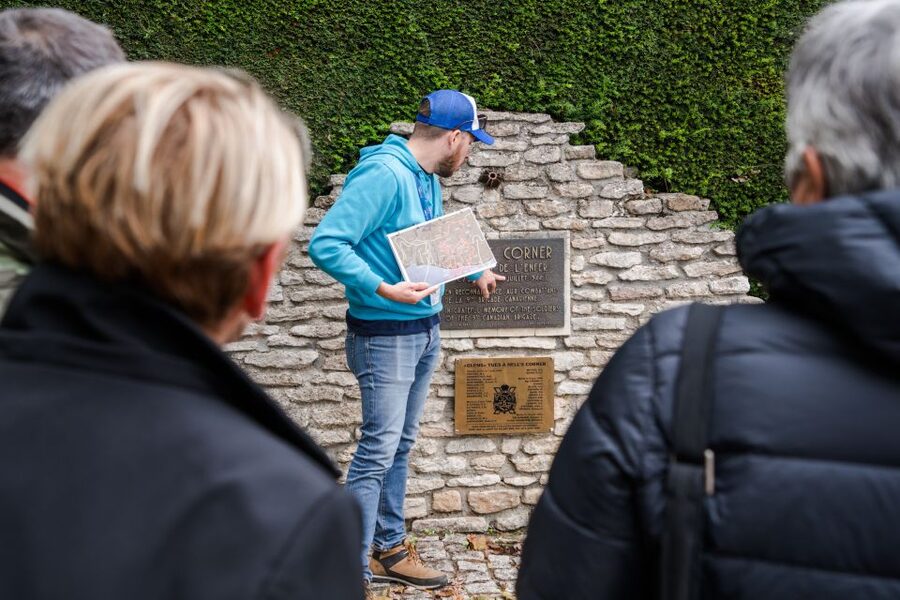
The tour continues beyond the beach to Hell’s Corner, described as the furthest inland advance made by Canadian troops on D-Day. It lies about five miles from Caen, showing that the Canadian story did not stop at the waterline.
This stop helps answer a question many beach visitors have: What happened after the landing? The physical distance between Juno Beach and the inland objectives makes the first day’s progress easier to appreciate.
You may also hear about the local families and buildings caught between German and Canadian forces. One memorable visit described during this tour involved a family home in Hell’s Corner, where a personal collection of German and Canadian ammunition helped explain how the area changed hands. Such details bring the conflict out of the textbook and into ordinary homes and villages.
That kind of local story is one reason the small group matters. If you want to ask how civilians experienced the fighting, or how the Canadian advance unfolded after the beach, you have a better chance of getting a real answer than you would on a large coach tour.
Abbey d’Ardenne and the human cost of war
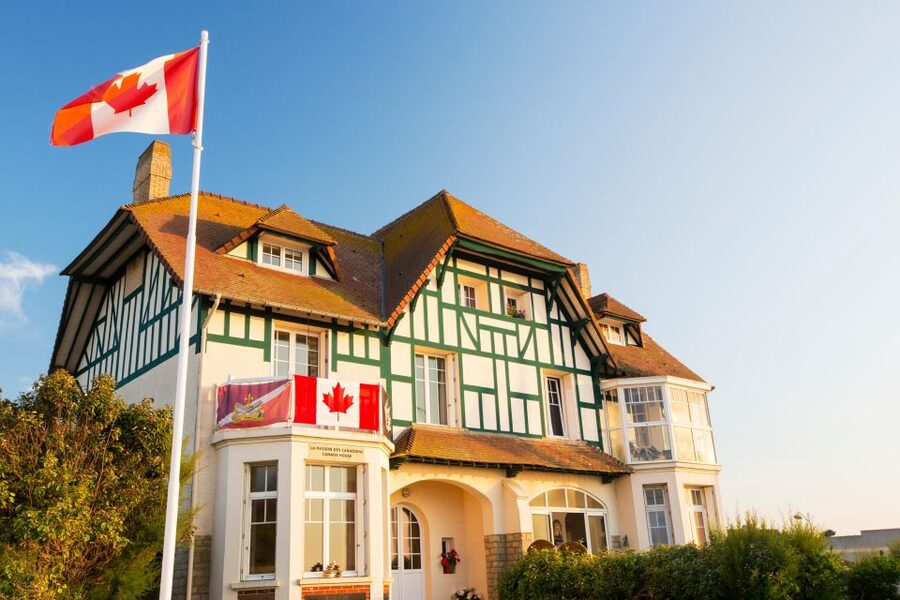
Abbey d’Ardenne is another important stop. The abbey served as a German headquarters point during the battle, linking the military story to a specific place inland.
The site adds a darker layer to the day. Normandy was not only a set of beaches and military objectives. It was also a region of villages, religious buildings, family homes, and farms pulled into the fighting.
Your guide explains the role of the abbey and the events connected with it. The stop works best when you have already seen the beach and cemetery because you can place the building within the wider movement of troops and command decisions.
The itinerary is not designed as a specialist archaeological tour. You will not examine every defensive position in the Juno sector. Instead, the guide selects places that show the path from landing, to advance, to the consequences of the fighting.
The guides make the difference
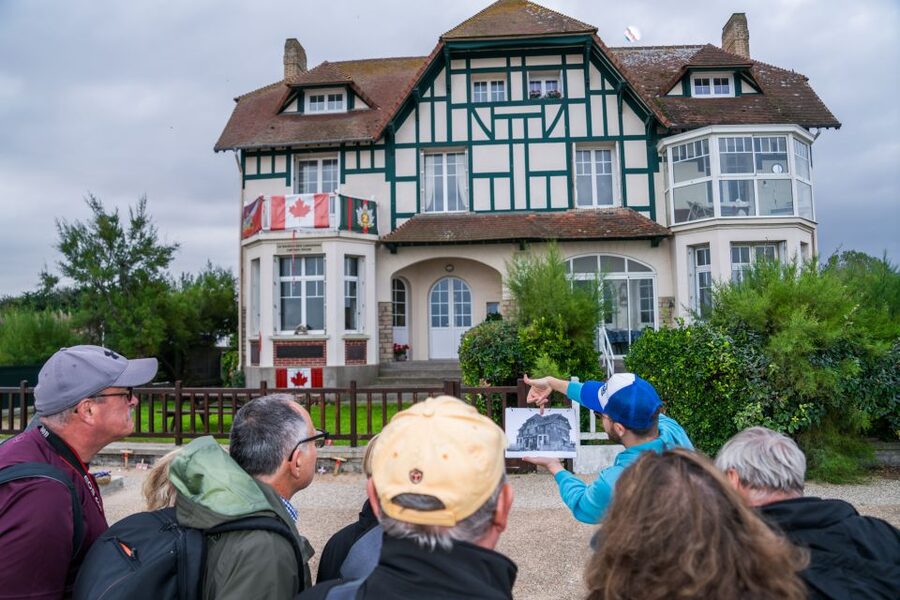
The guide assigned to your departure will vary, but the experience depends heavily on that person. Guides named in visitor feedback include Enzo, Mathieu, Julien, Aaron, Olivier, Brun, Gabriel, Jonathan, HP, and others.
The strongest guide style combines military detail with a calm, human tone. Aaron has been praised for his passion and clear command of Normandy’s story. Enzo has been described as engaging and flexible. Mathieu has been noted for explaining statistics and the events of June 6 clearly while also making the long drive comfortable.
Brun has used maps, family stories, and a bakery stop to make the day feel personal. Julien has enhanced the explanations with photos and audio excerpts. HP has been praised for combining humor with sensitivity, a useful balance on a day that includes both fascinating details and painful memories.
Guide quality can never be guaranteed by name because assignments change. Still, the format gives the guide enough time to speak with each person, answer questions, and respond to the group’s needs. That is one of the strongest reasons to choose this tour instead of a large scheduled coach.
Do keep your expectations sensible. English is the tour language, and one visitor found a microphone difficult to hear in some conditions. If you have trouble hearing, sit close to the guide when possible and ask for repetition. The experience is built around spoken explanation, so clear communication matters.
What the $283 price gets you
At $283 per person, this is not a cheap day trip. The cost covers transportation by minibus, an English-speaking guide, and entrance fees. Food is extra.
The value depends on what you would otherwise arrange yourself. Reaching Normandy from Paris by public transport and then connecting the beach, cemetery, inland sites, and museum would take planning. You would also lose the maps, battlefield explanations, and local stories that give the places meaning.
The small group is important to the price. You are paying for a more personal format, not just a seat in a vehicle. With no more than eight people, the guide can talk with you during the drive and adapt explanations at the stops.
I would consider the price fair for someone with one day available from Paris who wants a guided Canadian-focused visit. It is less suitable if you want to spend hours in one museum, explore every bunker, or set your own schedule. A private tour would offer more control, but likely at a higher total cost.
The tour’s strongest value is the combination of access and interpretation. You see the shore, the cemetery, the museum, the inland advance, and the German headquarters site in one day. You also avoid the work of fitting those pieces together yourself.
Who should take this tour?
This is an excellent choice for Canadians visiting Paris, especially if your family has a connection to the armed forces or Normandy. Several people have described standing on Juno Beach as the emotional high point of their trip, particularly when a parent or grandparent served there.
You do not need to be a military specialist. The guide explains the setting for curious visitors as well as serious students of World War II. The day can also suit families. One group with children aged 12 and 14 found the visit meaningful, though the long drive and solemn subject may not suit every child.
You should choose it if you value stories, maps, and context more than free time. You should skip it if a 13-hour day sounds exhausting or if you prefer to explore at your own pace.
The tour can also work for non-Canadians. Juno Beach is part of the wider D-Day story, and the stops explain both Canadian actions and the local effects of the battle. You may simply bring a different personal connection to the visit.
Practical advice for a smoother day
Arrive at Café Dada Ternes at least 15 minutes early. The vehicle arrives shortly before departure, and the 7:00 AM start is firm.
Wear shoes suitable for walking on sand and uneven ground. Pack a warm layer, hat, rain protection, and water. The coast can be windy, and the tour runs rain or shine.
Bring money or a card for lunch and snacks. Food is not included, and stops can vary. If you want a particular meal, ask your guide early in the day rather than waiting until you are hungry.
Keep your phone charged if you plan to take photos or use it for notes. One guide even helped a visitor locate a replacement charger, but that kind of help should be treated as good fortune, not part of the service.
Allow some flexibility on the return. The planned arrival is around 8:00 PM, but traffic can change that. Do not book a tight evening reservation or train connection in Paris.
Free cancellation is available up to 24 hours before departure, and you can reserve while paying later. Those terms help if your Paris plans are still shifting, but the strict late-arrival rule remains important.
Should you book the Juno Beach day trip?
Book it if you want a serious, well-explained look at the Canadian role in D-Day and you have only one day to leave Paris. The combination of Juno Beach, the Canadian Cemetery, the Juno Beach Centre, Hell’s Corner, and Abbey d’Ardenne gives you far more than a quick photo stop.
I especially recommend it for Canadians with a family connection to the war. Walking the beach and then visiting the cemetery creates a direct link between the public story and the people who lived it.
Think twice if you dislike long road days, need plenty of museum time, or want complete control over every stop. For most people who accept the early start and late return, the $283 cost buys a meaningful day with strong personal attention and a clear focus on remembrance.
FAQ
Where does the tour meet in Paris?
The meeting point is Café Dada Ternes. You should arrive at least 15 minutes before the official departure time.
What time does the tour leave?
The tour departs every day at 7:00 AM throughout the year. The vehicle arrives about 10 minutes before departure.
What time does the tour return to Paris?
The expected return is around 8:00 PM, although traffic can affect the arrival time.
How many people are in the group?
The tour has a maximum of eight participants and uses a minibus.
Is lunch included?
No. Food is not included, so you need to pay for your own lunch and snacks.
What language is the tour conducted in?
The tour is conducted in English with a live English-speaking guide.
What happens if it rains?
The tour operates rain or shine. Bring suitable clothing, since the beach can be cold and windy even outside winter.
Recently reviewed around Paris
- Louvre Private Tour – The Essentials and More with Expert Guide★ 5.0 · 227 reviews
- 2CV tour by night★ 5.0 · 55 reviews
- Eiffel Tower Second or Summit Floor Access by Elevator with Views★ 3.5 · 161 reviews
- 2 Hour Street-art Walk and Space Invaders Hunt in Paris★ 5.0 · 27 reviews
- 2 hour outdoor group activity in Paris: SAINT GERMAIN★ 5.0 · 48 reviews
- The only Paris Wine Tasting experience you need to do – 2 hours★ 5.0 · 265 reviews
- Sainte-Chapelle, Conciergerie & Palais de Justice Private Tour★ 5.0 · 72 reviews
- Private 2 – Hour Paris Landmarks Tour by Golf Cart Mini Moke★ 5.0 · 38 reviews
Normandy D-Day Tours, compared.
Normandy D-Day Sites & Cemetery Day Trip from Paris with Lunch
Read our review →
Normandy D-Day Small-Group Day Trip with Omaha Beach, Cemetery & Cider Tasting
Read our review →
Normandy D-Day Beaches and American Cemetery Day Trip from Paris
Read our review →
Normandy American D-Day Beaches Full Day Tour from Bayeux
Read our review →
Normandy American D-Day Experience – Group tour from Bayeux
Read our review →
Normandy Beaches Half-Day Afternoon Trip from Bayeux (A2)
Read our review →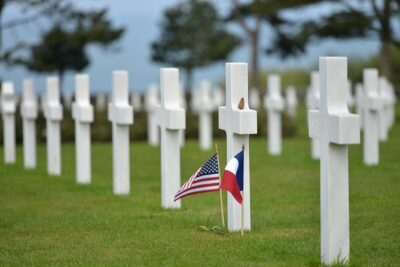
Omaha Beach D-Day Experience – Afternoon group tour from Bayeux
Read our review →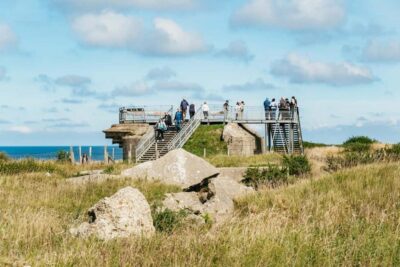
Normandy D-Day Sites Guided Day Trip with Lunch
Read our review →Browse the lists this tour appears in