
Reviewed · HISTORICAL TOURS
Explore the Marais: Culture, History & Hidden Gems of Paris
Paris’s Marais is one of the few parts of the city where medieval lanes, grand mansions, Jewish bakeries, LGBTQIA+ culture and sharp modern street art all share the same few blocks. This two-hour walking tour gives you a useful introduction without trying to swallow the whole neighborhood in one gulp. You begin near the Pompidou Center and finish around the Marais’s major landmarks.
I like the small maximum of 12 people, which makes it easier to ask questions and hear your guide in narrow streets. I also like the mix of serious history and simple pleasures: Saint Gervais church, Rue des Rosiers, a pastry stop and the grand Place des Vosges. The main caution is that this is a quick overview, not a full food tour. You walk about 2 kilometers, and only one pastry is included. Extra food and drinks cost more.
In This Review
- Key points to know before you book
- Why the Marais works so well for a walking tour
- Starting opposite the Pompidou Center
- Hôtel de Ville and the modern Marais
- Saint Gervais Church and medieval street details
- The merveilleux pastry stop
- Rue des Rosiers and Jewish Paris
- Place des Vosges and the Victor Hugo connection
- Place de la Bastille and the French Revolution
- What the $56 price gets you
- Pace, walking, weather and the best audience
- Should you book the Marais walking tour?
- FAQ
- How long does the Marais walking tour last?
- Where does the tour start?
- Where does the tour end?
- What language is the tour conducted in?
- How many people are in each group?
- Is food included?
- Is the tour suitable for vegetarians?
- What should I bring?
- Can I cancel or pay later?
Key points to know before you book
- A compact Marais introduction: Cover major sights in about two hours, with roughly 2 kilometers of walking.
- Three stories in one neighborhood: Learn about medieval Paris, the Jewish Quarter and the role of the LGBTQIA+ community in shaping the Marais today.
- A real pastry stop: The included merveilleux is a meringue-based French treat, not just a quick look through a shop window.
- Small-group format: The tour takes no more than 12 people, and a private option is available.
- A useful first-day activity: Guides such as Camila, Paloma, Adele, Mitch and Laure have been praised for adjusting the pace and offering food and shopping suggestions.
- Simple practical needs: Wear comfortable shoes, bring an umbrella, and plan for extra money if you want falafel, drinks or other snacks.
Why the Marais works so well for a walking tour
The Marais is not a neighborhood you understand from one postcard view. Its appeal comes from quick changes in mood. One moment you are looking at a medieval street, and a few minutes later you are beside a fashionable shop, a synagogue, a gay bar or a lively food counter.
That makes a guide useful. On your own, you can easily walk past a corbelled house, an old church or a meaningful street without knowing what you are seeing. This tour gives those places a story, then links them to the people who live, work and gather here now.
The route also has a good balance of famous and less obvious sights. You get the Centre Pompidou and Hôtel de Ville, both easy to find on a Paris map, but the focus soon shifts to smaller streets and local corners. You are not spending two hours on a single grand monument. You are learning how a whole district fits together.
The tone should suit visitors who want history without a lecture. Guides including Camila, Paloma, Adele, Mitch and Laure have been singled out for clear explanations, friendly conversation and a willingness to adapt the route to personal interests. That matters in a neighborhood where one person may care most about architecture, another about Jewish Paris and another about current LGBTQIA+ life.
More Historical Tours in Paris
- Paris: Louvre Museum Entry with History of Mona Lisa
★ 3.9 · 2,823 reviews - Paris: Dark History and Ghostly Guided Walking Tour
★ 4.7 · 1,000 reviews - Le Marais/Paris – The Historic, Trendy, Jewish, LGBT district
★ 5.0 · 341 reviews
Starting opposite the Pompidou Center
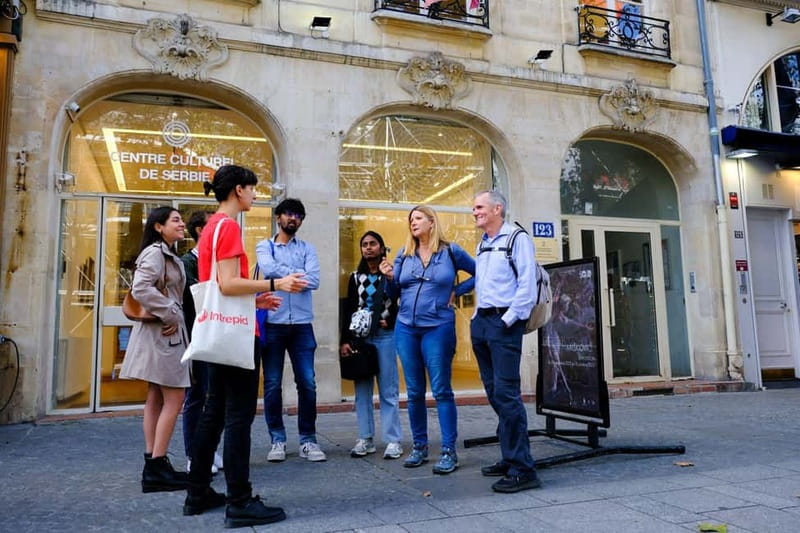
The meeting point is opposite the Centre Pompidou, near the Centre Culturel de Serbie. Look for a guide holding a sign with the local partner’s name. This is a busy central area, so arrive with enough time to identify the guide rather than rushing in at the scheduled start.
The Pompidou itself is not a full museum visit on this walk. The tour includes about 10 minutes of guided attention here, mainly as a starting point for understanding the area. You may get some street art and a quick look at the building’s unmistakable modern design before moving into the Marais.
This opening works well because it places you at the border between the city’s modern cultural scene and its older streets. If you have just arrived in Paris, it is a good way to get your bearings fast. If you have already visited the Pompidou, the value is less about seeing the building and more about beginning the neighborhood walk from a convenient landmark.
The tour then passes the Stravinsky Fountain and nearby street art. These details help set the mood. The Marais is not frozen in the past, and the route makes that clear from the first few minutes.
Hôtel de Ville and the modern Marais
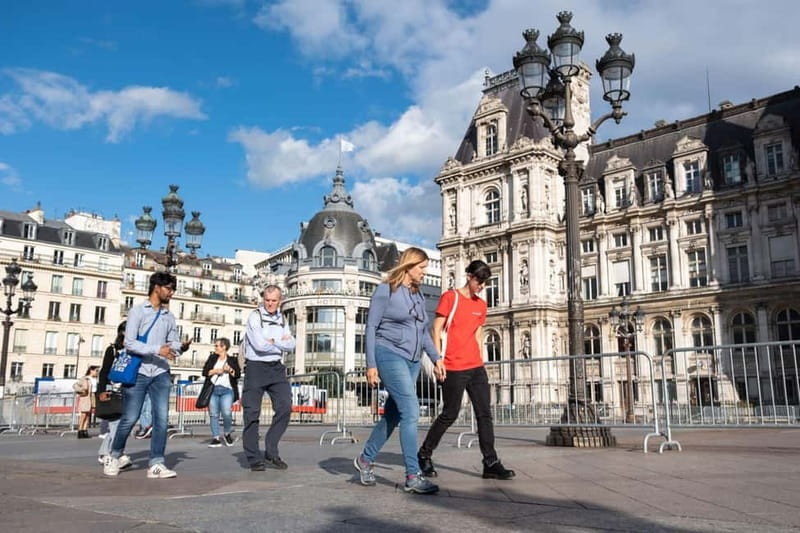
Hôtel de Ville is the next major stop, with about 15 minutes for sightseeing and explanation. The grand civic building gives your guide a chance to place the Marais within the wider story of Paris.
From here, the tour turns toward the neighborhood itself. You begin to see how old Parisian buildings sit beside newer shops, galleries and places connected with LGBTQIA+ life. The tour treats the LGBTQIA+ community as part of the Marais’s identity, not as a decorative side note.
That is one of the strongest reasons to choose this walk. Many history tours explain medieval streets and royal buildings but skip the people and communities shaping the district today. Here, you get both. You can expect discussion of how LGBTQIA+ life has influenced the Marais’s public character and commercial scene.
The treatment is likely most useful for visitors who want more than a list of dates and architectural labels. Ask questions if this part interests you. The small group gives you a better chance of turning a standard explanation into a conversation.
Saint Gervais Church and medieval street details
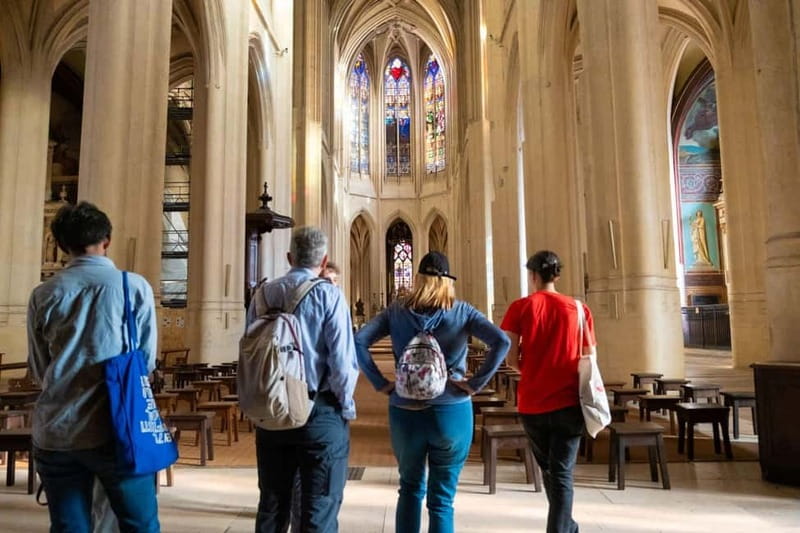
Saint Gervais church receives about 15 minutes of sightseeing. It is one of the route’s best chances to slow down and look closely at a building that can be easy to overlook when you are hurrying between larger Paris sights.
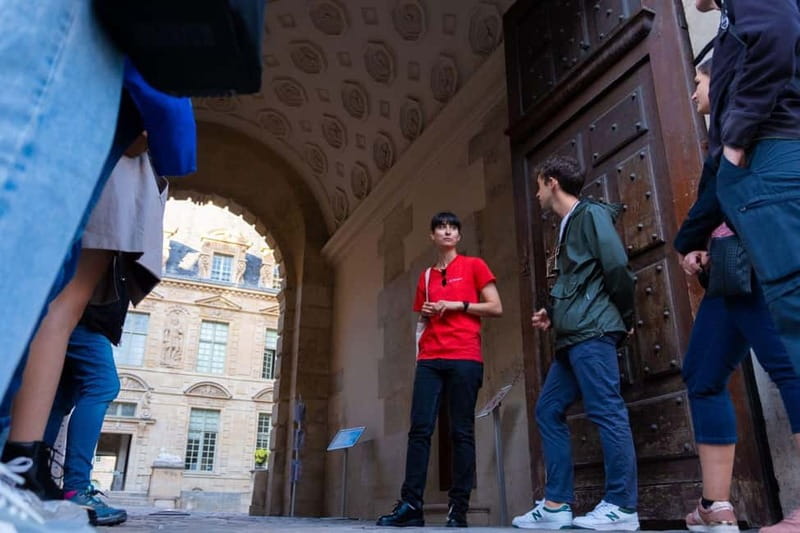
Your guide explains the church’s story and legacy, then leads you through older streets nearby. Look for medieval details such as corbelled houses, where upper floors project over the street. These structures give the Marais a look that feels very different from the broad boulevards associated with central Paris.
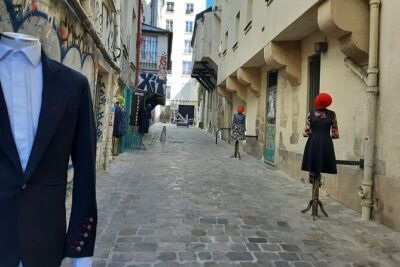
This portion rewards careful looking. The buildings are not presented only as pretty backdrops. Their shape, age and position help explain how the neighborhood developed. You might also spot small pieces of street art that are easy to miss without someone pointing them out.
Camila was praised for turning these discoveries into a kind of street-art treasure hunt, while Paloma was noted for giving information at a comfortable pace rather than rattling off facts. Those are useful qualities here. Narrow streets can feel crowded, and you need enough time to look up, listen and take photographs.
The drawback is time. Fifteen minutes at the church is enough for an introduction, but not for a detailed architectural study. If church interiors are a top priority, you may want to return later on your own.
More history-led days around Paris:
- Paris City of Fashion History Private Guided Walking Tour
★ 5.0 · 221 reviews - Paris: Le Marais & Montmartre Jewish History Walking Tour
★ 4.8 · 170 reviews - Historic Paris Walking Tour in English
★ 4.9 · 78 reviews - The historic district of Montmartre
★ 4.9 · 66 reviews
The merveilleux pastry stop

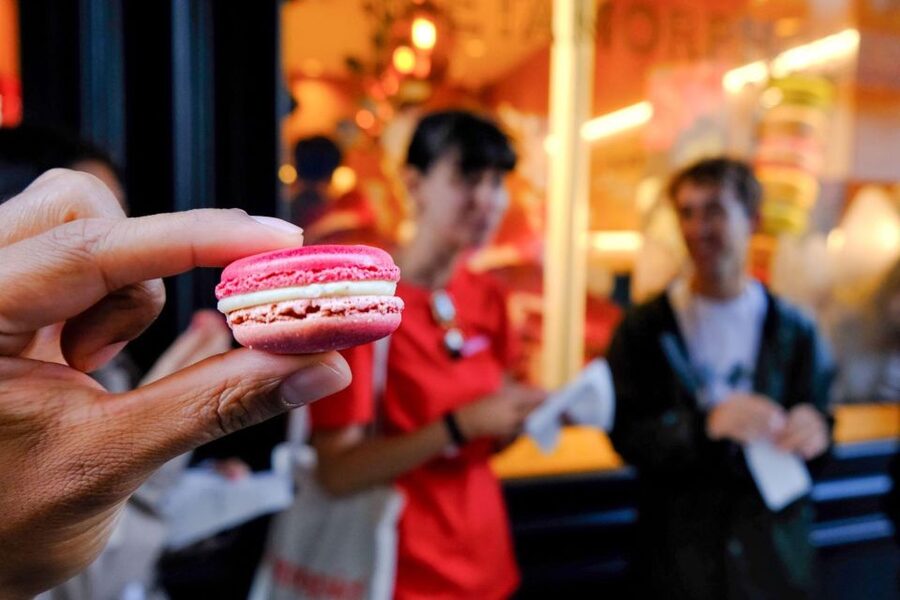
The food break centers on a merveilleux, a French pastry built around meringue. It is a small but welcome change of pace after the first stretch of walking and explanation.
I like this kind of tasting on a neighborhood walk because it connects food with place without pretending that one pastry is a full meal. You get a local specialty while remaining close to the route, rather than losing half the tour to a long restaurant stop.
Diet is important here. The tour suits vegetarians, but it is not suitable for lactose-free, gluten-free or vegan participants. The included pastry also means you should not book this expecting a broad tasting menu. Drinks and additional food are not included, so bring a little extra money if you want to try more along the way.
Some tour descriptions can make a short pastry stop sound like a complete culinary experience. This one is better understood as a history walk with one food sample. If that balance sounds right, the merveilleux adds charm. If food is your main reason for booking, choose a dedicated food tour instead.
Rue des Rosiers and Jewish Paris
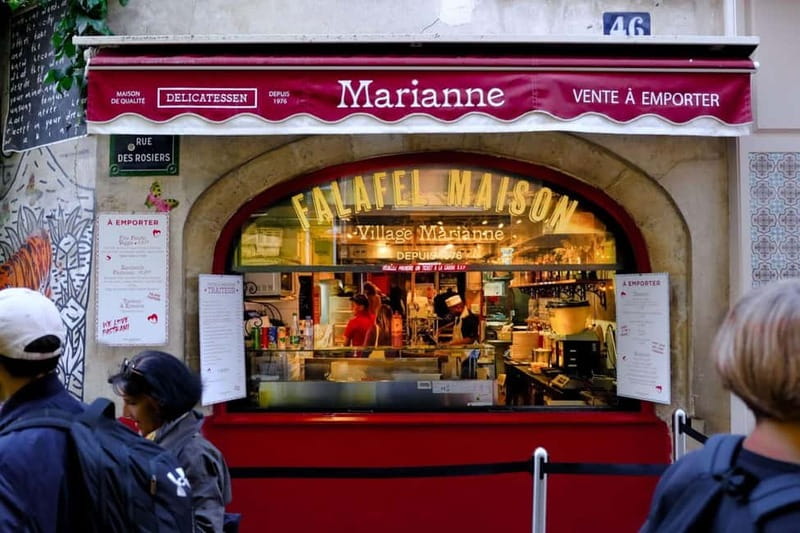
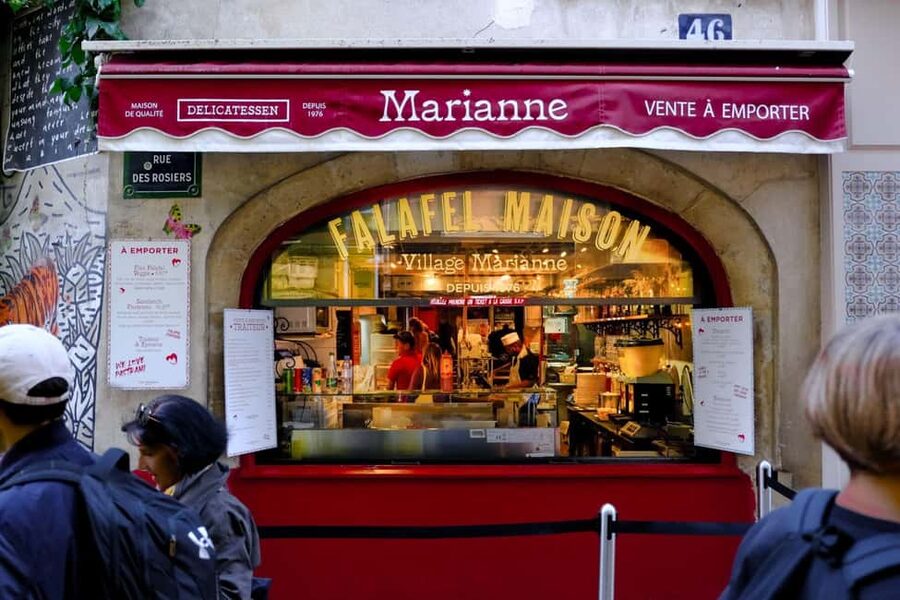
Rue des Rosiers is the heart of the route’s Jewish Quarter section. The street is known for Jewish cultural life and food, including falafel shops and bakeries. Here, your guide explains how the Jewish community has shaped the Marais.
The important point is that Rue des Rosiers is more than a place to grab lunch. It gives you a way to connect daily food, religious identity, migration and neighborhood change. Your guide can help you read the street as part of Paris’s social story rather than treating it as a line of restaurants.
You may want to return here after the tour for a meal, but food bought along the way is extra. The tour does not promise a falafel tasting, and you should not assume that every stop includes a sample. The included item is the pastry.
This is also a good place to ask about current neighborhood life. The Marais has changed over time, and the tour’s value comes from showing how several communities and eras overlap. The Jewish Quarter and LGBTQIA+ Marais are not separate worlds on a map. They occupy the same urban space, sometimes within a few minutes of one another.
Place des Vosges and the Victor Hugo connection
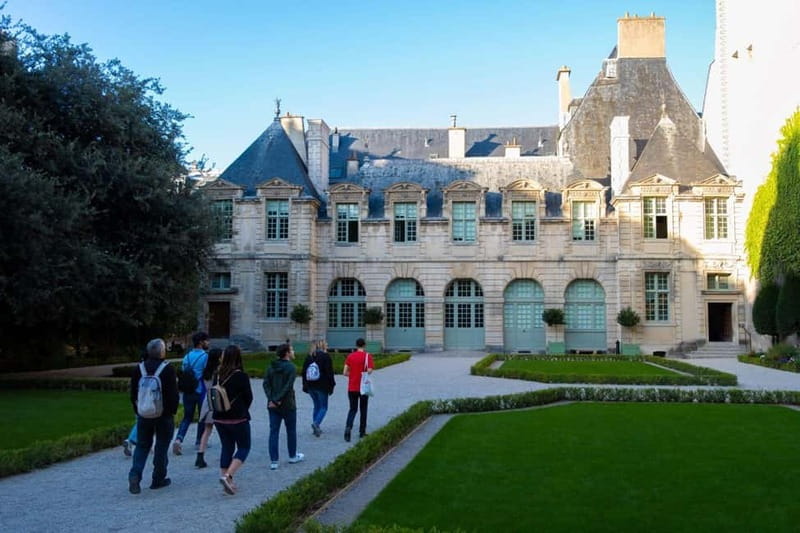
Place des Vosges is one of the most beautiful stops on the walk. Its regular arcades and symmetrical design offer a sharp contrast to the cramped medieval lanes you have just explored.
The square is linked with Victor Hugo, whose former home is here. The tour uses the place to connect literature, architecture and the life of the neighborhood. Even if you are not a Hugo enthusiast, the square makes a fine pause because its scale and design help you see another side of the Marais.
This is likely the most photogenic part of the route, but the tour is not simply a photo stop. Listen for the explanation of why the square matters and how it fits into the district’s past.
The stated route includes Place des Vosges near the end, followed by Place de la Bastille, while the listed finish is back at Place des Vosges. Since route details can vary by guide or departure, check the final meeting information when you book. In any case, you should expect the walk to center on these two locations rather than a distant end point.
Place de la Bastille and the French Revolution
The route also includes Place de la Bastille, with up to 30 minutes devoted to sightseeing. This gives the guide more time than most other stops and makes sense: the square carries enormous symbolic weight in French history.
The Bastille was the fortress-prison whose fall became a defining moment of the French Revolution. Today, the area is a broad urban space with cafés and bars, so the contrast between the historic event and the modern setting is part of the interest.
The tour presents Bastille as a useful place to continue your evening. You may want to stop for a drink at a local bar after the walk, but that drink is not included. This is a practical ending for visitors who prefer an activity that leaves them near places to eat and socialize.
One caution: the route’s stop descriptions allot 30 minutes here, but the overall activity is advertised as two hours. Guides may adjust the time spent at each place, especially for a private group or a lively conversation. Think of the schedule as a framework, not a minute-by-minute guarantee.
What the $56 price gets you
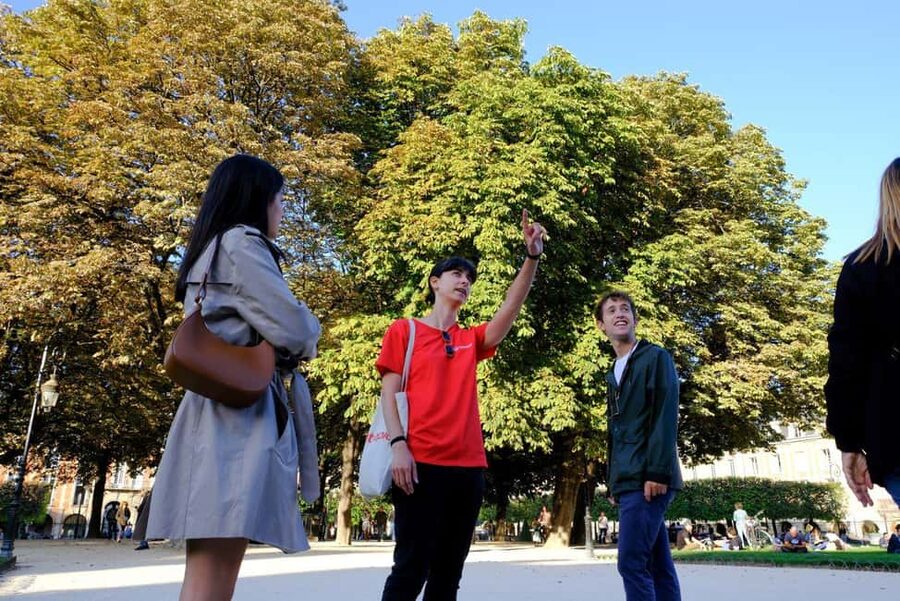
At $56 per person, this is not the cheapest way to walk through the Marais. You can stroll Rue des Rosiers and Place des Vosges for free. The price pays for the guide’s local context, the planned route, the small group and the pastry.
For me, the value is strongest if this is your first visit to the Marais. A good guide can show you details you would pass without noticing and help you decide where to return for a meal, drink or longer look. Camila, Paloma, Adele, Mitch and Laure have each been described as friendly, clear and able to answer questions beyond a basic script.
The value is also better for solo visitors and couples who want conversation. A maximum of 12 people is small enough to feel personal without requiring the price of a private guide. A private group is available if you want the route shaped more closely around your interests.
The value is weaker if you already know the Marais well or want a serious food crawl. Only a pastry is included, and drinks and extra food cost more. Some food-focused tour comments refer to cheese, charcuterie and wine, but those items are not included in the details for this experience. Book based on the stated offer: a walking tour plus one pastry.
Pace, walking, weather and the best audience
The route covers about 2 kilometers, or 1.2 miles. That is not a long distance, but Paris streets can be uneven and the tour includes frequent stops. Comfortable shoes are essential. Bring an umbrella because the walk operates outdoors and the weather can change.
This is a child-friendly activity, especially for families who prefer short explanations mixed with visual stops and a treat. The two-hour length is easier for children than a full-day historical tour, though younger children may still find the pauses and street walking tiring.
English is the listed tour language. If you need another language, this activity is not the right choice based on the available information. Private groups can provide a more personal experience, but the standard small group should already offer a reasonable amount of contact with the guide.
I would place this tour early in a Paris stay. Use it to learn the street plan, note restaurants and shops, then return to the places that caught your interest. Guides have offered recommendations for food, shopping and further exploring, which makes the walk more useful than a one-time photo circuit.
You can cancel up to 24 hours before the activity for a full refund, and reserve now while paying later. Those policies are helpful if your Paris schedule is still moving around, but the main booking decision remains simple: do you want a short, guided neighborhood introduction or a longer food experience?
Should you book the Marais walking tour?
Book it if you want a thoughtful first look at the Marais, with medieval architecture, Jewish Paris, LGBTQIA+ culture, street art and a pastry in one compact outing. The small group, flexible guides and manageable walking distance make it a sensible choice for first-time visitors, solo travelers and families.
Skip it if you want a full meal, several tastings or detailed access inside every landmark. You will get an introduction rather than an exhaustive study, and extra food and drinks are on your own.
For most visitors, I would book it near the start of the trip, wear good shoes, bring an umbrella and keep the rest of the afternoon open around Place des Vosges or Bastille. That gives you time to follow up on the places and foods that caught your attention.
FAQ
How long does the Marais walking tour last?
The tour is scheduled for two hours. The route covers about 2 kilometers, or 1.2 miles, with stops for guided sightseeing.
Where does the tour start?
It starts opposite the Centre Pompidou, near the Centre Culturel de Serbie. Your English-speaking guide will hold a sign with the local partner’s name.
Where does the tour end?
The activity information lists Place des Vosges as the finish. The route also includes Place de la Bastille, so check the final meeting details when booking.
What language is the tour conducted in?
The live tour guide speaks English.
How many people are in each group?
The small group has a maximum of 12 passengers. A private group option is also available.
Is food included?
One pastry, a merveilleux, is included. Drinks and additional food are not included.
Is the tour suitable for vegetarians?
Yes. It is suitable for vegetarians, but it is not suitable for lactose-free, gluten-free or vegan participants.
What should I bring?
Bring comfortable walking shoes and an umbrella.
Can I cancel or pay later?
You can cancel up to 24 hours in advance for a full refund. The reserve-now, pay-later option lets you book without paying immediately.
Recently reviewed around Paris
- Louvre Private Tour – The Essentials and More with Expert Guide★ 5.0 · 227 reviews
- 2CV tour by night★ 5.0 · 55 reviews
- Eiffel Tower Second or Summit Floor Access by Elevator with Views★ 3.5 · 161 reviews
- The only Paris Wine Tasting experience you need to do – 2 hours★ 5.0 · 265 reviews
- 2 Hour Street-art Walk and Space Invaders Hunt in Paris★ 5.0 · 27 reviews
- 2 hour outdoor group activity in Paris: SAINT GERMAIN★ 5.0 · 48 reviews
- Sainte-Chapelle, Conciergerie & Palais de Justice Private Tour★ 5.0 · 72 reviews
- Private 2 – Hour Paris Landmarks Tour by Golf Cart Mini Moke★ 5.0 · 38 reviews
Historical Tours, compared.

Louvre Museum Entry with History of Mona Lisa
Read our review →

Toulouse Food & History Tour with a Chef (in English)
Read our review →
Small-Group Full-Day Tour of Côte de Nuits, Côte de Beaune Vineyards and Beaune Historical District
Read our review →
Le Marais/Paris – The Historic, Trendy, Jewish, LGBT district
Read our review →Browse the lists this tour appears in