
Reviewed · WALKING TOURS
Historic Paris Walking Tour in English
Paris reveals itself best on foot, and this tour puts the city’s grandest sights into one lively historical story. In 150 minutes, you move from Hôtel de Ville toward Notre-Dame, the Louvre, Pont des Arts, and the Tuileries Gardens while hearing about Quasimodo, Napoleon, the Mona Lisa theft, revolution, and the rebuilding of Paris.
I like the clear route and the guides’ storytelling. Thomas, Harry, Tom, Yazid, Francesca, and others have been praised for making art, architecture, military history, and daily Parisian life accessible. I also like the timing: it is long enough to get your bearings, but short enough to leave room for a museum, meal, or picnic.
The main consideration is that this is a walking overview, not a museum visit or a private tour. You should expect exterior sights and a general introduction rather than entry inside every monument, and the pay-as-you-wish format means the advertised $31 covers the reservation and guide payment rather than functioning like a simple fixed-price sightseeing ticket.
In This Review
- Key points at a glance
- Starting at Hôtel de Ville, where Paris opens its story
- Notre-Dame and Sainte-Chapelle, faith and royal power by the Seine
- From royal palace to art museum at the Louvre
- The Tuileries Gardens and the making of modern Paris
- Pont des Arts and the Seine’s best connections
- Revolution, Napoleon, and the boulevards
- What the guide style means for your experience
- Price, timing, and the pay-as-you-wish format
- Who should book this Paris walk?
- Practical advice before you go
- Should you book the Historic Paris Walking Tour?
- FAQ
- How long is the Historic Paris Walking Tour?
- What language is the tour conducted in?
- Where does the tour meet?
- How early should I arrive?
- Does the tour include hotel pickup and drop-off?
- What sights are covered?
- Does the tour include admission to the Louvre or other monuments?
- How much does the tour cost?
- Can I cancel or pay later?
Key points at a glance
- A strong first-day route: Start at Hôtel de Ville and connect several central Paris sights in one walk.
- History with plenty of color: Hear about Gallic Paris, Roman rule, revolution, Napoleon, Quasimodo, Hitler, and the Mona Lisa theft.
- Major landmarks included: The route covers Notre-Dame, Sainte-Chapelle, the Louvre, Pont des Arts, the Tuileries Gardens, and views toward the Eiffel Tower.
- English-speaking local guides: Guides including Thomas, Harry, Tom, Yazid, and Francesca are praised for warmth, humor, and lively explanations.
- Good value for a short introduction: The 150-minute walk gives you useful city context before you spend money on museums and meals.
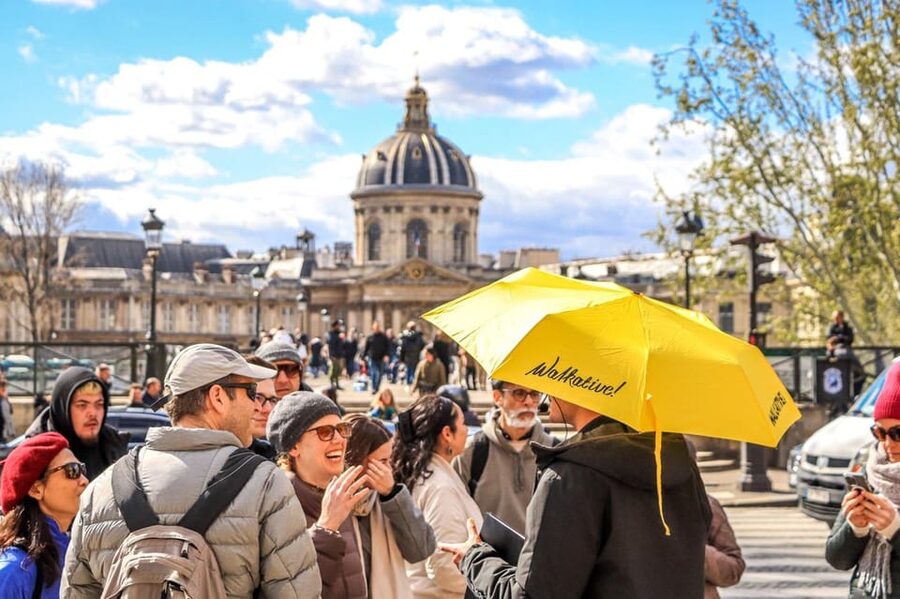
- Simple meeting point: Meet outside Hôtel de Ville metro station at exit 5, beside the yellow umbrella, 10 minutes early.
Starting at Hôtel de Ville, where Paris opens its story
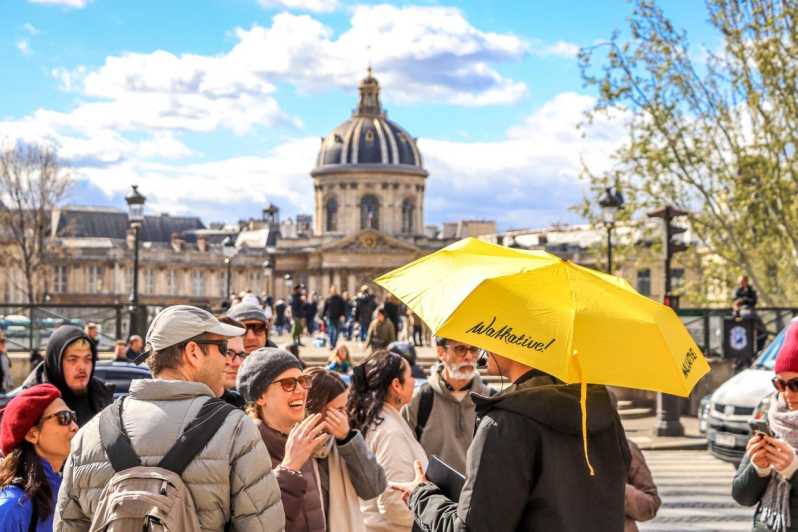
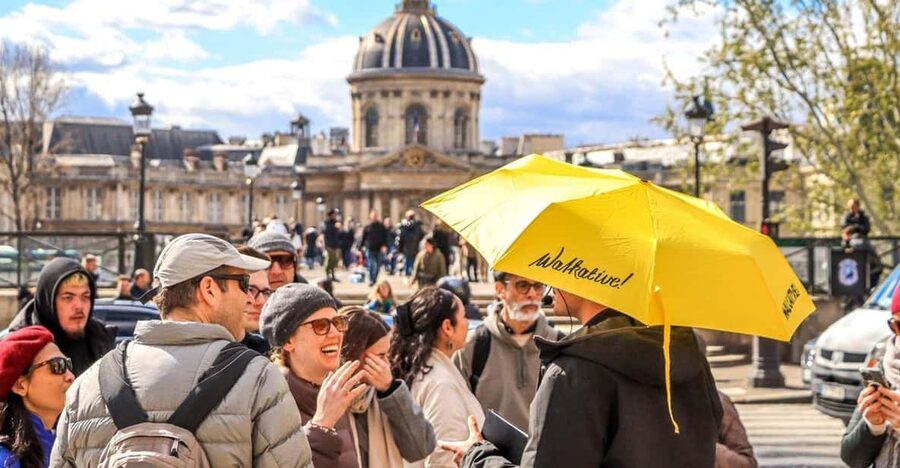
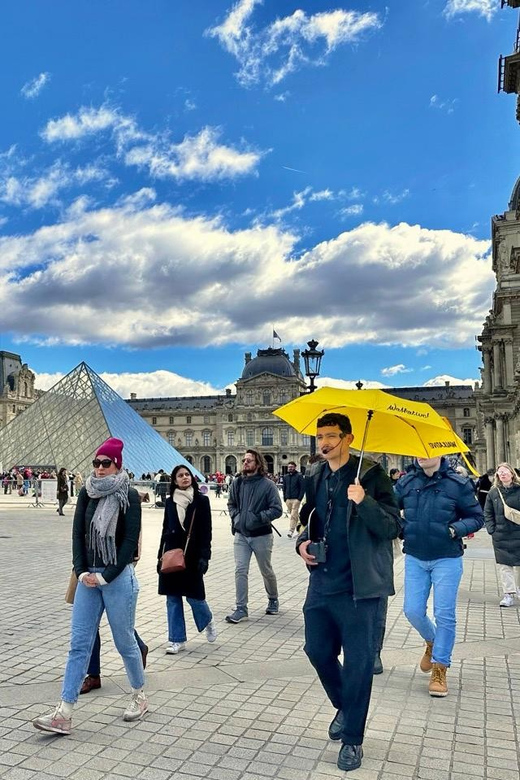
The meeting point outside Hôtel de Ville metro station is practical. Exit 5 takes you directly toward the yellow umbrella, so you do not need to search a broad plaza for a café or shop sign. Arrive 10 minutes before the start. That small buffer matters in central Paris, where a missed corner or crowded pavement can make a group hard to find.
Hôtel de Ville is a fitting place to begin because Paris is not just a collection of pretty façades. Its story is political, social, and often explosive. The city began on marshy ground beside the Seine, where the Gallic Parisii lived. Rome later took control, and Paris eventually became the capital of the Franks in the sixth century.
I appreciate that this tour sets up those early layers before rushing to the postcard sights. You get a reason for the city’s location and power. Paris grew into France’s political, economic, religious, and cultural center, and the walk uses that long timeline to explain why the buildings around you matter.
The pace should suit most people who can walk for two and a half hours without a strenuous climb. You will be on city streets, bridges, and public spaces, so comfortable shoes are more useful than anything fancy. Paris may reward elegance, but its paving stones reward sensible footwear.
More Historical Tours in Paris
- Paris: Louvre Museum Entry with History of Mona Lisa
★ 3.9 · 2,823 reviews - Paris: Dark History and Ghostly Guided Walking Tour
★ 4.7 · 1,000 reviews - Le Marais/Paris – The Historic, Trendy, Jewish, LGBT district
★ 5.0 · 341 reviews
Notre-Dame and Sainte-Chapelle, faith and royal power by the Seine
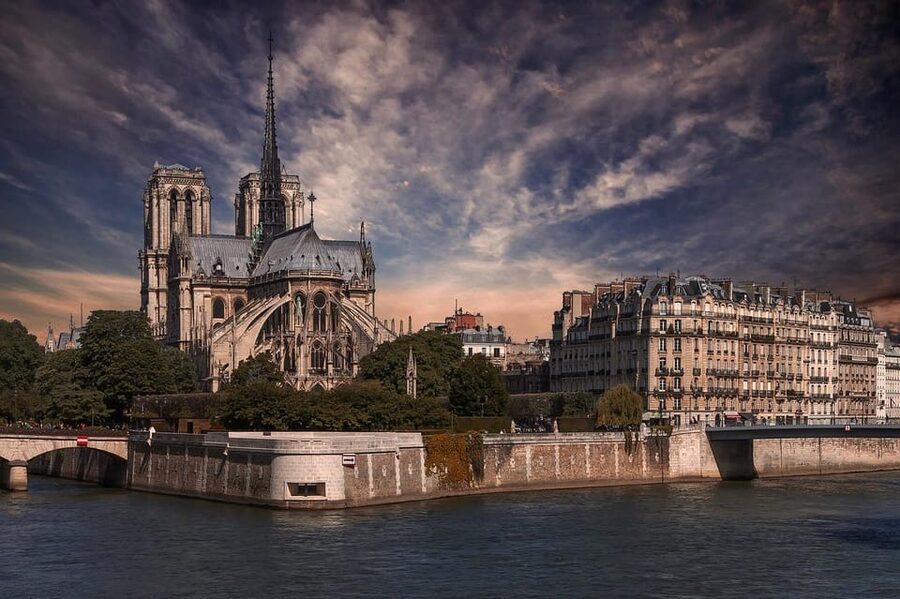
Notre-Dame Cathedral is one of the tour’s essential stops. Even when you have seen its image countless times, standing near the cathedral gives the building a different force. The tour places Notre-Dame inside the story of medieval Paris, when the city had become one of Europe’s largest urban centers.
The cathedral also provides a natural opening for stories about religion, monarchy, architecture, and popular culture. You may hear about Quasimodo and the way Victor Hugo’s famous tale helped focus attention on Notre-Dame. That is more useful than treating the cathedral as a backdrop for photographs. It shows how literature can shape the way an entire city is seen.
Sainte-Chapelle is included among the sights along the route. The tour’s purpose is explanation, not a guaranteed interior visit, so you should not book this walk as a substitute for an admission ticket. If its stained glass and royal connection are high on your list, allow separate time to visit it properly.
This is one of the walk’s strengths: the route links nearby monuments without pretending they all tell the same story. Notre-Dame expresses the religious importance of medieval Paris, while Sainte-Chapelle points to royal authority and the use of art to display power. You get more from both when you understand that difference.
From royal palace to art museum at the Louvre
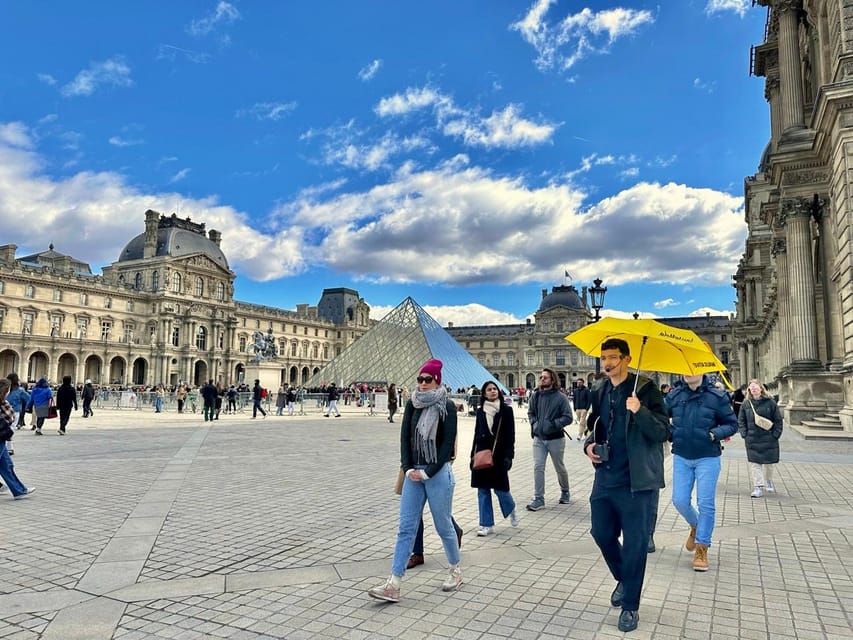
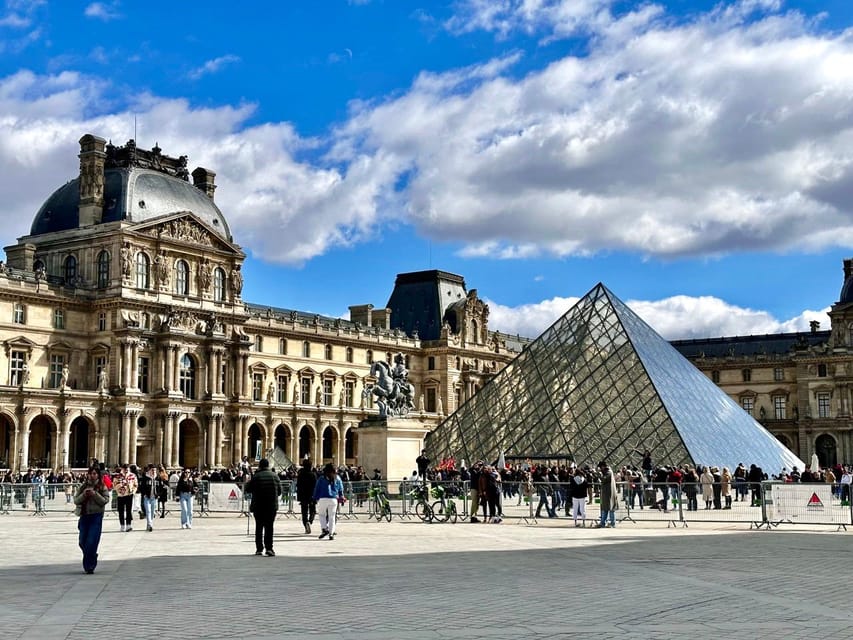
The Louvre is not introduced simply as the place where you can see the Mona Lisa. Its earlier identity as a palace gives the building a more interesting role in the city. The tour explains how the Louvre developed through France’s royal and political history before becoming one of the world’s major art museums.
That context helps you decide how to use your own museum time. A first visit to the Louvre can be overwhelming. It contains far more art than you can see in one session, and the building itself can distract you from planning. After this walk, you should have a clearer sense that the Louvre is both a museum and a record of French power.
The Mona Lisa story adds a lighter, sharper note. The daring theft is one of the most famous art crimes in history, and it gives the guide an opportunity to explain how one painting became such a powerful symbol. Expect the story as part of the walk, not a queue to see the painting itself.
The Louvre portion may be the highlight for anyone interested in art history, but it has an obvious limit. You will not have time to explore the galleries during a 150-minute walking tour. I see that as a benefit if you are visiting Paris for several days and want orientation first. It is less useful if your only goal is a museum visit.
The Tuileries Gardens and the making of modern Paris
The Tuileries Gardens offer a change of pace. After the cathedral, palace, and urban streets, the gardens give you room to think about how Paris was designed for pleasure, ceremony, and public life. They are also a natural place to connect royal history with the city’s later transformation.
The tour explains Paris as a city shaped by conflict and inequality. The Enlightenment brought major advances in science and philosophy, but severe poverty and social imbalance helped drive the French Revolution. Stories about the monarchy, the guillotine, and Napoleon give the gardens and surrounding boulevards a more complicated meaning.
I like this mix of high politics and ordinary city life. Paris is often sold as romance, fashion, and cuisine, but its character also comes from protest and argument. The French capital has a long tradition of residents challenging authority, and the tour makes that part of the city’s personality easier to understand.
The gardens are also useful for your own trip planning. If you want a place for a picnic with cheese, baguette, and wine, this area helps you see how much of Paris can be enjoyed outdoors. The tour does not provide food or a picnic, but it points you toward the kind of public setting that makes the city feel lived in rather than staged.
More Walking Tours in Paris
- Paris Top Sights Half Day Walking Tour with a Fun Guide
★ 5.0 · 2,893 reviews - Montmartre Hidden Gems and Scenic Highlights Walking Tour
★ 5.0 · 2,684 reviews - Montmartre Hill French Gourmet Food and Wine Tasting Walking Tour
★ 5.0 · 2,588 reviews - Paris Île de la Cité and Notre-Dame Walking Tour With Crypt
★ 5.0 · 2,272 reviews
Pont des Arts and the Seine’s best connections
Pont des Arts gives the walk one of its most attractive river moments. Bridges are central to understanding Paris because the Seine is not merely scenery. It separates and connects important parts of the city, and the bridges provide views toward major buildings, quays, and elegant streets.
The bridge also supports the tour’s broader theme of art and public life. From here, you can connect the Louvre, the river, and the surrounding historic center in a single view. A guide can make that geography practical, helping you understand how to move around on your own after the walk.
The route also includes beautiful boulevards and bridges beyond the named stops. You will hear about the sweeping 19th-century rebuilding of Paris, especially the work associated with Baron Haussmann. Wide boulevards, parks, aqueducts, and sewers changed how the city worked and looked.
There was a hard political edge to this redesign. Wider roads made movement easier, improved sanitation, and created grand public avenues. They also made it more difficult to build barricades during uprisings. That is the sort of detail that turns a pleasant walk into useful city knowledge.
Revolution, Napoleon, and the boulevards
The historical range is unusually broad for a 150-minute introduction. The tour moves from ancient Paris to Roman rule, the Franks, medieval expansion, religious violence, the Enlightenment, revolution, and Napoleon’s rise. You are not getting a specialist lecture on one period. You are getting a connected explanation of why Paris became so influential.
The revolution section should appeal to history enthusiasts, but the tone is meant to stay accessible. Danielle’s December 2024 tour, for example, was described as suitable for serious history fans and people with only a passing interest. That balance is important in a mixed group, especially if one person wants kings and battles while another prefers buildings, food, and stories about daily Paris.
Napoleon’s connection to Paris adds another turn. The tour uses his ambitions to show how the city’s monuments and political identity reached beyond France. You may also hear stories connected to Hitler, giving the route a 20th-century layer and showing how Paris survived periods of occupation and power struggles.
Guides use different styles. Tom and Thomas have been praised for warmth, humor, and clear historical framing. Yazid brings an art history background, while Harry is known for strong storytelling. One guide used illustrations to explain architecture, revolution, and Parisian passion. That can be especially helpful when a building’s original appearance is hard to picture from the street.
What the guide style means for your experience
The most important part of this tour is the person holding the group together. A good walking guide turns a sequence of monuments into a narrative, and the strongest feedback points to guides who are entertaining as well as informed.
Tom was singled out for answering questions during a crisp February morning walk, while the experience finished on time. That combination matters. You want room for questions, but you also want a dependable end time if you have a lunch booking or museum slot.
Harry has been praised as a storyteller who makes the past feel close. Yazid was noted for enthusiasm about art, architecture, and culture. Francesca was described as making the walk enjoyable while revealing places that might otherwise be easy to pass. Those details suggest that the experience depends partly on the guide assigned that day, so you should expect a shared format rather than one fixed personality or script.
The tour uses a thoroughly prepared narrative, but the best guides also respond to the group. You can ask about art, military history, buildings, culture, or local habits. The experience is likely to be most rewarding if you listen actively and ask a question or two instead of treating it as a silent photo walk.
The group may not be tiny. One particularly positive account estimated fewer than 20 people, while noting that the walk never felt like a lumbering crowd. Group size can vary, so expect a public walking tour rather than private attention at every stop.
Price, timing, and the pay-as-you-wish format
The listed price is $31 per person for 150 minutes. On a simple hourly calculation, that is a reasonable price for an English-language introduction covering several of central Paris’s most important areas. You are paying for a local guide, a prepared narrative, and a route that saves you the work of joining the historical dots yourself.
The payment structure needs careful reading. This is a general pay-as-you-wish tour, and the $31 reservation amount covers the booking fee and the guide’s payment in this case. You should not assume that the price works like a traditional fixed admission ticket or that no further reward is expected. Check the booking terms so you understand how the payment is handled before you go.
For value, I would compare this with the cost of spending your first afternoon wandering without context. The walk can help you choose which museums deserve your time, understand the layout of the historic center, and collect ideas for later meals and independent walks. It is a particularly useful purchase for a first visit.
The free cancellation policy allows cancellation up to 24 hours before the activity for a full refund. You can also reserve now and pay later, which helps if your Paris schedule is still shifting.
Who should book this Paris walk?
I would recommend it most strongly for first-time visitors, solo visitors, couples, and families with mixed interests. The walk gives you a shared foundation without demanding that everyone already cares about French kings, revolutions, or art.
Solo visitors may find the group format reassuring. Christine, attending a solo event outside her comfort zone, valued the friendly and inclusive atmosphere of her guide and group. That account concerns an evening event rather than this exact route, so I would not treat it as a promise about every walking group. Still, it points to the company’s broader emphasis on approachable guides and social ease.
History fans should appreciate the scope, though specialists may want more time at each site. Art lovers will like the Louvre and Mona Lisa material, but anyone wanting detailed gallery analysis should book a museum-focused experience instead. Food lovers get useful city context, but no tasting or meal is included.
You should think twice if you dislike walking, want guaranteed monument interiors, or need a highly private pace. The tour covers a lot of ground and is designed as an overview. Its value comes from connections between places, not from lingering for a long time at one building.
Practical advice before you go
Wear comfortable shoes and dress for the weather. The walk lasts 150 minutes, and the route includes streets, bridges, and open public spaces. A cold February morning can be pleasant for sightseeing, but you will feel the weather more than you would inside a museum.
Bring water and keep your schedule realistic after the finish. The walk is not described as strenuous, but it is long enough that you may want a short break before tackling the Louvre interiors or another major attraction.
Meet outside Hôtel de Ville metro station at exit 5 and look for the yellow umbrella. Arriving 10 minutes early is not busywork. It gives you time to locate the group, settle in, and avoid starting the tour flustered.
I would book this early in your Paris stay, not on your final day. One person who took it late wished it had happened sooner, and that makes sense. The advice about neighborhoods, museums, bridges, and gardens becomes more useful when you still have time to act on it.
Should you book the Historic Paris Walking Tour?
Book it if you want a smart first look at Paris rather than a checklist of isolated monuments. The route brings together Notre-Dame, Sainte-Chapelle, the Louvre, Pont des Arts, the Tuileries Gardens, grand boulevards, and Eiffel Tower views, while the guide explains the wars, revolutions, art thefts, and personalities behind them.
The strongest reason to choose it is the guide-led storytelling. Names such as Thomas, Tom, Harry, Yazid, and Francesca have been associated with warmth, humor, strong historical detail, and the ability to keep different ages and interests engaged. The 4.9 rating from 78 reviews also points to a consistently well-received experience.
Skip it if you need a private tour, extensive time inside museums, or a narrow specialist subject. For most first-time visitors, though, $31 and two and a half hours buy a useful map of Paris in both the geographic and historical sense. Take the walk early, keep the rest of your day flexible, and use the stories as a guide to your own exploring.
FAQ
How long is the Historic Paris Walking Tour?
The tour lasts 150 minutes, or two and a half hours.
What language is the tour conducted in?
The live tour guide speaks English, and the listed tour language is English.
Where does the tour meet?
Meet at Hôtel de Ville, outside the metro station at exit 5. Look for a yellow umbrella.
How early should I arrive?
Arrive 10 minutes before the activity starts.
Does the tour include hotel pickup and drop-off?
No. Hotel pickup and drop-off are not included.
What sights are covered?
The route includes Notre-Dame Cathedral, Sainte-Chapelle, the Louvre, Pont des Arts, the Tuileries Gardens, elegant boulevards and bridges, and views of the Eiffel Tower.
Does the tour include admission to the Louvre or other monuments?
The provided details describe a walking tour with exterior sightseeing and historical explanations. They do not state that admission to the Louvre, Notre-Dame, Sainte-Chapelle, or another monument is included.
How much does the tour cost?
The listed price is $31 per person. The payment covers the reservation fee and the guide’s payment for this general pay-as-you-wish tour.
Can I cancel or pay later?
Yes. You can cancel up to 24 hours in advance for a full refund, and you can reserve now and pay later.
Recently reviewed around Paris
- Louvre Private Tour – The Essentials and More with Expert Guide★ 5.0 · 227 reviews
- 2CV tour by night★ 5.0 · 55 reviews
- Eiffel Tower Second or Summit Floor Access by Elevator with Views★ 3.5 · 161 reviews
- The only Paris Wine Tasting experience you need to do – 2 hours★ 5.0 · 265 reviews
- 2 Hour Street-art Walk and Space Invaders Hunt in Paris★ 5.0 · 27 reviews
- 2 hour outdoor group activity in Paris: SAINT GERMAIN★ 5.0 · 48 reviews
- Sainte-Chapelle, Conciergerie & Palais de Justice Private Tour★ 5.0 · 72 reviews
- Private 2 – Hour Paris Landmarks Tour by Golf Cart Mini Moke★ 5.0 · 38 reviews
Walking Tours, compared.
Paris Top Sights Half Day Walking Tour with a Fun Guide
Read our review →
Montmartre Hidden Gems and Scenic Highlights Walking Tour
Read our review →
Montmartre Hill French Gourmet Food and Wine Tasting Walking Tour
Read our review →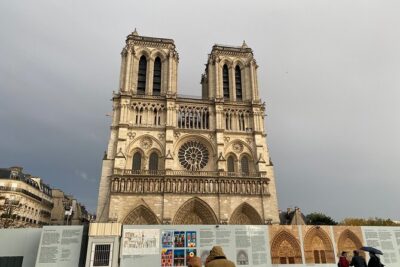
Paris Île de la Cité and Notre-Dame Walking Tour With Crypt
Read our review →
Montmartre Cheese, Wine & Pastry Guided Walking Tour
Read our review →
Paris in a Day: Louvre or Orsay, Eiffel Tower, City Walk & Cruise
Read our review →
Montmartre Highlights Walking Tour with a Local Guide
Read our review →
Browse the lists this tour appears in