
Reviewed · MONTMARTRE TOURS
Paris: Le Marais & Montmartre Jewish History Walking Tour
Paris’s Jewish story comes alive in two very different neighborhoods on this three-and-a-half-hour walk. Le Marais brings you community history, old streets, Jewish businesses, and the solemn Shoah Memorial. Montmartre adds artists, writers, cafés, studios, and sweeping views from Sacré-Cœur.
I like the small group size of up to nine people, which gives you room to ask questions. I also like the thoughtful link between Jewish identity and Parisian art, rather than treating Jewish history as a subject confined to one neighborhood. The main drawback is distance: you walk for about three hours, use public transport between districts, and cannot join once the tour has begun.
In This Review
- Key things to know before booking
- Why this Paris walk feels different
- Starting near BHV Marais
- Le Marais and the streets of Jewish Paris
- Agoudas Hakehilos and Hector Guimard’s design
- The Shoah Memorial, a necessary pause
- From Hôtel de Ville to Montmartre
- Montmartre’s Jewish artists and creative circles
- Finishing at Sacré-Cœur and Square Louise-Michel
- How difficult is the walk?
- Who will get the most from it?
- Practical verdict on the $80 price
- Should you book the Jewish History Walking Tour?
- FAQ
- How long does the tour last?
- What neighborhoods does the tour visit?
- Is the tour conducted in English?
- What is the maximum group size?
- Can I enter the synagogue?
- Is entry to the Shoah Memorial included?
- Are public transport tickets included?
- Is the tour suitable for wheelchair users?
Key things to know before booking
- Two neighborhoods, one connected story: Start in historic Le Marais, then cross Paris to Montmartre for a cultural change of pace.
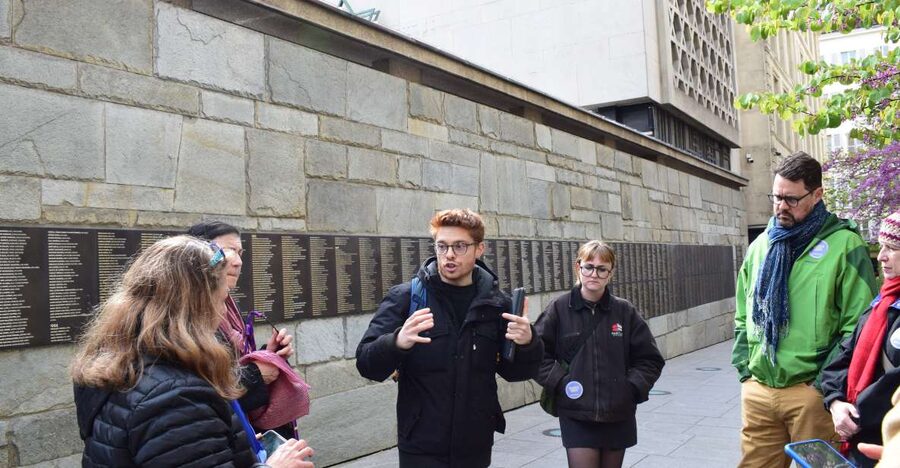
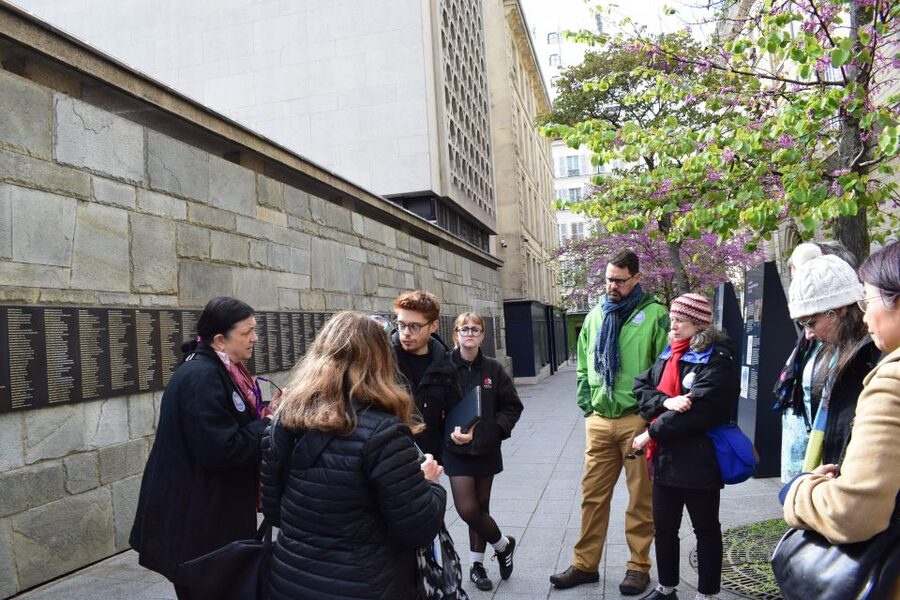
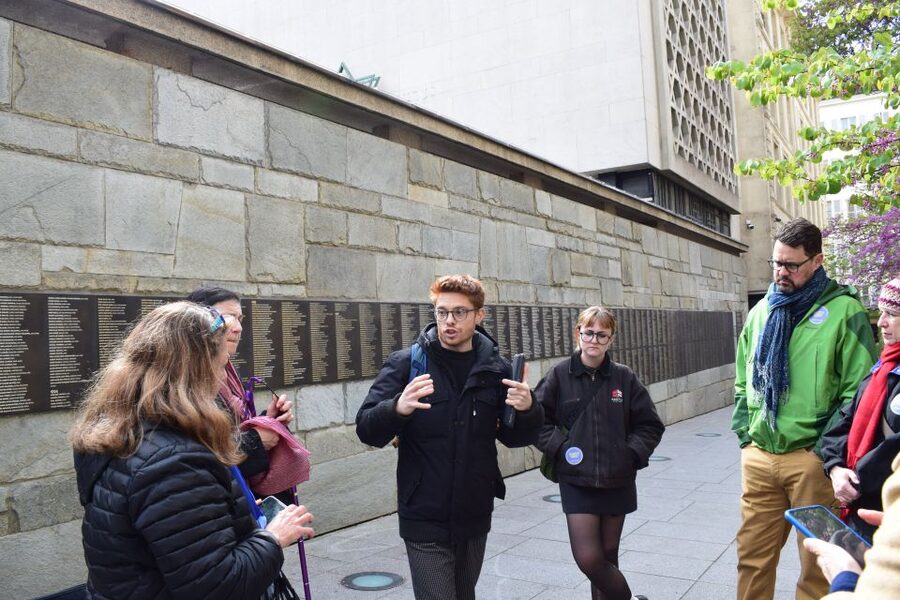
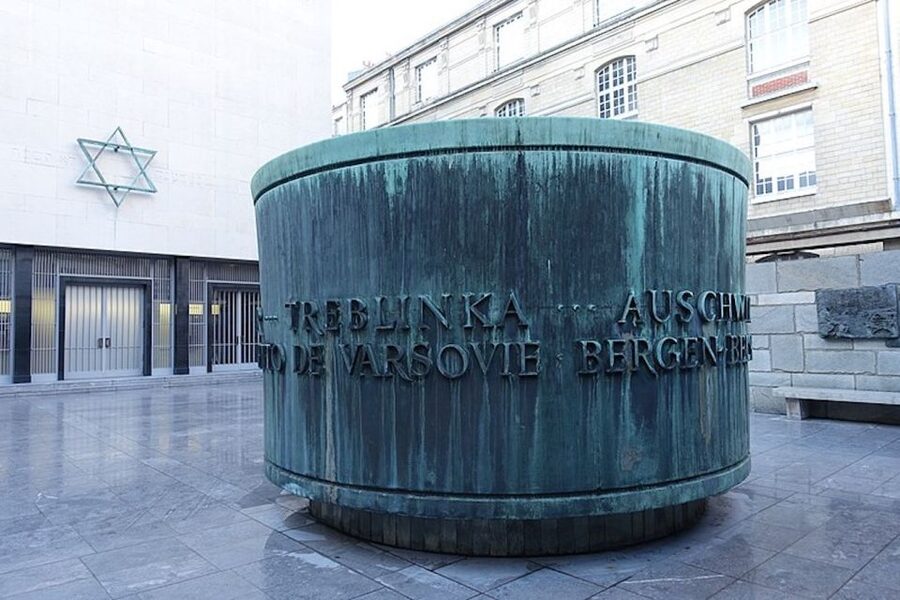
- A serious stop at the Shoah Memorial: The exterior includes the wall of names and a crypt, making this an important and moving part of the walk.
- Guimard’s synagogue is viewed from outside: Agoudas Hakehilos is a striking Art Nouveau landmark, but indoor synagogue visits are not included.
- Montmartre adds Jewish artists and writers: Stops include 7 Rue Ravignan, Le Bateau-Lavoir, the Musée de Montmartre, and 16 Rue du Mont-Cenis.
- Public transport tickets are included: This saves you the trouble of buying a separate ticket for the transfer to Montmartre.
- Good shoes and an early arrival matter: Arrive 15 minutes ahead, and expect uneven streets, stairs, hills, and a brisk pace.
Why this Paris walk feels different
Many Paris walking tours stay in one district. This one links Le Marais and Montmartre, two places that can feel like separate cities within the city. The first half deals with Jewish community life, persecution, memory, and survival. The second turns toward art, literature, and the creative circles that helped shape modern Montmartre.
That contrast is the tour’s best idea. You see Jewish Paris not only through religious buildings and memorials, but also through daily life and artistic work. The experience asks you to connect the past with the streets you are standing on now.
The tour costs $80 per person. That is not a bargain-priced stroll, but the price includes a live English-speaking guide, a group capped at nine, and public transport tickets. For a private or very small booking, that can be fair value, especially if French Jewish history is a main reason for your visit. If you only want a quick look at Le Marais, the price and three-and-a-half-hour commitment may feel excessive.
Guides vary. Benjamin, Benoit, Pierre-Louis, Pilu, Achilles, and others have led this experience at different times. The strongest pattern is clear: the guides are praised for strong command of French and Jewish history, clear English, warmth, and the ability to handle difficult subjects with care. The exact style will depend on who leads your group.
More Historical Tours in Paris
- Paris: Louvre Museum Entry with History of Mona Lisa
★ 3.9 · 2,823 reviews - Paris: Dark History and Ghostly Guided Walking Tour
★ 4.7 · 1,000 reviews - Le Marais/Paris – The Historic, Trendy, Jewish, LGBT district
★ 5.0 · 341 reviews
Starting near BHV Marais
There are two possible starting locations, including BHV Marais and L’Elephant Du Nil. Check the exact meeting point on your booking confirmation, because the location can vary by option.
The BHV meeting point deserves extra care. The department store has four entrances, and one person lost time trying to identify the correct one. Arrive 15 minutes early, allow time to find the guide, and do not assume an orange flag will be present. One guide reportedly did not have one, which caused a short but needless bout of uncertainty.
Once the group is together, the walk moves into Le Marais. The group size matters here. Narrow streets, busy crossings, bicycles, and passing pedestrians can make a large group tiring to manage. With no more than nine people, you should be able to hear the guide and ask questions without shouting.
Le Marais and the streets of Jewish Paris

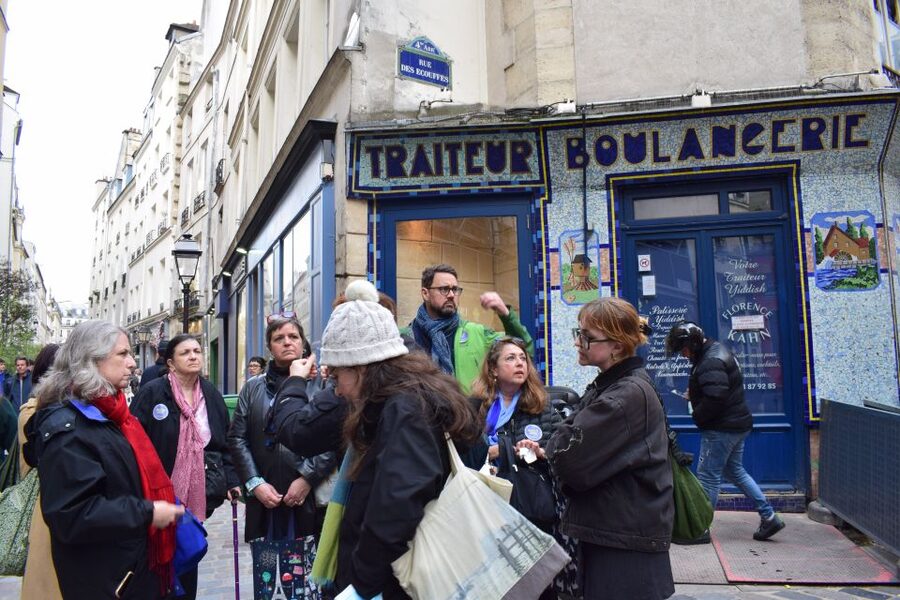
The first 90 minutes are spent in Le Marais, Paris’s best-known Jewish district. The guide sets the neighborhood within a long story that reaches from the Middle Ages to the present day, explaining how Jewish communities lived, traded, worshipped, suffered discrimination, and rebuilt their lives.
This is not a tour of preserved buildings alone. Much of what you see is ordinary Parisian street life: shops, cafés, apartments, food businesses, and handsome older buildings. That is useful because it shows how history can remain present even after a neighborhood changes.
Le Village Saint-Paul is one of the early stops. Here, the guide helps you read the streets and understand how the area once functioned as a community. Do not expect a fully preserved Jewish quarter with every historic building intact. Le Marais has changed greatly, and some of the tour involves learning what once stood in a place rather than looking at a building that remains unchanged.
That point is worth keeping in mind. One person found the neighborhood increasingly gentrified and homogenized, with much of the Jewish past existing through explanation rather than visible architecture. I see that as both a limitation and a lesson. The tour works best if you want historical interpretation, not simply a parade of old facades.
Agoudas Hakehilos and Hector Guimard’s design
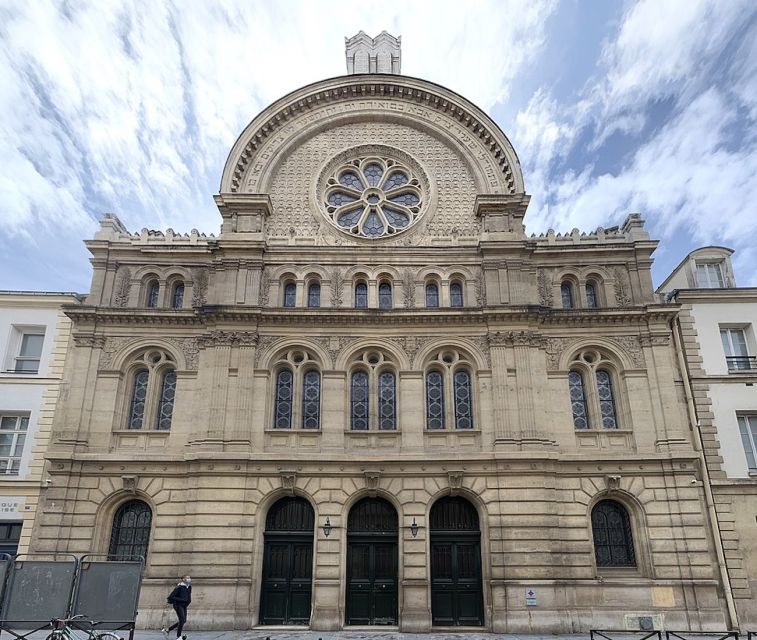
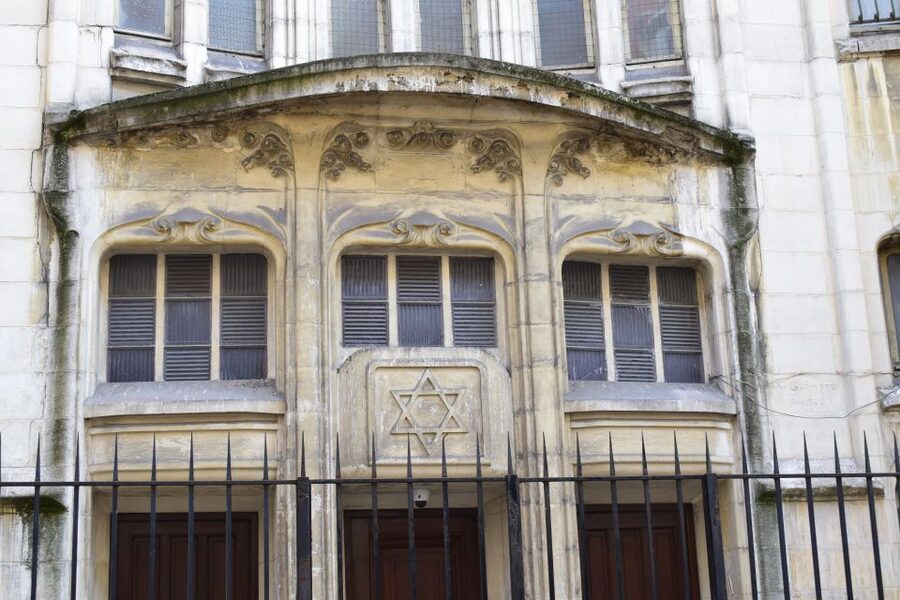
Agoudas Hakehilos Synagogue is one of the most memorable sights on the Le Marais route. It was designed by Hector Guimard, the Art Nouveau architect also associated with Paris Métro entrances. The exterior has the flowing lines and decorative character you would expect from his work.
The synagogue is viewed from outside. Indoor synagogue access is not included, so set your expectations correctly. Still, the exterior gives the guide a strong starting point for discussing Jewish communal life and the role of religious buildings in the district.
I like this stop because it connects architecture with community. You are not just admiring an Art Nouveau facade. You are considering why it was built, who used it, and how a religious landmark fits into the changing life of Le Marais.
More Walking Tours in Paris
- Paris Top Sights Half Day Walking Tour with a Fun Guide
★ 5.0 · 2,893 reviews - Montmartre Hidden Gems and Scenic Highlights Walking Tour
★ 5.0 · 2,684 reviews - Montmartre Hill French Gourmet Food and Wine Tasting Walking Tour
★ 5.0 · 2,588 reviews - Paris Île de la Cité and Notre-Dame Walking Tour With Crypt
★ 5.0 · 2,272 reviews
The Shoah Memorial, a necessary pause
The Shoah Memorial is the emotional center of the Le Marais section. The exterior includes a wall of names and a crypt, and the guide explains its significance without turning the stop into a rushed photo opportunity.
This is a solemn place. The subject is painful, and the walk addresses the persecution and murder of Jews during the Nazi occupation, along with the French people who helped Jews escape. Several guides have been singled out for treating this material with care, particularly when discussing difficult modern political emotions alongside the older history.
Give yourself room to listen. This is not the point in the tour for constant movement or casual conversation. The memorial gives the earlier neighborhood walk a sharper meaning, reminding you that Jewish Paris is shaped by both ordinary community life and catastrophic loss.
The tour does not include an indoor museum visit or entry to other historical sites. You are getting guided context from the outside, not a museum program. If you want a longer museum experience, plan a separate visit.
From Hôtel de Ville to Montmartre
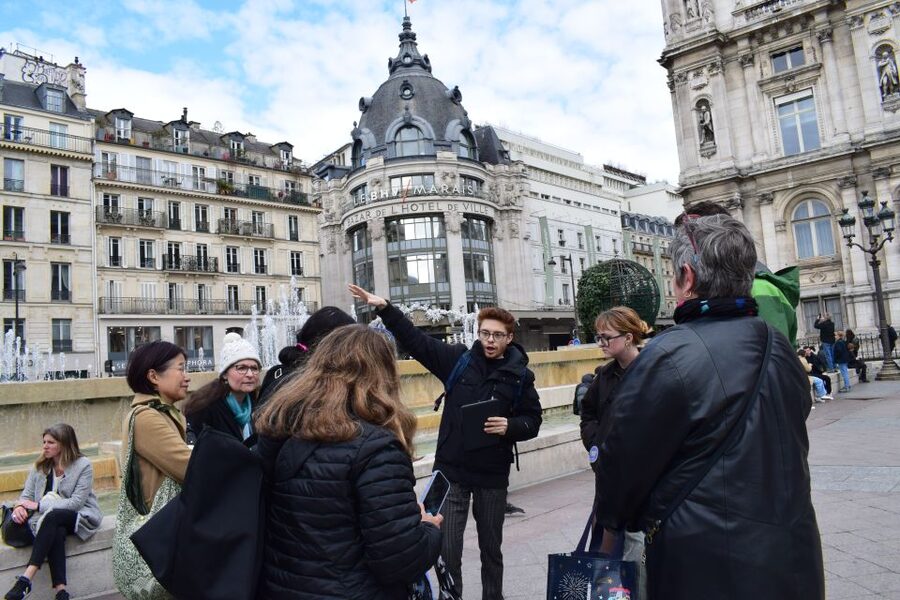
The Le Marais section finishes near Hôtel de Ville, Paris City Hall. From there, the group uses public transport for about 30 minutes to reach Montmartre. Tickets are included, which is convenient, although the transfer breaks the rhythm of the walk.
This is also a practical dividing line. You move from a central district with a clearly defined Jewish identity to a hilltop neighborhood better known for artists, writers, cabarets, and panoramic views. Wear shoes that can handle both city pavement and Montmartre’s uphill streets.
Do not expect a quiet private transfer. Public transport is part of the city experience, and the group must stay together. Pay attention when crossing streets and around bicycles. One useful piece of advice from the tour experience is to match the pace of the slowest person in the group, especially at crossings.
Montmartre’s Jewish artists and creative circles
The Montmartre section lasts about 90 minutes. Here, the guide looks at Jewish artists, writers, and thinkers who formed part of the neighborhood’s creative life in the late 19th and early 20th centuries.
The focus is less about formal Jewish landmarks and more about people, studios, cafés, and artistic networks. That makes this half feel different from Le Marais. Instead of tracing a neighborhood through worship and commerce, you follow Jewish voices through the world of painting, writing, ambition, and experimentation.
The route includes 7 Rue Ravignan and Le Bateau-Lavoir. These addresses are linked to Montmartre’s artistic past and help explain how studios and creative communities shaped the area. The guide’s stories are especially important here because the buildings alone may not explain their place in Jewish Paris.
You also pass the Musée de Montmartre. The tour does not include entry, so this is a look from the street rather than a museum visit. At 16 Rue du Mont-Cenis, the guide adds another point to the story of Jewish artistic life in Montmartre.
This section will suit you if you enjoy cultural history and biographies. If you booked mainly for religious sites, you may find the Montmartre material less direct. One person felt the tour spent too much time on general architecture and church details, so you should ask questions if you want the discussion kept closely tied to Jewish subjects.
Finishing at Sacré-Cœur and Square Louise-Michel
The route climbs toward Sacré-Cœur Basilica, one of Paris’s most recognizable landmarks. The experience includes sightseeing at the basilica, but not an indoor monument visit. The reward is the broad view over Paris from the hill.
The view works well as a final image because it places the whole walk in context. From above, the city becomes a connected web of neighborhoods, streets, and communities. The guide ties the setting back to Jewish identity and artistic expression before ending at Square Louise-Michel.
That closing reflection sounds simple, but it gives the tour a proper finish. You have moved from medieval community life to the Shoah Memorial, then into the artistic world of Montmartre. The final stop allows the guide to draw those strands together rather than leaving you at the basilica with only a photograph.
You will also be near places to eat at the end of the walk. Guides have offered advice on Jewish food and kosher restaurants, and some groups have finished with falafel nearby. Food is not included, but this is a useful chance to continue the experience on your own.
How difficult is the walk?
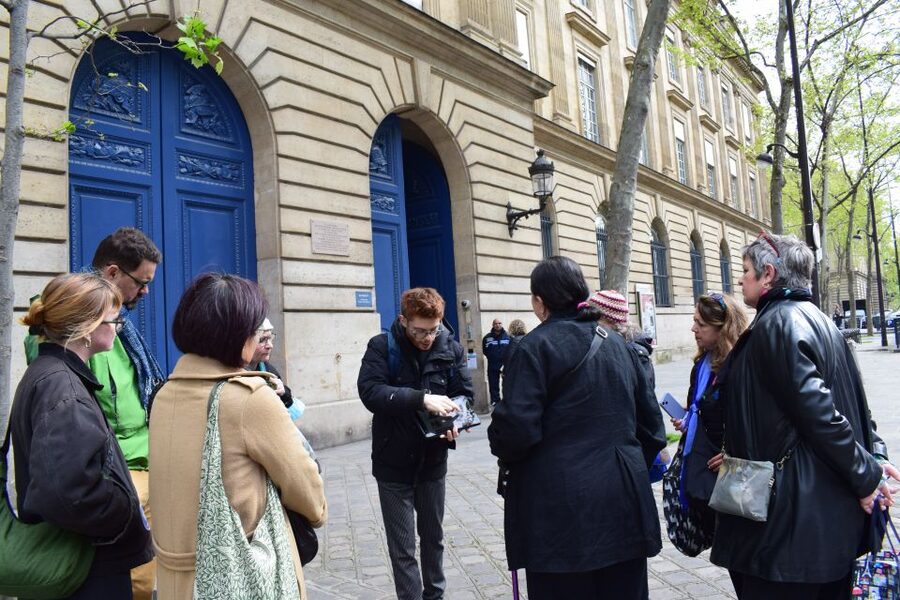
This is a long urban walk, not a gentle sightseeing loop. The advertised duration is 210 minutes, with about 1.5 hours on foot in Le Marais, a public transport transfer, and another 1.5 hours walking in Montmartre.
The tour is not suitable for people with mobility impairments or wheelchair users. Montmartre adds hills, and Paris streets can be uneven. Rain can make the walk less comfortable, though groups have completed it in wet weather. Bring water, wear supportive shoes, and dress for changing conditions.
The pace may also vary with the guide and the group. One group ran beyond the planned ending because a participant asked many extended questions. That can be pleasant if you have time, but inconvenient if you have a dinner reservation or another timed visit.
Who will get the most from it?
I would choose this tour if you want Jewish Paris explained by a guide rather than explored through buildings alone. It is a strong fit for visitors interested in French history, World War II memory, architecture, Jewish culture, or the relationship between identity and art.
It also works well for first-time visitors who want two major neighborhoods in one outing. You get the practical orientation of a guided walk and a useful introduction to Le Marais and Montmartre.
I would think twice if you dislike long walks, need step-free access, or want substantial indoor time. You will not enter the synagogue, the Shoah Memorial, the Musée de Montmartre, or Sacré-Cœur as part of the tour. The value lies in the guide’s explanations and the way the streets are interpreted.
The small group is a real advantage. You can ask about family history, religious life, architecture, food, or present-day Paris without competing with a crowd. Past guides such as Benjamin, Benoit, Pierre-Louis, and Achilles have been praised for answering questions and adjusting their explanations to the group.
Practical verdict on the $80 price
At $80, this is a specialist tour rather than a cheap introduction to Paris. You are paying for a live guide, a limited group, a carefully connected route, and the convenience of public transport between districts.
The price makes the most sense if you would otherwise spend hours piecing together the story yourself. It is less compelling if you want only a short walk through Le Marais or prefer to visit museums independently.
Book it for the interpretation, not for the number of admission tickets. There are no included indoor entries, and the synagogue is seen from the exterior. The strongest part is the human explanation: how Jewish communities shaped Paris, how persecution altered those communities, and how Jewish artists helped shape Montmartre.
Should you book the Jewish History Walking Tour?
Yes, if you want a serious, personal introduction to Jewish Paris and you can manage a long walk. The combination of Le Marais’s community history, the Shoah Memorial, Montmartre’s artistic stories, and the Sacré-Cœur view gives the experience more range than a single-district tour.
I would not book it for a relaxed architectural stroll or a wheelchair-accessible outing. Arrive early, confirm the meeting entrance, expect exterior visits, and keep your schedule flexible at the end.
For the right reader, this is a thoughtful way to see Paris through memory, community, and art. The high rating of 4.8 from 170 reviews fits the strongest feature of the experience: guides who make difficult history understandable without treating it casually.
FAQ
How long does the tour last?
The tour lasts 210 minutes, or three and a half hours.
What neighborhoods does the tour visit?
It visits Le Marais and Montmartre. Public transport connects the two parts of the route.
Is the tour conducted in English?
Yes. The tour has a live English-speaking guide.
What is the maximum group size?
The small-group option allows up to nine people. Private groups are also available.
Can I enter the synagogue?
No. Indoor synagogue visits are not included. Agoudas Hakehilos Synagogue is viewed from the exterior.
Is entry to the Shoah Memorial included?
No indoor entry is included. The tour visits the exterior of the memorial, including its wall of names and crypt area.
Are public transport tickets included?
Yes. Public transport tickets for the transfer from Le Marais to Montmartre are included.
Is the tour suitable for wheelchair users?
No. The experience is not suitable for wheelchair users or people with mobility impairments.
Recently reviewed around Paris
- Louvre Private Tour – The Essentials and More with Expert Guide★ 5.0 · 227 reviews
- 2CV tour by night★ 5.0 · 55 reviews
- Eiffel Tower Second or Summit Floor Access by Elevator with Views★ 3.5 · 161 reviews
- The only Paris Wine Tasting experience you need to do – 2 hours★ 5.0 · 265 reviews
- 2 Hour Street-art Walk and Space Invaders Hunt in Paris★ 5.0 · 27 reviews
- 2 hour outdoor group activity in Paris: SAINT GERMAIN★ 5.0 · 48 reviews
- Sainte-Chapelle, Conciergerie & Palais de Justice Private Tour★ 5.0 · 72 reviews
- Private 2 – Hour Paris Landmarks Tour by Golf Cart Mini Moke★ 5.0 · 38 reviews
Montmartre Tours, compared.

Montmartre Hidden Gems and Scenic Highlights Walking Tour
Read our review →
Montmartre Hill French Gourmet Food and Wine Tasting Walking Tour
Read our review →
Montmartre Cheese, Wine & Pastry Guided Walking Tour
Read our review →
Montmartre Highlights Walking Tour with a Local Guide
Read our review →
Sacré-Coeur and Montmartre Tour with Expert Guide
Read our review →
Private Montmartre Food Tour with Wine, Cheese & Pastries
Read our review →
Paris Montmartre Food Tour – A Full French Meal by Do Eat Better
Read our review →
Hidden Montmartre: Paris’ Secret Streets Walking Tour
Read our review →Browse the lists this tour appears in