
Reviewed · CHAMPAGNE TOURS
From Reims/Epernay: Champagne half-day tour (small group)
The best part of this Champagne afternoon is the chance to meet independent winegrowers, not just tour the grand brands along Épernay’s famous avenue. Angélique, a local guide and former vineyard and cellar worker, brings you into the working world behind the polished labels.
I like the small group, limited to eight, and the personal link Angélique has with producers in her home region. I also like the mix of six tastings, vineyard views, cellar visits, and village history. The main drawback is time: four hours goes quickly, so this is an introduction rather than a full Champagne education.
In This Review
- Key points to know before booking
- Why the small producers are the real draw
- Six tastings with useful food advice
- The road through the Montagne de Reims and Marne Valley
- Épernay’s grand avenue and 220 million bottles
- Hautvillers and the Dom Pérignon connection
- Angélique’s style and the value of a local guide
- Timing, meeting points, and what the four hours really means
- Is $188 a fair price?
- Who should book this Champagne afternoon?
- Should you book it?
- FAQ
- Where does the tour depart from?
- How long does the experience last?
- How many people are in the group?
- Which languages are available?
- How many Champagne tastings are included?
- What places are visited?
Key points to know before booking
- Two independent Champagne producers: Visit family-run domains in the Montagne de Reims and Marne Valley, where Pinot grapes are especially important.
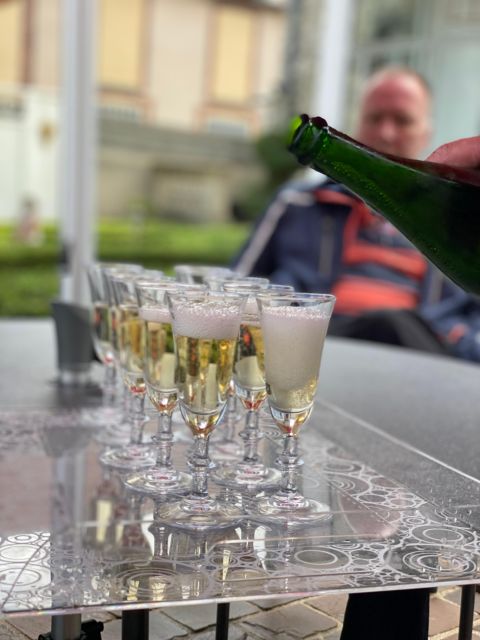
- Six Champagne tastings: Angélique explains the different blends and offers practical advice on matching Champagne with food.
- A guide with hands-on experience: Angélique has worked among the vines and in cellars, giving the tour a useful working perspective.
- Épernay and Hautvillers included: See the grand-house architecture on Avenue de Champagne, then visit the village associated with Dom Pérignon.
- Small-group transport: Travel by air-conditioned van with no more than eight participants.
- Easy regional timing: Depart from Reims Central station at 1:30 PM or the Épernay tourist office at 2:00 PM, returning around 5:30 to 6:00 PM.
Why the small producers are the real draw
Champagne is often presented through famous names such as Moët et Chandon, Perrier-Jouët, and Pol Roger. Those houses matter, but their grand cellars and formal tours can make the region feel more like a brand showroom than a farming area.
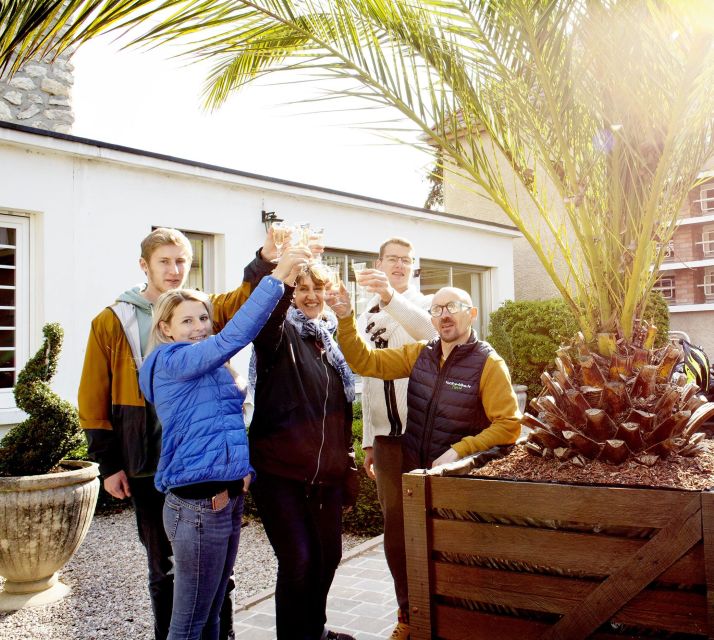
This excursion takes a different route. You visit two independent domains in the Montagne de Reims and the Marne Valley, two subregions where the vineyards are still closely tied to family landowners and growers. Local winegrowers own about 90 percent of Champagne’s 34,000 hectares of vines, so they are not a side note to the industry. They are at its foundation.
That distinction matters when you taste. A small producer may show you how a particular village, grape mix, or cellar method shapes the final wine. You get a better sense of Champagne as an agricultural product, not simply a bottle with a gold label.
The local growers also supply grapes to major Champagne houses. That gives their work a wider importance than the modest size of their cellars might suggest. You are seeing the people who tend much of the raw material used by the region’s best-known names.
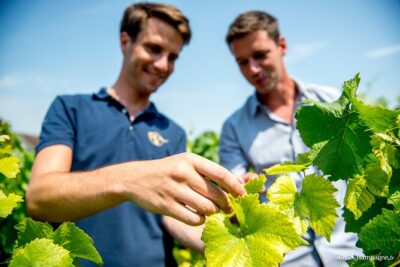
Angélique’s local connections are central to the experience. She grew up in the Champagne region and has worked with vines and cellars herself. Her role is not just to point out vineyards from a van window. She can explain the demanding work behind them, from pruning to harvest, and help you understand what you are tasting.
More Champagne trips worth a second look
- From Reims: Champagne and Family-Run Wineries Tour
★ 4.8 · 671 reviews - Reims afternoon tour Champagne and family growers
★ 5.0 · 535 reviews - From Reims: Morning Champagne Tour and Tastings
★ 4.8 · 463 reviews
Six tastings with useful food advice
The tasting portion includes six Champagnes made from different blends. That is a sensible number for a half-day tour: enough to compare styles without turning the afternoon into a blur of similar glasses.
The point is not simply to count tastings. Angélique gives food-pairing advice, which helps you think about Champagne beyond the usual toast or celebratory aperitif. You can learn how different wines might work with a meal, and why one bottle may suit a dish better than another.
The region is especially associated with Pinot grapes, including Pinot Noir and Pinot Meunier, while Chardonnay also plays an important role. The proportions and origins of those grapes affect the wine’s character. A tasting across two producers gives you a chance to notice those differences instead of treating Champagne as one single style.
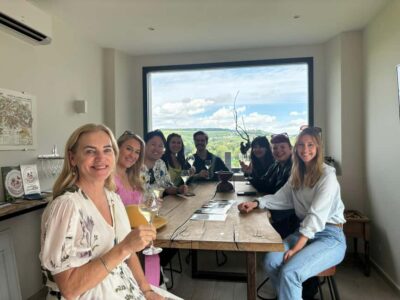
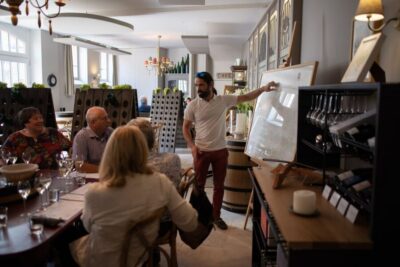
Expect the visits to feel more personal than a large commercial cellar tour. The producers are family-run, and the emphasis is on meeting the people who make the wine. The atmosphere may be informal, and the pace can depend on the work happening at the domain.
That last point is worth keeping in mind. During harvest, the producers may be busy pressing grapes. This can be a bonus rather than a problem, since you may see part of the production process in action. At other times of year, the visit may focus more on the cellar, the vineyard work, and the tasting itself.
You can also buy bottles directly from the producers. The tour does not require you to purchase anything, but bringing home a bottle from each domain can make sense if you find two distinct styles you enjoy.
The road through the Montagne de Reims and Marne Valley
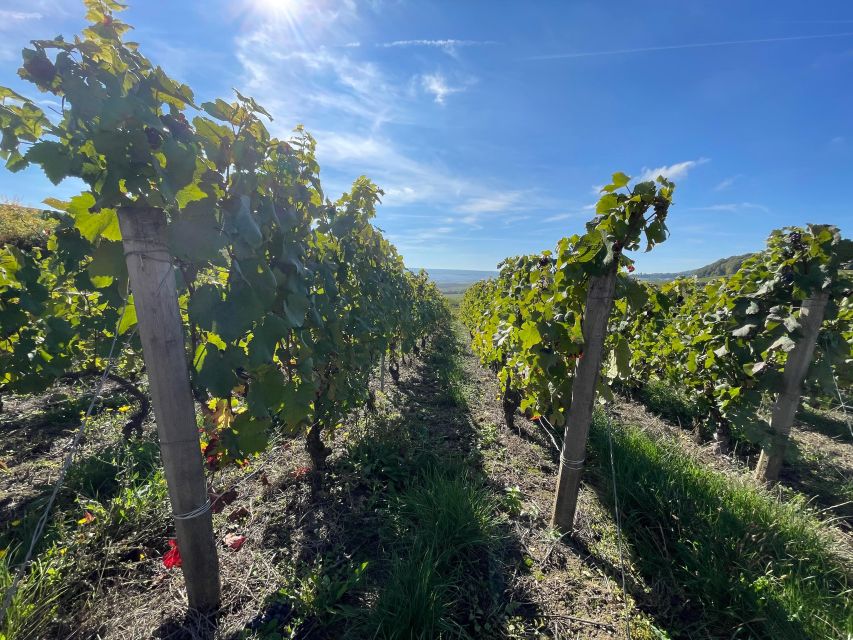
The short van rides are important because they connect the tasting rooms with the land that supplies them. From the road, you see the ocean of vines spread across rolling hills and villages.
Angélique uses stops in the vineyards to explain Champagne’s terroir. That includes the soil, the pruning systems, and the seasonal work that keeps the vines productive. Harvesting is done by hand, and vineyard workers spend the whole year tending the plants.
This is one of the most useful parts of the afternoon for anyone who wants to understand the price of Champagne. The final bottle may look elegant, but producing it begins with difficult fieldwork. Pruning, training, and harvesting all require care, and the region’s growers work as much like gardeners as factory operators.
You will not get a long technical course in four hours. Instead, you get a clear working picture of the region: rows of vines, changing grape varieties, careful pruning, hand harvest, and the growers’ role in the larger Champagne system.
The van is air-conditioned, and transport has received a 96 percent perfect score for comfort and service. With a group capped at eight people, you should have a better chance to ask questions and see the countryside without being packed into a large coach.
Épernay’s grand avenue and 220 million bottles
The tour continues with a van sightseeing circuit through Épernay, often called the cradle of Champagne. Its main showpiece is Avenue de Champagne, lined with the grand houses that helped build the drink’s international reputation.
The avenue offers a sharp contrast to the family producers. Here, the architecture is grand and competitive, with Champagne houses using elaborate buildings to project prestige. Names such as Moët et Chandon, Perrier-Jouët, and Pol Roger reflect the scale of the business.
Beneath Épernay are reportedly about 220 million bottles aging in cellars. You may not enter those particular cellars on this short city tour, but the figure helps explain why the avenue feels so important. Épernay is not merely a pretty town with wine shops. It is one of the places where Champagne’s commercial identity was built.
A van tour is a practical way to see the avenue during a half-day outing. You can take in the architecture and hear how the houses shaped the town without using your limited time on a full grand-house visit. If your main goal is to tour a famous commercial cellar, this excursion may not satisfy you. Its focus is the independent grower experience.
A different way to spend the day, same corner of France:
- Champagne: Champagne Tasting Class with Lunch
★ 4.9 · 384 reviews - Aÿ-Champagne: Pressoria Champagne Museum with Tasting
★ 4.7 · 239 reviews - Aÿ-Champagne: Champagne House Tour and Tasting Class
★ 4.9 · 209 reviews - Passy-Grigny: Chocolate and Champagne Tasting Tour
★ 4.8 · 208 reviews
Hautvillers and the Dom Pérignon connection
After Épernay, the route continues to Hautvillers, a small village in the hills above the Marne Valley. The village is closely linked with Dom Pérignon, the Benedictine monk who worked as a cellar master and became associated with the blending of grapes and crus, or village origins.
The story is often simplified into the claim that Dom Pérignon invented Champagne. The tour’s explanation is more useful: his work helped improve the quality of Champagne by refining the blending of grapes and wines from different villages.
You visit the abbey connected with him and see his burial place. The abbey stop adds a human and historical layer to the wine tasting. It shows that Champagne developed through religious, agricultural, and commercial traditions rather than appearing fully formed as a luxury product.
Hautvillers is also one of the afternoon’s best viewpoints. From the hills and the abbey garden, you can look over the Marne River and toward the Côte des Blancs in the distance. The view makes the geography easier to understand. You see how the villages and vineyards fit together instead of studying them only on a map.
The stop is not a long abbey tour with extensive interior detail. It is a focused visit that combines the village, Dom Pérignon’s connection, and the view over the river country. That balance works well in a four-hour tour.
Angélique’s style and the value of a local guide
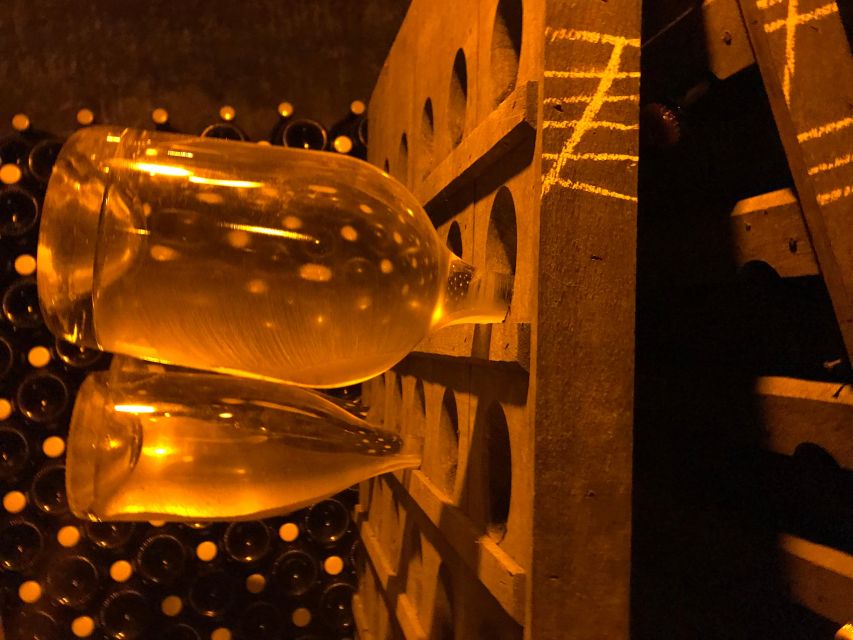
Angélique is repeatedly praised for her friendly manner, humor, and strong local ties. The most useful thing about her style is the personal attention made possible by the small group.
Some departures have had only two participants. In that setting, the outing can feel less like a fixed script and more like an afternoon conversation with someone who knows the region well. You can ask about grape varieties, growers, production, or the practical side of vineyard work.
Her background is particularly valuable. A guide who has worked in vines and cellars can explain the difference between what happens in the field and what happens in the bottle. She also understands the people who run the smaller domains, which helps make the visits more than a quick tasting-room stop.
That personal approach has also helped during difficult periods, including the New Year season when many Champagne houses close or operate on reduced schedules. Angélique has been able to work with producers who remained open, though the February and New Year period may still offer fewer choices than the busy season.
You should expect some flexibility, but not unlimited flexibility. The exact character of the producer visits may change with harvest work, holidays, or cellar availability. That is normal for a tour built around working growers rather than a large attraction with fixed public hours.
Timing, meeting points, and what the four hours really means
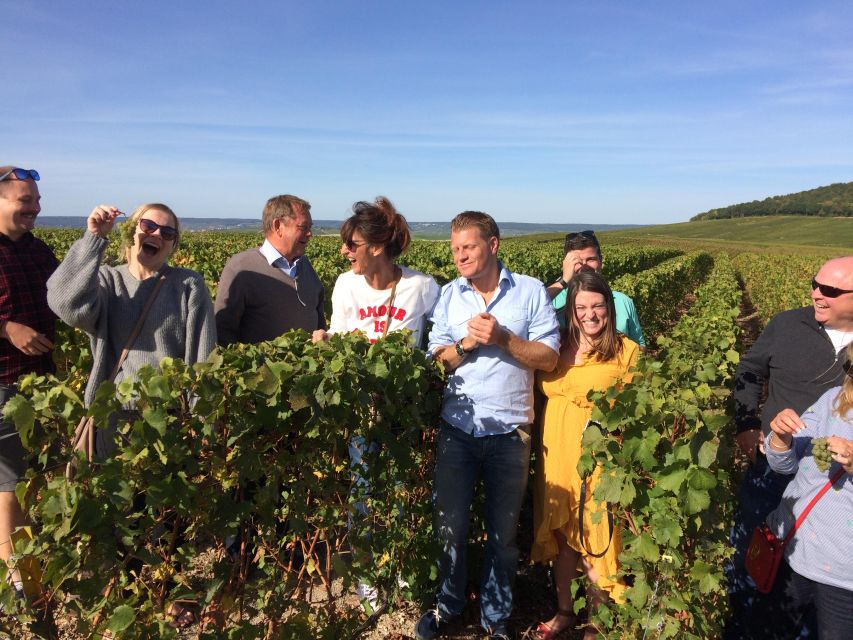
The Reims departure is at 1:30 PM from Reims Central station. If you are based in Épernay, pickup is at 2:00 PM at the tourist office. The return is scheduled between 5:30 and 6:00 PM, depending on your starting point and the day’s route.
This timing works well if you are staying in either town and want to fill an afternoon. It is less suitable if you hope to combine the excursion with several other scheduled attractions, since the return window is approximate rather than a precise train connection.
The air-conditioned van handles the driving, which is a major benefit in Champagne. You can taste without worrying about navigating country roads, and you can watch the vineyard country pass by between stops.
The group size is limited to eight people. That is small enough for direct questions and a more relaxed tasting, but you should still expect a shared outing rather than a private tour. English and French are available.
The stated duration is four hours. Within that time, you get transport, two producer visits, six tastings, Épernay sightseeing, Hautvillers, an abbey visit, and vineyard commentary. The schedule is well packed. You will see a lot, but you will not have hours to linger at each place.
Is $188 a fair price?
At $188 per person, this is not a budget sightseeing ride. The price includes pickup and return, an air-conditioned van, the guide, cellar visits, six tastings, the abbey stop, and vineyard sightseeing.
The value depends on what you want from Champagne. If you only want to drink a glass or two and take photographs along Avenue de Champagne, you can spend less. If you want to visit major houses in depth, you may prefer to book a dedicated commercial cellar tour separately.
For an independent-producer experience, the price is easier to justify. You are paying for transport across several parts of the region, access to small domains, a guide with vineyard and cellar experience, and the time saved by not arranging separate visits yourself.
The small group also matters. With only eight places, or sometimes far fewer, the guide can give more attention than a large coach tour. The 4.8 rating from 37 published ratings supports the view that the service is consistently strong, especially Angélique’s personal approach and the quality of the producer connections.
The price does not include any bottle purchases you choose to make. If you buy wine at both domains, allow extra room in your budget and luggage.
Who should book this Champagne afternoon?
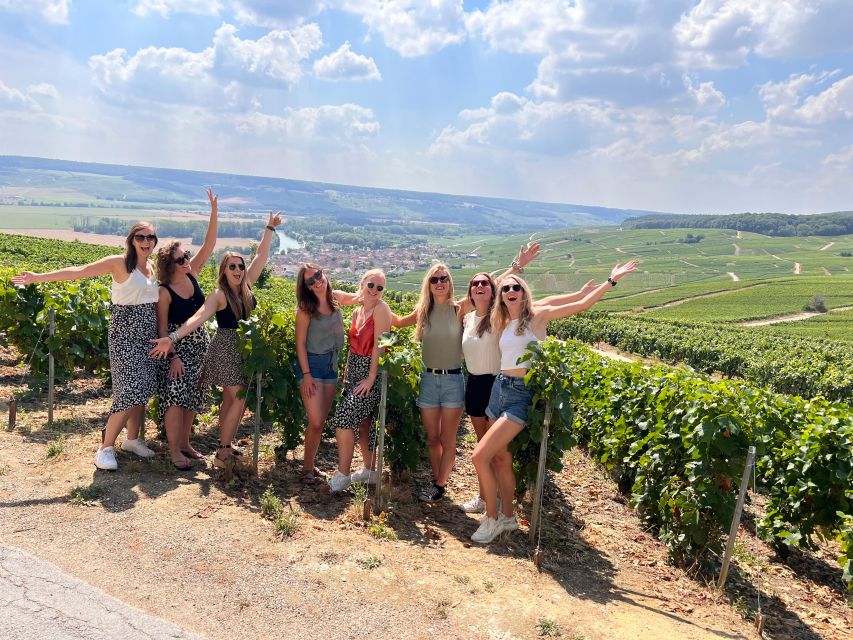
I would choose this tour if you want to understand how Champagne is made and who makes it. It suits first-time visitors who want a broad introduction in a single afternoon, especially if you are staying in Reims or Épernay without a car.
It is also a good fit for wine drinkers who prefer small family producers to famous corporate names. The six tastings and food-pairing guidance give you more to compare than a single cellar visit.
Couples, friends, and solo visitors can all fit comfortably into the format. The small group makes it easier to talk with Angélique and ask questions during the tastings.
I would hesitate if you need a highly predictable schedule or a long, technical winery tour. Harvest and holiday opening hours can affect the producer visits, and four hours leaves no room for a slow, leisurely exploration of every stop.
The experience offers free cancellation up to 24 hours before departure and allows you to reserve without paying immediately. Those policies are useful if your Champagne plans are still shifting, but the main decision is about style: local growers and regional context, not grand-house spectacle.
Should you book it?
Book this Champagne half-day tour if you want the region explained by someone who grew up among its vines and still has close ties with local producers. Angélique’s background, the two independent domains, six tastings, and the Hautvillers viewpoint create a well-rounded afternoon.
Skip it if your priority is a full visit inside one major Champagne house or a private, unhurried tasting. For most visitors with limited time, though, the combination of growers, vineyards, Épernay, and Dom Pérignon’s village gives you a more complete picture than a single famous-name tour.
FAQ
Where does the tour depart from?
You can meet the tour in Reims at Reims Central station at 1:30 PM, or in Épernay at the tourist office at 2:00 PM.
How long does the experience last?
The tour lasts four hours. The expected return time is between 5:30 and 6:00 PM.
How many people are in the group?
The group is limited to eight participants.
Which languages are available?
The live guide service is available in English and French.
How many Champagne tastings are included?
Six Champagne tastings are included, along with advice about pairing Champagne with food.
What places are visited?
The experience includes two independent Champagne producers, vineyard sightseeing in the Montagne de Reims and Marne Valley areas, a van tour of Épernay, and a visit to Hautvillers and its abbey.
Recently reviewed around Champagne
- Champagne experience with a vintage van from Epernay – 3 hours★ 5.0 · 108 reviews
- The Must-sees 3h30 from Epernay (Private Half day Champagne Tour)★ 5.0 · 30 reviews
- Food & Champagne Experience from Epernay (Private tour)★ 4.5 · 28 reviews
- Bubble Champagne Tour from Epernay (Small group half day tour)★ 5.0 · 58 reviews
- The Connoisseurs from Epernay (Private Half day Champagne Tour)★ 5.0 · 59 reviews
- From Epernay Full day Electric bike Champagne and lunch★ 5.0 · 36 reviews
- From Epernay: Champagne Small-Group tour with tastings & Lunch★ 5.0 · 93 reviews
- Champagne Munoz Bruneau : Half Day Visit and Tasting★ 5.0 · 50 reviews
Champagne Tours, compared.
Reims afternoon tour Champagne and family growers
Read our review →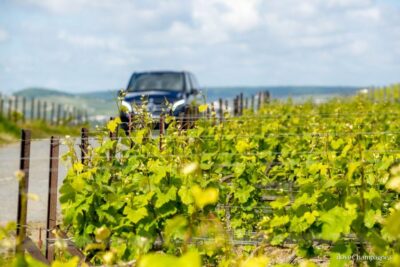
Aÿ-Champagne: Pressoria Champagne Museum with Tasting
Read our review →
Aÿ-Champagne: Champagne House Tour and Tasting Class
Read our review →
Passy-Grigny: Chocolate and Champagne Tasting Tour
Read our review →
Champagne Day Trip to 3 Family Domains & Lunch
Read our review →Browse the lists this tour appears in