
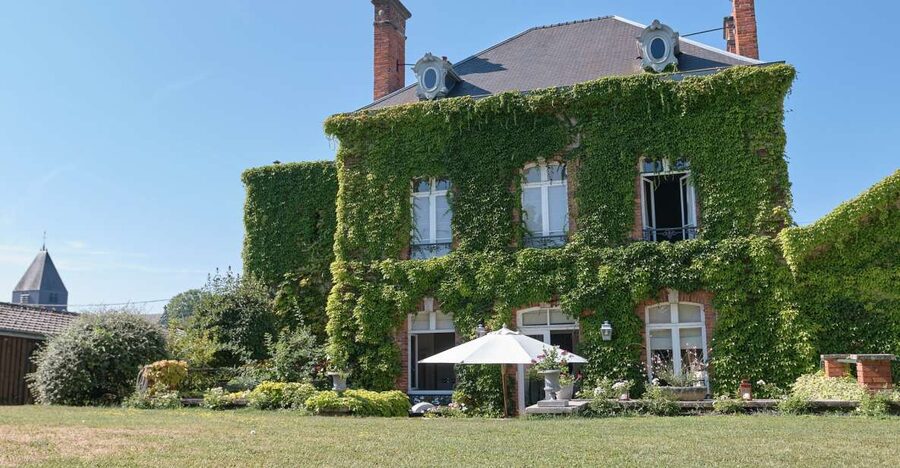
Reviewed · CHAMPAGNE TOURS
Aÿ-Champagne: Champagne House Tour and Tasting Class
The best part of this 90-minute visit is that Champagne is treated as something to understand, not simply something to sip. At Le Clos Corbier, you see a traditional press, enter cellars dug in the 1850s, and then put your new knowledge to work with an aroma workshop, quiz, and blind tasting.
I like the family-run setting and the way guides such as Alvaro, Amanda, Charlotte, Marie, and Martin make the session interactive. I also like that the three tastings include a Grand Cru Vintage, plus local sweets and finger food. The main drawback is getting there: there is no pickup, taxis around Aÿ can be scarce, and public transport from Reims or Paris takes planning.
In This Review
- Key points
- Arriving at Le Clos Corbier in Mareuil-sur-Aÿ
- Seeing the press room and 1850s cellars
- Turning the tasting into a Champagne class
- Three family Champagnes, including a Grand Cru Vintage
- Why the family scale matters
- Value at $47 per person
- Who will enjoy this Champagne visit
- Timing, language, and practical details
- Should you book Le Clos Corbier?
- FAQ
- Where does the Champagne House tour take place?
- How long does the experience last?
- What languages are available?
- What will I see during the visit?
- How many Champagnes will I taste?
- Is food included?
- Is transportation included?
Key points
- Tour a working Champagne House: Le Clos Corbier gives you a close look at its press room, cellars, and production story.
- Learn by tasting: The aroma workshop helps you connect Champagne’s flavors with what you smell in the glass.
- Taste three family Champagnes: The lineup includes one Grand Cru Vintage, tasted blind as part of a playful challenge.
- Enjoy a personal visit: The family setting feels more direct than a large commercial Champagne-house tour.
- Expect an entertaining lesson: The quiz turns technical information into a friendly group activity.
- Plan your transport carefully: Driving is the simplest option, while taxis and trains can be inconvenient.
Arriving at Le Clos Corbier in Mareuil-sur-Aÿ
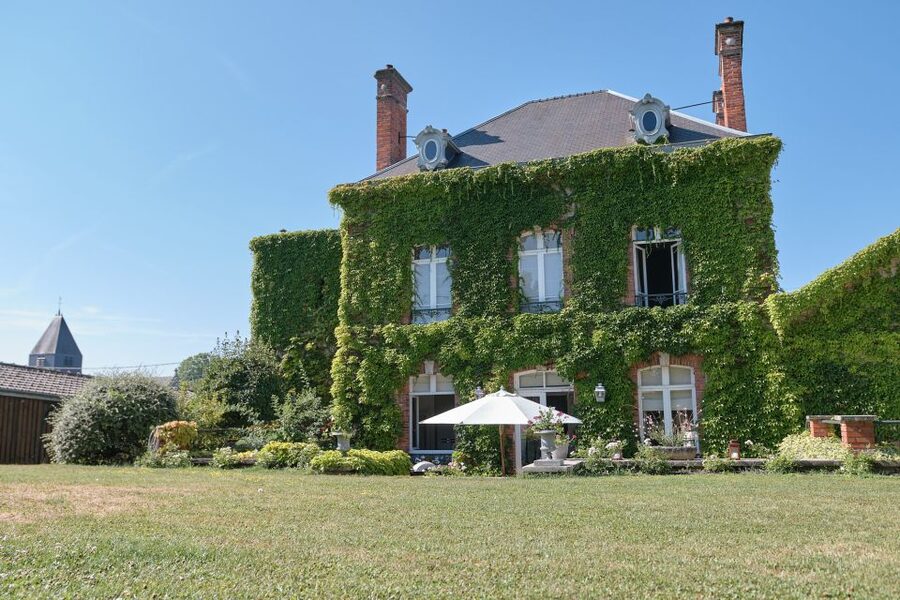
Le Clos Corbier sits in Mareuil-sur-Aÿ, in the middle of the Champagne vineyards. The address puts you in the proper wine-country setting, rather than in a city tasting room designed mainly for quick sales.
You begin at a typical Champagne House, where the welcome is informal and personal. If you arrive early, you may be offered coffee, tea, or water, a small touch that helps you settle in before the tour starts.
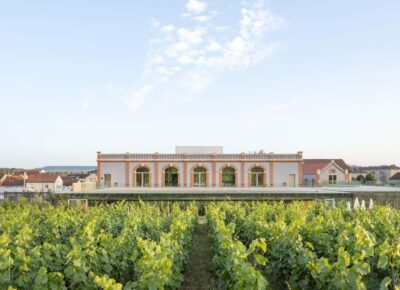
The property also has attractive outdoor grounds, and you can buy bottles after the tasting if you find a favorite. Some people have enjoyed sitting outside with a glass after the formal portion ends, though that extra time is not the scheduled tour itself.
The setting is one reason I would choose this visit for a first introduction to the region. You get the sense of a family business connected to its place, rather than only a polished presentation built around a famous brand name.
More Food Tours in Reims
- Champagne: Champagne Tasting Class with Lunch
★ 4.9 · 384 reviews - Aÿ-Champagne: Pressoria Champagne Museum with Tasting
★ 4.7 · 239 reviews - Passy-Grigny: Chocolate and Champagne Tasting Tour
★ 4.8 · 208 reviews
Seeing the press room and 1850s cellars
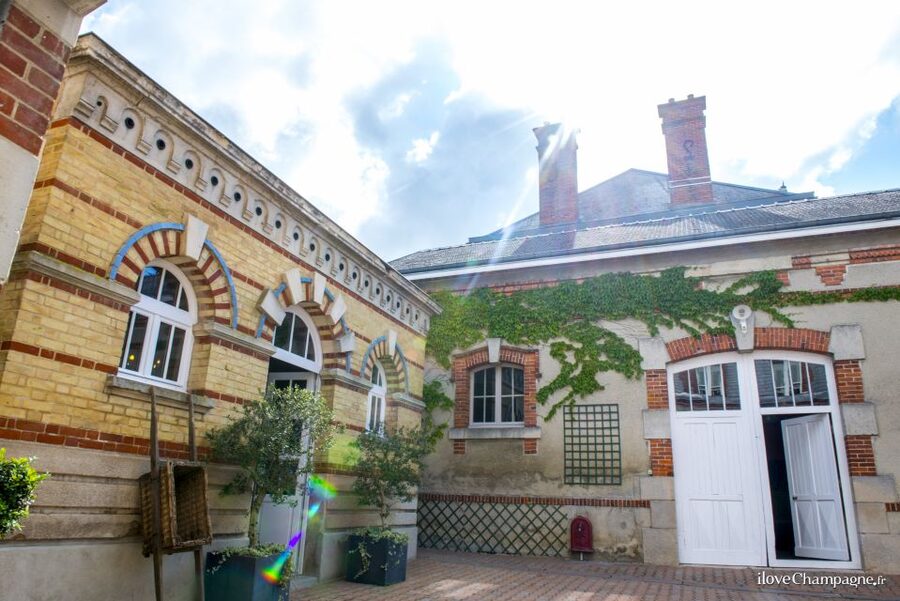
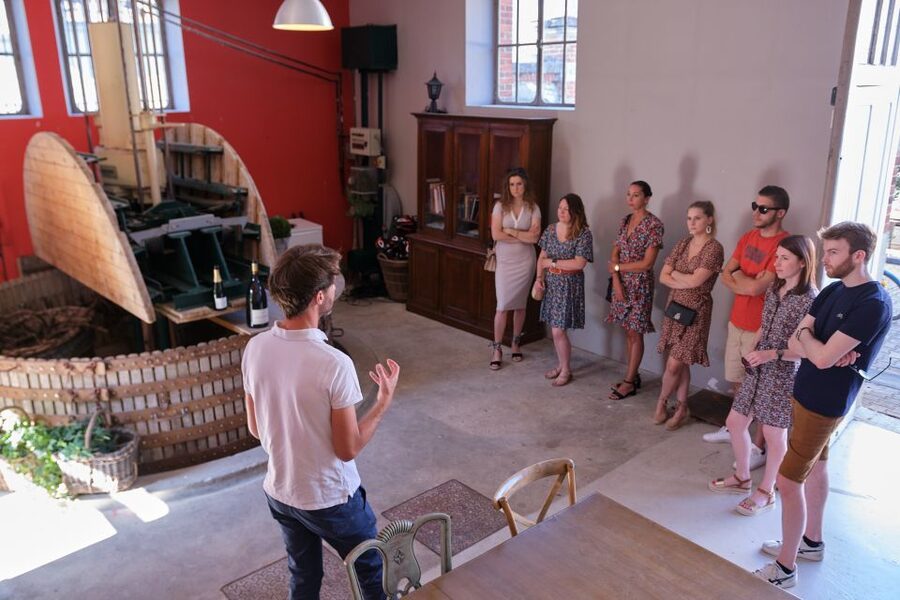
The visit begins with the equipment and spaces behind the bottle. At the press room, your guide explains how the grapes are handled at the start of production and how Champagne develops from harvest through bottling.
A traditional press provides a useful visual anchor. Instead of hearing a string of abstract terms, you can connect the explanation to a real piece of winemaking equipment. The guide also covers the wider process, including the stages between pressing the grapes and finishing the bottle.
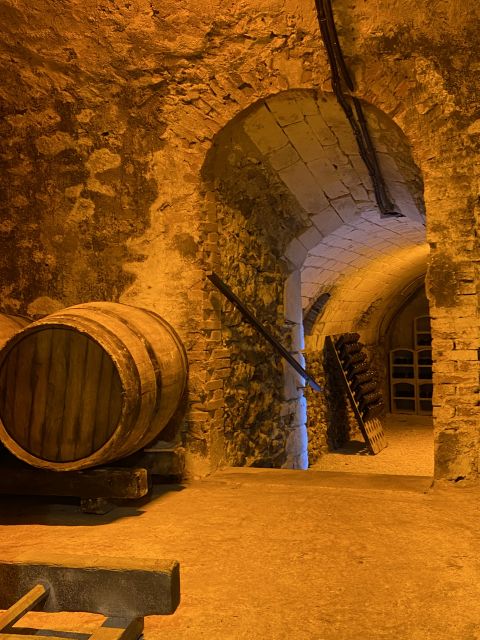
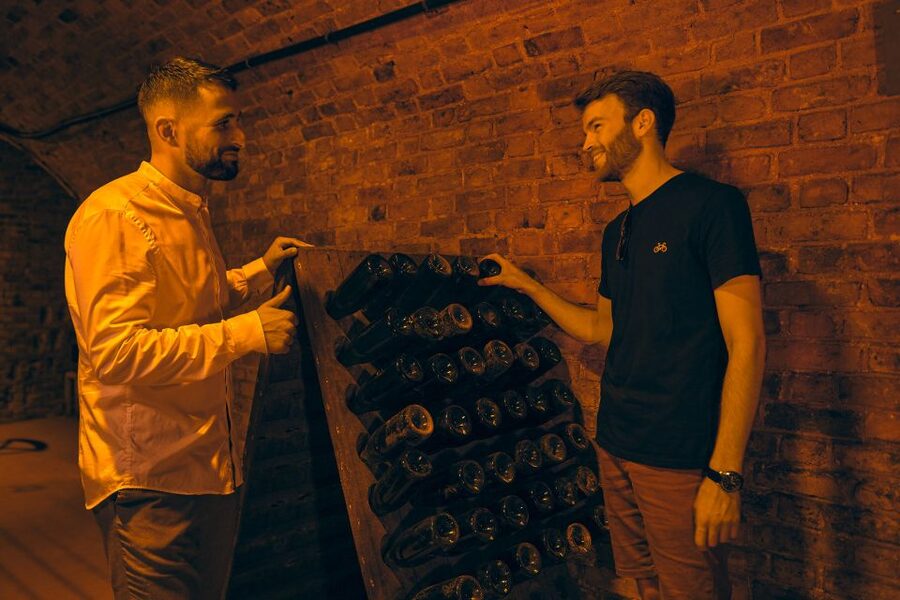
You then head into cellars dug in the 1850s. These older underground spaces give the tour a sense of place and help explain why Champagne production is not just a matter of fermenting grape juice and adding bubbles.
Expect the information to be clear but not overly technical. Alvaro has been especially effective at giving detailed explanations without making the 90-minute session feel like a lecture. Other guides, including Amanda and Charlotte, have also been praised for mixing facts with humor and stories.
The cellar portion is not a huge underground attraction with miles of grand corridors. That is worth knowing if you are comparing Le Clos Corbier with a major Champagne house in Reims or Épernay. The reward here is the direct explanation and family scale, not a vast corporate cellar spectacle.
Turning the tasting into a Champagne class
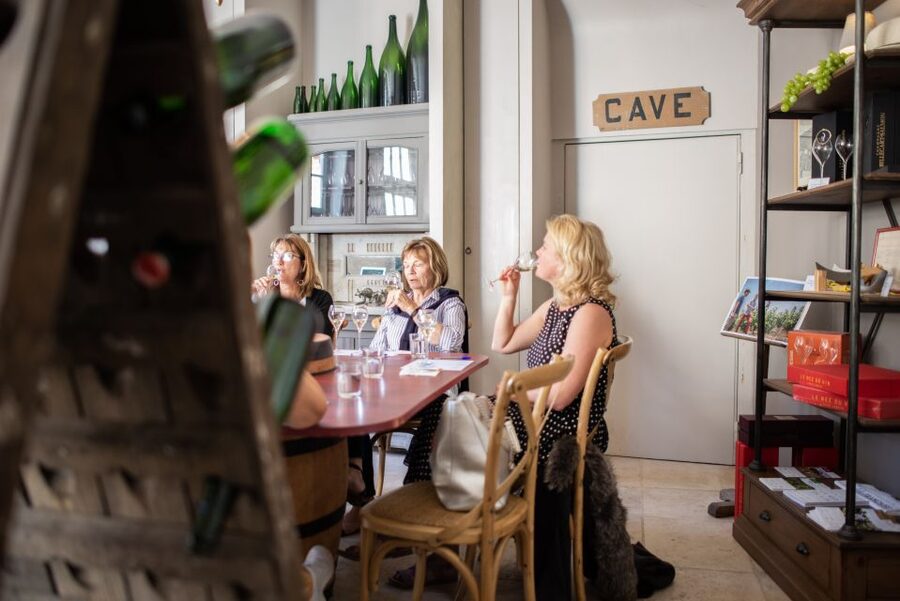
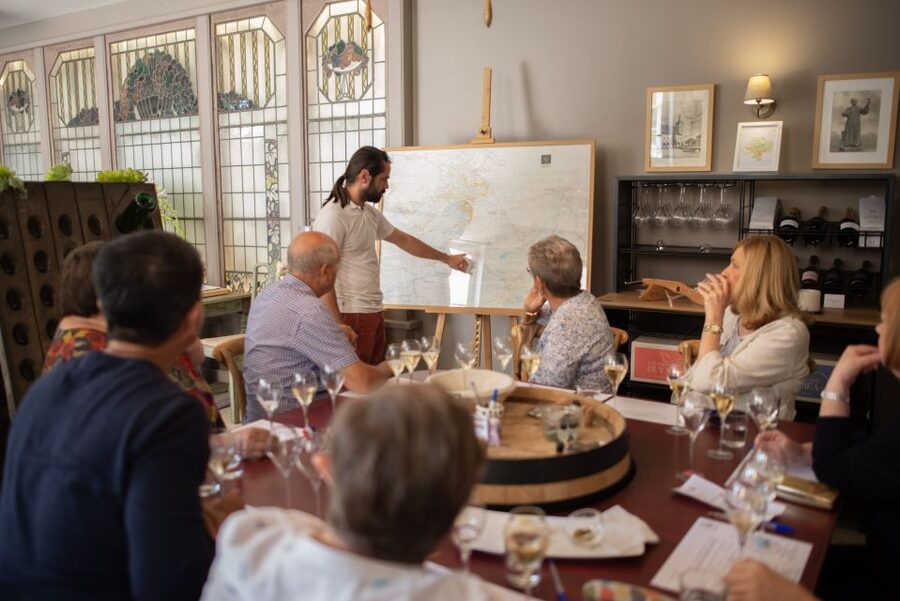
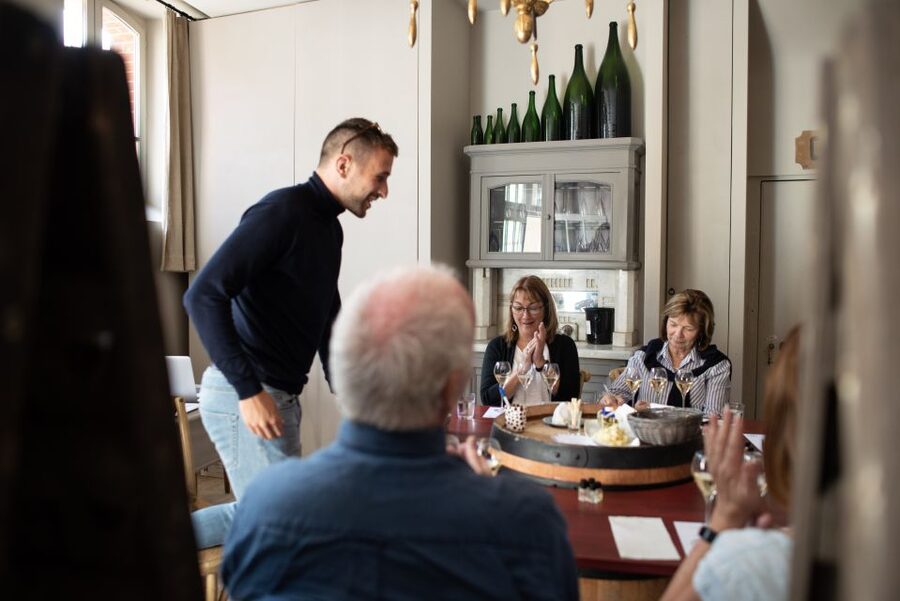
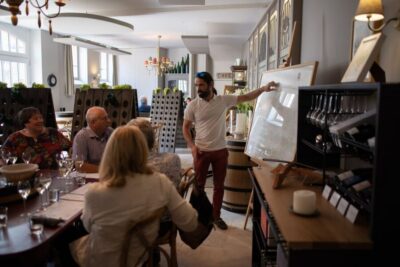
After the cellar visit, you sit down for the tasting class. This is where Le Clos Corbier becomes more than a standard cellar tour followed by three glasses.
The session includes a Champagne quiz, and it is meant to be part of the fun rather than a test you need to study for. Questions give the group a chance to recall what the guide just explained about the region, production, and Champagne culture.
I like this format because it keeps you involved. You are not simply listening for 45 minutes and then being handed a glass. The quiz gives you a reason to ask questions, compare impressions, and remember the basic ideas behind what you are drinking.
The tasting also includes an olfactory workshop. You train your nose to identify aromas and flavors that can appear in Champagne, then use those impressions to think about what is in the glass.
This is a useful skill for beginners. Many people can tell that one Champagne tastes different from another but struggle to explain why. The aroma exercise gives you a simple way to slow down, smell first, taste second, and describe what you notice.
Do not worry about getting every answer right. The point is to build confidence and curiosity, not to turn you into a professional taster in one sitting. The lively quiz format works particularly well for couples, friends, and families who enjoy doing something together.
Three family Champagnes, including a Grand Cru Vintage
The tasting includes three Champagnes from the family, with one Grand Cru Vintage in the lineup. You taste them blind as part of the activity, so you are encouraged to judge what is in the glass before knowing its identity.
That blind element adds a little competition without turning the visit into a serious contest. You can compare color, aroma, texture, and flavor, then make your best guess. The group gets involved, and the answers help reinforce the differences explained during the class.
The Grand Cru Vintage gives the tasting a strong high point. It lets you try a wine from a particularly respected classification and a specific vintage, rather than tasting only a general house blend.
At the same time, you should not expect a large flight of wines. Three tastings are enough for a focused lesson, especially when each glass is paired with discussion and the blind identification game. If your priority is sampling a dozen producers, this is not the right format.
Local sweet treats and finger food accompany the Champagne. These pairings make the tasting more comfortable and show how small bites can change the way a wine tastes. They also mean you are not drinking on an entirely empty stomach, though this is not a substitute for lunch or dinner.
Food can be adapted for allergies or specific diets. Tell the provider about your needs when booking or before the visit so the arrangements can be made.
More Champagne trips worth a second look
- From Reims: Champagne and Family-Run Wineries Tour
★ 4.8 · 671 reviews - Reims afternoon tour Champagne and family growers
★ 5.0 · 535 reviews - From Reims: Morning Champagne Tour and Tastings
★ 4.8 · 463 reviews - From Reims: Champagne Day Trip to 3 Family Domains & Lunch
★ 4.8 · 194 reviews
Why the family scale matters
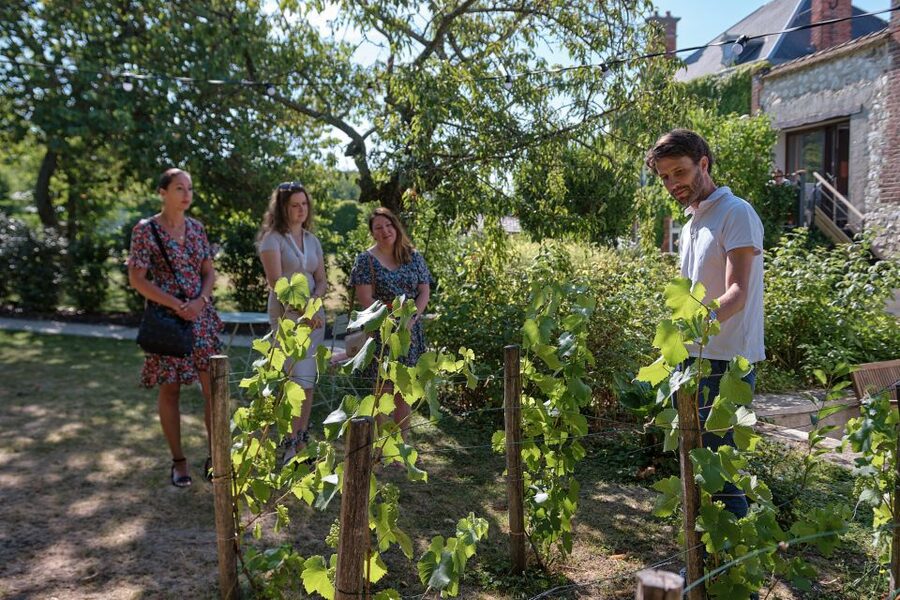
Large Champagne houses have their place. They often offer impressive facilities, polished visitor routes, and strong brand recognition. Le Clos Corbier offers something different: a closer look at how a family Champagne House presents its work.
The guides make a noticeable difference. Alvaro is warm, thorough, and good at drawing the group into the subject. Amanda has a relaxed, informative style, while Charlotte has been praised for making a lot of material easy to absorb in a short time. Martin has also handled family groups well, including children who took part in a simple nonalcoholic taste test using seltzer and syrup.
That last detail matters if you are visiting with children. The main activity is built around Champagne, so adults are the focus, but children do not have to sit silently while everyone else tastes. The experience can be made more inclusive, though you should still consider your children’s interest in a cellar and an educational tasting.
The setting also feels less formal than a grand-name house. You can ask questions without feeling as if you are interrupting a scripted presentation. If you have visited wineries in other countries, you will recognize the basic rhythm, but the Champagne-specific production details make this a useful regional introduction.
Value at $47 per person
At $47 per person, this is a good value if you want a guided lesson, cellar visit, and three tastings in one stop. You are paying for more than the liquid in the glasses. The price covers access to the house, the press room and cellar, the guide’s explanation, the aroma workshop, the quiz, and the food pairings.
The value is strongest for first-time visitors to Champagne. You leave with a clearer sense of how production works, what to look for when tasting, and why the region’s wines differ from ordinary sparkling wine.
It is also a sensible choice if you prefer personal contact over famous branding. Several visitors have preferred this format to larger houses, especially because the guides answer questions and involve the whole group.
The value is less obvious if you are already an experienced Champagne collector seeking rare bottles or a long technical seminar. The tour lasts only 90 minutes, and the tasting focuses on three family Champagnes. That is enough for a lively introduction, but not a full day of producer visits.
You should also budget for transportation. Pickup and drop-off are not included, and lunch or dinner is separate. If you are coming from Reims, taxis may be difficult to find in Aÿ and can be expensive. A rental car is the practical option if your itinerary allows it, but remember that the tasting includes alcohol.
From Épernay, the visit can be manageable with careful planning, and some people have reached it from the Avenue de Champagne. From Paris, it can work as a day trip, but you need to protect enough time for the journey back. A tight connection after the tasting leaves little room for delays.
Who will enjoy this Champagne visit
I would choose Le Clos Corbier for you if this is your first or second Champagne experience and you want the basics explained clearly. The tour gives you enough production background to make later tastings more meaningful.
It suits couples and groups of friends who enjoy a social activity. The quiz and blind tasting create conversation, and the format gives you something to do besides compare notes quietly.
It can also work for families with children, provided you understand that the central subject is alcohol. The nonalcoholic taste test described by one family shows that younger visitors can be included, but the cellar and lesson may not hold every child’s attention.
Wine lovers who have visited many large Champagne houses may appreciate the change of pace. You will not get a giant brand presentation, but you will get a family setting and a more direct explanation of the work behind the bottle.
I would hesitate only if transportation is a major problem, you need a full meal included, or you want an extensive tasting list. Those are the clear limits of this experience.
Timing, language, and practical details
The visit lasts 90 minutes, with starting times based on availability. That is long enough to cover the house, press room, cellars, tasting class, and three wines without taking over your whole day.
Guiding is available in French and English. If you have a technical question, ask it during the cellar section or tasting. The format encourages interaction, and the guides have been praised for responding thoughtfully rather than rushing through a fixed script.
Wear shoes you can walk comfortably in and bring a light layer if you are sensitive to cooler cellar temperatures. The supplied information does not specify cellar temperatures or accessibility details, so contact Le Clos Corbier directly if either point is important for you.
Free cancellation is available up to 24 hours before the visit for a full refund. You can also reserve and pay later, which helps if your Champagne plans are still shifting.
Should you book Le Clos Corbier?
Book this tour if you want a friendly, useful introduction to Champagne with real production spaces, a family setting, and a tasting that keeps you involved. The strongest reasons to go are the guides, the 1850s cellars, the aroma workshop, and the blind comparison of three family wines.
Think twice if you are relying on a last-minute taxi from Reims, need lunch included, or want a grand commercial cellar with a much larger tasting menu. For most visitors who can solve the transport question, $47 buys a well-rounded 90-minute experience and a better understanding of what they are drinking.
FAQ
Where does the Champagne House tour take place?
The experience takes place at Le Clos Corbier in Mareuil-sur-Aÿ, in the Grand Est region of France, among the Champagne vineyards.
How long does the experience last?
The tour and tasting last 90 minutes.
What languages are available?
The live guide can lead the experience in French or English.
What will I see during the visit?
You will discover the Champagne House, visit the press room, and enter cellars dug in the 1850s. The guide also explains the Champagne-making process from harvest through bottling.
How many Champagnes will I taste?
You will taste three Champagnes from the family, including one Grand Cru Vintage.
Is food included?
Local sweet treats and finger food are included with the tasting. Lunch or dinner is not included, but food pairings can be adapted for allergies or specific diets.
Is transportation included?
No. Pickup and drop-off are not included, so you must arrange your own transportation to Le Clos Corbier.
More Workshops in Champagne
- Afternoon Champagne visit & tasting class near Epernay
★ 5.0 · 29 reviews - Fragonard Paris: Mini Perfume Workshop
★ 4.5 · 1,924 reviews - Paris Cooking Class and Lunch with Wine plus Market Visit Option
★ 5.0 · 1,024 reviews - Paris Croissant Small-Group Baking Class with a Chef
★ 5.0 · 910 reviews
More Food Tours in Champagne
- The Essential Tour from Epernay with Champagne Tasting
★ 4.9 · 120 reviews - Champagne Tasting Class and Lunch near Epernay
★ 5.0 · 53 reviews - Champagne Munoz Bruneau : Half Day Visit and Tasting
★ 4.9 · 53 reviews - Champagne Munoz Bruneau : Half Day Visit and Tasting
★ 5.0 · 50 reviews
Recently reviewed around Champagne
- Champagne experience with a vintage van from Epernay – 3 hours★ 5.0 · 108 reviews
- The Must-sees 3h30 from Epernay (Private Half day Champagne Tour)★ 5.0 · 30 reviews
- Food & Champagne Experience from Epernay (Private tour)★ 4.5 · 28 reviews
- Bubble Champagne Tour from Epernay (Small group half day tour)★ 5.0 · 58 reviews
- The Connoisseurs from Epernay (Private Half day Champagne Tour)★ 5.0 · 59 reviews
- From Epernay Full day Electric bike Champagne and lunch★ 5.0 · 36 reviews
- From Epernay: Champagne Small-Group tour with tastings & Lunch★ 5.0 · 93 reviews
- Champagne Munoz Bruneau : Half Day Visit and Tasting★ 5.0 · 50 reviews
Champagne Tours, compared.
Reims afternoon tour Champagne and family growers
Read our review →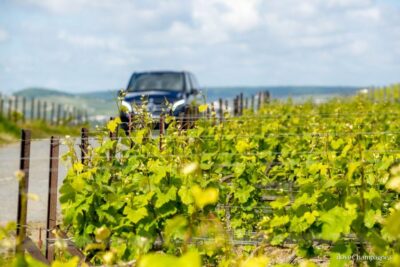
Aÿ-Champagne: Pressoria Champagne Museum with Tasting
Read our review →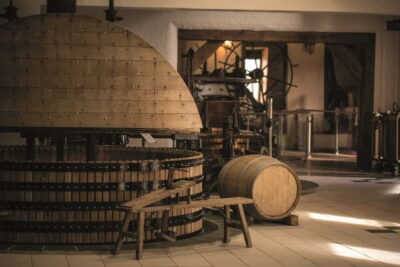
Passy-Grigny: Chocolate and Champagne Tasting Tour
Read our review →
Champagne Day Trip to 3 Family Domains & Lunch
Read our review →
E-Bike Champagne Day Tour with Tastings and Lunch
Read our review →Browse the lists this tour appears in