
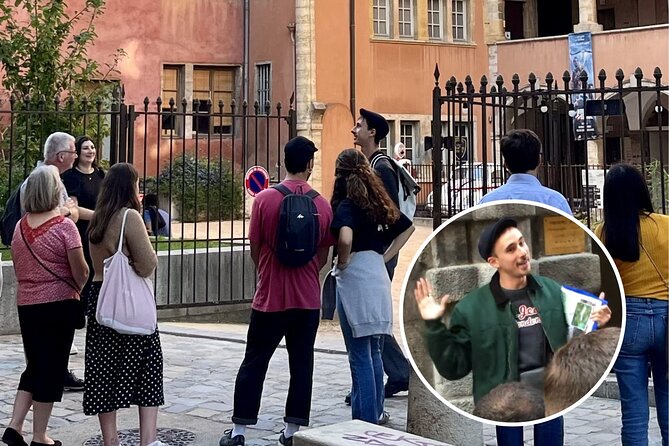
Reviewed · WALKING TOURS
Lyon’s History and Must-Sees with a Local! (English Walking Tour)
Lyon’s best introduction may be a walk that links Roman Lugdunum, Renaissance passageways, Resistance history, and French food in one compact route. Quentin Dubourg leads this English tour from Saint-Jean Cathedral through Vieux Lyon and across the city center, ending at Place Bellecour.
I like the strong mix of stories and places, especially the walk through Lyon’s traboules and the stop at the historic courthouse tied to Jean Moulin and Klaus Barbie. I also like the price: at $4.64 per person, this is remarkable value for nearly two hours with a local guide. The main consideration is pace. You cover a lot of ground in 1 hour and 45 minutes, and the tour gives you an overview rather than long visits inside major sights.
In This Review
- Key points at a glance
- Why this short Lyon walk works so well
- Starting at Saint-Jean Cathedral and ancient Lugdunum
- Walking Vieux Lyon through the traboules
- Rue du Bœuf and Lyon’s bouchon tradition
- The Saône and Lyon’s World War II story
- Place des Jacobins and the 19th-century city
- Grand Hôtel-Dieu and a changed public building
- Ending at Place Bellecour with Saint-Exupéry
- Price, group size, and practical value
- Who should book this Lyon walking tour?
- Should you book Quentin’s Lyon walk?
- FAQ
- Where does the walking tour begin?
- Where does the tour end?
- What time does the tour start?
- How long does the tour last?
- Who leads the tour?
- How large can the group be?
- Can I cancel for a full refund?
Key points at a glance
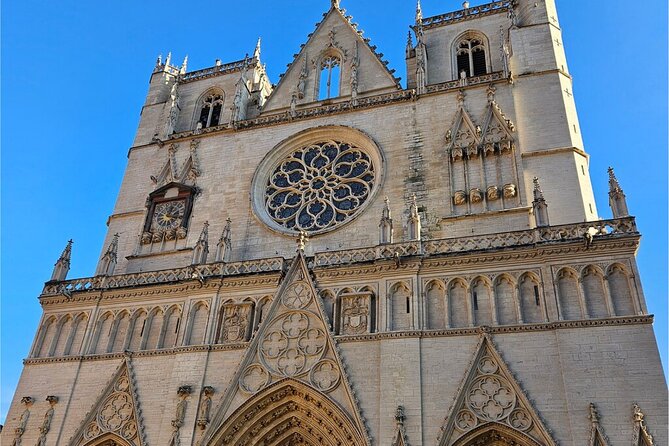
- Roman Lyon starts at Saint-Jean Cathedral: Learn how Lugdunum became the capital of the Gauls under Rome, then discuss Fourvière and enter the cathedral.
- Traboules bring Vieux Lyon to life: Quentin takes you through Lyon’s famous passageways while sharing lesser-known details about the old town.
- Food gets its own stop on Rue du Bœuf: Hear how bouchons, Paul Bocuse, and Mère Brazier shaped Lyon’s place as France’s gastronomic capital.
- The Resistance story is tied to a real courthouse: At the Palais de Justice, the tour connects Jean Moulin, Klaus Barbie, and Lyon during World War II.
- The route ends with Saint-Exupéry: At Place Bellecour, you finish with the lesser-known statue honoring the Lyon-born author of The Little Prince.
- Small enough to feel personal: The group limit is 20, with a 2 p.m. start and a mobile ticket.
Why this short Lyon walk works so well
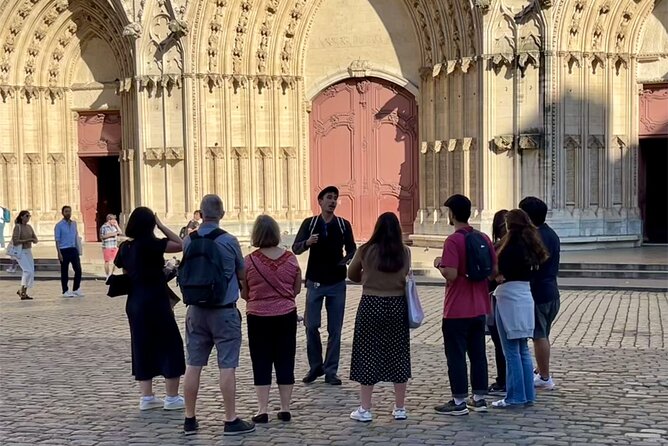
The clever part of this tour is its route. You begin in the oldest part of Lyon, follow the Saône toward the Presqu’île, then finish in the modern city center. That lets you see Lyon as a city built in layers, not as a collection of disconnected monuments.
Quentin’s approach also appears to favor storytelling over a long list of dates. His subjects range from ancient Roman power to local food, wartime courage, modern city life, and a famous children’s author. That range matters because Lyon can feel hard to read at first. The old town, riverfront, grand squares, and commercial center each tell a different story.
The tone is another reason this tour may suit you. The feedback describes Quentin as funny, energetic, charming, and good at drawing people into the places around them. He also seems to make an effort to bring the group together, which can make a short walking tour feel less formal.
Still, keep your expectations clear. This is not a museum tour, a food tasting, or a private walk. The group may include up to 20 people, and the stops are brief. You are paying for a lively orientation to Lyon, not extended time at each monument.
More Walking Tours in Lyon
- Vieux Lyon Cultural & Historical Walking Guided Tour (English)
★ 5.0 · 942 reviews - Lyon: Private Walking Tour of “Traboules” in the Old Town
★ 5.0 · 866 reviews - Lyon: City Highlights Walking Tour
★ 4.9 · 847 reviews
Starting at Saint-Jean Cathedral and ancient Lugdunum
The meeting point is Place Saint-Jean, beside Cathédrale Saint-Jean-Baptiste de Lyon. The tour begins at 2 p.m., so arrive ready to walk rather than expecting a slow start. This first section covers the foundations of Lyon, including Lugdunum, the Roman settlement that became the capital of the Gauls during the Roman Empire.
That opening gives the rest of the tour useful context. Lyon’s importance did not begin with its Renaissance merchants or 19th-century expansion. Its position and power go back to the Roman period, and Quentin uses that early story to explain how the city developed.
You also discuss the Basilica of Fourvière before discovering the inside of the cathedral. That pairing is useful because Fourvière dominates Lyon’s skyline and Saint-Jean anchors the old town below it. You get a sense of how the religious and historic parts of the city relate to each other without spending the tour climbing up to the basilica.
The cathedral stop lasts about 10 minutes. That is enough for a focused introduction and a look inside, but not enough for a detailed architectural study. If Saint-Jean matters greatly to you, plan to return on your own for a longer visit.
Walking Vieux Lyon through the traboules
The longest stop is Vieux Lyon, with about 30 minutes devoted to the old town. Much of this quarter was built during the Renaissance, and the streets offer some of Lyon’s most memorable architecture.
The highlight is the traboules, the passageways that run through buildings and courtyards. Quentin takes the group through several of them and explains some of the city’s lesser-known stories. These passages are one of the best reasons to choose this tour over a simple self-guided walk. From the street, you may not know which entrances matter or how the route fits into the old town’s design.
I especially like that this section is not limited to postcard views. The goal is to show how people moved through Lyon and how the old quarter worked behind its main facades. A quick walk through the traboules can make Vieux Lyon feel much more personal than a standard march from one landmark to the next.
There is a practical limit here. Passageways are shared urban spaces, not a private attraction reserved for the group. Access to individual traboules can vary, and the tour does not promise a visit to every notable passage. Quentin’s local knowledge is therefore important, but you should see this as a guided introduction rather than a complete survey.
The old town stop may be the strongest part of the tour for first-time visitors. It gives you orientation, history, and a little mystery without requiring a separate paid admission.
Rue du Bœuf and Lyon’s bouchon tradition
The stop on Rue du Bœuf shifts the focus from buildings to the dining table. Quentin introduces Lyon’s culinary tradition, including the history of bouchons and their traditional recipes.
A bouchon is part of Lyon’s identity, and learning about it in the middle of Vieux Lyon makes the food story feel connected to the city itself. You also hear about Paul Bocuse and Mère Brazier, two major figures linked to the growth and reputation of Lyon’s cuisine.
This 10-minute stop is not a tasting. That distinction matters. You will learn what shaped the local food culture, but the tour does not include a meal or samples. If you want to eat at a bouchon afterward, the introduction can help you understand why these restaurants matter, though the tour does not specify individual restaurant recommendations.
For me, this is a good example of the tour’s balance. It does not try to cover every subject in depth, but it adds a useful local thread. Lyon’s food reputation is not treated as a detached slogan. It becomes part of the city’s social and cultural story.
More history-led days around Lyon:
- Historical and naughty tour of Lyon in french
★ 4.5 · 49 reviews - Lyon: Music History Tour with Wine Tasting
★ 4.9 · 34 reviews - Paris: Louvre Museum Entry with History of Mona Lisa
★ 3.9 · 2,823 reviews - Paris: Dark History and Ghostly Guided Walking Tour
★ 4.7 · 1,000 reviews
The Saône and Lyon’s World War II story
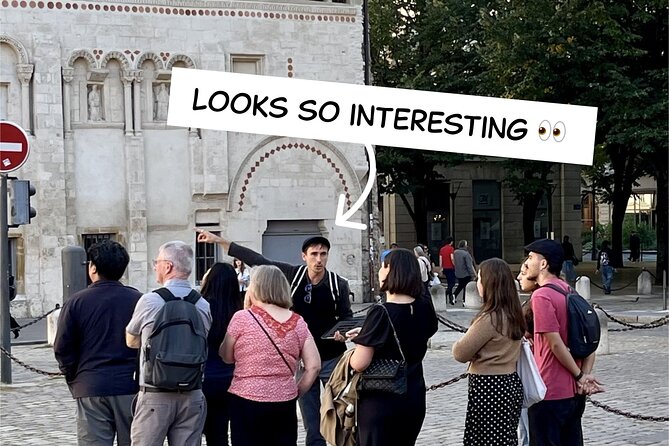
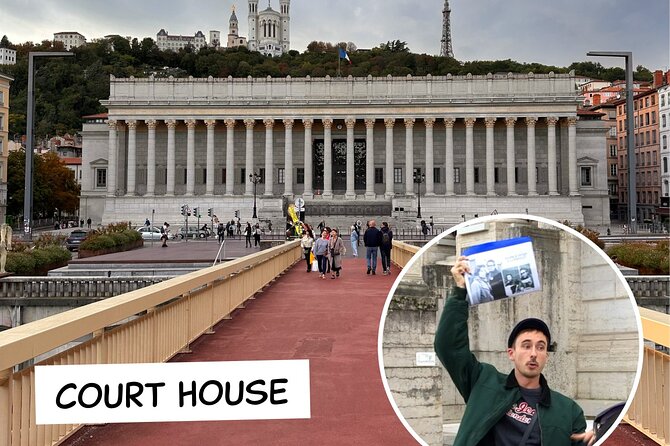
At the historic Palais de Justice de Lyon, you look toward the River Saône and discuss Lyon during World War II. This is the most serious section of the walk.
Lyon was an important center for the French Resistance, and Quentin connects the city to Jean Moulin, one of the movement’s key figures. The tour also discusses Klaus Barbie, the Gestapo chief who was judged in this courthouse more than 30 years later.
That connection between place and memory gives the stop real weight. You are not only hearing about wartime Lyon in general terms. You are standing beside a courthouse linked to a later trial, with the river and old city nearby. The setting helps show how history can remain present in ordinary streets and working buildings.
The stop lasts about 10 minutes. Quentin can introduce the main people and events, but this is not enough time for a full account of the Resistance or the Barbie trial. If this subject is central to your visit, treat the tour as a starting point for further reading or a longer history visit.
The shift in tone also gives the walk some needed range. After the lighter food discussion, the route asks you to think about courage, violence, justice, and memory. That makes the tour feel more substantial than a sightseeing circuit built only around attractive streets.
Place des Jacobins and the 19th-century city
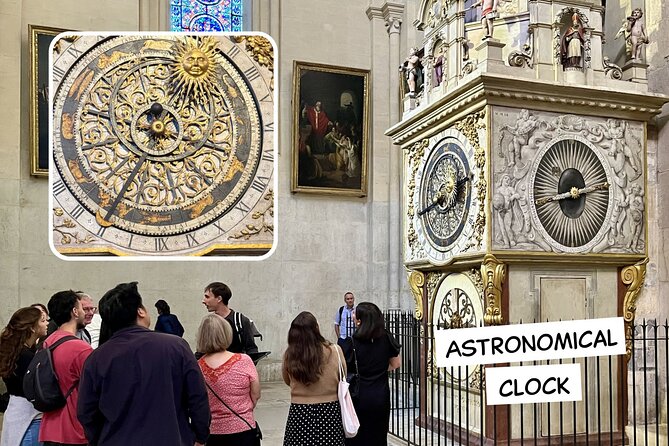
The 15-minute stop at Place des Jacobins looks at a newer phase of Lyon. Quentin takes you through the squares of this renovated area and explains how the 19th-century city was built for wealthy residents.
This section helps you read the Presqu’île, the central stretch between Lyon’s two rivers. The architecture and broad squares here feel different from the narrow lanes of Vieux Lyon, and the change is part of the point. You move from a Renaissance quarter into a more ordered, prosperous part of the city.
Quentin also discusses what it is like to live in Lyon today. That present-day perspective is useful. A city tour can become trapped in the past, especially in a place with Roman and Renaissance landmarks. Talking about modern Lyon gives you a better sense of the city as a living place rather than an open-air museum.
The stop is short enough to keep the tour moving. You will not receive a detailed architectural lecture on every building around the square, but you should come away with a clearer idea of how Lyon expanded and who shaped its central districts.
Grand Hôtel-Dieu and a changed public building
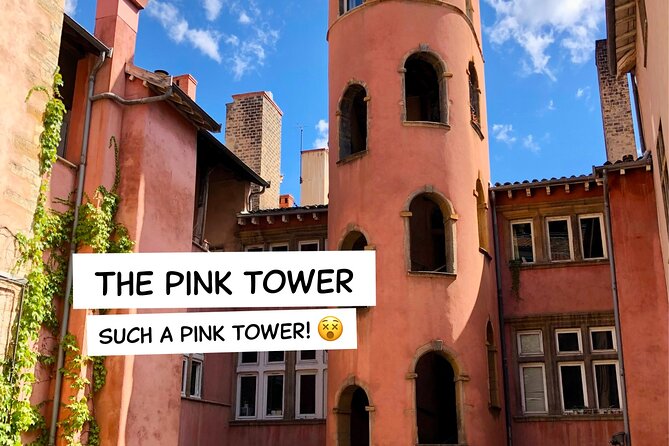
The walk then reaches the Hôtel-Dieu, a grand hospital that served Lyon for centuries. Quentin shows you the building and explains its earlier role before pointing out its present transformation into a mall.
This is a useful stop because it illustrates how historic buildings change purpose. A hospital that once formed part of Lyon’s civic life now serves a different commercial role, while its historic character remains part of the setting.
The visit lasts about 10 minutes. The tour does not promise access to every interior area or a detailed account of hospital medicine. Instead, you get a concise explanation of the building’s place in Lyon and a chance to see how the city reuses its older structures.
If you enjoy urban change, this may be one of the more interesting stops. It is less about a single famous event and more about how Lyon adapts its past for present use.
Ending at Place Bellecour with Saint-Exupéry
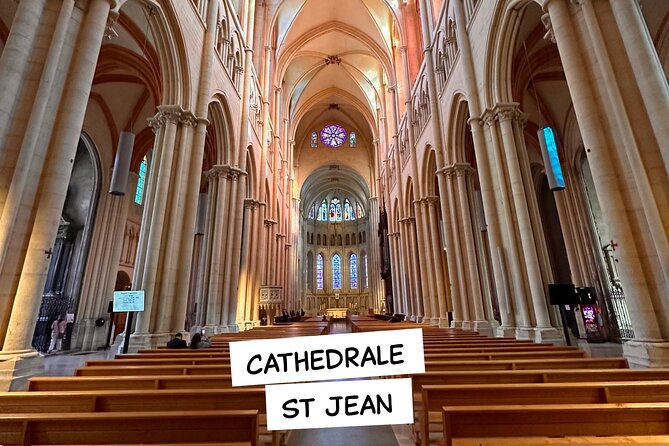
The tour ends at Place Bellecour, one of Lyon’s main squares in the city center. This is a practical finish. From the Presqu’île, you can reach other parts of Lyon easily, and several restaurants are only a short walk away.
Quentin also shares lesser-known details about the square before ending at the statue honoring Antoine de Saint-Exupéry, the Lyonnaise author of The Little Prince. That final detail gives the route a personal local touch. Saint-Exupéry is famous around the world, but the connection to Lyon can be easy to miss if you only visit the city’s major monuments.
Ending here also helps you plan the rest of your day. You can continue exploring the central districts, look for dinner, or use public transportation to reach another part of the city. Since the tour begins in Vieux Lyon and ends in the center, it does not return you to the starting point. That is convenient if you want to keep moving, but remember to account for the one-way route.
Price, group size, and practical value
At $4.64 per person, this tour is unusually inexpensive for a 1-hour-45-minute guided walk. The tour operates on a tip-based model, so the listed price is not the whole picture if you decide the experience deserves more. You can tip what you feel the walk was worth.
That arrangement can be excellent value for a budget-conscious visit. You get a local guide, an English presentation, a carefully linked route, and access to public places without separate admission charges. The real value is the interpretation: Quentin helps you notice why the traboules matter, how Lyon’s food culture developed, and why the courthouse carries such weight.
The tradeoff is less certainty about the final cost. If you prefer an all-inclusive fixed price, a tip-based tour may feel less straightforward. You should also remember that the listed route includes walking between stops, so the total time is not seven separate visits. It is one continuous city walk with short pauses.
The group limit is 20 people. That is not a private-tour size, but it is small enough to be more manageable than a large city group. The strongest feedback repeatedly points to Quentin’s humor, energy, clear knowledge of Lyon, and ability to make the group feel connected. Those qualities matter even more when a tour includes several short stops.
The tour uses a mobile ticket, confirmation arrives at booking, and it runs near public transportation. Service animals are allowed, and most people can participate. Free cancellation is available up to 24 hours before the 2 p.m. start time. Changes or cancellations inside that window are not accepted for a refund.
Who should book this Lyon walking tour?
I would choose this tour if you are visiting Lyon for the first time and want a broad introduction before exploring on your own. It gives you the basic map: old town, river, Presqu’île, major square, food culture, wartime history, and a famous local author.
It also suits you if you like guides with personality. The strongest praise centers on Quentin’s humor and energy, not only his facts. That combination can make a short afternoon walk more memorable, especially if you enjoy meeting people from different places.
Families and mixed-age groups may also find the format appealing because the subjects change often. Roman origins, passageways, food, war, city life, and The Little Prince offer enough variety to keep the walk from feeling like a long lecture.
You may want something else if you need a slow, highly detailed tour. The cathedral, Vieux Lyon, courthouse, Hôtel-Dieu, and Place Bellecour each deserve more time than this schedule allows. You should also look elsewhere if your main goal is food sampling, since no tasting is included.
Should you book Quentin’s Lyon walk?
Book it if you want a lively overview with real local context at an exceptionally low starting price. The route is well chosen, and the subjects go beyond the usual list of pretty buildings. The traboules, bouchon story, Resistance history, and Saint-Exupéry ending give the walk a strong Lyon identity.
Skip it only if you prefer private guiding, long monument visits, or a tour built around eating. For most visitors, especially on a first stay, Quentin Dubourg’s 1-hour-45-minute walk is a smart way to get your bearings, learn what makes Lyon distinctive, and decide where to spend the rest of your time.
FAQ
Where does the walking tour begin?
The tour begins at Place Saint-Jean, Pl. Saint-Jean, 69005 Lyon, France.
Where does the tour end?
The walk ends at Place Bellecour, Pl. Bellecour, 69002 Lyon, France, in Lyon’s Presqu’île and city-center area.
What time does the tour start?
The tour starts at 2 p.m.
How long does the tour last?
The experience lasts approximately 1 hour and 45 minutes.
Who leads the tour?
The tour is led by Quentin Dubourg, a local guide who presents the walk in English.
How large can the group be?
The tour has a maximum of 20 participants.
Can I cancel for a full refund?
Yes. You can cancel at least 24 hours before the local start time for a full refund. Cancellations or changes made less than 24 hours before the start are not accepted for a refund.
Recently reviewed around Lyon
- Taste Wine in Lyon: Burgundy, Beaujolais, Rhône, and more★ 5.0 · 211 reviews
- 1 or 2-Hour Pedicab tour of Lyon★ 5.0 · 213 reviews
- Hameau Duboeuf, 1st theme park on Vine and Wine in Europe★ 4.5 · 63 reviews
- Northern Rhône Valley Wine tour from Lyon Half Day★ 4.5 · 113 reviews
- Storytelling tour of Old Lyon★ 5.0 · 39 reviews
- Segway – Ride along the rivers 1h30★ 5.0 · 43 reviews
- Lyon Old Town Private Food Tour with 6 French Delicacies & Wines★ 5.0 · 85 reviews
- Rhône Valley Wine Tasting Private Day Tour from Lyon★ 5.0 · 43 reviews
Walking Tours, compared.
Paris Top Sights Half Day Walking Tour with a Fun Guide
Read our review →
Montmartre Hidden Gems and Scenic Highlights Walking Tour
Read our review →
Montmartre Hill French Gourmet Food and Wine Tasting Walking Tour
Read our review →
Paris Île de la Cité and Notre-Dame Walking Tour With Crypt
Read our review →
Montmartre Cheese, Wine & Pastry Guided Walking Tour
Read our review →
Paris in a Day: Louvre or Orsay, Eiffel Tower, City Walk & Cruise
Read our review →
Montmartre Highlights Walking Tour with a Local Guide
Read our review →
Browse the lists this tour appears in