
Reviewed · MONTMARTRE TOURS
Montmartre & Sacré Coeur: 2.5-Hour Walking Tour
Montmartre is Paris at its most theatrical: a hilltop village of crooked lanes, old artists’ studios, cabaret tales, and one enormous white basilica. This 2.5-hour walk gives you the useful thread tying it all together, from the Moulin Rouge up to Sacré Coeur, where the city opens out below you.
I like the mix of famous sights and quieter corners, and I like that the guides bring art history to life instead of simply pointing at buildings. Guides such as Tamari, François, Fred, Anastasia, Felix, and Liliyana have been praised for lively storytelling and strong art knowledge. The catch is the hill: good walking shoes are essential, and the tour is not suitable for wheelchair users or people with walking disabilities.
In This Review
- Key points to know before booking
- Why Montmartre works best on foot
- From Moulin Rouge to the old artists’ quarter
- Following Van Gogh, Picasso, and Toulouse-Lautrec
- Place du Tertre and the public face of Montmartre
- Sacré Coeur and the Paris view
- What the guide adds to the route
- Group size, pace, and practical limits
- Is $53 a fair price?
- Who should book this Montmartre walk?
- Should you book it?
- FAQ
- How long is the Montmartre and Sacré Coeur walking tour?
- What sights are included?
- Is entry to Sacré Coeur included?
- How many people are in the group?
- Which languages are offered?
- Does the price include food or drinks?
- Is the tour suitable for wheelchair users?
- Can I cancel the booking?
Key points to know before booking
- Artists’ Montmartre: Follow the footsteps of Van Gogh, Picasso, and Toulouse-Lautrec through the neighborhood they helped make famous.
- A small group walk: The semi-private format allows up to 12 people per guide, with private groups also available.
- Classic sights included: See Place du Tertre, Moulin Rouge, Café des 2 Moulins, and Sacré Coeur.
- Strong guide-led experience: The best part is the storytelling, with guides using art history, old images, and local context to explain what you see.
- A steep finish: Montmartre is hilly and involves a moderate amount of walking, so pack light and wear supportive shoes.
- Good flexibility: The tour lasts 2.5 hours, offers several guide languages, and allows cancellation up to 24 hours before departure for a full refund.
Why Montmartre works best on foot
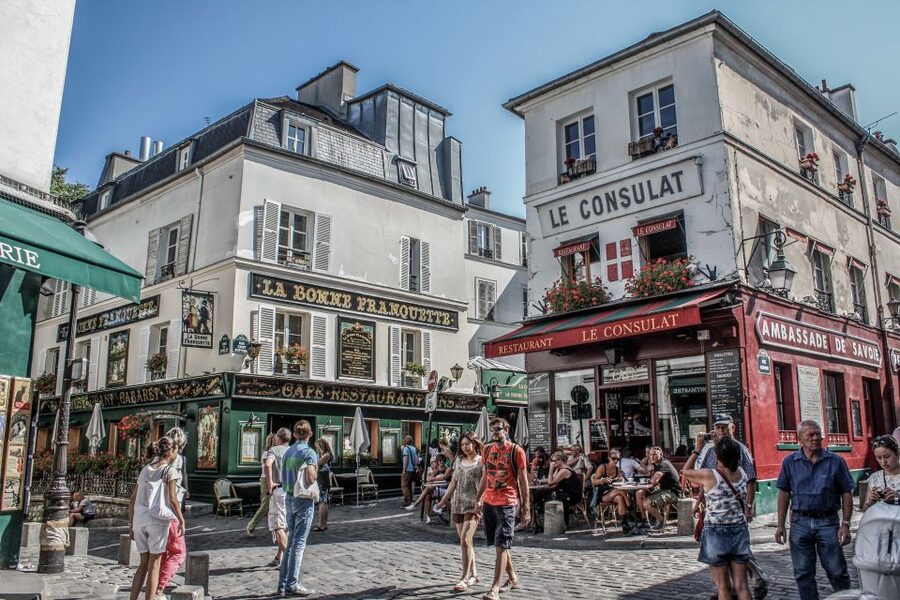
Montmartre can look simple on a map. It is not. The basilica sits on top of a hill, the Moulin Rouge is down near the boulevard, and the streets between them twist through several different versions of Paris.
That is why I see value in taking this district with a guide. You are not just moving from one postcard stop to the next. You are learning how a former village became a meeting place for painters, writers, performers, and people looking for a cheaper corner of Paris.
The walk also helps you notice details that are easy to miss on your own. A doorway, studio, café, or narrow passage can seem ordinary until you hear who lived there or what happened nearby. The route is designed to connect those small clues with the larger story of Montmartre.
At $53 per person, this is not the cheapest way to spend a morning or afternoon in Paris. You can walk past the basilica and Place du Tertre for free. The price makes more sense if you want interpretation, a planned route, and a small group rather than a self-guided wander with a phone in hand.
More Walking Tours in Paris
- Paris Top Sights Half Day Walking Tour with a Fun Guide
★ 5.0 · 2,893 reviews - Montmartre Hidden Gems and Scenic Highlights Walking Tour
★ 5.0 · 2,684 reviews - Montmartre Hill French Gourmet Food and Wine Tasting Walking Tour
★ 5.0 · 2,588 reviews
From Moulin Rouge to the old artists’ quarter
The Moulin Rouge is one of the tour’s headline stops, and it provides a useful opening to Montmartre’s Belle Époque character. Its famous red windmill and cabaret tradition bring out the neighborhood’s more colorful side, with stories of dancers, artists, nightlife, and Toulouse-Lautrec’s connection to the cabaret world.
I would not book this walk expecting an inside visit to the Moulin Rouge. The experience focuses on seeing the landmark and hearing its story from outside. That is still worthwhile, especially if you want to understand why Montmartre became linked with cabaret and bohemian Paris.
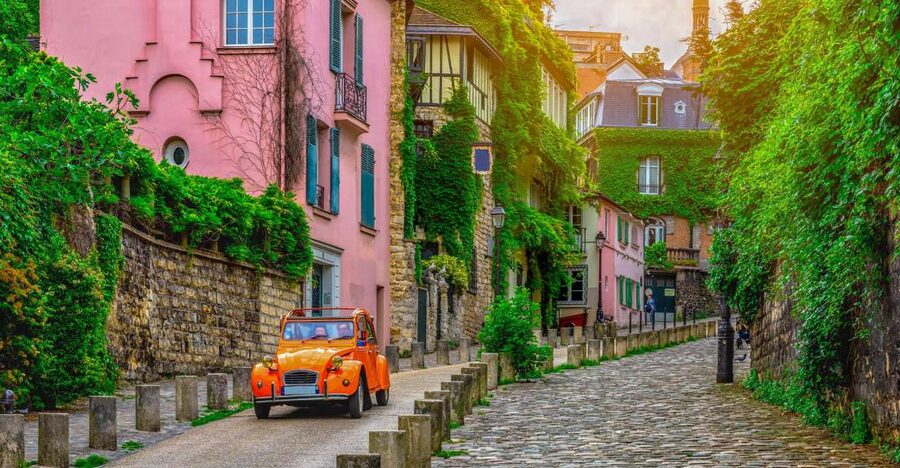
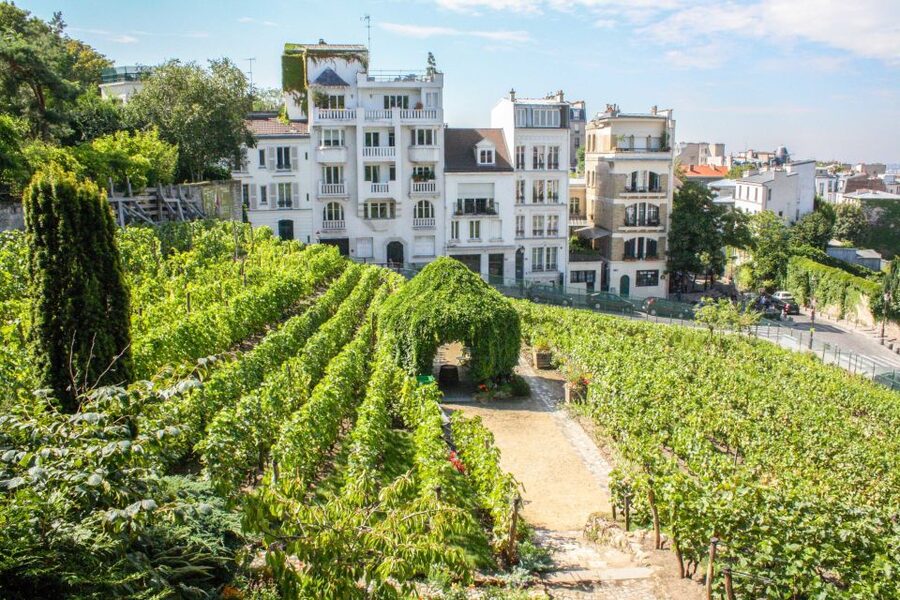
From here, the route moves uphill through streets that feel less grand than central Paris. This is part of the appeal. Montmartre’s charm comes from its uneven lanes, small squares, old façades, and sudden views. The walking itself is the sightseeing.
The climb can also be the first point where the tour tests your legs. The description calls for a moderate amount of walking, and that matters more here than it would on a flat city route. You will be better off in sneakers or sturdy walking shoes than in smooth-soled dress shoes.
Following Van Gogh, Picasso, and Toulouse-Lautrec
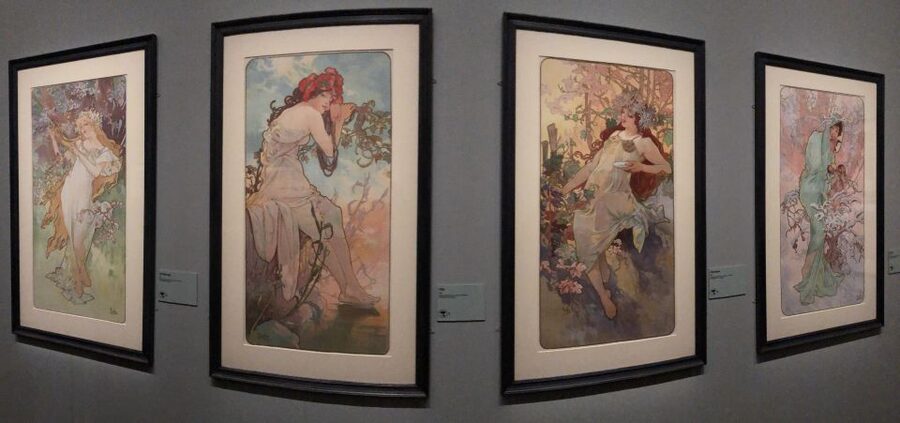
Art is the main thread running through this experience. You visit places linked with Vincent Van Gogh and Pablo Picasso, and you hear about Henri de Toulouse-Lautrec and the artists who worked, drank, argued, and exhibited around Montmartre.
The former home of Van Gogh gives the neighborhood a personal connection to one of Europe’s best-known painters. Picasso’s studio adds another layer, since Montmartre was not simply a place where artists lived. It was a working district where ideas and styles changed quickly.
A good guide makes these locations useful even when there is no major museum interior to enter. Anastasia, for example, has been praised for an art history background that connected famous works to places along the route. Liliyana also tied the art to the streets, giving the paintings a physical setting instead of treating them as isolated facts.
Felix has used before-and-after images on a tablet to show how parts of the arrondissement changed over time. That sort of visual aid can be especially helpful in Montmartre, where modern Paris often sits on top of a much older version of the district.
You should think of this as an art-history walk with landmarks, not an art museum visit. The focus is on places, people, and stories. Specific collections or museum rooms are not part of the stated experience, and the walking tour does not include food or drinks.
Place du Tertre and the public face of Montmartre
Place du Tertre is the traditional artists’ square and one of the most recognizable stops on the hill. Easels, portrait artists, and café tables give it the look many people expect from Montmartre.
It can also be busy and commercial. The square is not a frozen slice of nineteenth-century Paris, so you should come ready for a popular sightseeing stop rather than a quiet village plaza. The guide’s explanation helps you see past the surface and understand how this place fits into the artistic identity of the neighborhood.
This is one of the spots where a small group helps. With a maximum of 12 people per guide, you have a better chance of hearing the explanation without being swallowed by a large crowd. A private group is also available if you want a more personal pace or are arranging the walk for family or friends.
The tour may include Café des 2 Moulins, known to many visitors from Amélie. That stop adds a modern film connection to the older artist and cabaret stories. It is a good example of how Montmartre’s identity has been renewed by popular culture, not just preserved in old paintings.
Do not assume that a café stop means a meal or a scheduled drink. Food and beverages are not included. If you want to eat or linger over coffee, plan that separately before or after the walk.
More Paris walks with a guide:
- Paris Île de la Cité and Notre-Dame Walking Tour With Crypt
★ 5.0 · 2,272 reviews - Paris: Montmartre Cheese, Wine & Pastry Guided Walking Tour
★ 4.8 · 2,255 reviews - Paris in a Day: Louvre or Orsay, Eiffel Tower, City Walk & Cruise
★ 5.0 · 1,956 reviews - Paris: Montmartre Highlights Walking Tour with a Local Guide
★ 4.9 · 1,668 reviews
Sacré Coeur and the Paris view
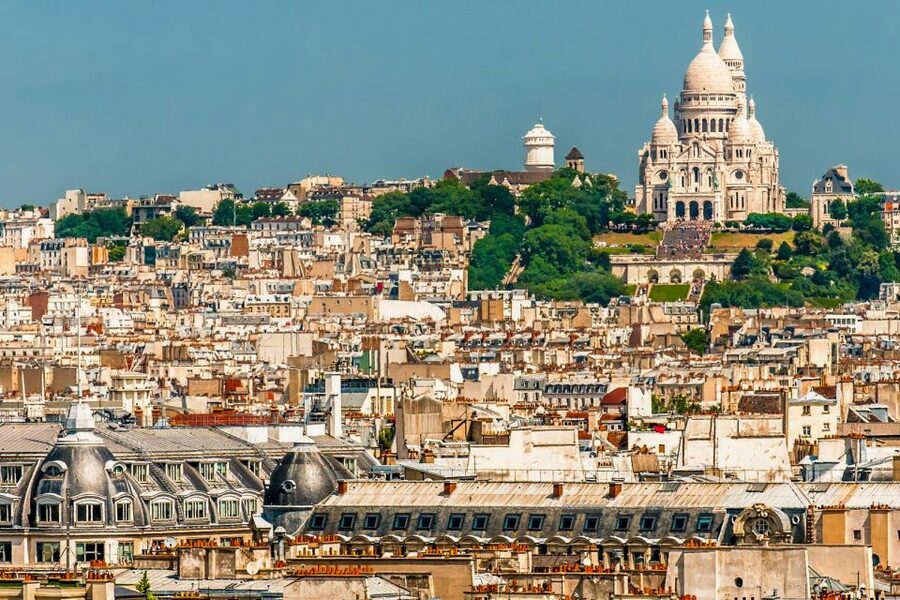
Sacré Coeur is the grand finish, a white basilica perched at the top of Montmartre. The visit includes entry to the cathedral, and the hilltop position gives you a broad view across Paris.
The view is the reward for the climb. From this height, the city spreads below in a way that makes the route easier to understand. You can see why Montmartre feels separate from the rest of Paris, even though it is still part of the city.
The basilica itself is a major sight, but the experience remains a walking tour rather than a formal religious or architectural lecture. Your guide can explain the building and its place in Montmartre, then give you time to take in the interior and the view.
The tour information suggests that some departures may be timed around sunset. Check the available starting time carefully before booking, since the best light and the exact feel of the view depend on the season and departure slot.
Keep in mind that religious sites can impose quiet rules or restrict speaking in certain areas. Follow your guide’s instructions inside. The tour information also notes that occasional closures can happen without warning, in which case an alternative may be offered if opening is delayed by more than an hour.
What the guide adds to the route
The guide is the real reason to choose this experience instead of walking the same streets alone. The strongest guides make Montmartre feel connected: the painters lead to the cafés, the cafés lead to the cabarets, and the cabarets lead back to the district’s changing public image.
François has been described as energetic, conversational, and strong on Parisian architecture, culture, and history. Fred has been praised for a relaxed, friendly approach and for giving enough context to make the streets easier to read.
Alex is noted for passion about Parisian history, while Elena is described as warm and generous. Eden and Tamari have also been praised for creating an engaging, personal walk. These names are useful because they show the range of guide strengths, but you should not assume a particular guide will lead your departure.
The listed languages are English, Spanish, Italian, French, Russian, and German. If your language choice matters, check the available option before paying. The tour is live and guide-led, so language fit will affect how much you get from the stories.
Group size, pace, and practical limits
A maximum of 12 people per guide is a sensible compromise. It is small enough for questions and conversation, but it may not feel like a fully private walk. If you want the guide to shape the route around your interests, choose the private group option if available for your date.
The tour ends back at the meeting point, and transportation is not included. Meeting points can vary by the option booked, so read the specific departure details rather than relying on a general Montmartre landmark.
Bring a passport or ID card, and leave suitcases and large bags behind. Large luggage is not allowed, which is important if you are arriving directly from a hotel or train station.
The walk is not suitable for people with mobility impairments, and the semi-private version is specifically unavailable to wheelchair users. Montmartre’s incline, cobbles, and stair sections make this a real physical consideration, not a minor note.
The minimum for the semi-private tour is two participants. If that minimum is not met, an alternative date or full refund is offered. You can also cancel up to 24 hours ahead for a full refund, and the reserve-now, pay-later option can help if your Paris plans are still shifting.
Is $53 a fair price?
For a simple neighborhood stroll, $53 may feel high. For a 2.5-hour guided walk with basilica entry, multiple art connections, a small group, and a guide who can explain the district’s changing character, the cost is more reasonable.
I would place the value in the interpretation, not the admission. Sacré Coeur itself is not the sort of paid attraction that makes the ticket price alone worthwhile. You are paying for someone to organize the route and explain why Van Gogh, Picasso, Toulouse-Lautrec, the Moulin Rouge, Amélie, and the basilica belong in the same story.
The value is strongest at the start of a Paris visit. You get a working map of Montmartre, learn which streets and squares matter, and can return later to explore at your own pace. It is less useful if you already know the district well or prefer to stop whenever you like for food, shopping, or photographs.
Who should book this Montmartre walk?
I would recommend it to first-time visitors who want more than a quick look at Sacré Coeur. It also suits anyone interested in art, film, architecture, or the Belle Époque, especially if you enjoy learning through stories rather than reading plaques.
Families can benefit from the short format and personal guide, though the hills may be tiring for young children or older adults. A private option gives you more control over the pace, but all versions still involve walking uphill.
This is not the right pick if you need step-free access, want a food tour, or expect entry to the Moulin Rouge. It is also not ideal for anyone carrying luggage or seeking a slow, unstructured afternoon.
Should you book it?
Book this tour if you want Montmartre explained as a living neighborhood, not just a collection of famous photo stops. The combination of artists’ homes, Place du Tertre, cabaret history, Café des 2 Moulins, and Sacré Coeur gives you a well-rounded first look at the hill.
My practical advice is simple: choose a time that suits your energy, wear good shoes, bring a small bag, and check whether your preferred language and departure option are available. If the walking is manageable, $53 buys a useful introduction led by a guide who can turn Montmartre’s confusing lanes into a coherent Paris story.
FAQ
How long is the Montmartre and Sacré Coeur walking tour?
The tour lasts 2.5 hours. Starting times vary, so check availability for the date you want.
What sights are included?
The route includes Montmartre, Place du Tertre, the Moulin Rouge, locations connected with Van Gogh and Picasso, Café des 2 Moulins, and Sacré Coeur Basilica.
Is entry to Sacré Coeur included?
Yes. A visit to Sacré Coeur Cathedral is included.
How many people are in the group?
The tour has a maximum of 12 people per guide. A private group option is available.
Which languages are offered?
Live guides are available in English, Spanish, Italian, French, Russian, and German. Check the available language when choosing your option.
Does the price include food or drinks?
No. Food and drinks are not included.
Is the tour suitable for wheelchair users?
No. The semi-private tour is not available for wheelchair users or people with walking disabilities. A moderate amount of walking is involved.
Can I cancel the booking?
You can cancel up to 24 hours in advance for a full refund. The reserve-now, pay-later option is also available.
Recently reviewed around Paris
- Louvre Private Tour – The Essentials and More with Expert Guide★ 5.0 · 227 reviews
- 2CV tour by night★ 5.0 · 55 reviews
- Eiffel Tower Second or Summit Floor Access by Elevator with Views★ 3.5 · 161 reviews
- The only Paris Wine Tasting experience you need to do – 2 hours★ 5.0 · 265 reviews
- 2 Hour Street-art Walk and Space Invaders Hunt in Paris★ 5.0 · 27 reviews
- 2 hour outdoor group activity in Paris: SAINT GERMAIN★ 5.0 · 48 reviews
- Sainte-Chapelle, Conciergerie & Palais de Justice Private Tour★ 5.0 · 72 reviews
- Private 2 – Hour Paris Landmarks Tour by Golf Cart Mini Moke★ 5.0 · 38 reviews
Montmartre Tours, compared.

Montmartre Hidden Gems and Scenic Highlights Walking Tour
Read our review →
Montmartre Hill French Gourmet Food and Wine Tasting Walking Tour
Read our review →
Montmartre Cheese, Wine & Pastry Guided Walking Tour
Read our review →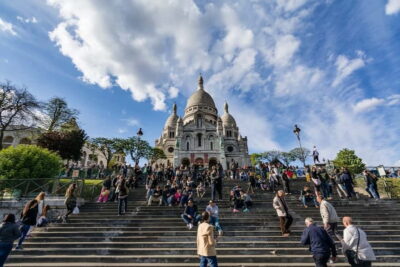
Montmartre Highlights Walking Tour with a Local Guide
Read our review →
Sacré-Coeur and Montmartre Tour with Expert Guide
Read our review →
Private Montmartre Food Tour with Wine, Cheese & Pastries
Read our review →
Paris Montmartre Food Tour – A Full French Meal by Do Eat Better
Read our review →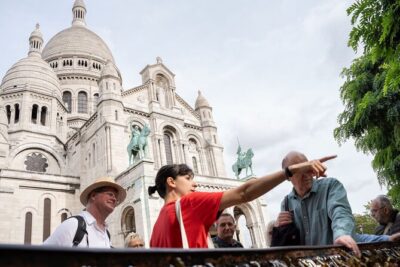
Hidden Montmartre: Paris’ Secret Streets Walking Tour
Read our review →Browse the lists this tour appears in