
Reviewed · MONTMARTRE TOURS
Montmartre Walking Tour with a Local Guide
Montmartre’s best moments are often between the famous stops: a story about Picasso or Van Gogh, a small detail on a building, a quiet side street, or a view opening across Paris. This two-hour walk links those pieces into a clear route from Place Blanche to Sacré-Cœur, so you get more than a quick look at the white-domed basilica.
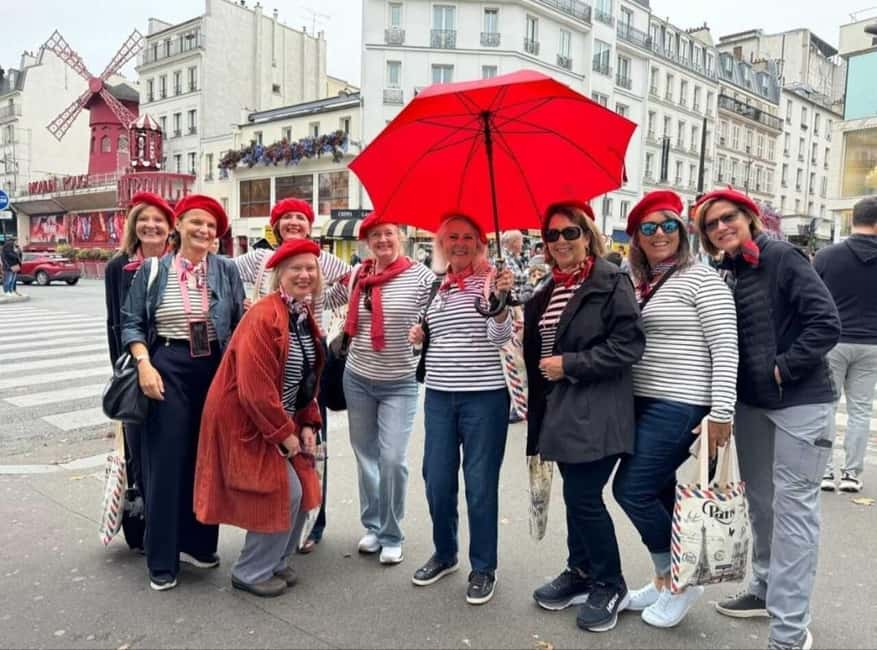
I like the guide’s personal touch, especially the way Samy takes family photos, answers questions, and adjusts the pace for children or older walkers. I also like the route’s mix of art, film, local life, and major sights. The drawback is the hill: this is not suitable for wheelchair users or people with mobility limits, and even a gentle climb can feel tiring in hot weather or rain.
In This Review
- Key points at a glance
- Why Montmartre works best on foot
- Place Blanche and the Moulin Rouge
- The Wall of Love and Montmartre’s modern image
- Moulin de la Galette and the artists’ quarter
- Dalida’s statue and the power of small stops
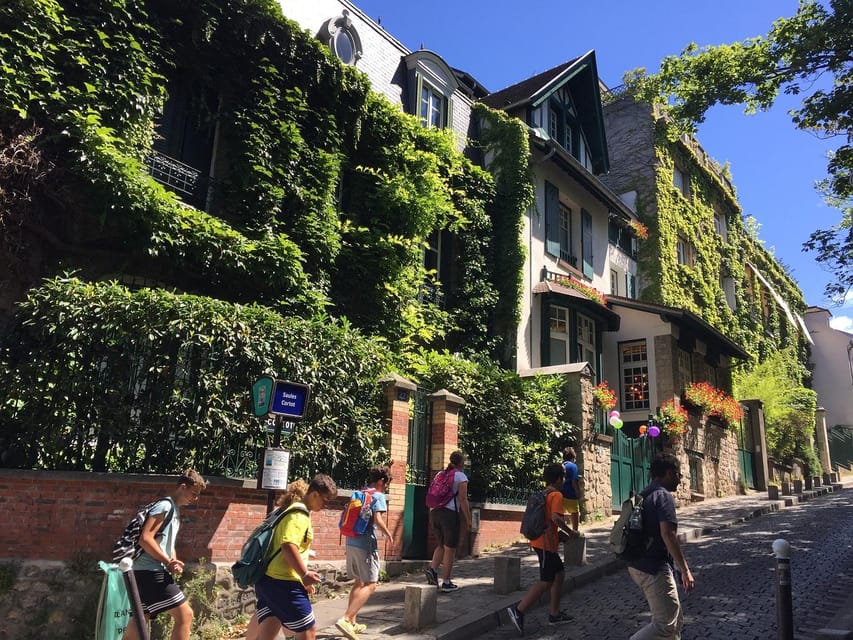
- La Maison Rose and the photogenic side of Montmartre
- Place du Tertre and the working artists
- Reaching Sacré-Cœur without treating the hill as a race
- Inside the Basilica of Sacré-Cœur
- The Paris view from Montmartre’s summit
- How Samy shapes the experience
- Is $27 a fair price?
- Who should book this Montmartre walk?
- Should you book it?
- FAQ
- Where does the Montmartre walking tour begin?
- Where does the tour finish?
- How long does the walking tour last?
- Is the tour conducted in English?
- Is the tour suitable for wheelchair users?
- What should I bring?
Key points at a glance
- Start beside the Moulin Rouge: Meet near Blanche Metro station, where the tour begins with one of Montmartre’s best-known landmarks.
- A small-group feel: Some departures have been very small, with Samy describing groups of up to eight people.
- Art and neighborhood stories: Hear about Lautrec, Picasso, Van Gogh, Dalida, and the artists who shaped Montmartre.
- A back-way climb to Sacré-Cœur: The route includes uphill walking but may avoid tackling every staircase head-on.
- Photos are included: Your guide offers to take family and group pictures during the walk.
- Good value at $27: For two hours with an English-speaking local guide, the price is modest, especially on a first Paris visit.
Why Montmartre works best on foot
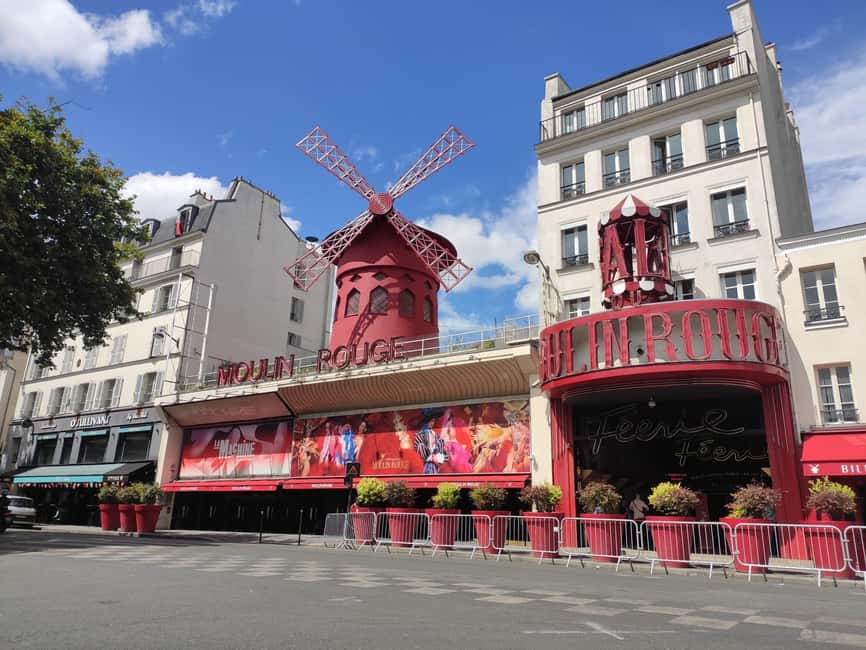
Montmartre is not a single sight. It is a hilltop district with a famous church, an artists’ square, old entertainment venues, movie locations, small streets, and layers of Parisian history. You can wander here alone, but it is easy to spend two hours seeing only the obvious places.
A guide gives the neighborhood a storyline. Instead of passing a painted facade or a crooked street without context, you learn why it matters and who lived or worked nearby. That is particularly useful in Montmartre, where the artistic reputation can otherwise feel like a collection of souvenirs and postcards.
The route begins at Place Blanche, close to Blanche Metro station on Line 2. Look for the guide near the station exit, carrying a green booklet and wearing a green badge. This is a busy part of Paris, so arrive with enough time to locate the correct exit and identify the guide before the group sets off.
The walk ends at the Basilica of Sacré-Cœur. That arrangement makes sense: you begin in the entertainment district and gradually climb into the quieter, higher parts of Montmartre, finishing with one of Paris’s best views.
More Walking Tours in Paris
- Paris Top Sights Half Day Walking Tour with a Fun Guide
★ 5.0 · 2,893 reviews - Montmartre Hidden Gems and Scenic Highlights Walking Tour
★ 5.0 · 2,684 reviews - Montmartre Hill French Gourmet Food and Wine Tasting Walking Tour
★ 5.0 · 2,588 reviews
Place Blanche and the Moulin Rouge
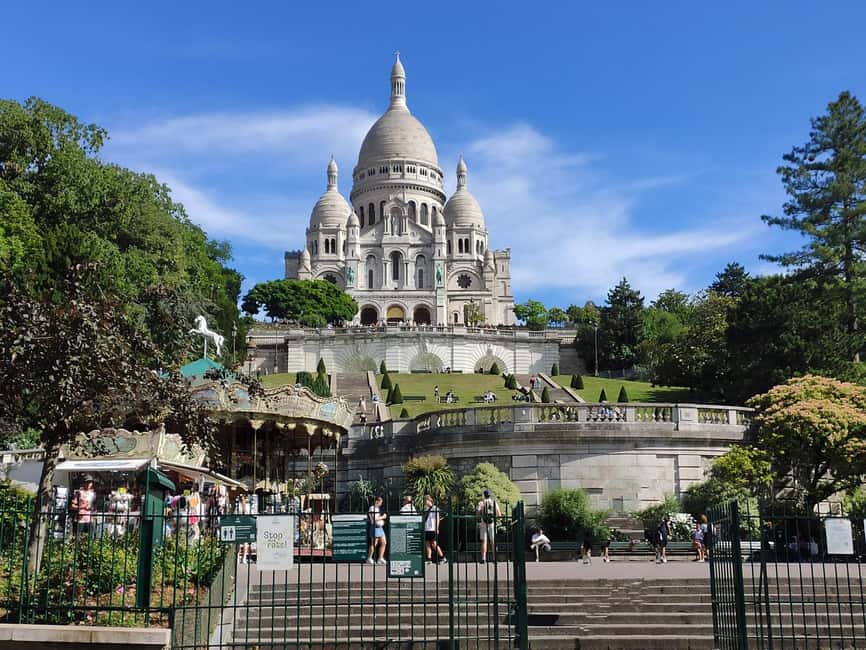
The Moulin Rouge is a lively starting point because it immediately introduces Montmartre’s old cabaret identity. The stop is mainly for photos and a short explanation, around 10 minutes, rather than a performance or a visit inside the venue.
Your guide can help separate the famous image from the wider neighborhood. Montmartre was not only a place of cabarets and nightlife. It also drew painters, writers, performers, and ordinary Parisians, creating the mix of art and street life that still defines the district.
Do not expect a long museum-style talk at each stop. The format moves briskly, with short explanations followed by walking. That keeps the tour manageable, though anyone hoping for a detailed lecture on every artist may find the time at each location brief.
The Wall of Love and Montmartre’s modern image
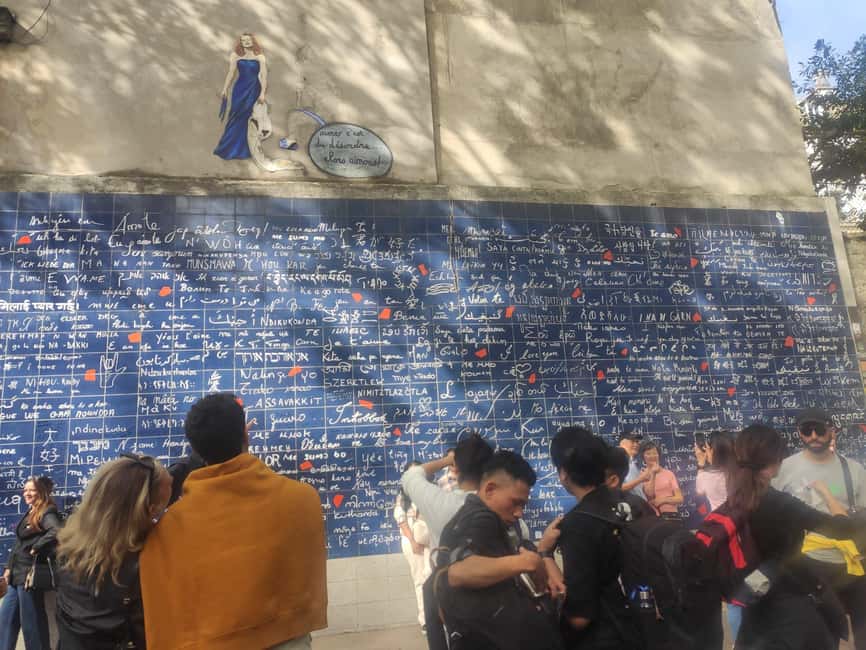
The Wall of Love, or Le Mur des Je T’aime, is a natural photo stop. The artwork presents the words I love you in many languages, making it a quick but pleasant pause near the start of the uphill route.
This is also where the tour can feel different from a strictly historical walk. Montmartre is not frozen in the era of Picasso and Van Gogh. Film locations, street art, popular culture, and modern Paris all form part of its current character.
The guide’s role matters here. A short stop can either feel like a box to tick or a useful introduction to the area. Samy’s approach, based on the available details, is conversational and flexible. He takes questions, points out small features, and adds local advice instead of rushing everyone from one photograph to the next.
Moulin de la Galette and the artists’ quarter
Moulin de la Galette connects the present-day streets to Montmartre’s artistic past. The former windmill and the surrounding area are tied to the neighborhood’s painters and old village character.
This is one of the places you might pass without understanding its importance. That is where a local guide earns the $27 fee. You hear about the artists who lived in Montmartre, including Picasso and Van Gogh, and get a sense of why the district attracted people looking for a less formal, less expensive Paris.
The tour also brings in Henri de Toulouse-Lautrec and other figures connected with the neighborhood. The useful part is not just memorizing names. The stories show how Montmartre developed its reputation as a place where artists worked, socialized, and found inspiration.
The route includes moderate climbs. You will have breaks, but this is still a walking tour on a hill. Wear shoes with good grip and keep your schedule loose after the tour if you prefer not to hurry.
More Paris walks with a guide:
- Paris Île de la Cité and Notre-Dame Walking Tour With Crypt
★ 5.0 · 2,272 reviews - Paris: Montmartre Cheese, Wine & Pastry Guided Walking Tour
★ 4.8 · 2,255 reviews - Paris in a Day: Louvre or Orsay, Eiffel Tower, City Walk & Cruise
★ 5.0 · 1,956 reviews - Paris: Montmartre Highlights Walking Tour with a Local Guide
★ 4.9 · 1,668 reviews
Dalida’s statue and the power of small stops
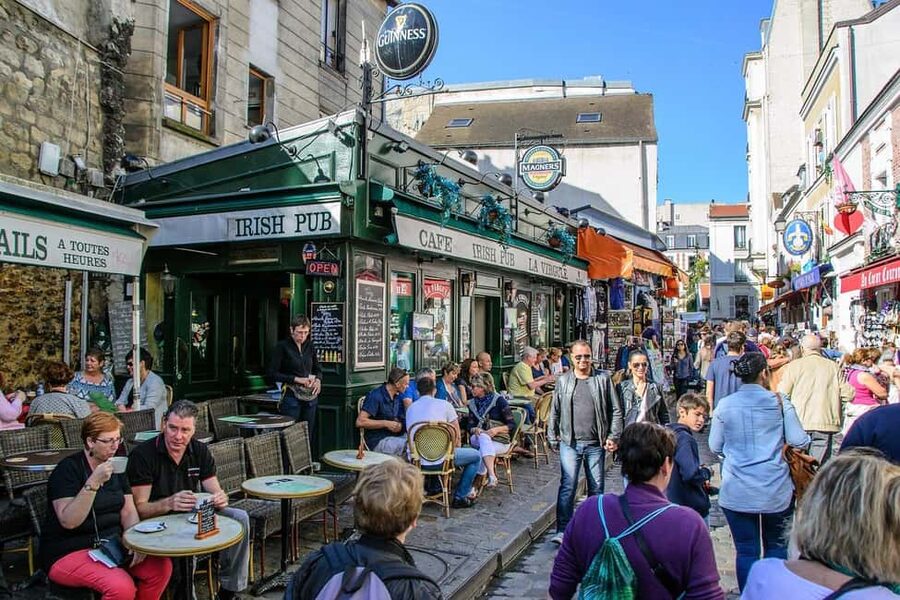
The statue of singer Dalida is one of the route’s more personal stops. It adds a later cultural chapter to a walk often dominated by nineteenth-century painters and cabaret history.
Small landmarks like this are one reason I would choose a guided walk instead of simply taking the funicular to the top. The funicular is useful transport, but it skips the stories and details scattered through the streets. A guide can point out why a particular statue, doorway, facade, or corner matters.
There is also a practical benefit for families. Samy has adjusted the pace for toddlers, older walkers, and people who need extra time. That does not remove the hills, but it suggests a considerate style rather than a rigid march.
La Maison Rose and the photogenic side of Montmartre
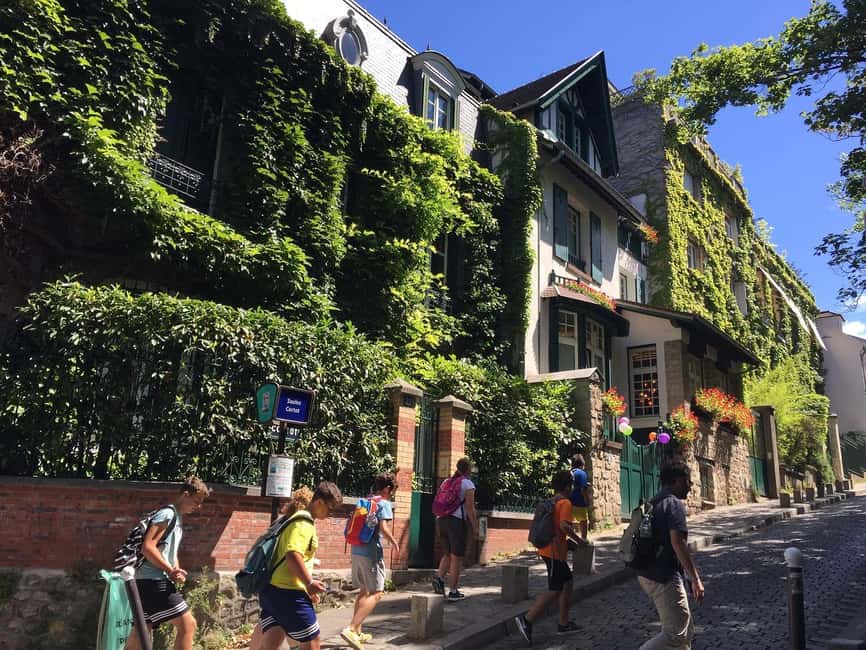
La Maison Rose is one of Montmartre’s most photographed buildings, with its pink exterior and distinctive corner setting. The stop is brief, but the building helps explain why this district attracts painters, photographers, film crews, and people simply looking for a memorable Paris street.
This is a good place to remember that a photograph does not tell the whole story. Montmartre can be crowded around its best-known corners, and other people may be taking the same picture. One person described the area as beautiful but noted that many people are doing the same thing.
The guide helps you move beyond the postcard view. You get the photograph, then hear about the local setting and the people linked to the neighborhood. It is a modest difference, but it makes the stop more meaningful.
Place du Tertre and the working artists
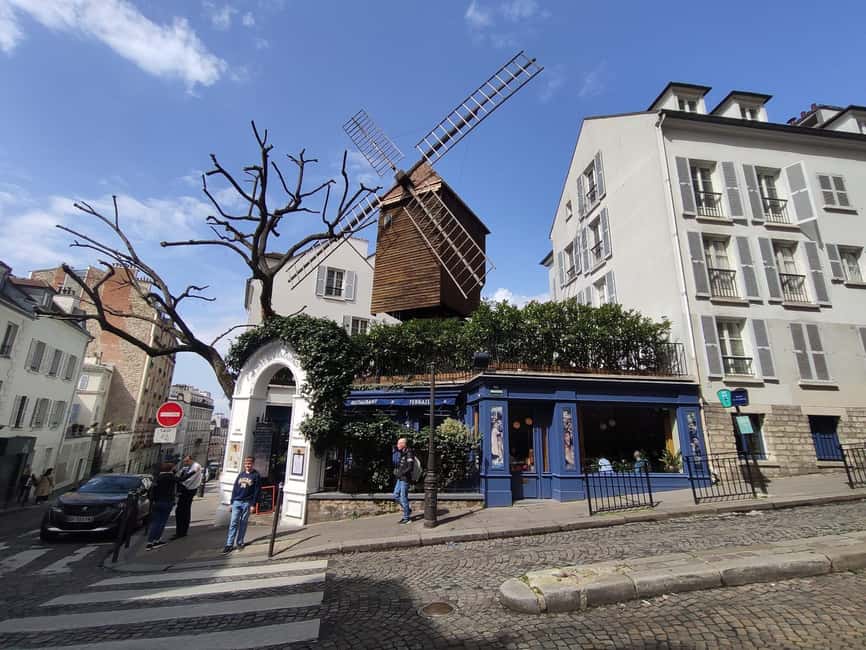
Place du Tertre is the heart of Montmartre’s public art scene. Painters display their work, portraits are offered, and the square has the atmosphere of an outdoor studio.
It can also be crowded and commercial. That is not a reason to skip it, but you should set your expectations. This is no longer an untouched artists’ village. The value comes from seeing how the tradition continues, while understanding that the square now serves a large number of visitors.
The tour allows time to walk around and take photographs, with about 10 minutes of guided attention. Use that time to look past the central activity at the surrounding buildings and narrow lanes. If you want to buy art, you may need more time than the tour provides, so plan to return later.
Place du Tertre is also a useful point to ask for restaurant or neighborhood suggestions. Samy regularly gives practical Paris tips, which can help you decide where to explore after the walk.
Reaching Sacré-Cœur without treating the hill as a race
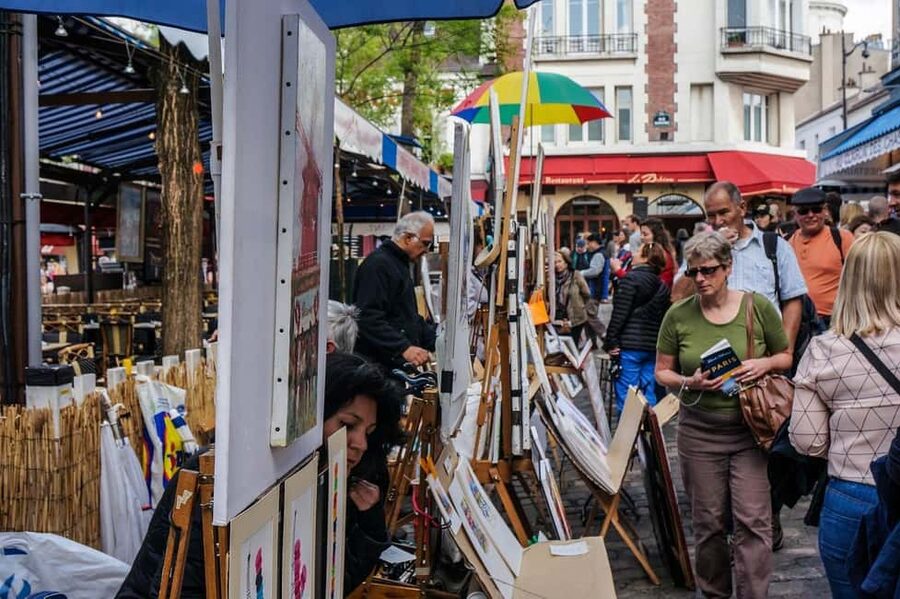
The final approach to Sacré-Cœur is the physical test of the tour. Montmartre is Paris’s highest point, and the route includes uphill sections. The climb is manageable for many people, but it is not flat, and the pace may vary with the group.
One useful feature is the approach from behind the basilica rather than simply attacking the main staircase. That can make the climb feel gentler, though you should still bring water and wear comfortable shoes. The tour operates rain or shine, so a light waterproof layer is sensible.
The guide has received strong praise for being patient with people who walk more slowly. On one rainy outing, the group continued for almost three hours while still covering the planned sights. That flexibility is helpful, but you should not count on every departure lasting longer than the advertised two hours.
Inside the Basilica of Sacré-Cœur
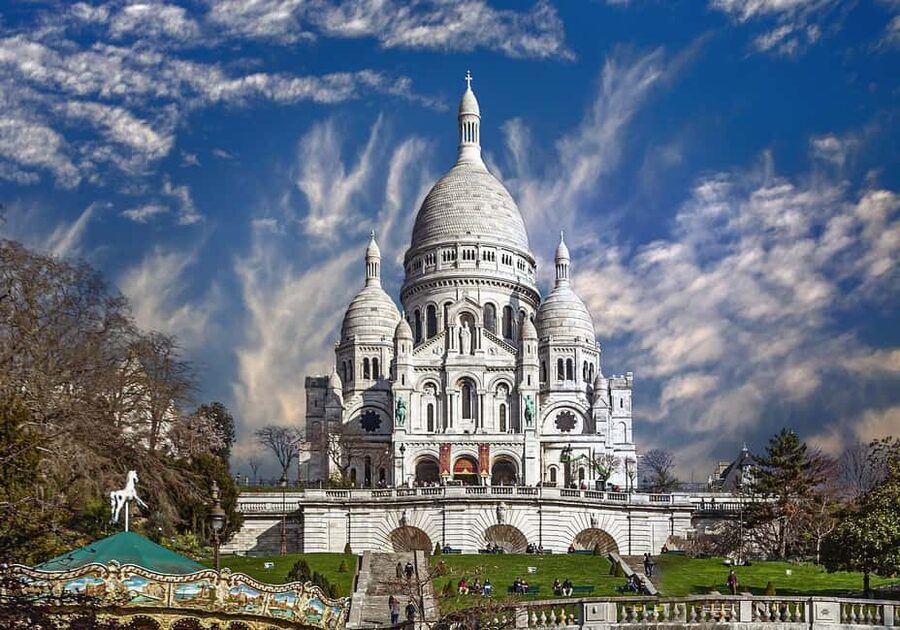
The tour finishes at the Basilica of Sacré-Cœur, where you explore both the outside and the inside. The exterior is the major visual reward, with its white domes set high above Paris, but the interior gives the ending more substance.
The basilica is also a practical endpoint. You are not left halfway up the hill with a long return walk built into the tour. Once the guided portion ends, you can stay in the area, visit the church at your own pace, or use the Montmartre funicular if you want to reduce the descent.
The exact amount of time inside can vary because the overall walk depends on group pace, the number of questions, and the time spent at each stop. Treat the two-hour duration as an estimate rather than a stopwatch promise.
The Paris view from Montmartre’s summit
From the hill, you get a broad view over Paris. The Eiffel Tower, Notre-Dame, and Montparnasse Tower are among the landmarks that can be identified from the high viewpoint.
This is a strong final scene because the tour has taken you through the neighborhood before showing you the city from above. You understand Montmartre as a place within Paris, not only as an isolated tourist district.
The view is weather-dependent. On a clear day, it can be spectacular. In rain or haze, the panorama will be less impressive, though the streets and basilica still give the walk plenty of purpose.
How Samy shapes the experience
The guide is central to this activity, and Samy is the name that appears most often in the available feedback. His strengths are clear: he explains history in an easy-to-follow way, brings artists and local characters to life, answers questions, and offers recommendations for the rest of your stay.
He also takes photos, which is useful if you are traveling as a family or couple and do not want to rely on passing strangers. Several families appreciated his ability to keep children interested, while older participants valued the patient pace.
English ability is important on a story-led walk, and Samy is described as easy to understand. The tour is in English only, so it is not a good choice if you need another language.
Group size can change the feel. Some departures have been private or limited to two people, while Samy has indicated groups of no more than eight. A small group gives you more room for questions and makes it easier to adjust the pace, but you should confirm the current departure size if that matters to you.
Is $27 a fair price?
At $27 per person, this is a reasonable price for a two-hour guided walk in Paris. You are paying for an English-speaking local guide, the organized route, and the chance to see several places without spending time figuring out the neighborhood yourself.
The value is strongest if this is your first visit to Montmartre. You get the major landmarks, background on the artists, a view from the summit, and practical suggestions for what to do next. A self-guided walk costs less, but it requires planning and will probably miss some of the small details that give the district its character.
Food and drinks are not included. That is not a serious problem because the tour is short, but budget separately for a snack or meal if you plan to eat in Montmartre afterward.
Free cancellation up to 24 hours before the start and reserve-now, pay-later terms also make the booking relatively flexible. Check the available start times before booking, since the duration is listed as around two hours rather than a fixed departure length.
Who should book this Montmartre walk?
I would recommend it to first-time Paris visitors, families, couples, and anyone who wants the neighborhood explained rather than simply photographed. It is especially useful if you like art, local stories, film locations, and small cultural details.
The walk also suits people who prefer a relaxed pace. Samy has adjusted the route for toddlers, an 87-year-old participant, and people who needed extra time. That said, patience from the guide does not change the terrain. You need to be comfortable walking uphill and on cobbled streets.
I would be more cautious about booking if you have a mobility impairment, use a wheelchair, or want a fully flat route. I would also skip it if you prefer long visits inside attractions, since most stops are short and the experience is built around moving through the neighborhood.
Should you book it?
Book this tour if you want a friendly introduction to Montmartre with a strong mix of famous places and easily missed details. The price is modest, the route ends at Sacré-Cœur, and Samy’s warm, flexible style suits families and small groups particularly well.
Skip it only if you cannot manage moderate uphill walking or already know Montmartre well enough to explore its history on your own. For most first-time visitors, this is a useful way to get oriented before returning later for a longer wander around Place du Tertre, La Maison Rose, and the quieter side streets.
FAQ
Where does the Montmartre walking tour begin?
Meet near the exit of Blanche Metro station on Line 2, close to the Moulin Rouge. The guide can be identified by a green booklet and green badge.
Where does the tour finish?
The tour finishes at the Basilica of the Sacred Heart of Paris, also known as Sacré-Cœur.
How long does the walking tour last?
The scheduled duration is two hours, but the walk can vary with the group’s pace, number of stops, and participants’ comfort.
Is the tour conducted in English?
Yes. The tour has a live English-speaking guide.
Is the tour suitable for wheelchair users?
No. The tour is not suitable for wheelchair users or people with mobility impairments because the route includes cobbled streets and moderate uphill sections.
What should I bring?
Bring comfortable walking shoes. The tour operates in rain or shine, so weather-appropriate clothing is also sensible.
Recently reviewed around Paris
- Louvre Private Tour – The Essentials and More with Expert Guide★ 5.0 · 227 reviews
- 2CV tour by night★ 5.0 · 55 reviews
- Eiffel Tower Second or Summit Floor Access by Elevator with Views★ 3.5 · 161 reviews
- The only Paris Wine Tasting experience you need to do – 2 hours★ 5.0 · 265 reviews
- 2 Hour Street-art Walk and Space Invaders Hunt in Paris★ 5.0 · 27 reviews
- 2 hour outdoor group activity in Paris: SAINT GERMAIN★ 5.0 · 48 reviews
- Sainte-Chapelle, Conciergerie & Palais de Justice Private Tour★ 5.0 · 72 reviews
- Private 2 – Hour Paris Landmarks Tour by Golf Cart Mini Moke★ 5.0 · 38 reviews
Montmartre Tours, compared.

Montmartre Hidden Gems and Scenic Highlights Walking Tour
Read our review →
Montmartre Hill French Gourmet Food and Wine Tasting Walking Tour
Read our review →
Montmartre Cheese, Wine & Pastry Guided Walking Tour
Read our review →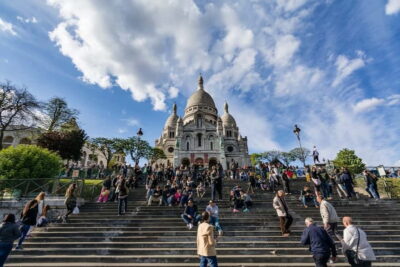
Montmartre Highlights Walking Tour with a Local Guide
Read our review →
Sacré-Coeur and Montmartre Tour with Expert Guide
Read our review →
Private Montmartre Food Tour with Wine, Cheese & Pastries
Read our review →
Paris Montmartre Food Tour – A Full French Meal by Do Eat Better
Read our review →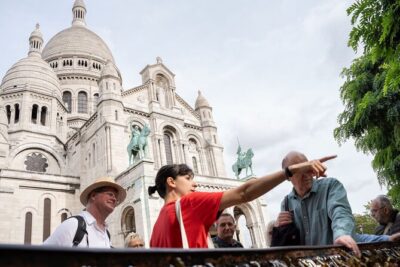
Hidden Montmartre: Paris’ Secret Streets Walking Tour
Read our review →Browse the lists this tour appears in