
Reviewed · LE MARAIS WALKING TOURS
Paris Bike Tour Hidden Secrets in the Latin Quarter & Le Marais neighborhoods
Paris reveals itself beautifully from a bicycle, especially when the route slips away from the big monuments. This four-hour ride links the Latin Quarter and Le Marais, taking you from a medieval bookstore and Roman arena to Jewish heritage sites, quiet lanes, and one of the city’s finest squares.
I like the small maximum of 12 people, which gives guides such as Arnaud, Aaron, Lena, Joris, and Lucien room to answer questions and manage the group. I also like the many stops, since you are not pedaling for four hours without pause. The main caution is traffic: this is city cycling, not a car-free park ride, and you need to feel steady on a bike.
In This Review
- Key points
- Why a bicycle works so well in central Paris
- The Latin Quarter begins with books and old cafés
- Shakespeare and Company
- Le Procope and Saint-Sulpice
- The Pantheon, lunch, and a Roman arena
- A local-style pause near Rue Mouffetard
- Arenes de Lutece
- Le Marais brings Jewish history into the ride
- Memorial de la Shoah
- Rue des Rosiers
- Place des Vosges and medieval Paris
- Hotel de Sens
- What the cycling feels like in practice
- Is the $54.42 price good value?
- Who should book this Paris bike tour?
- FAQ
- Where does the Paris bike tour start?
- What time does the tour begin?
- Where does the tour finish?
- How long does the tour last?
- How many people can join the tour?
- Are bike and helmet rentals included?
- Is lunch included?
- Do children need to know how to ride a bicycle?
- Can I cancel for a full refund?
Key points
- Roman Paris in the Arenes de Lutece: Cycle into an ancient arena hidden within the modern city.
- Two historic neighborhoods in one ride: See the Latin Quarter’s university past and Le Marais’s Jewish heritage.
- A real lunch break on Rue Mouffetard: Take 30 minutes to buy crepes, bakery food, or a café lunch at your own cost.
- Small groups up to 12 people: The limited size helps the guide keep the ride personal and organized.
- Bikes and helmets included: You do not need to arrange a separate rental before arriving.
- Traffic requires confidence: Cars, buses, scooters, pedestrians, and busy crossings are part of the route.
Why a bicycle works so well in central Paris
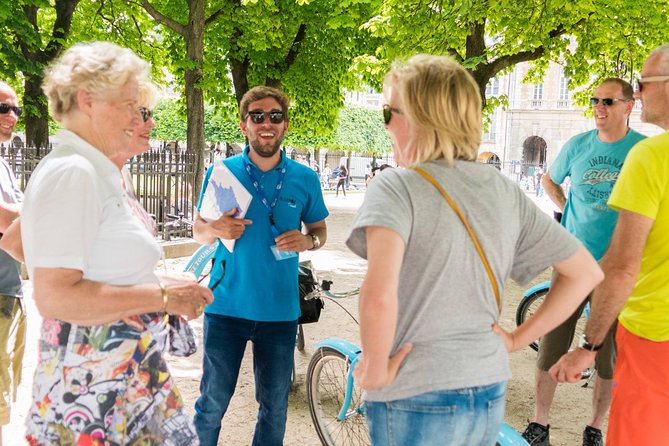
The tour begins at Fontaine Saint-Michel at 10 a.m. and returns to the same meeting point. That location sits in the Latin Quarter, making it a sensible starting place for a route through central Paris.
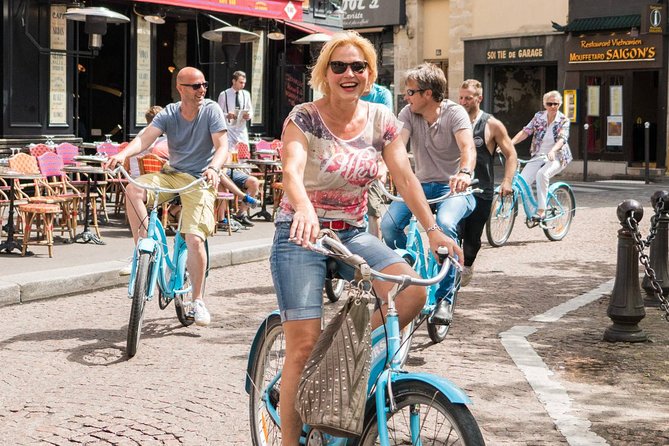
On foot, these neighborhoods can consume a full day, especially if you pause for photos, food, and church interiors. By bike, you cover more ground while still stopping often enough to listen and look around. The ride is less about speed than connection. You move between sites through the small streets that tie them together.
The bikes are described as new and comfortable, though they are one-speed models with low gearing. That makes them straightforward to use, but some riders found hills and major intersections tiring. You should be able to ride independently and react to changing street conditions.
The tour is capped at 12 people. Some departures may be smaller, and one private-feeling outing had only three people. A small group matters in Paris, where a large line of bicycles can be awkward at crossings and narrow lanes. It also lets you hear the guide more easily at stops.
More Bike Tours in Paris
- Versailles Palace Bike Tour with Market & Marie-Antoinette hamlet
★ 5.0 · 2,680 reviews - Paris: Charming Nooks and Crannies Bike Tour
★ 4.8 · 2,585 reviews - From Paris: Versailles Bike Tour w/ Palace, Gardens, & Picnic
★ 5.0 · 2,150 reviews
The Latin Quarter begins with books and old cafés
The first section takes place in the Latin Quarter, one of Paris’s oldest districts. Its name comes from the Latin once used by students at La Sorbonne, when the university was among the earliest international centers of learning.
The neighborhood is ideal for a guided ride because its story is not confined to one monument. You pass through narrow streets and get a sense of how university life, religion, food, and politics have shaped this part of the city.
Shakespeare and Company
The first stop is Shakespeare and Company, the famous English-language bookstore near the Seine. Its medieval setting, with timber beams and plaster walls, gives it a very different feel from a modern bookshop.
Inside, shelves fill almost every available space. You receive time to look around after the guide explains the shop’s unusual past. The store is also associated with visiting writers who have slept there, adding a literary angle that feels more personal than a standard photo stop.
The 15-minute visit is short, so you should treat it as an introduction rather than a long browsing session. If the shop is crowded, your free time may pass quickly.
Le Procope and Saint-Sulpice
At Le Procope, founded in 1686, the guide brings Paris café culture into focus. This is known as the oldest café in Paris, and its historical guest list includes Benjamin Franklin, Voltaire, Napoleon Bonaparte, and Victor Hugo.
You stop for about 10 minutes and can take photos from outside. The point is the story, not a meal, since food and drinks are not included in the tour.
Next comes Eglise Saint-Sulpice, a church almost large enough to rival Notre Dame in size. Its mismatched towers and long past provide plenty for the guide to explain, including its connection with Dan Brown’s The Da Vinci Code.
The church interior is included in the route, but admission is not included in the tour price. Check the guide’s instructions on the day if a ticket is required. A 15-minute stop gives you a useful look, though it is not enough for a slow examination of the building.
More rides around Paris:
- Paris: City Highlights Bike Tour
★ 4.7 · 1,835 reviews - Electric Bike Tour of Paris’ Hidden Gems
★ 4.9 · 1,377 reviews - Paris Local Districts and Stories Off the Beaten Track Guided Bike Tour
★ 5.0 · 1,264 reviews - Best of Paris Electric Bike Tour
★ 5.0 · 1,179 reviews
The Pantheon, lunch, and a Roman arena
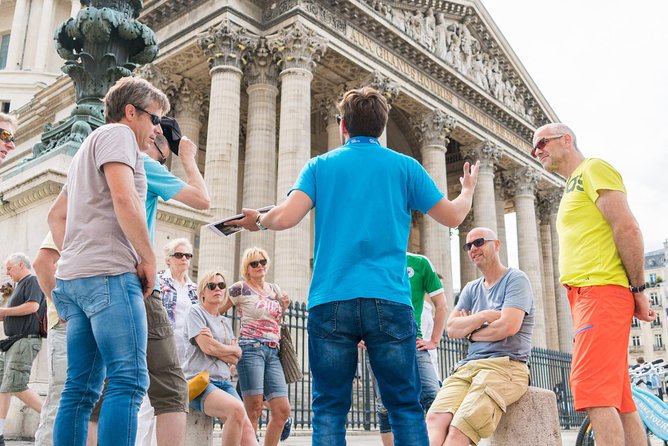
The Pantheon is one of the route’s strongest stops. Its enormous dome is easy to see, but many people do not set aside time to understand what lies inside. The building serves as a final resting place for notable French figures.
The guide points out scientists Pierre and Marie Curie, authors Alexandre Dumas and Victor Hugo, and dancer and activist Josephine Baker. The stop lasts around 15 minutes. That is enough to place the Pantheon in the story of France, but you should plan a separate visit if you want to spend time in the interior and crypt.
A local-style pause near Rue Mouffetard
After the Pantheon, the group takes a 30-minute break near Marche Monge and Rue Mouffetard. This is one of the most useful parts of the schedule because it gives you time to eat without turning the tour into a fixed restaurant outing.
You pay for lunch yourself. Savory crepes are a local specialty here, though a bakery or café is also an option. Guides have offered food and ice cream suggestions, so ask for help if you want a quick, practical recommendation.
Bring a small backpack. The bicycles do not have baskets, and this detail is not always obvious before booking. A backpack is also easier to manage than a loose shopping bag while riding.
Arenes de Lutece
The Arenes de Lutece is the route’s most surprising historical stop. Paris was once part of the Roman world, and this ancient arena offers a physical reminder that is easy to miss among today’s streets and apartment buildings.
You cycle into the arena itself and hear how Rome shaped early Paris. The guide also explains the types of violent public events held there. The stop lasts about 20 minutes, giving you time to look at the surviving structure and picture its original use.
This is exactly the kind of place that benefits from a guide. Without context, it can look like a quiet patch of stone. With the story, it becomes one of the ride’s most memorable moments.
Le Marais brings Jewish history into the ride
The second half moves into Le Marais, a district once built on marshland. Over time, it became closely linked with Paris’s Jewish community and is now known for its shops, food, architecture, and lively streets.
The tour places real emphasis on Jewish heritage rather than treating Le Marais as only a fashionable shopping area. That makes the route more thoughtful than a simple ride past pretty façades.
Le Marais is especially active on Sundays, when many businesses open. In France, shops must close for at least one day each week, and businesses here generally choose Saturday. The Sunday atmosphere can therefore be a useful reason to schedule the tour on that day, though the ride operates in all weather.
Memorial de la Shoah
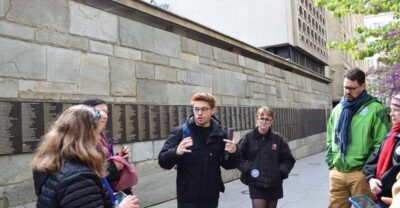
The Memorial de la Shoah is a serious and emotional stop. A wall bears the names of more than 3,900 non-Jewish French people who risked their lives, and in some cases lost them, while helping Jewish people during World War II.
You spend about 15 minutes here. The guide places this memorial within the wider cultural story of Le Marais, where Jewish life has long been central. This is not a light sightseeing stop, and you should be prepared for a change in mood.
That pause adds meaning to the neighborhood. It also reminds you that the attractive streets and restaurants of Le Marais exist alongside painful chapters that deserve attention.
Rue des Rosiers
At Rue des Rosiers, you walk your bicycle rather than simply riding through. This pedestrian street is the heart of the Jewish quarter, with small shops, boutiques, and kosher restaurants.
The 15-minute stop lets you notice the food smells and street details without worrying about weaving through pedestrians on two wheels. It is a good example of how the tour uses cycling for distance but switches to walking when the setting calls for it.
If you want to return for lunch or a longer food stop, make a note of the street’s location. The scheduled lunch break takes place earlier near Rue Mouffetard, not here.
Place des Vosges and medieval Paris
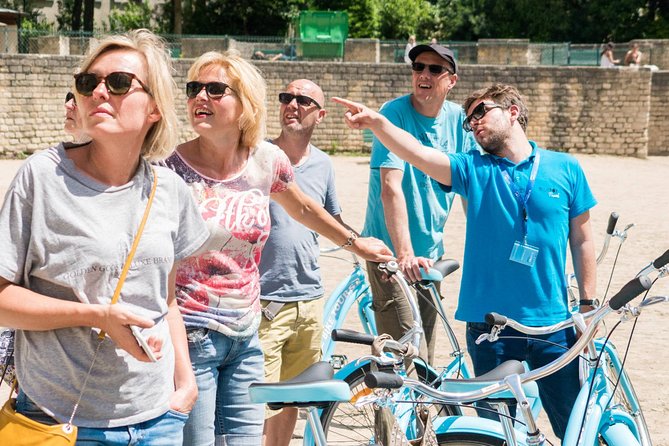
Place des Vosges is one of the most handsome public squares in Paris, with red-brick buildings dating from the 1500s. The architecture gives the square a more uniform look than many Parisian plazas.
You see elegant art shops and a high-end hotel around the edges, while the grassy center belongs to picnickers, families, and people taking a quiet break. The contrast is part of the charm. It is a polished historic setting that still functions as an ordinary neighborhood square.
The group spends about 15 minutes here. You may want extra time for photographs, but the brief stop works well as part of a wider route.
The Wall of Philip II Augustus provides another clear look at medieval Paris. In the 1100s, Philip built a large stone wall around the city to defend it. The guide connects the story with Richard the Lionheart, then takes you to one of the wall’s largest and best-preserved sections.
This stop is less grand than the Pantheon or Place des Vosges, but it helps explain the city’s original scale. Modern Paris can feel huge. A surviving medieval wall shows how compact the settlement once was.
Hotel de Sens
The Hotel de Sens looks more like a small fortress than a private mansion. Its turrets and gargoyles make it an easy building to remember, especially after a morning of more familiar Paris sights.
The guide explains why it was built and points out the cannonball lodged in its façade. The stop lasts about 15 minutes and works as a final architectural surprise before the ride returns toward Fontaine Saint-Michel.
What the cycling feels like in practice
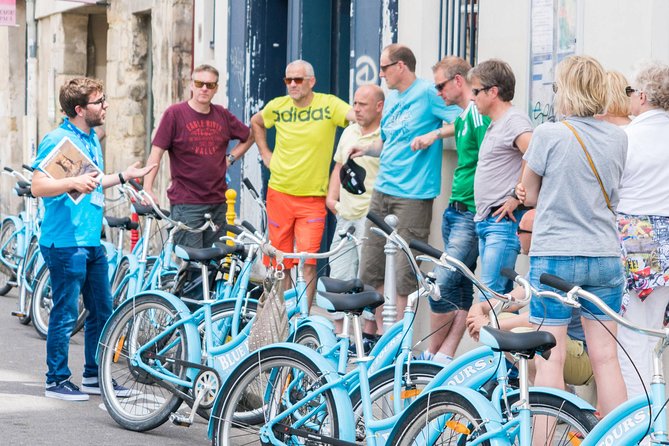
You should not interpret the gentle pace as a completely effortless ride. The route includes frequent stops, which keeps the four hours manageable, but you still pedal through central Paris.
Some riders found the pace easy and comfortable, even with children. Others found the ride physically demanding, particularly on hills and at intersections. If you are nearly 70, reasonably fit, and used to cycling, the tour may still feel like a workout. If you are unsteady or frightened by city traffic, choose a walking tour instead.
The main safety issue is proximity to cars, buses, scooters, other bicycles, and pedestrians. Parts of the route use bike lanes, but other sections do not. Large intersections can split a group if a light changes before everyone crosses.
You must follow the guide closely and pay attention to the people ahead of you. One useful concern raised by the ride’s setup is that a single guide may lead while the rear of the group falls behind. The small group limit helps, but it does not remove the need for every rider to manage their own position.
Do not wear flip-flops. Dress for the forecast because the tour operates in rain and other weather. Rain ponchos have been available on at least some departures, but you should still bring a rain jacket. Carry your belongings in a backpack because the bikes have no baskets.
Children aged 10 and older must know how to cycle on their own. Children aged 1 to 4 can use a child seat if reserved in advance. Children aged 5 to 9 can ride solo if able, or use a tandem attachment with a parent if arranged ahead of time. Every child needs a paid, reserved place in the group.
Is the $54.42 price good value?
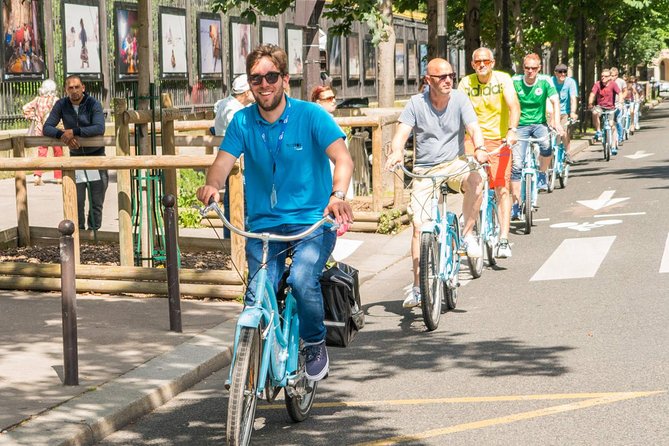
At $54.42 per person, the tour is fairly priced for a four-hour small-group experience that includes a bike, helmet, and guide. You are paying for the route design and the time saved moving between two large neighborhoods, not for entry to major attractions.
The value is strongest if you are new to Paris, have limited time, or want an overview before choosing places to revisit. It is also useful for repeat visitors who have already seen the Eiffel Tower, Louvre, and Notre Dame area and want a different side of the city.
Remember to budget for lunch, drinks, any admission at Saint-Sulpice if required, and a tip for the guide. The lunch stop is flexible, which keeps the base price reasonable but means the total cost depends on what you buy.
The experience receives a 4.9 rating from 766 reviews, with 98 percent recommending it. The strongest praise centers on guides who combine local detail, humor, patience, and careful navigation. Arnaud, Aaron, Lena, Joris, Lucien, Michaelangelo, Antoine, Lulu, Ryan, and Cece are among the guides singled out for making the ride informative and friendly.
Guide quality can vary from one departure to another, as it does with any live tour. The small group and clear route are strong foundations, but your enjoyment will still depend on your comfort with cycling and the day’s traffic.
Who should book this Paris bike tour?
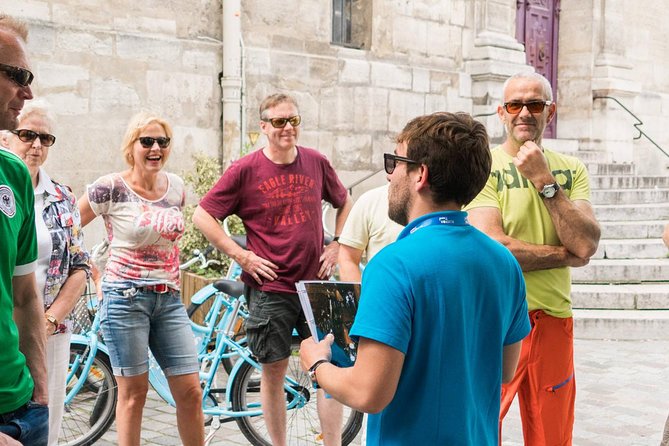
I would choose this ride if you want history with movement, enjoy stopping often, and feel comfortable steering through an urban setting. It suits couples, families with capable older children, solo visitors, and repeat Paris visitors who want a fresh route.
It is a particularly good first or second-day activity. You get a working map of the Latin Quarter and Le Marais, plus ideas for where to return for books, food, architecture, and museums.
I would not choose it if you want a traffic-free outing, dislike hills, or are not confident on a bicycle. A 4.9 rating cannot change the basic fact that Paris streets require attention.
Book it if the idea of reaching Roman ruins, medieval walls, Jewish landmarks, cafés, and quiet lanes in one morning sounds appealing. Skip it if you want long interior visits or a slow photography tour. For the right rider, this is an efficient and human-scale way to see central Paris.
FAQ
Where does the Paris bike tour start?
The tour starts at Fontaine Saint-Michel, Place Saint-Michel, 75005 Paris, France.
What time does the tour begin?
The scheduled start time is 10 a.m.
Where does the tour finish?
The activity ends back at the meeting point at Fontaine Saint-Michel.
How long does the tour last?
The tour lasts approximately four hours.
How many people can join the tour?
The maximum group size is 12 people.
Are bike and helmet rentals included?
Yes. Bike rental and helmet rental are included in the tour.
Is lunch included?
No. The tour includes a 30-minute lunch break near Marche Monge and Rue Mouffetard, but you pay for your own food and drinks.
Do children need to know how to ride a bicycle?
Everyone aged 10 and older must be able to cycle independently. Children aged 1 to 4 may use a reserved child seat, and children aged 5 to 9 may use a reserved tandem attachment with a parent or ride solo if able.
Can I cancel for a full refund?
Yes. You can cancel at least 24 hours before the experience start time for a full refund. Cancellations or changes made less than 24 hours before the start are not accepted or refunded.
Recently reviewed around Paris
- Louvre Private Tour – The Essentials and More with Expert Guide★ 5.0 · 227 reviews
- 2CV tour by night★ 5.0 · 55 reviews
- Eiffel Tower Second or Summit Floor Access by Elevator with Views★ 3.5 · 161 reviews
- The only Paris Wine Tasting experience you need to do – 2 hours★ 5.0 · 265 reviews
- 2 Hour Street-art Walk and Space Invaders Hunt in Paris★ 5.0 · 27 reviews
- 2 hour outdoor group activity in Paris: SAINT GERMAIN★ 5.0 · 48 reviews
- Sainte-Chapelle, Conciergerie & Palais de Justice Private Tour★ 5.0 · 72 reviews
- Private 2 – Hour Paris Landmarks Tour by Golf Cart Mini Moke★ 5.0 · 38 reviews
Le Marais Walking Tours, compared.

Award-Winning Paris French Bakery Experience — Le Marais, 4th Arr
Read our review →
Paris Le Marais Food Tour With 10+ Tastings, Cheese, Wine & More
Read our review →
Paris Le Marais District Original Food and Wine Tasting Tour
Read our review →
Food and Wine Tasting Walking Tour in Le Marais
Read our review →
Le Marais/Paris – The Historic, Trendy, Jewish, LGBT district
Read our review →
Le Marais & Montmartre Jewish History Walking Tour
Read our review →Browse the lists this tour appears in