
Reviewed · MONTMARTRE TOURS
Paris : Montmartre highlights walking tour
Montmartre gives you Paris in one uphill walk: cabarets, painters, windmills, village lanes, and the white domes of Sacré-Cœur Basilica waiting at the top. This 105-minute tour links the district’s best-known sights with the stories that make them more than photo stops.
I like the small groups, limited to 10 people, and the relaxed pace that leaves room for questions and pictures. I also like the guide-led route from Moulin Rouge to the basilica, since you see the neighborhood unfold rather than simply arrive at its famous church.
The main consideration is the hill itself. You need comfortable shoes, and this tour is not suitable for wheelchair users or people with mobility impairments. It also ends at Sacré-Cœur, so you should be ready for walking uphill and standing outdoors.
In This Review
- Key points at a glance
- From Place Blanche into Montmartre
- The Wall of Love and Montmartre’s romantic side
- Moulin de la Galette and the painters’ Montmartre
- Dalida’s statue and the personal side of the neighborhood
- La Maison Rose and the picture-book streets
- Lapin Agile and the old cabaret circuit
- Place du Tertre and the artists today
- The final climb to Sacré-Cœur
- What the guides add to the walk
- Is $29 a fair price?
- Who will enjoy this Montmartre walk?
- Practical details before you book
- Should you book the Montmartre highlights walk?
- FAQ
- Where does the Montmartre walking tour begin?
- Where does the tour finish?
- How long does the walking tour last?
- What language is the tour conducted in?
- How many people are in each group?
- Is food or drink included?
- Is the tour suitable for wheelchair users?
Key points at a glance
- A compact Montmartre route: Cover Moulin Rouge, the Wall of Love, Moulin de la Galette, Place du Tertre, and Sacré-Cœur in 105 minutes.
- Small groups: The tour is limited to 10 participants, and some departures may feel nearly private.
- Strong guide presence: Sammy, Samy, and Diana are among the guides praised for clear stories, patience, and time for questions.
- Art and cabaret history: Follow the footsteps of Picasso, Van Gogh, Toulouse-Lautrec, and other artists associated with the district.
- A downhill-looking finish: End at the highest point in Paris with views toward the Eiffel Tower, Notre Dame, and Montparnasse Tower.
- Simple value: At $29 per person, the tour offers a low-cost introduction to Montmartre, but food, drinks, and any interior visits are not included.
From Place Blanche into Montmartre
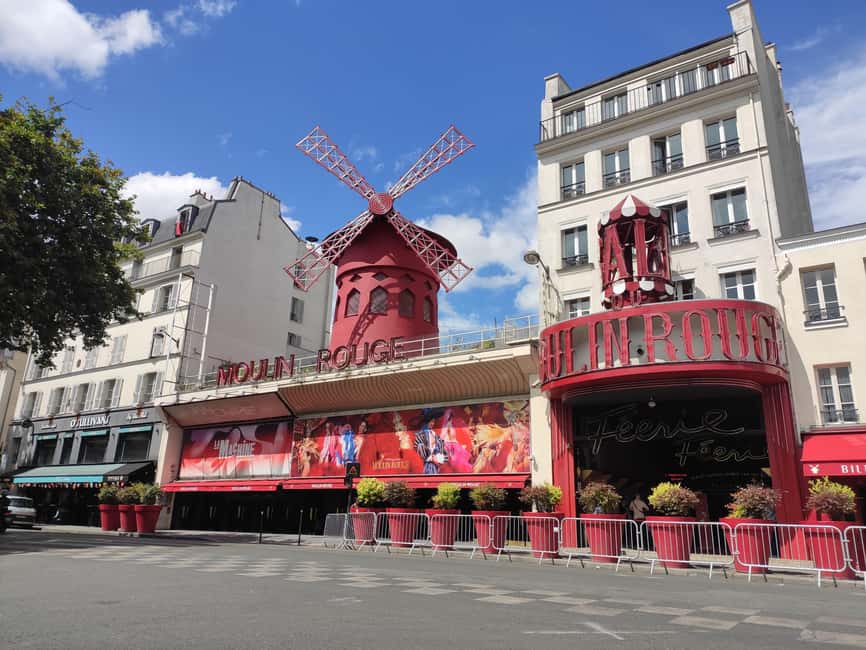
The walk begins near the exit of Blanche metro station, on line 2, close to the Moulin Rouge. Look for the guide with a green booklet and green badge. This meeting point is practical because it places you right beside one of Paris’s most famous entertainment landmarks.
The opening stop is the Moulin Rouge, with about 10 minutes for a guided explanation and photographs. You will learn about the cabaret’s place in Montmartre’s story rather than simply take a picture of its red windmill.
This is a good start because the area changes quickly. Place Blanche has a busy, commercial feel, while the route soon turns toward quieter streets and the artistic identity that made Montmartre famous. The guide helps connect those different sides of the neighborhood.
Do not expect a full Moulin Rouge visit. It is a photo stop and an outdoor explanation, not a cabaret performance or backstage tour. If you want to see a show, that requires a separate booking.
More Walking Tours in Paris
- Paris Top Sights Half Day Walking Tour with a Fun Guide
★ 5.0 · 2,893 reviews - Montmartre Hidden Gems and Scenic Highlights Walking Tour
★ 5.0 · 2,684 reviews - Montmartre Hill French Gourmet Food and Wine Tasting Walking Tour
★ 5.0 · 2,588 reviews
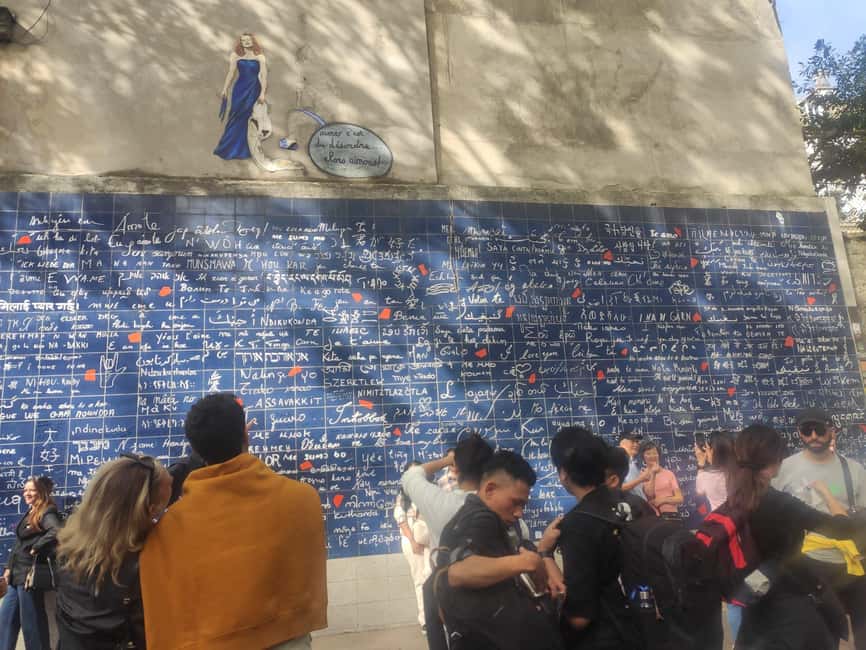
The Wall of Love and Montmartre’s romantic side
The next stop is Le Mur des Je T’aime, or the Wall of Love. Here, the phrase I love you appears in many languages across a tiled wall. The tour allows around 10 minutes for the guide’s explanation and photographs.
This is one of the more modern stops on the route. It breaks up the older architecture and gives you a lighter, more playful moment early in the walk. It is also useful for photographs, though the wall is compact and you will not spend a long time there.
I appreciate this kind of stop on a walking tour. Montmartre can sometimes feel like a string of famous names, but the Wall of Love adds a simple human theme between the cabaret and the art history. Your guide may also help you understand why the site fits the neighborhood’s romantic image.
Moulin de la Galette and the painters’ Montmartre
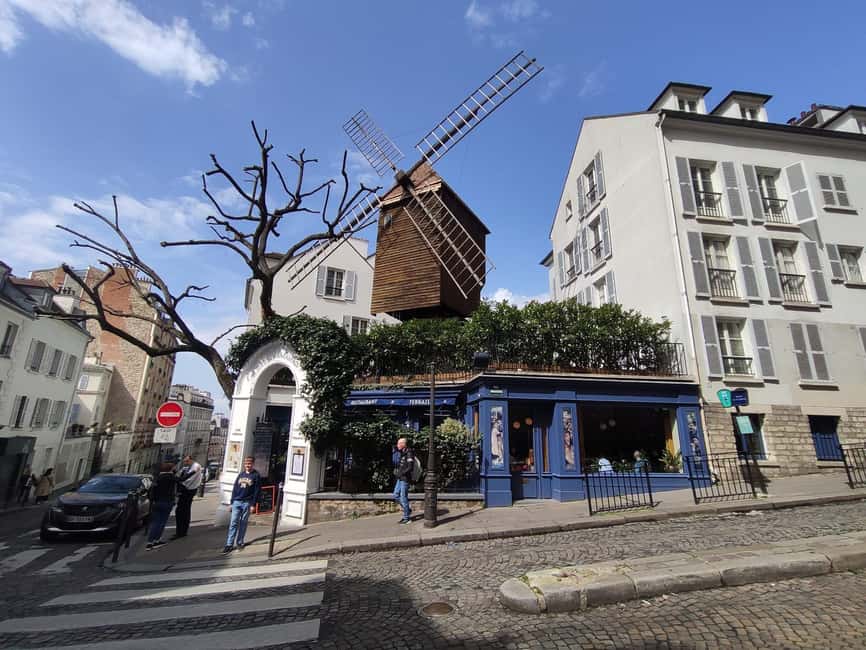
Moulin de la Galette brings you back to the district’s artistic past. The windmill is linked with the old village character of Montmartre and with the painters who used the neighborhood as both home and subject.
The tour discusses artists such as Picasso, Van Gogh, and Toulouse-Lautrec. Their names are not used as decoration only. Montmartre became known for artists, studios, cafés, cabarets, and a less formal way of life, and this stop helps place that story on an actual street.
You should expect another short guided stop, roughly 10 minutes, rather than a museum visit. The appeal is the setting and the explanation. You are seeing the exterior and hearing the background while moving through the neighborhood.
This is where a good guide makes a real difference. Samy, also listed by some participants as Sammy, was repeatedly praised for using stories and even pictures to explain Montmartre. Diana was also praised for sharing interesting facts in a relaxed way. The tour is strongest when the guide turns a building or windmill into a small scene from the district’s past.
Dalida’s statue and the personal side of the neighborhood
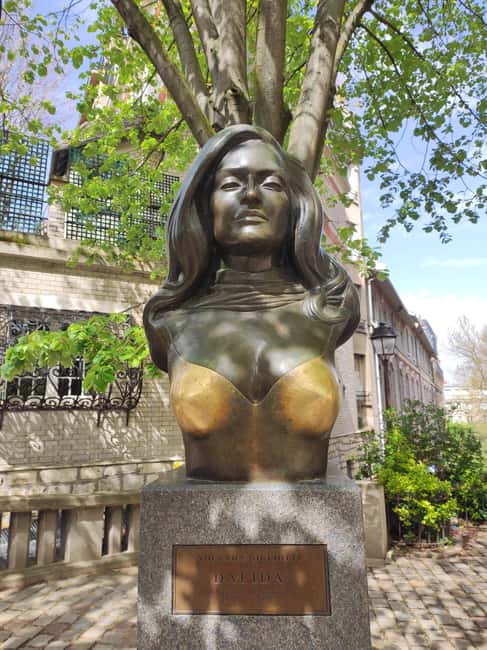
The Dalida Statue is a short photo and commentary stop. Dalida, a major French and international singer, lived in Montmartre, and her statue has become one of the district’s recognizable points of interest.
The stop adds a different layer to the walk. Montmartre is often sold as the neighborhood of painters, but its cultural story also includes singers and performers. Dalida’s connection shows how the area continued to attract well-known creative figures beyond the late nineteenth and early twentieth-century art scene.
The tour schedule gives each main stop about 10 minutes. That keeps the walk moving, though it also means you will not linger at every place. If you like a slow, unstructured wander, this guided route may feel brisk. If you want an efficient first look at Montmartre, the timing works well.
More Paris walks with a guide:
- Paris Île de la Cité and Notre-Dame Walking Tour With Crypt
★ 5.0 · 2,272 reviews - Paris: Montmartre Cheese, Wine & Pastry Guided Walking Tour
★ 4.8 · 2,255 reviews - Paris in a Day: Louvre or Orsay, Eiffel Tower, City Walk & Cruise
★ 5.0 · 1,956 reviews - Paris: Montmartre Highlights Walking Tour with a Local Guide
★ 4.9 · 1,668 reviews
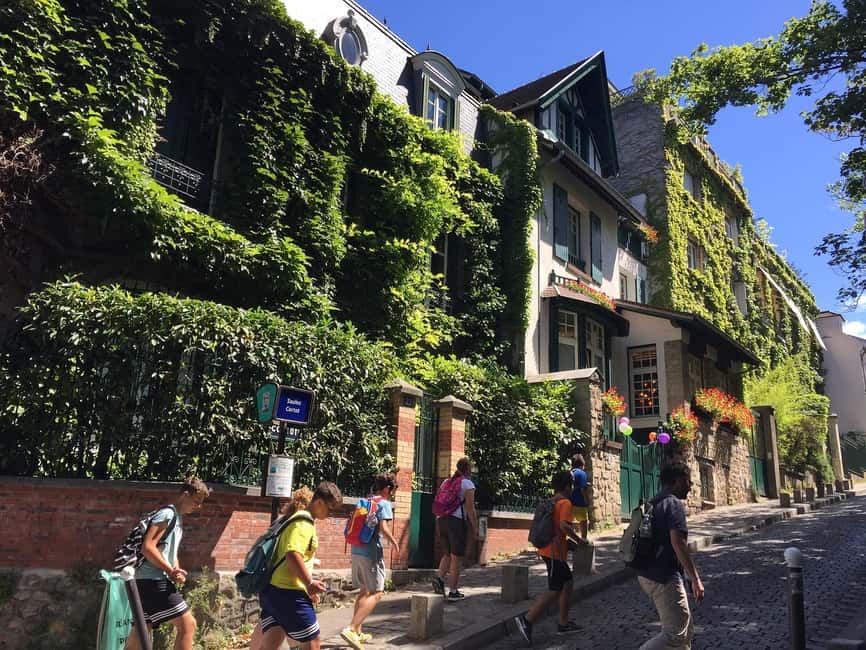
La Maison Rose and the picture-book streets
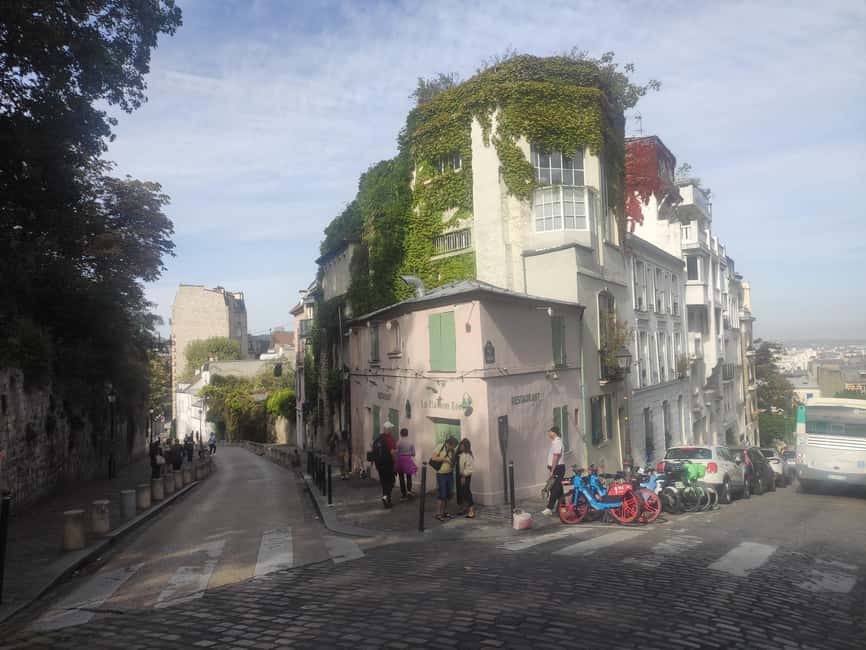
La Maison Rose is one of Montmartre’s most recognizable buildings, with its pink exterior and compact shape. It is a natural photograph stop, but the guide’s explanation gives the image more context than a quick stop made alone.
This part of the route is especially appealing if you want the quieter, village-like side of Montmartre. The neighborhood is famous for its artists, yet its charm often comes from the smaller streets between the major sights. The tour gives you a reason to pay attention to those surroundings instead of walking straight from one landmark to another.
La Maison Rose is also a reminder to keep your expectations realistic. The tour does not promise extended time inside attractions, and no food or drinks are included. You see the exterior, hear the story, and continue on foot.
Lapin Agile and the old cabaret circuit
Lapin Agile is another important cabaret landmark. Along with Moulin Rouge, it shows how Montmartre’s reputation grew through performance as well as painting. The guide explains the location during another short outdoor stop.
I like the way these cabaret sites balance the art-focused parts of the itinerary. Picasso and Van Gogh are central to the district’s identity, but the cafés and music venues helped create the atmosphere that drew artists in the first place.
Again, this is not an interior tour. You should plan on an explanation and a photograph from outside. That is enough for a first visit, especially if you are trying to see several parts of Montmartre in a single morning or afternoon.
The small-group format matters here. With no more than 10 people, you are more likely to hear the guide clearly and ask a question without holding up a large crowd. Several participants specifically valued the chance to ask questions, take photographs, and move at a comfortable pace.
Place du Tertre and the artists today
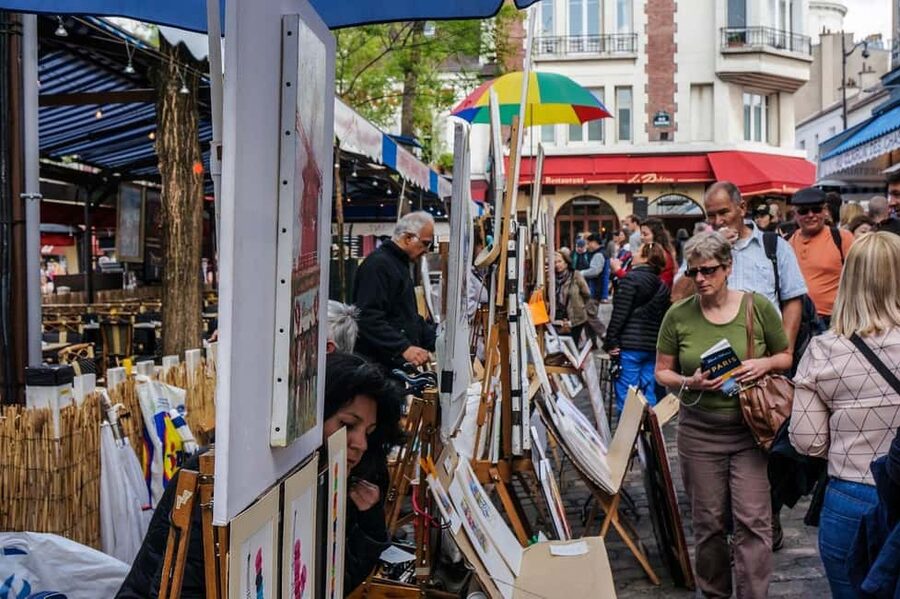
Place du Tertre is the point where Montmartre’s artistic past meets its present-day tourist life. Painters display their artwork around the square, continuing a tradition that remains part of the district’s public identity.
This is one of the tour’s most useful stops because you can see the art scene rather than only hear about famous painters from the past. The square can be busy, and the concentration of artists, cafés, and visitors may feel more commercial than the quieter streets nearby. Still, it is an essential part of a first Montmartre walk.
Your guide explains the square’s role and gives you time to look around. You may want to buy artwork, but that is not part of the tour and prices vary. Treat the stop as a chance to observe, photograph, and decide for yourself if anything catches your eye.
Place du Tertre also helps explain why the neighborhood remains so popular. Montmartre is not preserved as a museum. It is a working district shaped by residents, artists, restaurants, visitors, and the steady stream of people heading toward Sacré-Cœur.
The final climb to Sacré-Cœur
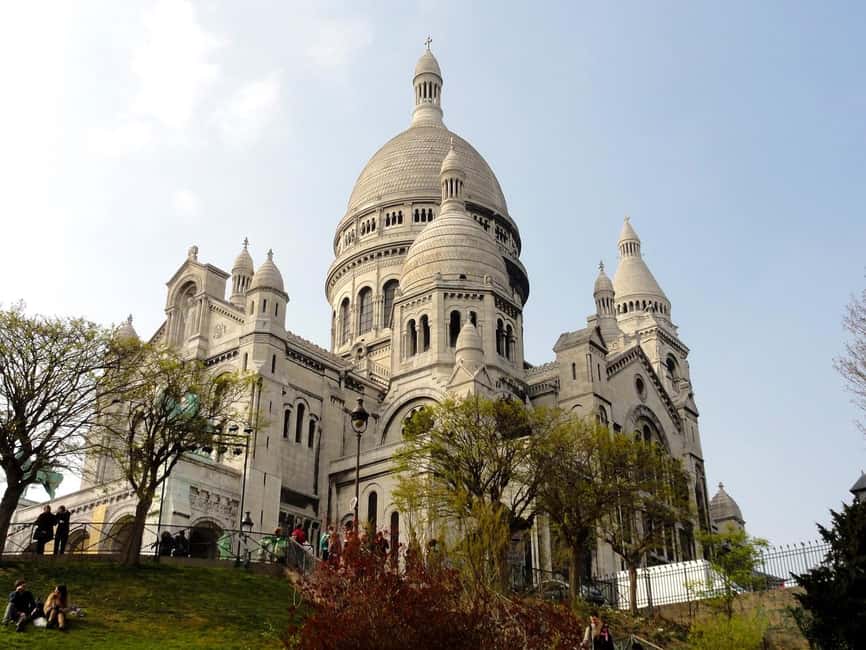
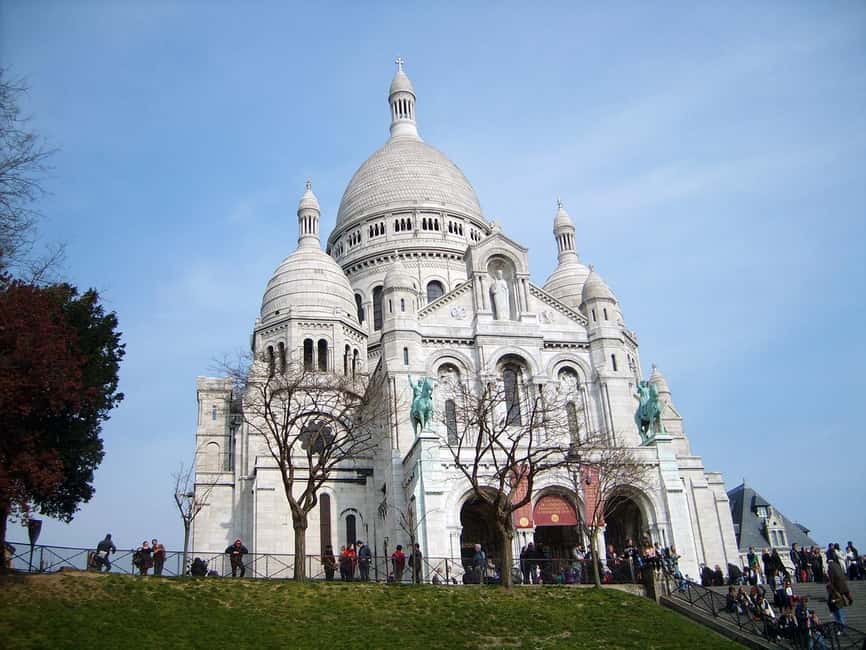
The route finishes at the Basilica of Sacré-Cœur de Montmartre. The walk includes scenic views on the way, followed by a guided stop at the basilica and time for photographs.
Sacré-Cœur sits on Montmartre’s hill, the highest point in Paris. From the area around the basilica, you can look across the city and identify major landmarks including the Eiffel Tower, Notre Dame, and Montparnasse Tower.
The view is the natural payoff of the route. You have spent the walk moving through the neighborhood’s streets, and now the city opens out in front of you. I find this more satisfying than taking the metro straight to the basilica, because you gain a sense of how the hill and neighborhood fit together.
The basilica stop is listed as sightseeing and a photo opportunity. The tour does not include a special interior visit, so check the guide’s instructions if you want to enter on your own afterward. Since the experience ends at Sacré-Cœur, you can continue exploring from there rather than returning to Place Blanche with the group.
The climb is also the tour’s main physical issue. Montmartre’s slopes and steps can be tiring, particularly if you have already spent the day walking around Paris. Wear comfortable shoes, bring only what you want to carry, and allow yourself time to pause for photographs.
What the guides add to the walk
The guide is the heart of this experience. The most praised guides are Sammy or Samy and Diana. Samy was described as friendly, chatty, patient, and full of information, while Diana was praised for her pleasant manner and interesting stories.
The strongest pattern is not simply that guides know the landmarks. They give you time to ask questions, take pictures, and move at a relaxed pace. Samy also used images to support some of his stories, which can help when a building or person is difficult to picture from a spoken explanation alone.
A small group can make the tour feel personal. Some departures had only two or five participants, and at least two people described their walks as private or nearly private. That is not guaranteed, but the 10-person limit gives you a better chance of direct conversation than a large coach-style tour.
The tour is in English only. If you want a French-language walk or a multilingual option, this is not the right choice. One participant also appreciated a guide’s patience while the group worked through some French, but the official tour language remains English.
Is $29 a fair price?
At $29 per person, this is a sensible price for a guided introduction to Montmartre. You receive 105 minutes with a live guide, a small group, and a route that covers many of the district’s most recognizable places.
The value comes from the organization and explanation. You could walk past Moulin de la Galette, La Maison Rose, or Lapin Agile on your own, but you might not know why they matter or how they connect to the neighborhood’s artists and performers.
The price does not include food, drinks, admission tickets, or a return transfer. That is not a problem if you want a straightforward walking tour, but you should budget separately for a café stop or meal. The tour is best viewed as a guided orientation, not a complete day in Montmartre.
Free cancellation up to 24 hours before the start gives you useful flexibility, and the reserve-now, pay-later option can help if your Paris schedule is still changing. Check the available starting times before booking, since the exact departure time is not fixed in the information provided.
Who will enjoy this Montmartre walk?
I would choose this tour for a first visit to Montmartre, especially if you want the main sights without spending hours researching the route. It also suits anyone interested in art, cabaret, famous residents, and city views.
It works well for solo visitors and couples because the group size leaves room for conversation. Families with older children may also like the mix of statues, windmills, colorful buildings, artists, and a large basilica, provided everyone is comfortable with the uphill walk.
You should think twice if you need step-free access or have mobility limits. The tour is not suitable for wheelchair users or people with mobility impairments. You may also prefer a self-guided visit if you want to stop for a long lunch, shop at Place du Tertre, or spend extended time inside the basilica.
The 105-minute length makes it easy to fit into a larger Paris plan. You can schedule it before an evening meal or pair it with further sightseeing near Sacré-Cœur. Just remember that the tour ends at the basilica, not back at Blanche.
Practical details before you book
Meet near the exit of Blanche metro station on line 2, close to the Moulin Rouge. Identify the guide by the green booklet and green badge, and arrive ready to walk.
Wear comfortable shoes. The route includes the slope of Montmartre, and the walking surface may be less forgiving than a flat Paris boulevard.
The tour is English-speaking and limited to 10 participants. Food and drinks are not included, so carry what you need for the walk and plan a separate café stop if you want one.
The overall rating is 4.8 from 53 reviews, with especially strong praise for Samy or Sammy and Diana. The repeated strengths are clear explanations, patience, friendly conversation, useful stories, and time for photographs.
Should you book the Montmartre highlights walk?
Book it if you want an affordable, story-led introduction to Montmartre with a small group and a clear finish at Sacré-Cœur. The route covers the district’s signature sights without wasting time on transfers, and the guides appear to be the main reason the experience works so well.
Skip it if you need accessible routes, dislike hills, or want long visits inside attractions. For most visitors making a first visit to Montmartre, though, $29 buys a useful sense of place, plenty of photo stops, and a strong view over Paris at the end.
FAQ
Where does the Montmartre walking tour begin?
It begins near the exit of Blanche metro station on metro line 2, close to the Moulin Rouge. Look for the guide carrying a green booklet and wearing a green badge.
Where does the tour finish?
The tour finishes at the Basilica of Sacré-Cœur de Montmartre.
How long does the walking tour last?
The tour lasts 105 minutes.
What language is the tour conducted in?
The live tour is conducted in English.
How many people are in each group?
The group is limited to 10 participants. Some departures may have fewer people.
Is food or drink included?
No. Food and drinks are not included in the tour price.
Is the tour suitable for wheelchair users?
No. The tour is not suitable for wheelchair users or people with mobility impairments. Comfortable shoes are recommended.
Recently reviewed around Paris
- Louvre Private Tour – The Essentials and More with Expert Guide★ 5.0 · 227 reviews
- 2CV tour by night★ 5.0 · 55 reviews
- Eiffel Tower Second or Summit Floor Access by Elevator with Views★ 3.5 · 161 reviews
- The only Paris Wine Tasting experience you need to do – 2 hours★ 5.0 · 265 reviews
- 2 Hour Street-art Walk and Space Invaders Hunt in Paris★ 5.0 · 27 reviews
- 2 hour outdoor group activity in Paris: SAINT GERMAIN★ 5.0 · 48 reviews
- Sainte-Chapelle, Conciergerie & Palais de Justice Private Tour★ 5.0 · 72 reviews
- Private 2 – Hour Paris Landmarks Tour by Golf Cart Mini Moke★ 5.0 · 38 reviews
Montmartre Tours, compared.

Montmartre Hidden Gems and Scenic Highlights Walking Tour
Read our review →
Montmartre Hill French Gourmet Food and Wine Tasting Walking Tour
Read our review →
Montmartre Cheese, Wine & Pastry Guided Walking Tour
Read our review →
Montmartre Highlights Walking Tour with a Local Guide
Read our review →
Sacré-Coeur and Montmartre Tour with Expert Guide
Read our review →
Private Montmartre Food Tour with Wine, Cheese & Pastries
Read our review →
Paris Montmartre Food Tour – A Full French Meal by Do Eat Better
Read our review →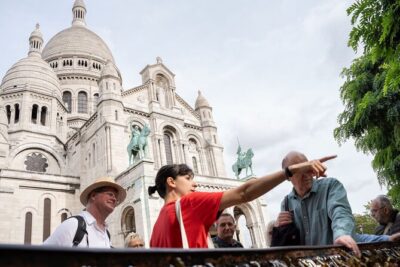
Hidden Montmartre: Paris’ Secret Streets Walking Tour
Read our review →Browse the lists this tour appears in