
Reviewed · MONTMARTRE TOURS
Paris: Montmartre Private Walking Tour
Montmartre is at its best when you understand what you are looking at. This private walk takes you from the Moulin Rouge and old drinking spots to Rue Lepic, Place du Tertre, the Sacré-Coeur, and a small vineyard tucked into the neighborhood. The stories connect cabaret dancers, Impressionist painters, Picasso, Modigliani, and the rough-edged village Montmartre once was.
I like the private format, since your guide can adjust the pace and explain the district in a way that works for your group. I also like the route’s mix of famous sights and less polished corners, including Lapin Agile and the Vigne de Montmartre. The main drawback is the short two-hour running time. Montmartre is hilly, and this tour covers a lot, so you will get a strong introduction rather than a slow, detailed look at every stop.
In This Review
- Key points at a glance
- Why Montmartre works best with a guide
- Meeting at Metro Blanche and entering the cabaret quarter
- Rue Lepic, from steep old road to artists’ territory
- Moulin de la Galette and the working side of Montmartre
- Place du Tertre and the village feel
- Sacré-Coeur and the hilltop view
- The Vigne de Montmartre, a small vineyard in the city
- Lapin Agile and the artists’ drinking dens
- Boris, Isabella, and the value of a private guide
- Is $171 per person good value?
- Practical details that affect the walk
- Who should book this Montmartre walk?
- Should you book it?
- FAQ
- How long does the Montmartre private walking tour last?
- Where does the tour begin?
- How will I recognize the guide?
- Where does the tour end?
- Is this a private group tour?
- Which languages are available?
- Is food or drink included?
- Does the tour run in bad weather?
- Can I cancel for a full refund?
- Can I reserve now and pay later?
Key points at a glance
- Start at Metro Blanche: Meet your guide by the exit, where they carry a red canvas tote bag.
- A private walk through old Montmartre: Your group gets a personal guide rather than joining a large shared tour.
- Cabaret and art history together: Follow the story of the Can-Can, Impressionism, Picasso, Modigliani, and the neighborhood’s drinking dens.
- A varied route: Expect Moulin Rouge, Rue Lepic, Moulin de la Galette, Sacré-Coeur, Place du Tertre, the vineyard, and Lapin Agile.
- Guides with strong personal appeal: Boris is praised for clear English and keeping children engaged, while Isabella is described as informative and fun.
- Good booking flexibility: You can cancel up to 24 hours ahead for a full refund and reserve now while paying later.
Why Montmartre works best with a guide
Montmartre can look simple at first glance: steep streets, souvenir shops, artists with easels, and the white domes of Sacré-Coeur. The real pleasure comes from knowing how the pieces fit together.
This hilltop district was once outside Paris’s official jurisdiction. That separation helped it develop a reputation for cheap wine, illegal alcohol, cabarets, and behavior that polite Paris preferred to keep at a distance. Later, artists and writers turned the same streets into one of Europe’s most famous creative quarters.
A guide gives those changes a clear shape. You are not just walking past an old cabaret. You are hearing how the Can-Can developed in a neighborhood where entertainment, drinking, rebellion, and art overlapped. You are not simply climbing Rue Lepic. You are following one of Montmartre’s old routes while learning how painters and writers lived around it.
I find that especially useful in Montmartre because the district is full of visual distractions. A guide can point out the difference between a grand house and a former working-class corner, explain why an ordinary-looking street mattered, and help you see beyond the postcard view.
More Walking Tours in Paris
- Paris Top Sights Half Day Walking Tour with a Fun Guide
★ 5.0 · 2,893 reviews - Montmartre Hidden Gems and Scenic Highlights Walking Tour
★ 5.0 · 2,684 reviews - Montmartre Hill French Gourmet Food and Wine Tasting Walking Tour
★ 5.0 · 2,588 reviews
Meeting at Metro Blanche and entering the cabaret quarter
The walk begins by the exit of Metro Blanche. Look for a guide carrying a red canvas tote bag. This is a practical meeting point because Blanche places you directly in the lower Montmartre cabaret area, near the Moulin Rouge.
The opening section sets the tone. You will hear about the former Maison Blanche, the older name connected with Metro Blanche, and see the Moulin Rouge, one of Paris’s best-known cabaret landmarks. The point is not simply to admire the red windmill. It is to understand the type of entertainment that made Montmartre famous.
This is where the story of the Can-Can comes in. The dance became linked with loud music, high kicks, and performers who challenged respectable social rules. Your guide also discusses illegal alcohol and the district’s reputation for obscene performances, giving you a sharper picture of Montmartre before it became a standard stop on every Paris itinerary.
The area around the Moulin Rouge is now a major tourist zone. You should expect a busy, commercial setting at the start, not a quiet village lane. The guide’s historical context matters here because the modern streets do not always reveal the old atmosphere.
Rue Lepic, from steep old road to artists’ territory
From the cabaret quarter, the route climbs ancient Rue Lepic. This is one of the most useful stretches of the tour because the street lets you feel Montmartre’s change in character as you move uphill.
Rue Lepic is not presented as a museum piece. It is a real urban street, with the mixture of handsome buildings and less polished corners that gives Montmartre its appeal. The climb also makes the tour physical. You are walking uphill, so comfortable shoes are a sensible choice.
Your guide uses the street to explain the birth of 19th-century art movements, including Impressionism. Montmartre attracted painters because it was cheaper and less formal than central Paris, while its cabarets and cafes supplied endless subjects and social contacts.
I like this part because it connects art to ordinary life. The great names of painting did not work in a vacuum. They drank, argued, struggled to pay rent, and spent time in the same places as performers, writers, and other artists. The neighborhood’s artistic importance grew from that mixture.
The route also helps explain why Montmartre feels different from the grand boulevards below. You see lavish houses beside run-down slums, a contrast that says a great deal about the district’s old social divisions.
Moulin de la Galette and the working side of Montmartre
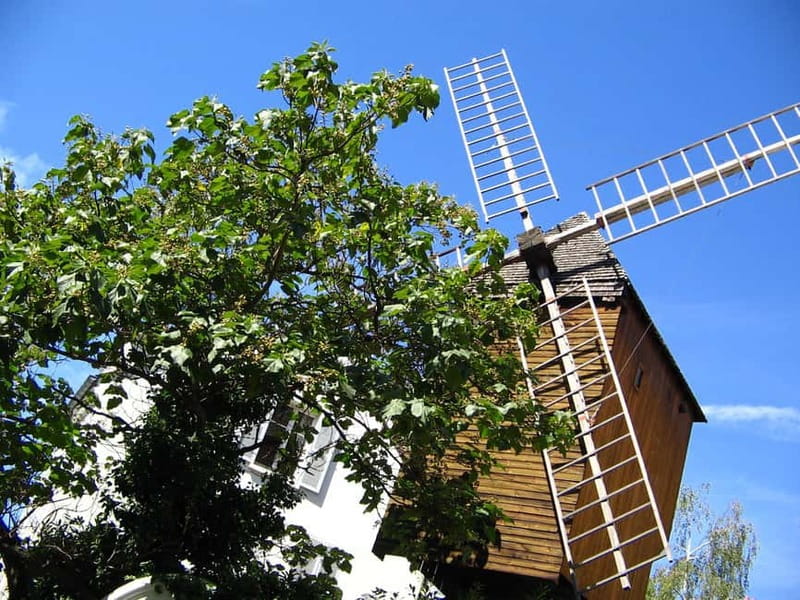
The Moulin de la Galette adds another layer to the walk. Its name recalls Montmartre’s old windmills and the area’s rural past, before the hill became fully absorbed into Paris.
This stop works well in a guided tour because the modern setting may not tell you much on its own. Your guide can place the windmill in the story of a neighborhood where village life, cheap entertainment, and modern art met. It is one of the places that helps you picture Montmartre as more than a collection of painters’ studios.
The contrast between the old mill and the nearby streets also makes the district’s transformation easier to understand. Montmartre was not born bohemian in the polished sense. It earned that image through a mix of poverty, nightlife, independence, and creative energy.
The tour does not include food or drinks, so do not expect a cafe stop built into the schedule. That keeps the two-hour route focused, but it also means you may want to return later if you want to sit down in one of the neighborhood’s cafes.
More Paris walks with a guide:
- Paris Île de la Cité and Notre-Dame Walking Tour With Crypt
★ 5.0 · 2,272 reviews - Paris: Montmartre Cheese, Wine & Pastry Guided Walking Tour
★ 4.8 · 2,255 reviews - Paris in a Day: Louvre or Orsay, Eiffel Tower, City Walk & Cruise
★ 5.0 · 1,956 reviews - Paris: Montmartre Highlights Walking Tour with a Local Guide
★ 4.9 · 1,668 reviews
Place du Tertre and the village feel
Place du Tertre is one of Montmartre’s most recognizable spots. Street artists work around the square, and the setting has a village quality that feels surprising in the middle of Paris.
This is likely to be one of the more crowded sections of the walk. The square is famous, and its artist stalls are part of the attraction. It can also feel more commercial than the quieter streets, especially if you are hoping to find the rougher Montmartre associated with struggling painters.
Still, it is worth seeing. The square shows how the neighborhood’s artistic identity has been preserved and packaged for visitors. A guide can help you separate the modern tourist image from the older role the square played in Montmartre’s social life.
I would pay attention to the setting rather than rushing through for a photograph. Look at the scale of the square, the surrounding buildings, and the way the lanes open into it. The guide’s stories should make the place feel less like a decorative stop and more like one part of a long artistic tradition.
Sacré-Coeur and the hilltop view
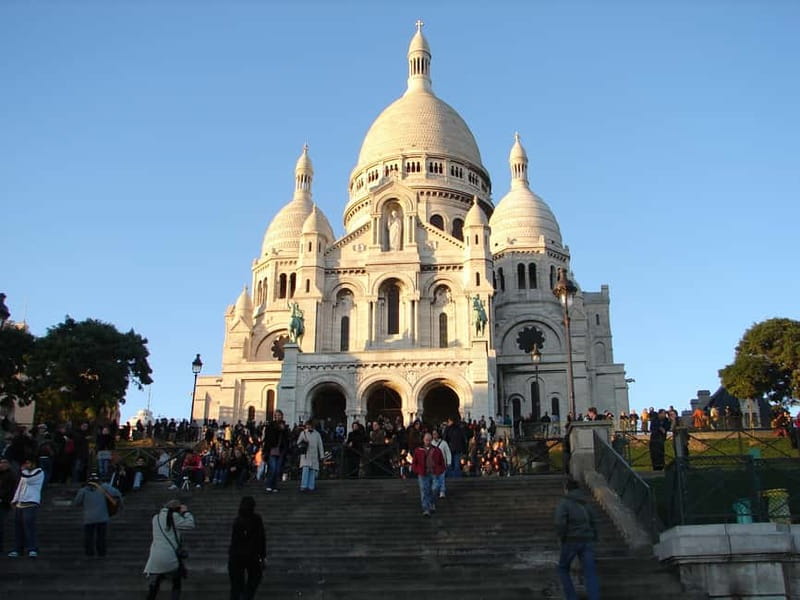
The white façade of Sacré-Coeur is the visual climax of most Montmartre walks. Its position near the top of the hill gives the route a natural sense of progress, even though this tour ends back at the meeting point rather than at the basilica.
You will see the church and learn how it fits into Montmartre’s changing identity. The basilica is a major religious landmark, but the neighborhood around it is also tied to nightlife, art, poverty, and political tensions. That combination is part of what makes the hill interesting.
The approach involves uphill walking and possibly steps, depending on the exact route your guide takes. The tour information does not provide a detailed accessibility plan, so anyone concerned about steep streets should ask before booking.
The viewpoint also gives you a chance to pause and take in Paris from above. Because the walk lasts only two hours, the time here may be brief. If you want a long visit inside Sacré-Coeur or an extended view across the city, plan a separate visit before or after the tour.
The Vigne de Montmartre, a small vineyard in the city
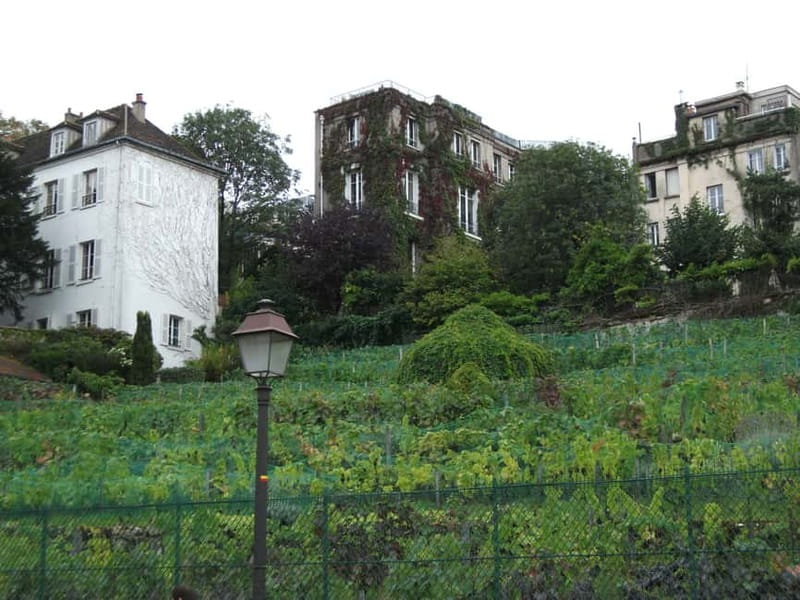
The Vigne de Montmartre is one of the route’s most unusual sights. A vineyard in Paris sounds unlikely, but it fits the old village character of the hill.
This small patch of vines helps you see that Montmartre was not always an urban entertainment district. It also gives the walk a welcome change of pace after the cabarets, art legends, and major monuments.
Do not expect a wine tasting. Food and drinks are not included, and the tour is built around walking and explanation. The value here is the setting and the story, not a culinary activity.
For me, the vineyard is exactly the kind of stop that improves a neighborhood tour. It is easy to find the Moulin Rouge and Sacré-Coeur on your own. A less obvious place such as this gives you a better reason to book a guide.
Lapin Agile and the artists’ drinking dens
Lapin Agile is an old cabaret with strong links to Montmartre’s artistic past. The tour explains why it became a favored spot for struggling artists and writers, including Picasso and Modigliani.
This is where the route becomes especially personal. Instead of treating Picasso as a distant name in a textbook, the guide places him in the social world of cafes, cabarets, and uncertain careers. Modigliani’s connection adds another reminder that Montmartre’s art scene was shaped by people who were not yet famous and often had very little money.
You will also hear about the drinking dens favored by Picasso and other artists. The stories should help you picture the neighborhood as a place where ideas were exchanged over cheap drinks, performances, and arguments.
Lapin Agile is not the same type of sight as Sacré-Coeur. You may mainly see its exterior and hear its story rather than enter for a performance. That is not a flaw, but it is important to understand the experience as a historical walking tour, not a cabaret show.
Boris, Isabella, and the value of a private guide
The guide can make or break a short walking tour. Here, Boris and Isabella are specifically identified as guides, and both bring different strengths to the experience.
Boris is a strong choice for families or anyone who wants detailed explanation in English. He is described as having excellent English and a broad command of Paris and its past. He also kept two children, ages 10 and 12, interested during the walk, which matters in a neighborhood where some historical details involve adult nightlife and social scandal.
Isabella is described as informative and fun. That combination suits Montmartre, since the subject needs more than dates and names. The cabarets, artists, and odd local stories are best handled with a light touch.
The tour is offered in English, French, and Serbo-Croatian. When booking, check the available guide language and starting time. A private group gives you more room to ask questions than a large shared walk, and you can likely tell the guide if your group needs a slower pace, though the overall route remains limited to two hours.
Is $171 per person good value?
At $171 per person, this is not a cheap orientation walk. The price needs to make sense for your group size and priorities.
A private tour becomes easier to justify when you are traveling as a small family or group that wants direct attention. You are paying for the guide’s time, the ability to ask questions, and a route built around your interests rather than a fixed speech delivered to a crowd.
The tour provider, Paris in person private tours, was selected among the top 10 small tour operators in Europe from 26,000 companies in the 2025 Arival TourReview Spotlight Awards. That recognition does not guarantee that every departure will suit every person, but it adds useful context when considering the price.
The two-hour length keeps the commitment manageable. You can fit it into a busy Paris schedule, then continue exploring on your own. The tradeoff is that $171 buys an introduction, not a full-day exploration or a meal.
I would consider it good value for first-time visitors who want Montmartre explained rather than simply photographed, especially families and groups with a strong interest in art or local history. If you are comfortable researching the area and walking independently, you can see many of the outside sights without paying for a private guide.
Practical details that affect the walk
The tour runs rain or shine. Bring clothing that suits the forecast, since the experience takes place outdoors and the route includes uphill streets.
The meeting point is by the exit of Metro Blanche. Your guide carries a red canvas tote bag, which should make the meeting easier in a busy area. The activity ends back at the same meeting point, so you do not need to arrange transport from a distant final stop.
Starting times vary, so check availability before you plan the rest of your day. The tour lasts two hours, and the schedule may feel tight if you want long stops for photographs or a leisurely visit inside a monument.
The walk includes streets and hill sections rather than coach transport. Wear comfortable shoes and allow extra energy for the climb. Since food and drinks are not included, you can plan a cafe break separately before or after the walk.
Cancellation is flexible up to 24 hours in advance for a full refund. You can also reserve now and pay later, which helps if your Paris plans are still shifting.
Who should book this Montmartre walk?
I would choose this tour if you want the neighborhood’s stories to lead the experience. It suits people who enjoy art history, old nightlife, literary connections, and the social details behind famous places.
Families can also benefit. Boris kept children aged 10 and 12 involved, suggesting that the guide can adapt difficult material and use stories rather than a dry lecture. The private format is useful if your group has its own pace or questions.
This is less suitable if you want a long stop inside Sacré-Coeur, a cabaret performance, food tasting, or a relaxed cafe crawl. Those activities are not part of the two-hour walk.
It is also not the best fit for anyone who dislikes hills or outdoor tours in poor weather. The walk runs rain or shine, and the route’s character depends on moving through Montmartre’s streets.
Should you book it?
Book this Montmartre private walking tour if you want to connect the Moulin Rouge, Rue Lepic, Moulin de la Galette, Place du Tertre, Sacré-Coeur, the vineyard, and Lapin Agile into one understandable story. The private guide, language choices, and family-friendly approach add real value.
Skip it if you only want quick photographs or a cheap way to reach the basilica. You can visit the major sights without a private walk. But if you want to understand how cabarets, struggling artists, village life, and Parisian glamour ended up sharing the same hill, this is a focused and worthwhile introduction.
FAQ
How long does the Montmartre private walking tour last?
The tour lasts two hours.
Where does the tour begin?
Meet your guide by the exit of Metro Blanche.
How will I recognize the guide?
The guide will be carrying a red canvas tote bag.
Where does the tour end?
The tour ends back at the original meeting point.
Is this a private group tour?
Yes. The experience is organized for a private group.
Which languages are available?
The live tour guide is available in English, French, and Serbo-Croatian.
Is food or drink included?
No. Food and drinks are not included.
Does the tour run in bad weather?
Yes. The tour takes place rain or shine.
Can I cancel for a full refund?
Yes. You can cancel up to 24 hours in advance for a full refund.
Can I reserve now and pay later?
Yes. The reserve now and pay later option lets you hold your plans without paying immediately.
Recently reviewed around Paris
- Louvre Private Tour – The Essentials and More with Expert Guide★ 5.0 · 227 reviews
- 2CV tour by night★ 5.0 · 55 reviews
- Eiffel Tower Second or Summit Floor Access by Elevator with Views★ 3.5 · 161 reviews
- The only Paris Wine Tasting experience you need to do – 2 hours★ 5.0 · 265 reviews
- 2 Hour Street-art Walk and Space Invaders Hunt in Paris★ 5.0 · 27 reviews
- 2 hour outdoor group activity in Paris: SAINT GERMAIN★ 5.0 · 48 reviews
- Sainte-Chapelle, Conciergerie & Palais de Justice Private Tour★ 5.0 · 72 reviews
- Private 2 – Hour Paris Landmarks Tour by Golf Cart Mini Moke★ 5.0 · 38 reviews
Montmartre Tours, compared.

Montmartre Hidden Gems and Scenic Highlights Walking Tour
Read our review →
Montmartre Hill French Gourmet Food and Wine Tasting Walking Tour
Read our review →
Montmartre Cheese, Wine & Pastry Guided Walking Tour
Read our review →
Montmartre Highlights Walking Tour with a Local Guide
Read our review →
Sacré-Coeur and Montmartre Tour with Expert Guide
Read our review →
Private Montmartre Food Tour with Wine, Cheese & Pastries
Read our review →
Paris Montmartre Food Tour – A Full French Meal by Do Eat Better
Read our review →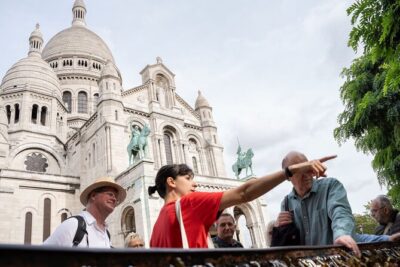
Hidden Montmartre: Paris’ Secret Streets Walking Tour
Read our review →Browse the lists this tour appears in