
Reviewed · ORSAY MUSEUM TOURS
Paris: Orsay Museum Masterpieces Guided Tour
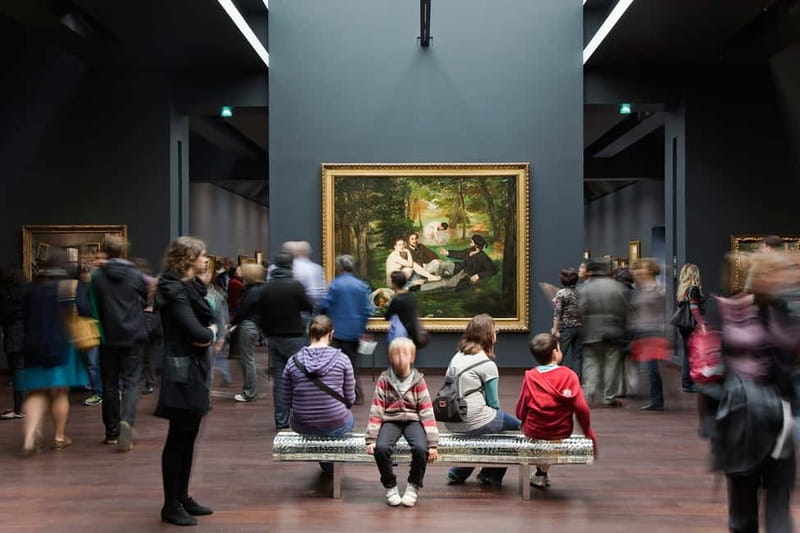
The Musée d’Orsay is one of Paris’s most rewarding museums, but its great art can blur together when you are facing room after room of paintings. This two-hour guided tour gives you a clear route through the Impressionist and Post-Impressionist highlights, from Monet’s changing light to Van Gogh’s restless color.
I like the reserved entry, which cuts down on time spent waiting, and the way good guides such as Anais, Hamish, Blerta, and Abed connect paintings to politics, personalities, and technique. The main drawback is pace: two hours is enough for the stars, not for every corner of the museum.
In This Review
- Key points at a glance
- Why the Musée d’Orsay works so well with a guide
- Meeting at the elephant statue
- Inside the former station
- The Impressionist turning point
- Van Gogh and the Post-Impressionist rooms
- Two hours, two group choices
- Is $60 good value?
- Practical limits to consider
- Who should book this Musée d’Orsay tour?
- Should you book it?
- FAQ
- Where does the Musée d’Orsay tour begin?
- How long does the tour last?
- What language is the tour conducted in?
- Is museum admission included?
- Does the tour include skip-the-line entry?
- How large can the group be?
- What artworks can I expect to see?
- Is transportation included?
- Can I bring a stroller or large bag?
Key points at a glance
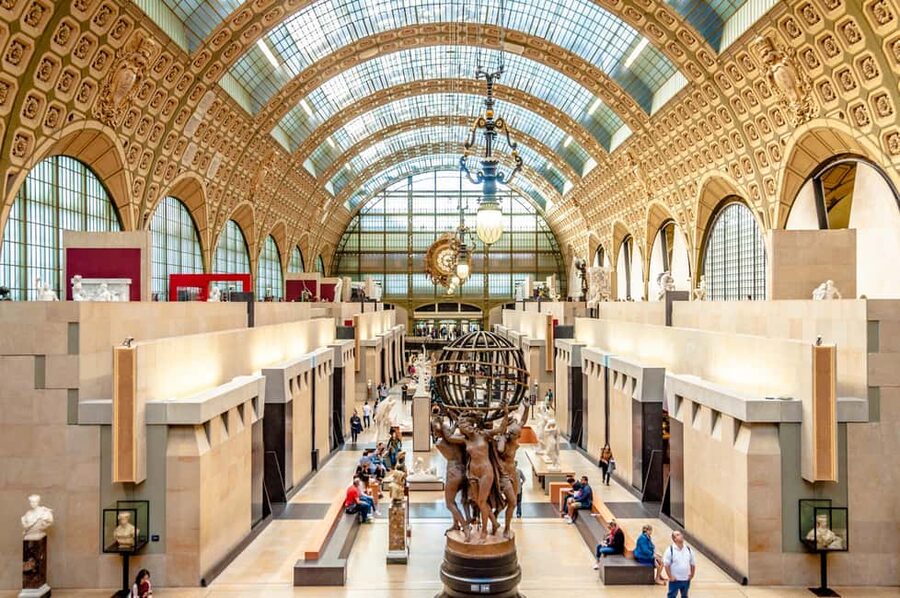
- Former railway station setting: The museum’s Beaux Arts architecture, giant clocks, and central hall are part of the experience.
- Major Impressionist works: See Monet, Renoir, Manet, Degas, Cézanne, Van Gogh, and other French masters.
- Two group sizes: Choose a semi-private group of up to 6 or a larger group capped at 25.
- Reserved museum entry: Pre-booked admission helps you avoid the regular ticket line.
- Strong guide element: The best guides explain both what you see and why the art caused such a stir.
- A focused two-hour visit: Ideal when you want an introduction before returning later on your own.
Why the Musée d’Orsay works so well with a guide
I find the Musée d’Orsay easier to appreciate than the Louvre in one important way: its collection has a more defined time span and artistic story. The museum is devoted mainly to art from the mid-19th century to the early 20th century, so you can follow the move from official academic painting toward the freer brushwork and new subjects of Impressionism.
That story is not always obvious when you walk alone. A guide can point out how artists broke with accepted rules, why critics attacked early Impressionist exhibitions, and how painters responded to modern Paris. Instead of seeing a famous Monet as just a pretty scene, you begin to notice the loose brushwork, shifting light, and decision to capture a passing moment.
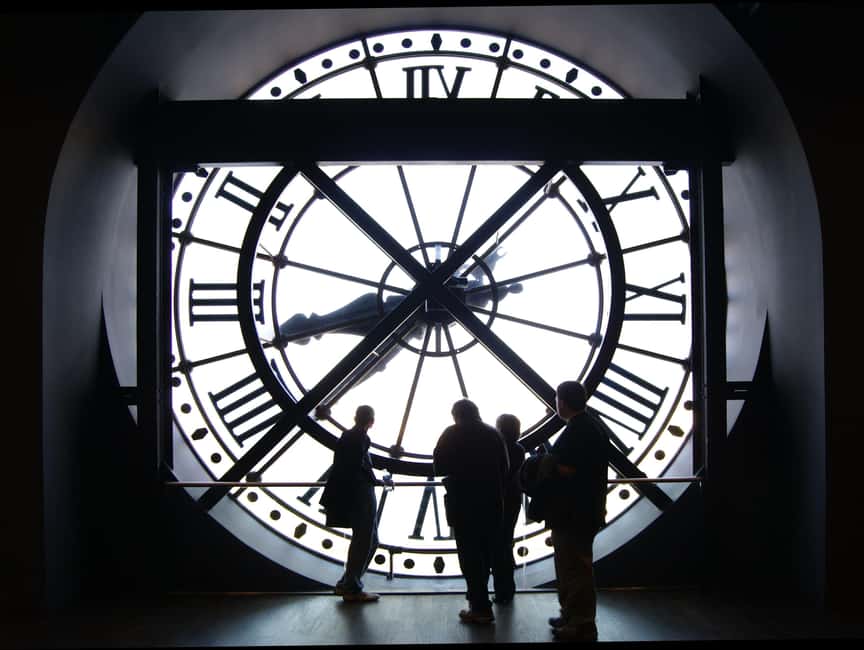
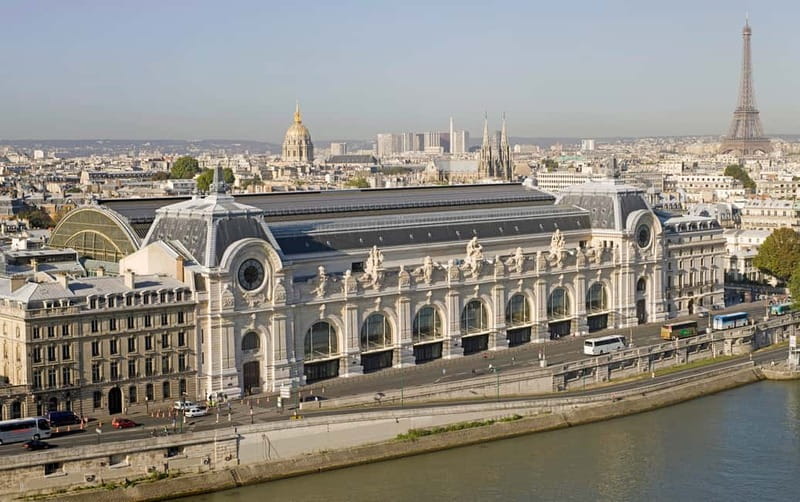
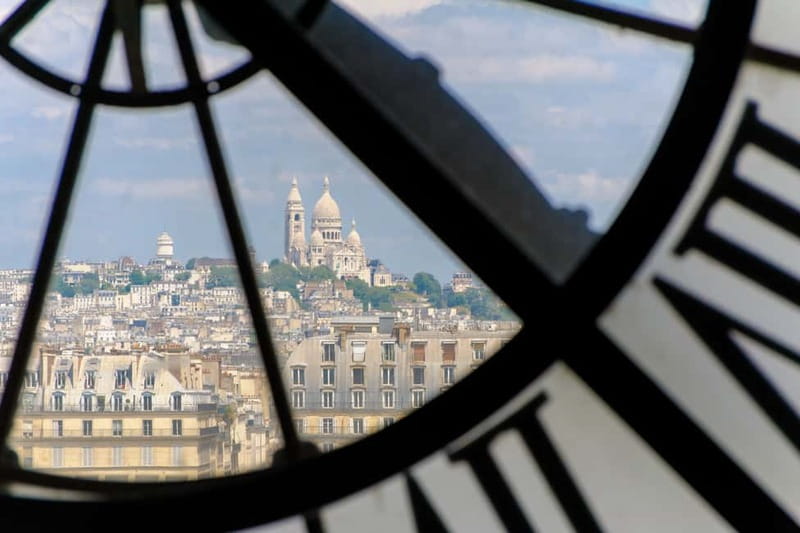
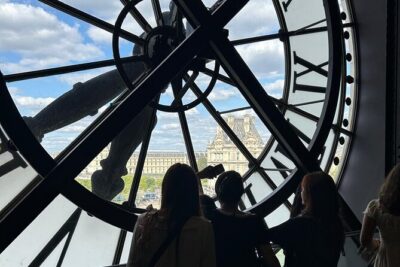
The building adds plenty of character. The museum occupies a former railway station, with a grand central hall and a river-facing facade marked by two huge clocks. You meet outside in the courtyard at the foot of the large elephant statue, so the start is easy to identify once you reach the museum.
A good guide also helps you keep your bearings inside. The building is large enough to feel confusing, especially when the museum is crowded. The tour is not a slow wander through every gallery. It is a selected route designed to show how the main artists and ideas fit together.
More Paris museums and collections:
- Paris: Louvre Museum Timed-Entrance Ticket
★ 4.6 · 71,977 reviews - Louvre Museum Masterpieces Guided Tour with Access
★ 4.5 · 12,023 reviews - Paris: Louvre Museum Entry Ticket With Host and River Cruise
★ 4.6 · 9,926 reviews
Meeting at the elephant statue
The meeting point is 5 Rue de la Légion d’Honneur, in the courtyard in front of the main entrance. Look for the guide at the foot of the elephant statue and for a company sign.
The simplest public transport option is the RER C station named Musée d’Orsay. You can also use Metro Line 12 to Solferino. From Solferino, leave through exit 2, marked Musée d’Orsay, turn left, and walk up Rue de Bellechasse to the museum.
If you arrive by taxi, ask to be dropped at the museum entrance. On foot, use the Seine as your guide: the museum sits along Quai Anatole France. Arrive with a little extra time. A missed meeting point is a poor way to begin a museum visit, and the courtyard has more than one possible approach.
The tour ends back at the starting point. There is no transportation included, which is not much of a concern here because the museum is well connected by public transport and sits in central Paris.
Inside the former station
Before the paintings claim your attention, take a moment to look at the structure itself. The old station gives the museum a scale and shape that feel very different from a conventional gallery. The central space, high roof, clocks, and long sightlines help explain why the Musée d’Orsay feels like both a transport hub and an art museum.
That setting matters because many of the artists shown here painted a Paris that was changing fast. Railways, new boulevards, cafés, theaters, leisure, and city crowds all became part of modern life. The museum’s building quietly reinforces that connection between new technology and new ways of seeing.
Your guide will use the museum’s layout to create a manageable visit. Expect stops at major works rather than a complete survey of every artist. You may spend several minutes on a single painting, discussing its subject, technique, and place in the artist’s career, then move on before the crowd gathers too tightly.
Headsets are supplied when needed. They are useful in a busy room, where standing close to the guide may block your view or leave you straining to hear. Equipment can occasionally cause trouble, so keep an ear out for instructions at the start. Guides such as Hamish have been praised for handling audio problems calmly and keeping the tour moving.
The Impressionist turning point
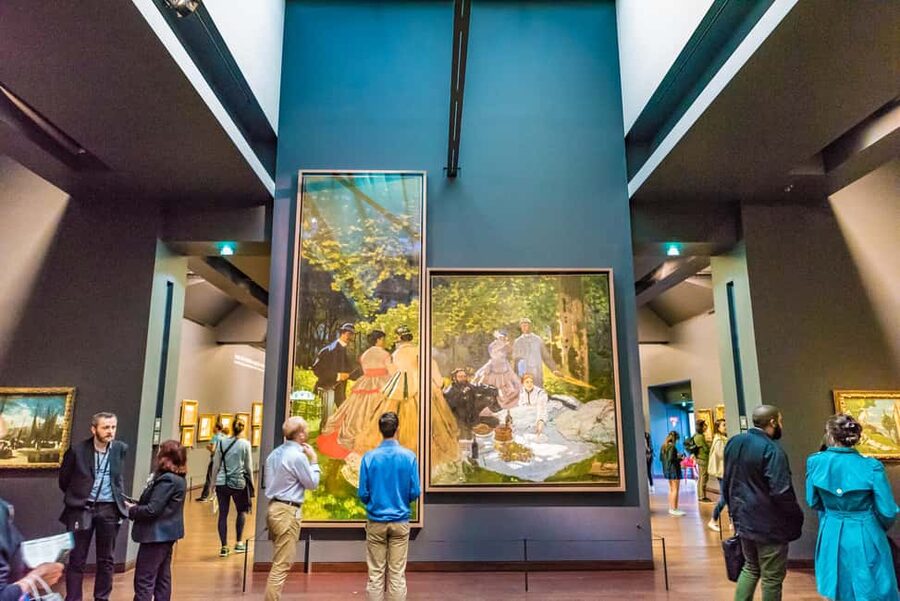
Impressionism is often reduced to soft colors and sunny outdoor scenes. The better explanation is more interesting. These artists challenged the official art system by choosing ordinary subjects, visible brushwork, modern leisure, and changing light over polished historical scenes.
Your guide should help you see those choices in the paintings. Look for the sense that a scene has been caught rather than carefully staged. A Paris street, a dance hall, a river, or a garden can become a serious subject. The painting does not need to tell an ancient story to matter.
Monet is central to this account. His work asks you to watch light and atmosphere rather than search for hard outlines. The Musée d’Orsay’s Monet holdings make it a particularly good place to compare how color and brushwork can suggest a scene without spelling out every detail.
Renoir offers another side of modern Paris. Dance at Le Moulin de la Galette shows a Sunday gathering at a popular dance hall, filled with movement, conversation, and dappled light. Your guide may draw your attention to the way the painting records social life as much as it records faces and clothing.
Manet is important because he helped push painting toward modern subjects and a less polished visual language. Degas brings a different interest, with careful observation of bodies, movement, and performance. Cézanne points toward later modern art through his forceful handling of form and structure.
The exact route can vary with museum conditions, crowd levels, and the guide assigned to your group. That is a good reason to treat the tour as a framework rather than a fixed checklist.
More Paris trips worth a second look
- Paris: Louvre Guided Tour with Reserved Access & Boat Cruise
★ 4.3 · 16,353 reviews - Louvre Museum – Exclusive Guided Tour (Entry Included)
★ 5.0 · 6,296 reviews - Versailles: Skip-the-Line Guided Palace Tour and Full Access
★ 4.6 · 5,214 reviews - Louvre Priority Access with Mona Lisa Escort or Guided Option
★ 4.0 · 4,420 reviews
Van Gogh and the Post-Impressionist rooms
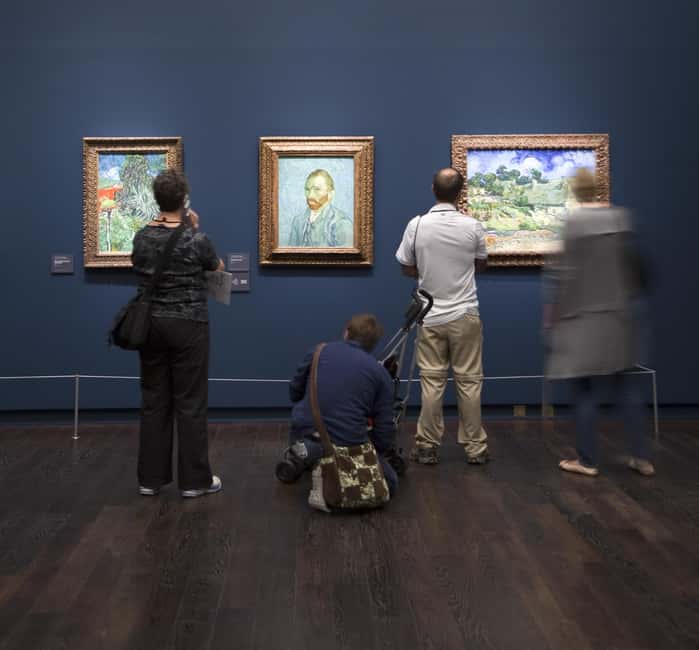
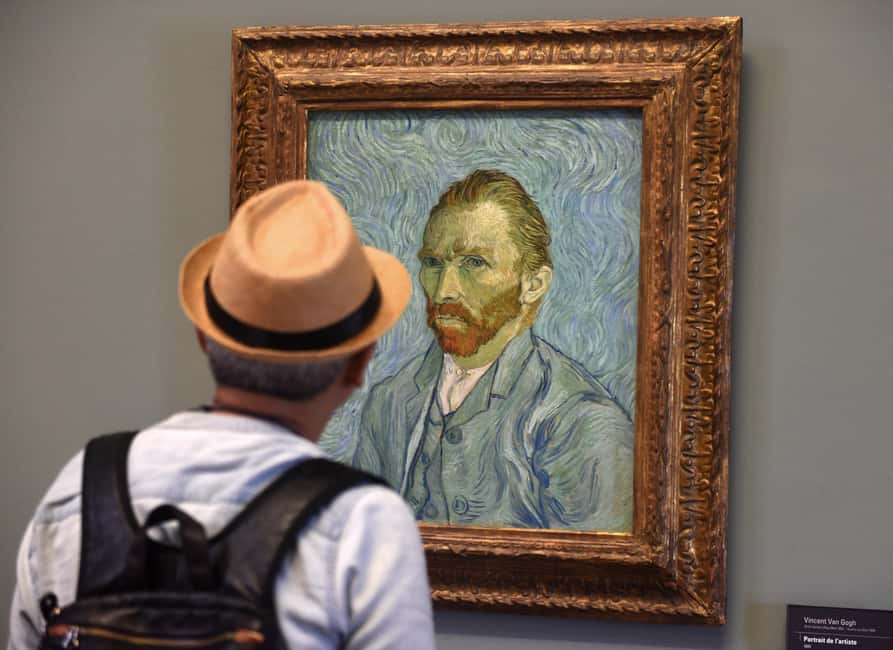
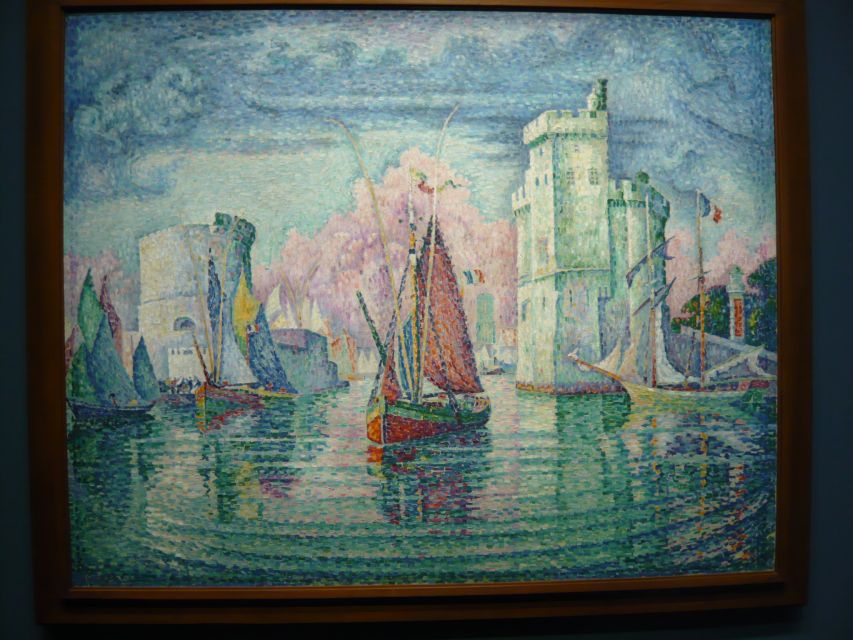
The visit also reaches beyond Impressionism to Post-Impressionist works, where artists took the earlier breakthroughs in different directions. Van Gogh’s Starry Night over the Rhône is one of the most memorable stops.
The painting gives you a night view shaped by reflected lights, a dark river, and a sky full of stars. A guide can help you look past the fame of the image and focus on how Van Gogh builds the scene with strong color and energetic strokes. The painting feels personal, but it is also carefully organized around contrasts between sky, water, lamps, and figures.
Cézanne is useful here because his work shows how painting could become less about copying the visible world and more about testing its structure. You may not immediately respond to every Cézanne, but a clear explanation of his forms and brushwork can make the paintings easier to read.
This part of the museum is where a strong guide earns the $60 price. You are not simply being led to famous canvases. You are given a way to understand why the artists mattered and how one generation opened doors for the next.
The best guide names associated with this experience include Anais, Blerta, Hamish, Eric, Abed, Addy, Florence, Irwin, and Erwan. Assignments can change, so you should not book on the assumption that one particular person will lead your tour. The useful pattern is clear: guides are expected to explain art history in English, answer questions, and adjust when the group needs more time.
Some guides bring humor into the walk. Addy, for example, has been praised for involving children and inviting questions. Others focus closely on technique, historical context, or the personalities behind the works. Erwan has been noted for linking art to politics and history, and one tour extended beyond its planned length because the group remained engaged. That extra time should be viewed as a pleasant possibility, not a guarantee.
Two hours, two group choices
The standard tour lasts two hours. That is a sensible length for a first visit, especially if you have several other Paris plans the same day. It is long enough to understand the museum’s main story without turning into an exhausting all-day art march.
You can choose a semi-private tour for up to 6 people or a larger group with a maximum of 25. I would choose the smaller option if you want to ask several questions, hear every explanation clearly, or prefer a more personal pace.
The larger group can still work well, particularly if saving money matters and you mainly want a guided route to the major paintings. The tradeoff is simple: more people can mean less room for individual questions and a greater chance that you will need to stay close to the guide.
Crowds are part of the calculation. Reserved entry helps with the ticket line, but it does not make the galleries empty. The Musée d’Orsay is one of Paris’s most popular museums, and standard visiting hours can be busy. A guide who knows how to move through crowded rooms is a real advantage.
Wear comfortable shoes. You will be on your feet and walking through a large museum. Many sections are not air-conditioned, so warm weather can make the visit feel more tiring. Plan your clothing with that in mind.
Is $60 good value?
At $60 per person, this is not the cheapest way into the Musée d’Orsay. You are paying for more than admission: the reservation, a live English-speaking art historian, and a planned two-hour route.
I think the price makes sense for a first-time visitor who wants help with the museum’s major works. A guide can save you from spending your limited Paris time wandering between floors and reading scattered labels. The historical links and explanations of painting technique are also hard to reproduce with a quick self-guided visit.
The value is strongest if you have limited time. One person with a museum map can see plenty in two hours, but it is harder to know which rooms deserve priority or how the artists connect. The tour gives you that structure.
If you already know Impressionism well, you may find the highlights format less satisfying. You will see important works, but you will not have time for a quiet look at every favorite artist. In that case, the smartest plan is to add a few hours afterward, returning to the rooms that caught your attention.
Practical limits to consider
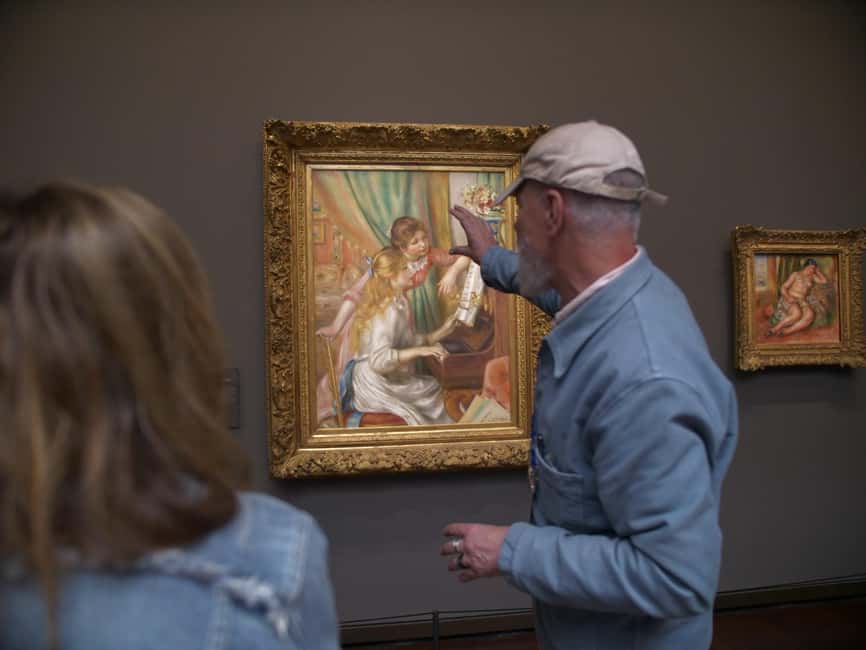
This experience is not suitable for wheelchair users or people with impairments requiring special assistance. Strollers and baby carriages are not accepted on group tours, and large bags, luggage, backpacks, and flash photography are not allowed.
The walking requirement is moderate but real. Comfortable shoes are specifically recommended, and you should expect to remain on your feet for much of the two hours.
The tour is conducted in English. Guides are expected to explain the art and answer questions, but speaking styles can vary. Most of the named guides, including Anais, Blerta, Hamish, and Florence, are praised for clear explanations, patience, and strong command of the material. One guide was described as harder to understand despite offering solid information, so travelers who need very simple spoken English may prefer the smaller group option.
Free cancellation is available up to 24 hours before the tour for a full refund. You can also reserve now and pay later, which helps if you are still arranging a Paris schedule.
Who should book this Musée d’Orsay tour?
I would recommend it to a first-time Paris visitor, anyone with only a few hours for the museum, and people who want the major Impressionist names explained in plain English. It also suits families when the guide makes an effort to involve younger members of the group.
The tour is less suited to a specialist art lover who wants long, quiet stretches with individual paintings. It is also a poor fit if you need wheelchair access, plan to bring luggage, or dislike staying with a group.
For most people, the best plan is to take the tour early in your museum visit, then stay afterward if your ticket and schedule allow. The guided route gives you the basic story. Your own extra time lets you slow down and look again at Monet, Renoir, Van Gogh, or whichever artist catches you by surprise.
Should you book it?
Book this tour if you want a focused introduction to the Musée d’Orsay and value a guide who can connect famous paintings with French art, politics, and daily life. The reserved entry and small-group choice add practical value, especially during busy periods.
Skip it if you prefer complete freedom, already know the collection well, or want to spend long stretches alone with less famous works. At $60, it is a premium museum visit, but for a first look at one of Paris’s finest collections, the structure and expert explanation make it a sensible choice.
FAQ
Where does the Musée d’Orsay tour begin?
Meet in the courtyard in front of the main entrance at 5 Rue de la Légion d’Honneur. Your guide waits at the foot of the large elephant statue with a company sign.
How long does the tour last?
The guided museum visit lasts two hours. Check availability for the specific starting times.
What language is the tour conducted in?
The live tour guide speaks English.
Is museum admission included?
Yes. Entrance and reservation fees for the Musée d’Orsay are included.
Does the tour include skip-the-line entry?
The experience includes pre-booked entry and skip-the-ticket-line access, helping you avoid the regular ticket line.
How large can the group be?
You can choose a semi-private option for up to 6 people or a group tour with a maximum of 25 people.
What artworks can I expect to see?
The route includes major works by Van Gogh, Cézanne, Monet, Renoir, Manet, and Degas. Featured examples include Van Gogh’s Starry Night over the Rhône and Renoir’s Dance at Le Moulin de la Galette.
Is transportation included?
No. You make your own way to and from the museum. The nearest RER stop is Musée d’Orsay, and Solferino is the nearest listed Metro stop.
Can I bring a stroller or large bag?
No. Baby strollers, baby carriages, backpacks, luggage, and large bags are not allowed. Flash photography is also prohibited.
Recently reviewed around Paris
- Louvre Private Tour – The Essentials and More with Expert Guide★ 5.0 · 227 reviews
- 2CV tour by night★ 5.0 · 55 reviews
- Eiffel Tower Second or Summit Floor Access by Elevator with Views★ 3.5 · 161 reviews
- The only Paris Wine Tasting experience you need to do – 2 hours★ 5.0 · 265 reviews
- 2 Hour Street-art Walk and Space Invaders Hunt in Paris★ 5.0 · 27 reviews
- 2 hour outdoor group activity in Paris: SAINT GERMAIN★ 5.0 · 48 reviews
- Sainte-Chapelle, Conciergerie & Palais de Justice Private Tour★ 5.0 · 72 reviews
- Private 2 – Hour Paris Landmarks Tour by Golf Cart Mini Moke★ 5.0 · 38 reviews
Orsay Museum Tours, compared.

Paris in a Day: Louvre or Orsay, Eiffel Tower, City Walk & Cruise
Read our review →
Musée d’Orsay Entry Ticket and Seine River Cruise
Read our review →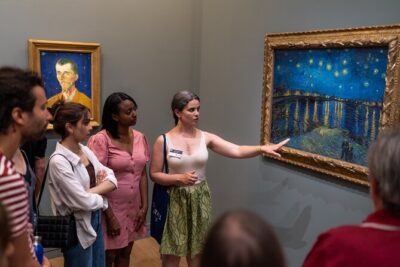
Musée d’Orsay Skip-the-Line Tour with Expert Guide
Read our review →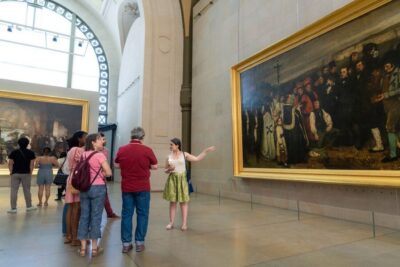
Musée d’Orsay Skip-the-Line Tour with Expert Guide
Read our review →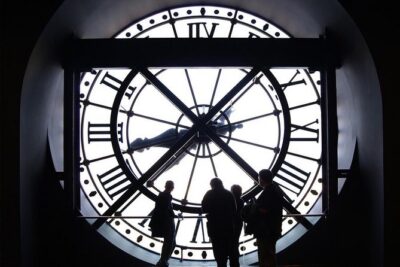
The Musée d’Orsay Guided Tour Orsay Museum Semi-Private 6ppl Max
Read our review →
Louvre & Musée d’Orsay Guided Museum Tour Semi-Private 6ppl Max
Read our review →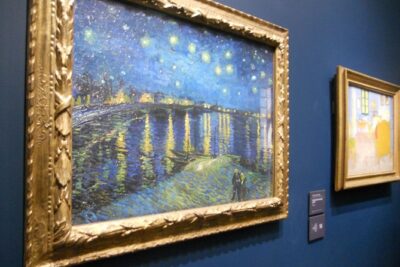
Browse the lists this tour appears in