
Reviewed · MONTMARTRE TOURS
Paris: Walking Tour of Montmartre
Montmartre is best understood on foot, one sloping street at a time. This two-hour walk begins at the Moulin Rouge and climbs through old artist lanes to Sacré-Cœur, mixing famous sights with quieter corners and curious stories about Parisian life. Vera, Nadine, Solene, and Christin are among the guides praised for warmth, humor, and strong storytelling.
I like the gradual climb, which gives you time to hear the history instead of racing from one photo stop to the next. I also like the focus on places beyond the postcard view, including Moulin de la Galette and the less crowded side streets near La Maison Rose. The main consideration is the hill itself, plus a meeting point that can be hard to identify around the traffic island near the Moulin Rouge.
In This Review
- Key Points at a Glance
- Why Montmartre Works Best as a Walking Tour
- Meeting at Blanche and Finding the Right Guide
- Moulin Rouge: More Than a Red Windmill
- Climbing Past Moulin de la Galette
- La Maison Rose and the Quieter Side Streets
- Place du Tertre and Montmartre’s Artist Image
- Sacré-Cœur: The Reward at the Top
- The Guides Make the Difference
- Price, Pace, and Practical Value
- Who Should Book This Montmartre Walk
- Should You Book It?
- FAQ
- Where does the Montmartre walking tour start?
- Where does the tour finish?
- How long does the walking tour last?
- Which languages are available?
- What sights are included on the route?
- Is the tour suitable for wheelchair users?
Key Points at a Glance
- A gradual route uphill: Walk from Blanche metro station to Sacré-Cœur through Montmartre’s cobbled streets.
- Four memorable guides named in feedback: Vera, Nadine, Solene, and Christin are noted for humor, clear English, and lively anecdotes.
- A good mix of famous and quieter sights: See the Moulin Rouge and Place du Tertre, then move into streets with a more local feel.
- Two languages on set days: English tours run Monday, Wednesday, and Saturday. German tours run Tuesday, Thursday, Saturday, and Sunday.
- A compact two-hour introduction: The tour gives you a useful first look without taking up an entire day.
- One practical drawback: The route is not suitable for wheelchair users, and the group can be larger on public holidays.
Why Montmartre Works Best as a Walking Tour
Montmartre sits on Paris’s highest hill, so you get more than a collection of monuments. The route changes as you climb. Down by Blanche, the Moulin Rouge puts you in the old entertainment district. Higher up, the streets become quieter, more residential, and more closely linked with painters, poets, cabaret performers, and everyday Paris life.
I like tours that give a neighborhood a sense of place instead of treating it as a checklist. This one aims to explain why Montmartre attracted artists and dreamers, while also sharing small tales about its residents and the city around them. That approach matters here because the district can feel confusing on your own. One lane is packed with photo stops, while the next may hold a plain doorway or a modest square with a story attached.
The format is simple. You walk, stop, listen, and continue uphill. There is no food, drink, museum ticket, or transportation included, so the $34 price is paying mainly for the guide’s time and local interpretation. For a first visit, that is a fair price if you want context and company rather than only a map and a list of addresses.
More Walking Tours in Paris
- Paris Top Sights Half Day Walking Tour with a Fun Guide
★ 5.0 · 2,893 reviews - Montmartre Hidden Gems and Scenic Highlights Walking Tour
★ 5.0 · 2,684 reviews - Montmartre Hill French Gourmet Food and Wine Tasting Walking Tour
★ 5.0 · 2,588 reviews
Meeting at Blanche and Finding the Right Guide
The meeting point is outside Blanche metro station, at the traffic island in front of the Moulin Rouge. Look for a guide carrying a HelpTourists bag and wearing a pink base cap.
Give yourself extra time to find the exact spot. The area has more than one traffic circle and several busy corners, so the phrase in front of the Moulin Rouge is not quite precise enough on its own. The traffic island is the useful detail. If you are arriving by metro, Blanche is the clearest landmark.
The guide may be Vera, Nadine, Solene, Christin, or another member of the team. The strongest feedback focuses on guides who keep the walk lively without losing the thread of the history. Nadine is singled out for funny, detailed explanations and careful answers to questions. Vera is praised for energy and storytelling, while Solene is described as engaging, clear, and fluent in English. Christin is noted for taking the group through quieter parts of Montmartre and giving people time to ask questions.
The company offers tours in English and German, but the days differ. English departures are Monday and Wednesday at 3 p.m., plus Saturday at 5 p.m. German departures are Tuesday and Thursday at 4 p.m., Saturday at 3 p.m., and Sunday at 2 p.m. Check the current schedule before booking, since the start time depends on the date.
Moulin Rouge: More Than a Red Windmill
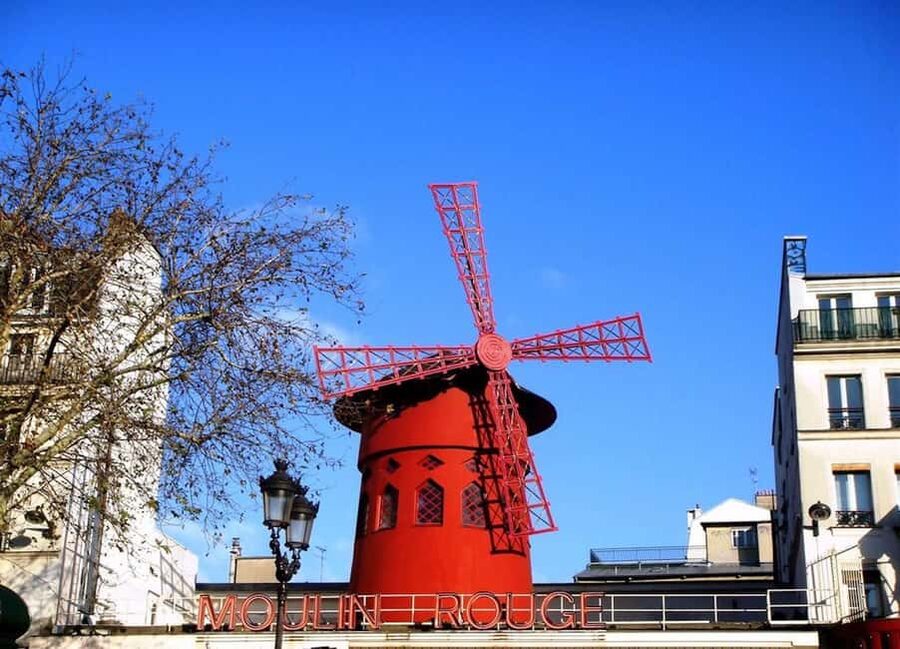
The first major stop is the Moulin Rouge, where you pause for photographs and an introduction to Montmartre’s cabaret past. The famous red windmill façade is an easy picture, but the useful part of the stop is the explanation around it.
The tour promises surprising secrets about the cabaret, so you are not simply being told to take a picture and move on. The guide uses the Moulin Rouge as a doorway into Montmartre’s old reputation for music, nightlife, unconventional characters, and artistic freedom.
This is still a busy city intersection. You will not get a quiet, reflective opening here, and the stop does not include a cabaret performance. Think of it as a lively starting marker, not the main event. The walk gets more atmospheric as it moves away from the traffic.
Climbing Past Moulin de la Galette
From the Moulin Rouge, the route heads uphill toward Moulin de la Galette. This is where the walk begins to show a different side of Montmartre. The streets and buildings connect more directly with the district’s artistic identity, and the guide can explain the area through its painters, working residents, and old meeting places.
The climb is gradual rather than a single hard push, but you should still wear comfortable shoes. Montmartre’s cobbles and slopes are part of its appeal and part of its work. If you dislike hills, the two-hour route may feel more tiring than the distance suggests.
I like this section because it provides a bridge between the famous cabaret below and the hilltop basilica above. Instead of teleporting from one landmark to another, you see how the neighborhood changes. The guide’s anecdotes are especially useful here, since the streets themselves do not always announce why they matter.
The stop is mainly for sightseeing, walking, and photographs. There is no promise of an interior visit, so the value comes from the setting and the explanation rather than from entering a building.
More Paris walks with a guide:
- Paris Île de la Cité and Notre-Dame Walking Tour With Crypt
★ 5.0 · 2,272 reviews - Paris: Montmartre Cheese, Wine & Pastry Guided Walking Tour
★ 4.8 · 2,255 reviews - Paris in a Day: Louvre or Orsay, Eiffel Tower, City Walk & Cruise
★ 5.0 · 1,956 reviews - Paris: Montmartre Highlights Walking Tour with a Local Guide
★ 4.9 · 1,668 reviews
La Maison Rose and the Quieter Side Streets
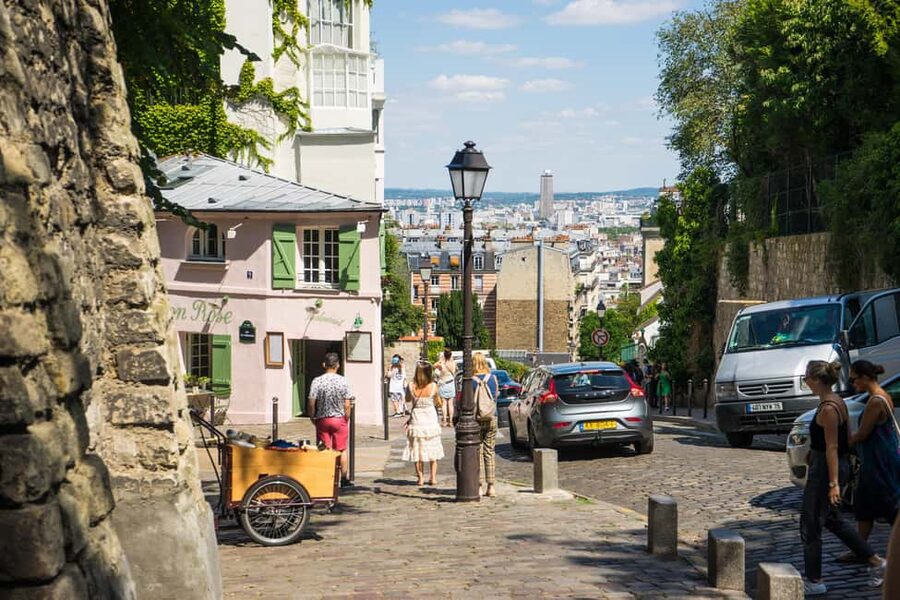
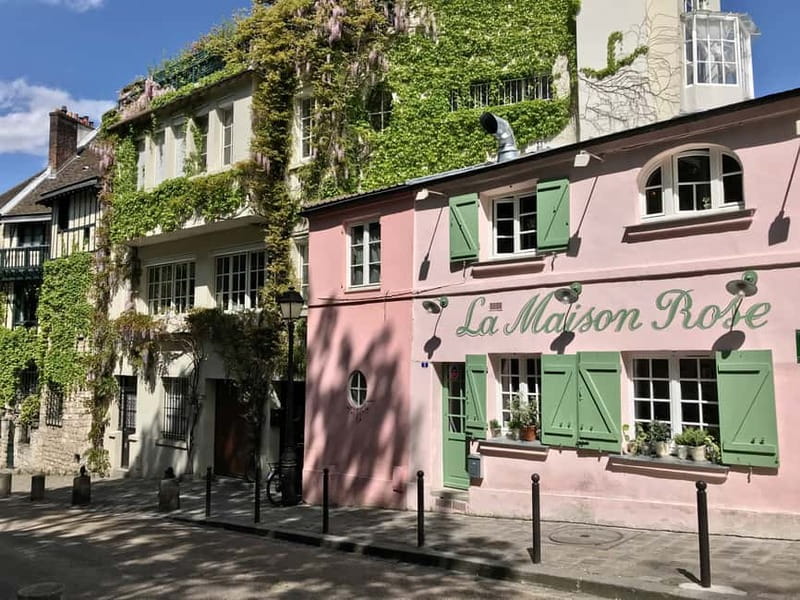
La Maison Rose is one of Montmartre’s most recognizable photo stops. Its colored façade gives you the postcard image many people expect, but the route does not treat it as the whole neighborhood.
The walk also aims to show places with character away from the densest crowds. That is a worthwhile distinction. Montmartre can feel overrun around its best-known squares, especially at busy times, but a guide who knows the lanes can give you a more measured look at the district.
Christin is praised for showing the quieter, less tourist-focused side of Montmartre and for being patient with questions. That is exactly the sort of guiding that helps here. You want someone who can point out the difference between a place that is merely photogenic and one that has a useful connection to the area’s past or daily life.
Do not expect a private visit inside La Maison Rose. It is a photo and sightseeing stop. The appeal is seeing it in the context of the surrounding streets, not treating the building as a standalone attraction.
Place du Tertre and Montmartre’s Artist Image
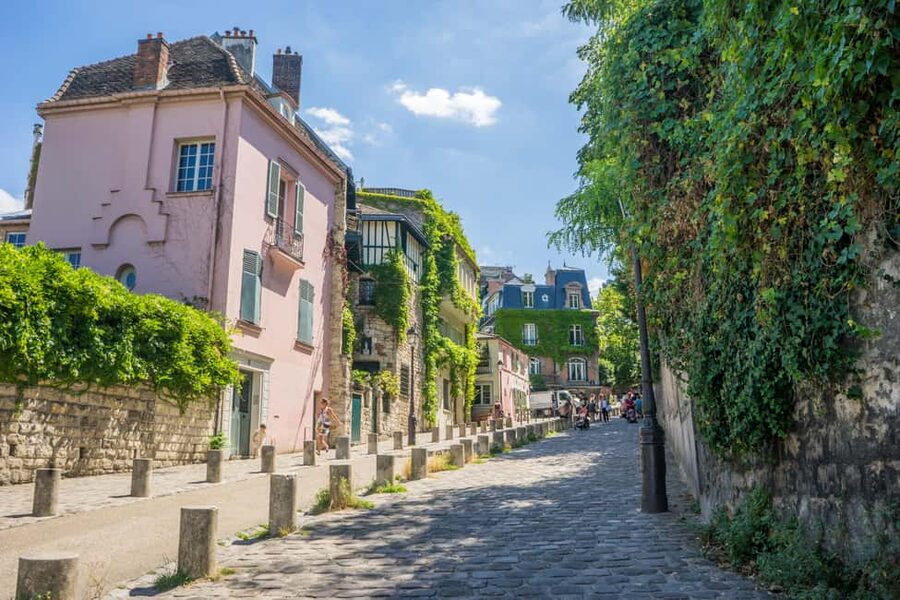
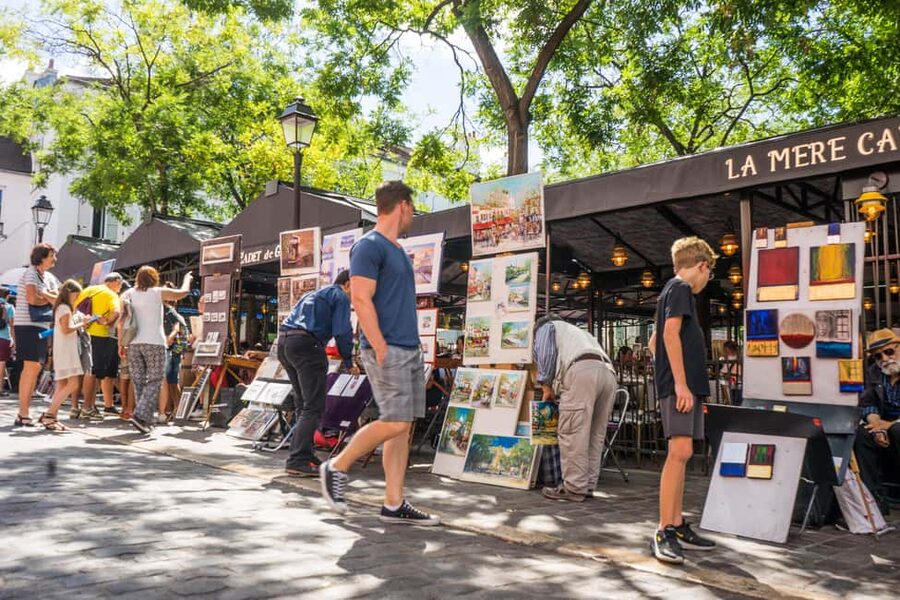
Place du Tertre is the most obvious expression of Montmartre’s artist quarter. Painters work outdoors, and the square keeps alive the image of artists creating beneath the open sky.
It is also one of the most crowded and commercial parts of the hill. That contrast is worth understanding. The square can be fun and colorful, but it is not a preserved artist village untouched by modern tourism. A guide adds value by explaining the older bohemian identity behind the present-day stalls and portraits.
You will have time for photographs and a visit to the square, but the two-hour schedule means this is not a long browsing session. If you want to buy art, you may be able to do so, but shopping is not included in the tour and should not be the reason you book it. One person described buying art after the walk, which suggests the tour can help you get oriented before you decide what deserves a closer look.
The best way to approach Place du Tertre is with realistic expectations. Enjoy the scene, listen to the stories, and notice how the guide frames the square within Montmartre’s wider creative past.
Sacré-Cœur: The Reward at the Top
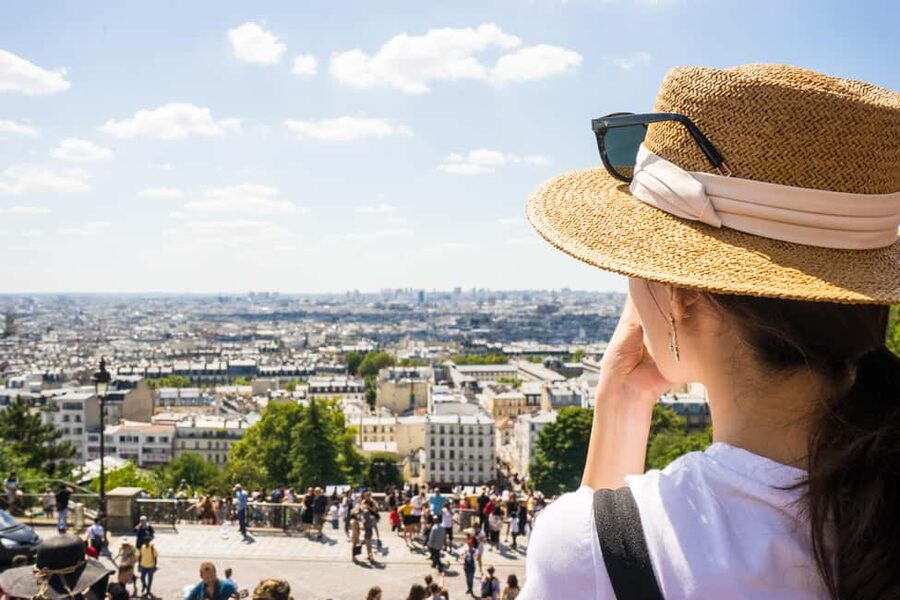
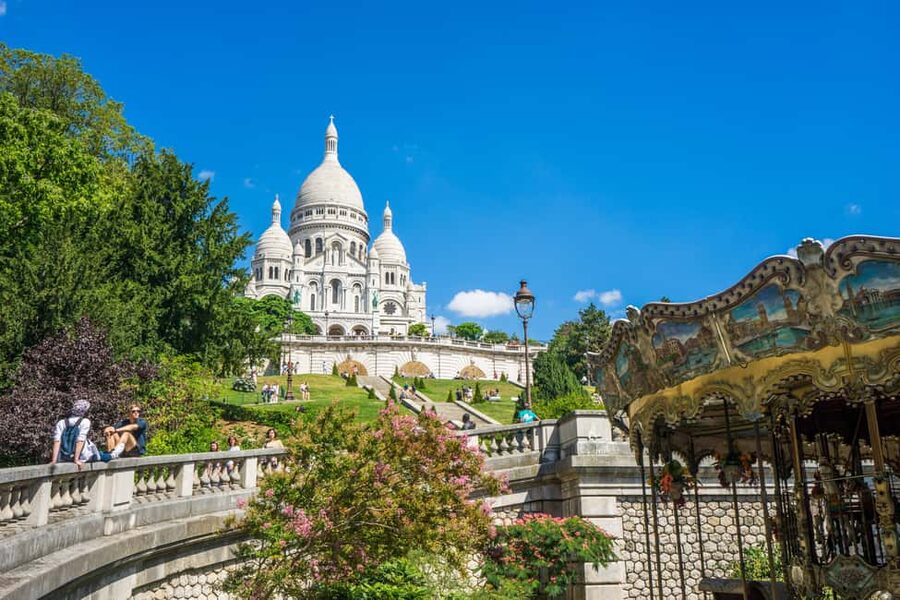
The route finishes at the Basilica of Sacré-Cœur, the grand white church crowning Montmartre. Reaching the basilica after the gradual climb gives the walk a natural ending. You have moved from nightlife at the Moulin Rouge through artist streets and finally to one of Paris’s best-known viewpoints and monuments.
The stop includes sightseeing and a visit, but the supplied details do not promise a guided interior tour or special access. Your main benefit is arriving with a better understanding of the hill and its neighborhoods, rather than seeing the basilica as an isolated church.
The basilica area can be crowded, and the steps and slopes around it add to the physical demand. Still, the setting is a strong payoff. The tour lets you approach Sacré-Cœur through Montmartre instead of arriving by the quickest route and missing the gradual change in atmosphere.
There is a small point to clarify when planning your day. The itinerary describes Sacré-Cœur as the finish, while the meeting information says the activity ends back at the meeting point. Because those details do not fully match, confirm the end point when you book or ask the guide at the start. Do not schedule a tight appointment immediately afterward.
The Guides Make the Difference

The route is fixed, but the feel of the tour depends heavily on who leads it. This is not a ticketed attraction with a standard audio script. It is a live walk built around anecdotes, questions, and the guide’s ability to connect one place to the next.
The most praised qualities are clear speech, humor, energy, and attention to the group. Nadine is described as especially funny and detailed. Vera is praised for filling the climb with stories, while Solene is noted for engaging delivery and fluent English. Christin receives credit for patience and for taking the group beyond the most crowded streets.
One important warning comes from a language problem. On one occasion, the English guide did not appear, so the French guide spoke mainly in German and gave the two English-speaking participants only a brief recap. That sounds unusual rather than typical, but it is a real risk for anyone who depends on English. If language access is essential, confirm the departure language at the meeting point.
The provider tries to keep groups small, which is useful on narrow streets and makes questions easier. On public or national holidays, the group may be larger. A bigger group can make it harder to hear, especially near traffic or crowded squares, so a regular weekday may offer the smoothest experience.
Price, Pace, and Practical Value
At $34 per person, this is not the cheapest way to walk around Montmartre, since the streets and exterior sights are free. The question is what you want from the money. If you already know the district well and prefer wandering alone, you may get more value from a map and your own time.
If you want the stories behind the streets, the price is easier to justify. The tour combines the Moulin Rouge, Moulin de la Galette, La Maison Rose, Place du Tertre, and Sacré-Cœur in two hours. You also get a person who can explain connections you might otherwise miss.
The walk does not include food or drinks. Bring what you need, especially if you book a late-afternoon departure and plan to stay on the hill afterward. The schedule offers English at 3 p.m. on Monday and Wednesday, plus 5 p.m. Saturday. German departures are spread across the week, with a 2 p.m. Sunday option.
You should plan for a real uphill walk, uneven streets, and time spent standing. The activity is not suitable for wheelchair users. The provider allows free cancellation up to 24 hours before the start and offers a reserve-now, pay-later option, which helps if your Paris schedule is still changing.
Who Should Book This Montmartre Walk
I would choose this tour for a first or early visit to Paris, especially if Montmartre feels like a maze of pretty streets with no clear order. It is also a good fit if you enjoy local anecdotes more than formal lectures and want a guide who can answer questions as you go.
The tour suits people who want a compact introduction before exploring alone. Afterward, you can return to Place du Tertre, spend more time around La Maison Rose, or remain near Sacré-Cœur. It also works well for visitors who prefer a neighborhood walk to a large city sightseeing bus.
I would think twice if you need step-free access, dislike hills, or want to enter several attractions. This is an outdoor walking tour, not a museum visit or cabaret show. The Moulin Rouge, Moulin de la Galette, La Maison Rose, and Sacré-Cœur are viewed from the route, with no promise of private access.
Should You Book It?
Book this Montmartre walk if you want the district explained through stories, artists, cabaret, and everyday Parisian details. The gradual route, strong guide feedback, and mix of famous sights with quieter streets make it a useful two-hour introduction at a reasonable price.
Skip it if you are comfortable navigating Montmartre alone or need a fully accessible route. Before paying, check the language, departure day, group size expectations, and final meeting point. If those details suit you, this is a practical way to reach Sacré-Cœur while learning why the hill became one of Paris’s most memorable neighborhoods.
FAQ
Where does the Montmartre walking tour start?
It starts outside Blanche metro station, at the traffic island in front of the Moulin Rouge. Look for a guide with a HelpTourists bag and a pink base cap.
Where does the tour finish?
The route lists the Basilica of Sacré-Cœur de Montmartre as the final stop. The meeting information also says the activity ends back at the meeting point, so confirm the exact end point with the provider or guide.
How long does the walking tour last?
The tour lasts two hours.
Which languages are available?
The live tour guide is available in English and German. English tours run Monday, Wednesday, and Saturday. German tours run Tuesday, Thursday, Saturday, and Sunday.
What sights are included on the route?
The route includes the Moulin Rouge, Moulin de la Galette, La Maison Rose, Place du Tertre, and Sacré-Cœur Basilica.
Is the tour suitable for wheelchair users?
No. The activity is not suitable for wheelchair users.
Recently reviewed around Paris
- Louvre Private Tour – The Essentials and More with Expert Guide★ 5.0 · 227 reviews
- 2CV tour by night★ 5.0 · 55 reviews
- Eiffel Tower Second or Summit Floor Access by Elevator with Views★ 3.5 · 161 reviews
- 2 hour outdoor group activity in Paris: SAINT GERMAIN★ 5.0 · 48 reviews
- The only Paris Wine Tasting experience you need to do – 2 hours★ 5.0 · 265 reviews
- 2 Hour Street-art Walk and Space Invaders Hunt in Paris★ 5.0 · 27 reviews
- Sainte-Chapelle, Conciergerie & Palais de Justice Private Tour★ 5.0 · 72 reviews
- Private 2 – Hour Paris Landmarks Tour by Golf Cart Mini Moke★ 5.0 · 38 reviews
Montmartre Tours, compared.

Montmartre Hidden Gems and Scenic Highlights Walking Tour
Read our review →
Montmartre Hill French Gourmet Food and Wine Tasting Walking Tour
Read our review →
Montmartre Cheese, Wine & Pastry Guided Walking Tour
Read our review →
Montmartre Highlights Walking Tour with a Local Guide
Read our review →
Sacré-Coeur and Montmartre Tour with Expert Guide
Read our review →
Private Montmartre Food Tour with Wine, Cheese & Pastries
Read our review →
Paris Montmartre Food Tour – A Full French Meal by Do Eat Better
Read our review →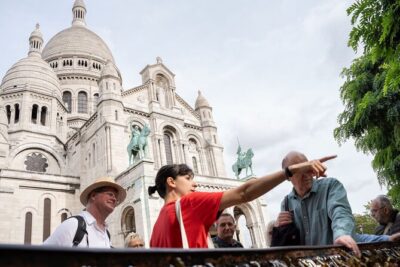
Hidden Montmartre: Paris’ Secret Streets Walking Tour
Read our review →Browse the lists this tour appears in