
Reviewed · NORMANDY TOURS
Rouen: Discover Rouen with a licenced tour guide
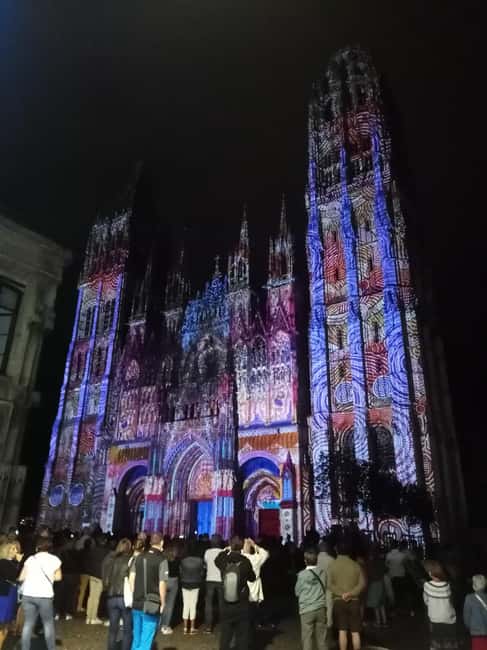
Rouen’s story comes at you in layers: a Gothic cathedral, a medieval law court, a clock spanning a street, and a modern church marking Joan of Arc’s final moments. This two-hour walking tour links those sights in a compact route through old lanes, half-timbered houses, and postwar streets.
I like the small group of up to 10 because you can ask questions without shouting across a crowd. I also like the mix of famous sights and odd details, especially Saint Maclou’s former plague-era bonehouse and the law court’s connection to a Jewish university. The main caution is value: at $64, this is not a cheap orientation walk, and one two-star experience involved a guide substitution and language difficulty.
In This Review
- Key points to know before you book
- Starting beneath Rouen Cathedral
- Saint Maclou and the memory of the plague
- Saint Ouen’s stained glass and spacious Gothic form
- The law court and a surprising Jewish connection
- The Big Clock, Rouen’s practical timepiece
- Joan of Arc at the Old Market Square
- Medieval lanes, half-timber houses, and postwar Rouen
- What the guide adds to the walk
- Is $64 fair for two hours?
- Timing, flexibility, and who should book
- Should you book the Rouen walking tour?
- FAQ
- Where does the tour meet?
- How long does the tour last?
- What languages are available?
- How many people are in the group?
- Is the tour wheelchair accessible?
- Does the tour include Rouen Cathedral?
- Will I see Rouen’s Big Clock?
- Does the route include Joan of Arc sites?
- Can I cancel the booking?
Key points to know before you book
- Rouen’s major sights fit into a focused two-hour walk, with the cathedral, Big Clock, Joan of Arc sites, Saint Ouen, Saint Maclou, and the law court.
- Polly has led some departures, bringing local knowledge, French history, and practical market help to the route.
- The tour goes beyond postcard views, including a former mass grave, a working Gothic law court, and postwar buildings.
- The cathedral and Saint Ouen are important interior stops, not just photo pauses from the street.
- A maximum of 10 people keeps the walk personal, though the $64 price makes the guide’s quality especially important.
- English, French, and German are offered, and the walk is listed as wheelchair accessible.
Starting beneath Rouen Cathedral
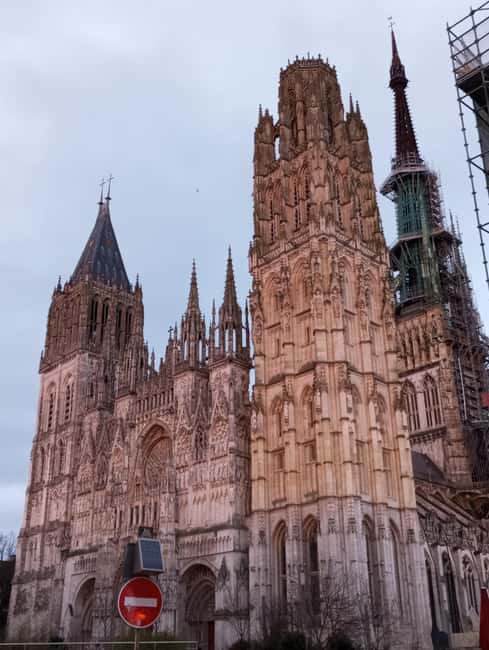
Meet your guide in front of Rouen Cathedral, an easy landmark in the center of the city. The route begins with one of Normandy’s great Gothic buildings, viewed from outside and explored inside.
The cathedral is especially useful as a first stop because it gives you a quick sense of Rouen’s scale and age. You can look up at the Gothic facade, then hear how the building fits into the city’s religious and civic story. The guide is there to supply the details that a quick solo visit often misses.
Do not expect a long, quiet cathedral lecture. Two hours must cover a lot of ground, so this is a moving city walk with selected stops. The cathedral portion works best for someone who wants context and orientation before exploring Rouen on their own.
The meeting point also makes the tour easy to add to a day in the city. After the walk, you are already in the historic center, close to streets, shops, and places to eat. If you arrive early, use the cathedral as your fixed landmark rather than trying to find a small side street.
More Normandy trips worth a second look
- Caen: Guided D-Day Sites Tour & Caen Memorial Museum Ticket
★ 4.8 · 385 reviews - Mont St Michel Full Day Tour with a National Guide from Bayeux
★ 5.0 · 377 reviews - Mémorial de Caen Museum Admission and Guided Tour of D-Day Sites
★ 4.5 · 275 reviews
Saint Maclou and the memory of the plague
Saint Maclou brings a darker note to the route. The church is tied to a unique atrium that once served as a bonehouse during the Black Death. The tour also describes this area as a mass grave, making it one of the most unusual stops in Rouen.
This is not simply another handsome church facade. The site shows how medieval cities dealt with disease, death, and crowded urban conditions. You get a reminder that Rouen was not only a place of grand churches and wealthy merchants. It was also a difficult place to live through epidemics.
I like this stop because it gives the walk some edge. The cathedral can feel grand and formal, while Saint Maclou points to the ordinary human cost behind medieval religious life. The former bonehouse is also the kind of detail you could easily pass without understanding.
The drawback is that this part may feel somber, especially if you prefer a tour focused only on architecture. Still, it is valuable context, and the short format means the guide can explain the site without turning the walk into a long lecture on plague history.
Saint Ouen’s stained glass and spacious Gothic form
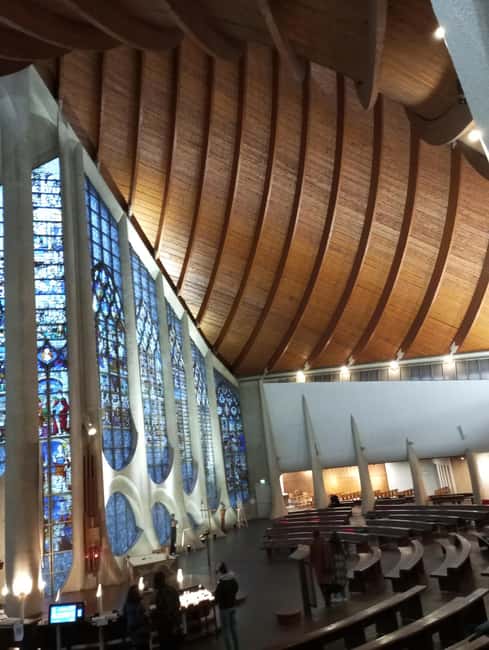
The route continues to Saint Ouen Abbey Church, one of the architectural highlights. Its splendid stained-glass windows are a major reason to go inside.
Saint Ouen adds a different visual experience from the cathedral. Instead of spending the whole tour comparing Gothic exteriors, you get time to look at color, light, and the church’s interior scale. The stained glass rewards a slower glance, so listen to the guide first, then take a moment to look around for yourself.
The church is still part of Rouen’s working city, not just a frozen monument. That matters because the tour presents these buildings as living parts of the city rather than isolated museum pieces.
With only two hours, you should not expect an exhaustive visit to every chapel or window. Think of Saint Ouen as a carefully chosen stop that shows why Rouen has such a strong reputation for Gothic architecture and church art. If stained glass is high on your list, you may want to return later for a longer look.
The law court and a surprising Jewish connection
Rouen’s Gothic law court is another strong part of the route. It is still active, so you are seeing a working civic building rather than a site used only for tourism.
The court once housed a Jewish university, a detail that gives the building a broader cultural and religious story. This is exactly the sort of fact that changes the way you look at old stonework. A facade may appear to tell one story, but its use over time can be far more varied.
The court also adds balance to the church stops. You move from religious buildings to a place connected with law, education, and public life. That variety keeps the walk from becoming a simple list of churches.
Access to a working law court can depend on current conditions, so treat this as a guided exploration rather than a guaranteed extended interior visit. The activity includes a tour of the law court, but the pace and access may be shaped by its ongoing use.
A different way to spend the day, same corner of France:
- Normandy American D-Day Beaches Full Day Tour from Bayeux
★ 5.0 · 2,103 reviews - Normandy American D-Day Experience – Group tour from Bayeux
★ 5.0 · 1,566 reviews - Normandy Beaches Half-Day Afternoon Trip from Bayeux (A2)
★ 4.5 · 1,116 reviews - Omaha and Band Of Brothers Full Day Tour
★ 5.0 · 1,104 reviews
The Big Clock, Rouen’s practical timepiece
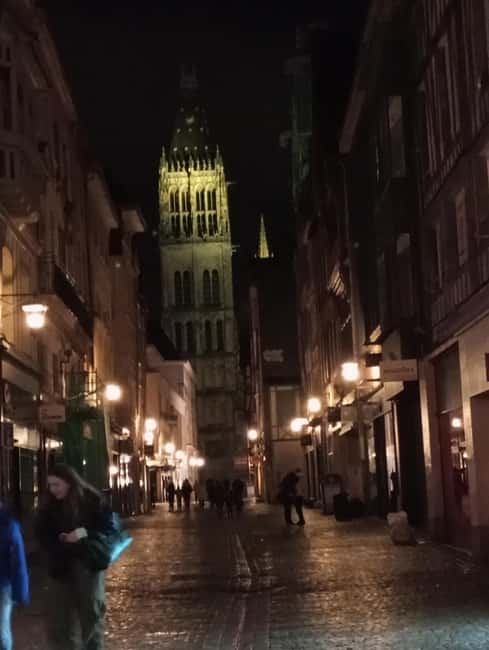
The astronomical clock, known locally as le gros horloge, is one of Rouen’s most memorable street scenes. Its arch spans the road, joining historic buildings above a busy passage.
The clock is photogenic, but the guide can make it more than a quick picture. You will learn how this elaborate timepiece fits into the city’s public life and why it remains such a strong symbol of Rouen.
I like the way the clock changes the rhythm of the walk. After the solemn churches and law court, you are back among streets and daily movement. Look both up and down here. The clock sits overhead, while the old buildings and cobblestones continue the medieval setting at street level.
Because the stop is in an active part of town, the area may feel more crowded than the quieter church interiors. Keep your group in sight, especially while taking photographs. The small group helps, but Rouen’s narrow streets still require attention.
Joan of Arc at the Old Market Square
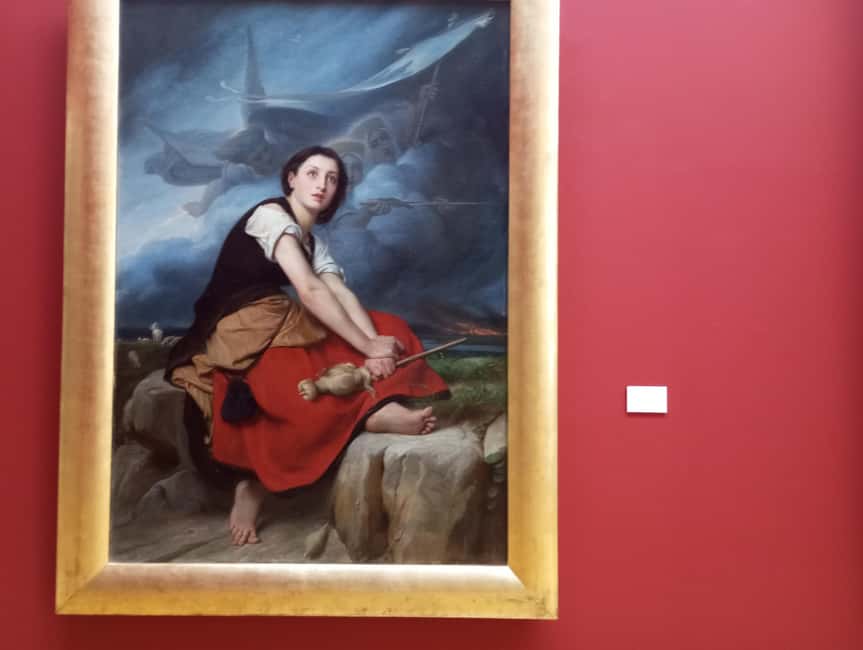
The Old Market Square is the emotional center of the tour. It marks the place associated with Joan of Arc’s last breath and her pyre emplacement. Nearby is the modern church dedicated to her.
This stop works because it brings together two very different periods. The square recalls a major event from France’s past, while the modern church uses a later architectural language to honor Joan of Arc. You are not only looking at an old monument. You are seeing how a city chooses to remember a national figure.
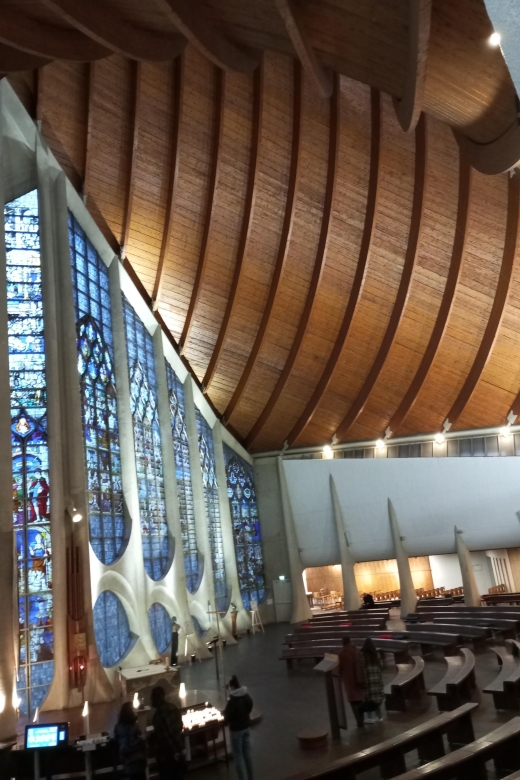
The modern church is particularly useful for readers who expect every historic sight in Rouen to look medieval. Its design reflects postwar construction, and the route also points out other modern buildings created after the war. That comparison helps you read the city as a place that survived change, not as a perfect old-town set.
The visit is likely to be brief, since the route must cover several major sites. If Joan of Arc is your main reason for coming to Rouen, use this tour to get the basic setting and return later for more time at the church and square.
Medieval lanes, half-timber houses, and postwar Rouen
The connecting streets are part of the attraction. You will walk along cobblestones beside half-timbered houses dating from the 14th through the 18th centuries.
These lanes help you understand Rouen as a city rather than a row of separate monuments. The architecture changes as you walk, and the guide can point out the contrast between older houses and modern constructions built after the war.
I appreciate that the route includes less obvious details. You are not rushed from one famous facade to the next. The walk aims to show how Rouen’s capital-city role, religious buildings, courts, markets, and rebuilt areas fit together.
Cobblestones can be tiring, and historic streets are not always comfortable underfoot. The tour is listed as wheelchair accessible, but a traveler with specific mobility needs should still confirm the current route and access conditions before booking. The guide may adjust the pace, but the historic center remains an old urban environment.
What the guide adds to the walk
The guide is the main reason to choose this experience over a self-guided route. A good guide turns the cathedral, clock, court, and churches into connected stories instead of isolated stops.
Polly has led departures and is described as having strong local knowledge and a broad grasp of French and Rouen history. One useful practical touch was help arranging a cheese board, fresh baguette, and wine at the market when little English was spoken there. That tells you the guide may be able to help with more than dates and architecture, though market assistance should not be treated as a formal part of the tour.
Guido has also been associated with a departure. The available experience information gives several language choices, English, French, and German, but guide assignments can vary.
Language is worth considering carefully. Most of the feedback is strongly positive about historical detail, yet one departure had an unplanned guide substitution and a clear communication problem. The substitute was described as kind, but difficult to understand at times. That appears to be an exception, not the normal expectation, but it is a real reason to confirm your requested language and guide arrangements if possible.
The strongest praise centers on local facts and history. One person described Polly’s help in the market, while others highlighted her local knowledge and historical explanations. Another French-language assessment described a relaxed, friendly walk. Those points suggest the tour suits you best if you want conversation and interpretation, not a highly scripted performance.
Is $64 fair for two hours?
At $64 per person, this is a premium short walking tour. The price makes more sense if you value a small group, a live licensed guide, and access or interpretation at several important buildings.
You are paying for concentration. In two hours, the route covers the cathedral, Saint Maclou, Saint Ouen, the law court, the Big Clock, Joan of Arc’s square and church, old streets, and postwar architecture. A self-guided walk costs less, but you would need to research the sites and connect the details yourself.
Still, one two-star assessment made a fair criticism: if the walk feels like a basic city stroll, the price can seem out of proportion. That is the key value question. This tour earns its price when the guide provides clear historical links, handles questions well, and gives you access or understanding that you would not get from simply walking the same streets.
The limited group size helps. Ten people is small enough for a personal exchange, and it should make it easier to hear the guide in narrow streets. If you are already well read on Rouen and mainly want photographs, $64 may be too much. If you have only a short stay and want a strong first orientation, the concentrated route can be worthwhile.
Timing, flexibility, and who should book
The walk lasts two hours, with starting times shown according to availability. That duration suits a morning or afternoon in Rouen, leaving room for lunch, independent sightseeing, or a return visit to a favorite church.
You can cancel up to 24 hours before the start for a full refund, and the reserve-now, pay-later option keeps your plans flexible. These policies are useful in Normandy, where a change in arrival plans can affect a short city visit.
The tour is a good fit for:
- First-time visitors who want the essential Rouen route explained clearly.
- History lovers interested in Joan of Arc, medieval religion, plague memory, and Jewish heritage.
- Visitors who prefer a small group to a large city tour.
- People who want both famous sights and less obvious details.
- Travelers with only a few hours in Rouen.
It is less suited to you if you want long interior visits, extensive free time at each monument, or a low-cost walk. It is also worth caution for anyone who needs a very specific language or access arrangement, since guide substitutions can affect communication and old streets can be challenging.
Should you book the Rouen walking tour?
Book it if you want a fast, story-filled introduction to Rouen and you value a guide who can connect the cathedral, plague memorials, Gothic churches, law court, Big Clock, and Joan of Arc into one readable city story. The small group and the range of stops are the strongest reasons to choose it.
At $64, I would book this as an orientation tour, not as your complete Rouen visit. Plan to return to Saint Ouen, the cathedral, or Joan of Arc’s church if a particular stop catches your interest. Confirm the language you need, arrive at the cathedral meeting point early, and judge the price by the quality of the guiding rather than the number of sights alone.
FAQ
Where does the tour meet?
The meeting point is in front of Rouen Cathedral.
How long does the tour last?
The guided walk lasts two hours.
What languages are available?
The live guide may conduct the tour in English, French, or German.
How many people are in the group?
The group is limited to 10 participants.
Is the tour wheelchair accessible?
Yes, the activity is listed as wheelchair accessible.
Does the tour include Rouen Cathedral?
Yes. The route includes the cathedral inside and outside.
Will I see Rouen’s Big Clock?
Yes. The tour visits the astronomical clock known as le gros horloge.
Does the route include Joan of Arc sites?
Yes. You will visit the Old Market Square, the location of Joan of Arc’s pyre emplacement and final moments, along with the modern church dedicated to her.
Can I cancel the booking?
You can cancel up to 24 hours in advance for a full refund. The reserve-now, pay-later option is also available.
Recently reviewed around Normandy
- Découverte Bénédictine★ 4.0 · 138 reviews
- Le Havre Shore Excursion: Private Day Tour with Omaha Beach & American Cemetery★ 5.0 · 57 reviews
- Immersive tour DISTILLERIE PERE MAGLOIRE★ 5.0 · 314 reviews
- From Cherbourg: D-Day Beaches Shore Excursion★ 5.0 · 28 reviews
- Normandy Victory Museum admission ticket★ 5.0 · 58 reviews
- Mt St. Michel Private Tour with Abbey tickets and tour guide★ 5.0 · 45 reviews
- Mont-St-Michel: Private Walking Tour “Abbey Ticket Included”★ 5.0 · 28 reviews
- Airborne Museum Admission Ticket★ 5.0 · 424 reviews
Normandy Tours, compared.
Normandy American D-Day Beaches Full Day Tour from Bayeux
Read our review →
Normandy American D-Day Experience – Group tour from Bayeux
Read our review →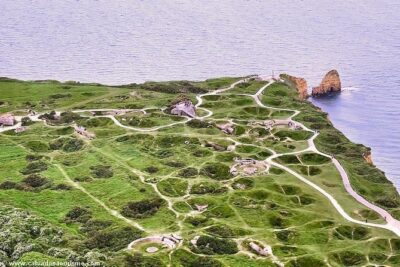
Normandy Beaches Half-Day Afternoon Trip from Bayeux (A2)
Read our review →

Omaha Beach D-Day Experience – Afternoon group tour from Bayeux
Read our review →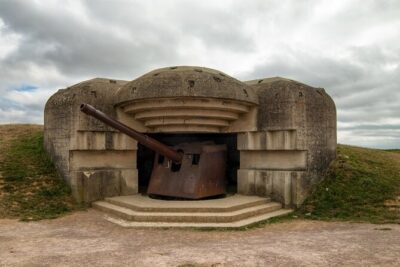

Normandy Battlefields Tour – American Sites (A3)
Read our review →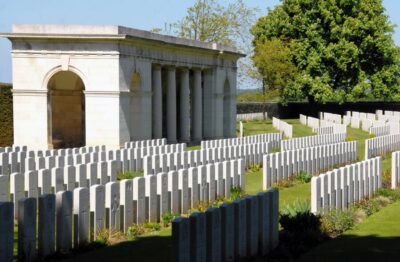
American D-Day Sites in Normandy Half-Day Tour
Read our review →Browse the lists this tour appears in