
Reviewed · WALKING TOURS
Giverny Monet House and Gardens Skip the line Walking tour
Giverny is where Monet’s paintings become a real place. You’ll walk through the village where he lived from 1883 to 1926, then enter his pink house and flower-filled gardens through a special entrance. The Japanese bridge, lily ponds, and weeping willows look familiar because Monet painted them again and again.
I like the small-group limit of 15, which gives a guide a fair chance to keep the visit personal. I also like the combination of village stories and included admission, since you get more than a quick look at the gardens. The main caution is crowd control: during Easter and other busy periods, the site can feel packed, and one poorly organized group had trouble hearing its guide.
In This Review
- Key points
- Why Giverny feels different from a museum visit
- Meeting at La Capucine Giverny
- The opening walk through Monet’s village
- Entering Monet’s pink house
- Following the flowers into the Oriental Water Gardens
- The guide makes the biggest difference
- How much time do you really get?
- Is $63.86 a fair price?
- Crowds, sound, and practical comfort
- Who should book this Giverny tour?
- My booking verdict
- FAQ
- Where does the tour meet?
- Where does the tour end?
- How long does the tour last?
- Is admission to Monet’s house and gardens included?
- Does the tour include transportation?
- Can I skip the entrance line?
- How large is the group?
- When should I arrive?
- Can I cancel for a full refund?
Key points
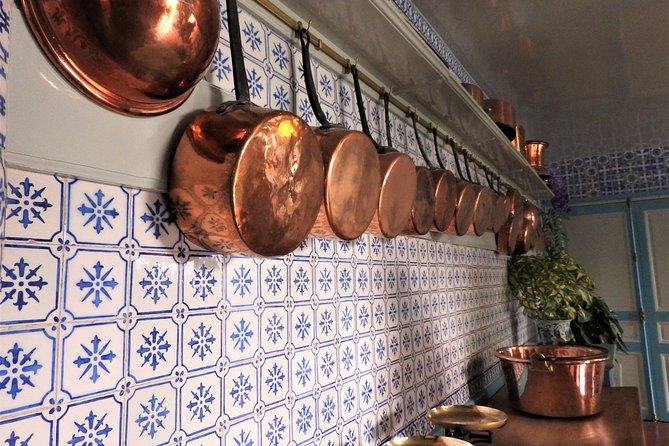
- Monet’s actual home: See the cheerful kitchen, pink facade, rooms, and collection of Japanese prints.
- The gardens behind the paintings: Walk beside the lily ponds, Japanese bridge, roses, poppies, hollyhocks, and honeysuckle.
- Skip-the-line entry: The guide provides admission tickets and uses a special entrance to avoid the main queue.
- A village walk first: Learn how Giverny grew into an artists’ colony linked to Monet, John Singer Sargent, Paul Cézanne, and Mary Cassatt.
- Small group, but not private: The planned maximum is 15 people, though one past departure was reported as larger.
- Season matters: April through October brings the best garden color, while October can be quieter in bloom, especially after poor weather.
Why Giverny feels different from a museum visit
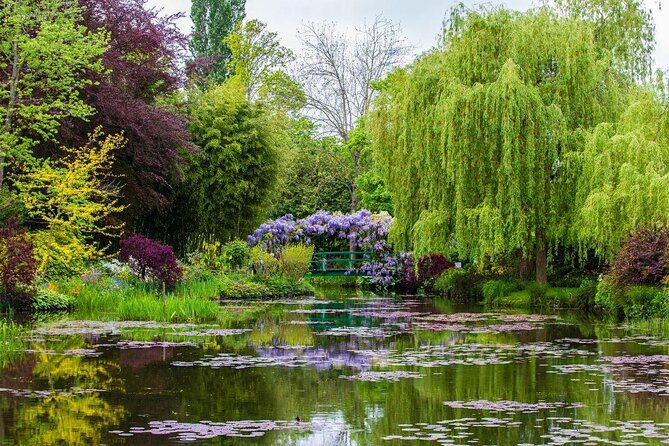
At a museum, Monet’s paintings are finished objects behind glass. At Giverny, you see the setting that fed his eye and imagination. The pond, bridge, willow branches, and changing flower beds make it easier to understand why he returned to the same subjects from different angles and in different light.
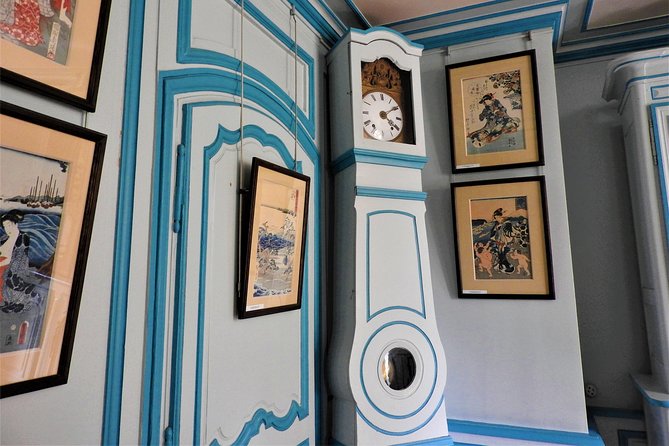
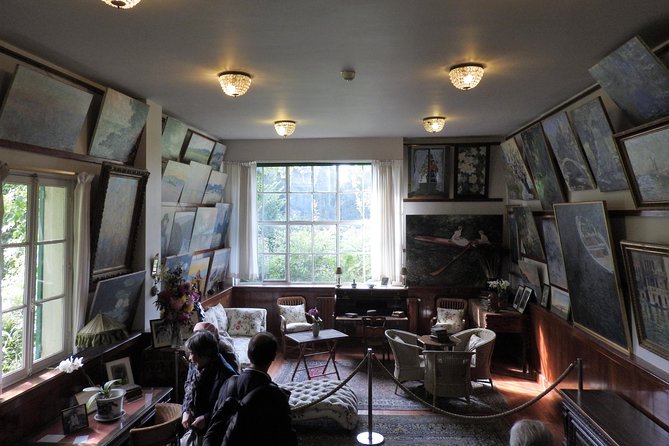
The visit also puts Monet’s work in a human setting. His house is not a grand palace. It is a country home with a colorful kitchen, domestic rooms, and Japanese prints that reflect his strong interest in Japanese art. That detail matters because it helps connect his famous garden scenes with the wider visual world that shaped his work.
You should not come expecting to see original Monet paintings in the house. The home contains quality reproductions and personal furnishings, while the original paintings are held in museums. For me, that is not a dealbreaker. The real value here is seeing the garden itself and understanding how the place became part of Monet’s artistic practice.
More Walking Tours in Paris
- Paris Top Sights Half Day Walking Tour with a Fun Guide
★ 5.0 · 2,893 reviews - Montmartre Hidden Gems and Scenic Highlights Walking Tour
★ 5.0 · 2,684 reviews - Montmartre Hill French Gourmet Food and Wine Tasting Walking Tour
★ 5.0 · 2,588 reviews
Meeting at La Capucine Giverny
The tour begins at La Capucine Giverny, 80 Rue Claude Monet, in the village. You need to arrive 15 minutes early because the tour starts promptly, and late arrivals risk missing the group.
That warning is worth taking seriously. Giverny can become difficult to navigate during busy periods, particularly if you are driving. One visitor reported arriving early but spending an hour trying to find parking before giving up. Parking problems are not part of the guided visit itself, but they can ruin an otherwise simple day.
If you are coming by public transportation, the practical route described for the area is a train to Vernon followed by a shuttle to Giverny. The tour information does not include pickup or drop-off, so you must arrange that part yourself. A transport detail that seems minor on paper can make a big difference when you have a fixed meeting time.
The activity ends back at the meeting point. That makes it easier to continue exploring the village afterward, and some departures leave you with free time to look around once the formal tour is over.
The opening walk through Monet’s village
The first part is a walking tour of Giverny. This gives you a useful introduction before you enter the foundation. Instead of arriving at the house with no context, you hear about Monet’s long connection with the village and the artists who gathered there.
Monet moved to Giverny in 1883 and remained there until his death in 1926. His presence helped turn a quiet rural village into an artists’ colony. John Singer Sargent, Paul Cézanne, and Mary Cassatt were among the artists associated with Giverny by the late 19th century.
A guide can make these names more meaningful by explaining the social and artistic setting around Monet. The tour also covers his role in the Impressionist movement, so you get a short art-history lesson without committing to a full museum tour.
The village walk is not just filler before the main attraction. It helps you see Giverny as a place where people lived and worked, not simply as a famous garden attached to a ticket office. Still, the activity lasts about two hours in total, so the village portion cannot be an extended town tour.
Entering Monet’s pink house
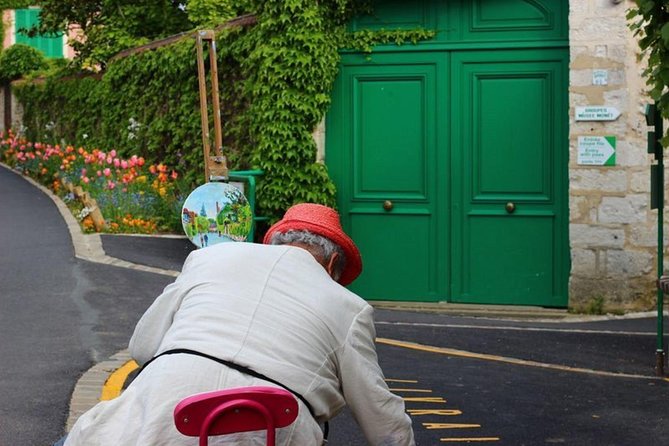
After the village walk, the guide takes the group to Monet’s house and gardens. Included admission is supplied by the UTG guide, and the group uses a special entrance intended to bypass the regular lines.
That can be worth a good part of the $63.86 price, especially during spring weekends or school holidays. Giverny is a popular stop, and a long wait would cut into the time available for the house and gardens. Skip-the-line access does not mean the grounds will be empty. It only helps you get inside faster.
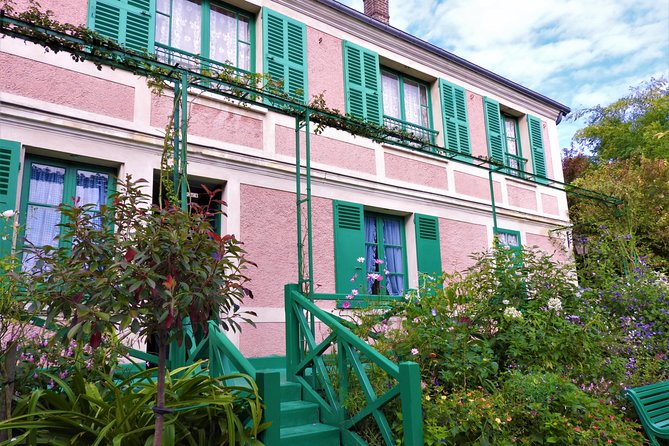
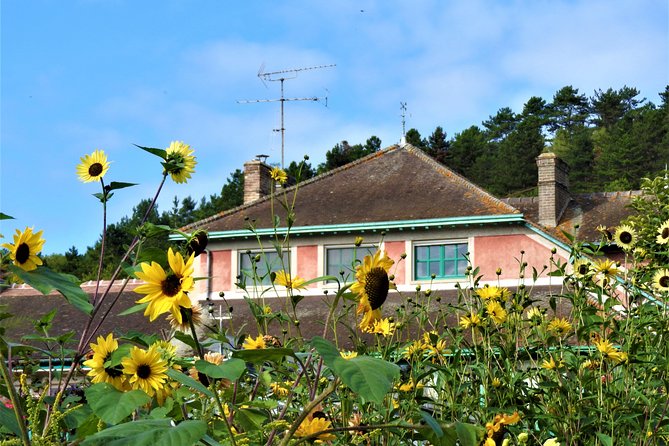
The house itself offers a different experience from the gardens. You’ll see the pink exterior and original furnishings, along with the cheerful kitchen that many people find especially memorable. Monet’s collection of 18th and 19th century Japanese prints is another important feature.
I like this part because it shows Monet as a collector and homeowner, not only as the painter of water lilies. The rooms also provide a sense of the daily setting behind the public image. Keep your expectations in check, though. This is a preserved historic home, not a gallery filled with original masterpieces.
More Paris walks with a guide:
- Paris Île de la Cité and Notre-Dame Walking Tour With Crypt
★ 5.0 · 2,272 reviews - Paris: Montmartre Cheese, Wine & Pastry Guided Walking Tour
★ 4.8 · 2,255 reviews - Paris in a Day: Louvre or Orsay, Eiffel Tower, City Walk & Cruise
★ 5.0 · 1,956 reviews - Paris: Montmartre Highlights Walking Tour with a Local Guide
★ 4.9 · 1,668 reviews
Following the flowers into the Oriental Water Gardens
The gardens are the heart of the visit. From April to October, they can be filled with roses, hollyhocks, poppies, and honeysuckle. The exact appearance changes with the season, so your experience depends heavily on the date.
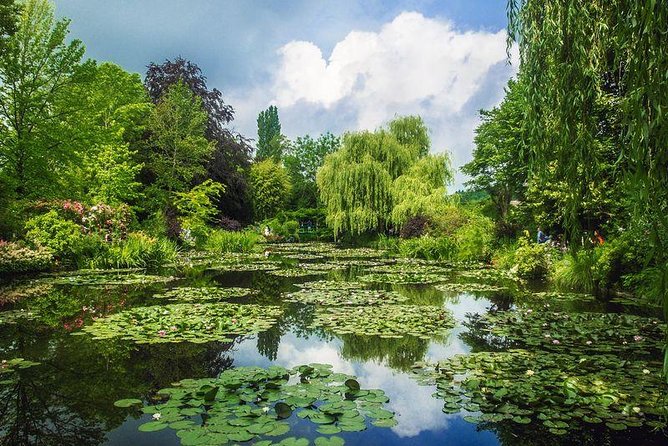
The Oriental Water Gardens contain the features most closely linked with Monet’s paintings: water lilies, weeping willows, and the Japanese bridge. You’ll have plenty of chances for photographs, but the setting works best when you pause beyond the obvious picture spots and look at how the paths, water, flowers, and trees fit together.
Spring is the safest choice if your priority is a full display of flowers. A May visit can bring intense color and heavy blooms. October can still be beautiful, and some late-season visitors find more flowers than expected, but other October visits have found parts of the garden past their best. Rain is also possible, though it does not automatically spoil the visit.
The gardens can feel peaceful even with many people inside. That contrast is part of the experience. You may find a quiet corner, then turn onto a crowded path near the bridge. The guide helps you understand what you are seeing, but you should not expect solitude.
The guide makes the biggest difference
This is a guided visit, so the quality of the experience depends heavily on the person leading your group. Several guides have received especially warm praise for their approach.
Bernard is described as engaging and able to add detail even for someone who already knows a lot about Monet. Mwamiri has been singled out for keeping a group together, offering plenty of information, and bringing a sense of fun to a crowded visit. Marine is noted for telling good stories and watching out for the group. Another guide, remembered by one participant as being from Virginia, was praised for using photographs to support the explanation.
Those details point to what you should want from the guide: clear pacing, useful stories, and help moving through a busy site. A good guide does more than identify the bridge. The guide explains Monet’s family, friends, working life, and connection to the gardens, then helps you see familiar paintings with fresh eyes.
There are also clear limits. One poorly received departure involved French-speaking participants being added to an English tour, forcing the guide to translate. The group was also reported as larger than the promised cap, and people at the back had trouble hearing through headsets. Another guide was criticized for speaking only occasionally and lacking energy.
The stated maximum is 15 people, which is a sensible size for a walking tour. I would still confirm the group arrangement at the start and stay close enough to hear. If your guide uses an audio system, do not drift too far behind.
How much time do you really get?
The listed duration is about two hours, including the village walk, house, and gardens. That is enough for a guided introduction, but it is not a leisurely half-day visit.
The advantage is efficiency. You can cover the main sights without having to plan the route yourself, and the guide handles the entrance process. The disadvantage is that you may want more time in the gardens than the scheduled tour allows.
Some departures leave people with free time after the guided portion, but the details can vary. Since the activity ends where it began, you may be able to stay in Giverny afterward if your wider schedule allows. Do not build your day around an assumption of a long unscheduled break unless it is confirmed for your departure.
For art lovers, two hours may feel short. For families or visitors fitting Giverny into a wider day trip from Paris, it can be a useful length. You get the key explanation and a clear route without spending an entire day on one site.
Is $63.86 a fair price?
At $63.86 per person, this is not the cheapest way to enter Monet’s property. You are paying for more than admission: a local guide, the village walk, skip-the-line handling, and a small-group format.
The value is strongest when the lines are long or when you want context rather than a self-guided visit. A good explanation of Monet’s life and the garden design can change how you see the house and water gardens. It is also useful if you are visiting Giverny for the first time and do not want to work out the historical connections alone.
The value is weaker if you are comfortable exploring independently, arrive early, and care mainly about taking your time with photographs. One unhappy participant felt a self-guided visit would have been better. That is a reasonable view, especially on a quiet day with short lines.
I would consider the price fair for an art-focused visitor who values a guide and wants to save time at the entrance. I would hesitate if your priority is a long, slow garden visit or if you are traveling on a tight budget.
Crowds, sound, and practical comfort
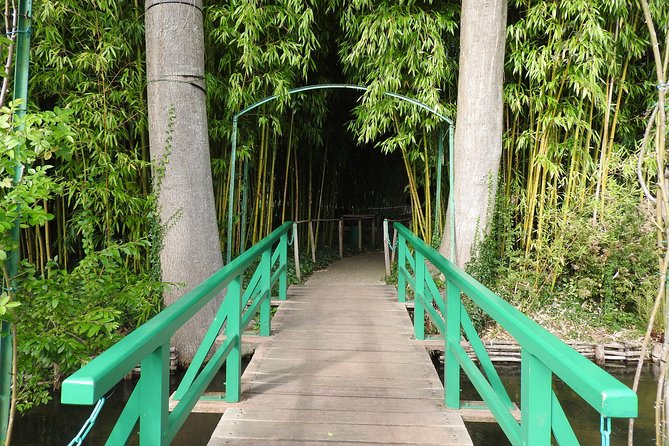
Giverny can be crowded during Easter vacation and other popular travel periods. You may still enjoy the flowers, but the bridge and pond area can become difficult for lingering photographs.
The group size is meant to stay at 15, but the tour has had at least one reported problem with a larger group. That makes it important to arrive early, identify your guide, and remain within hearing range. The tour includes a walking route, so comfortable shoes are sensible, though the supplied details do not specify the surface or accessibility of every part of the property.
Most people can participate, and service animals are allowed. The site is near public transportation, but transportation to the meeting point is not included. Food and drinks are also not included, so plan those separately if you expect to spend extra time in the village.
The activity is offered by UTG EXPERIENCE, an independent tour agency, not by the Fondation Claude Monet itself. Your entrance tickets come from the UTG guide rather than directly from the foundation. That distinction is useful to understand if you are comparing this experience with a direct admission ticket.
Who should book this Giverny tour?
I would choose this tour for:
- First-time visitors who want the main sights explained in a clear order.
- Monet fans who want to connect the paintings with the house and gardens that inspired them.
- Visitors on a day trip from Paris who value a fixed schedule and faster entry.
- Families who may appreciate a guide turning the house and gardens into a story.
- People who prefer a small group rather than a large coach excursion.
I would think twice if you want complete freedom to linger, photograph, or sit beside the pond. I would also be careful about booking a tight schedule around it if you are driving, since parking can be difficult and late arrivals may be left behind.
My booking verdict
I would book this experience if the date falls during the main flower season and you want the setting explained by a guide. The best parts are the house, the Japanese prints, the flower beds, and the chance to see the bridge and lily ponds in their real setting. Skip-the-line entry adds useful protection against wasted time.
Before paying, check the meeting instructions closely and plan to arrive at least 15 minutes early. If you can confirm a group of no more than 15 and you prefer guided context, the tour is a sensible choice. If you are an independent visitor who can arrive early and wants to set your own pace, direct admission may offer better value.
Free cancellation is available up to 24 hours before the start time for a full refund. Cancellations or changes within 24 hours are not refunded, and the tour requires a minimum number of participants.
FAQ
Where does the tour meet?
The meeting point is La Capucine Giverny at 80 Rue Claude Monet, 27620 Giverny, France.
Where does the tour end?
The activity ends back at the meeting point.
How long does the tour last?
The tour lasts about two hours.
Is admission to Monet’s house and gardens included?
Yes. Entrance fees to Monet’s house and gardens are included.
Does the tour include transportation?
No. Pickup and drop-off are not included. You must arrange your own transportation to the meeting point.
Can I skip the entrance line?
Yes. The guide provides the tickets and uses a special entrance intended to bypass the long lines at Monet’s house and gardens.
How large is the group?
The activity is planned for a maximum of 15 participants.
When should I arrive?
You should arrive 15 minutes before the scheduled start. The tour begins promptly, and late arrivals risk missing it.
Can I cancel for a full refund?
Yes. You can cancel at least 24 hours before the experience start time for a full refund. Cancellations or changes made within 24 hours are not refunded.
More Skip the Line in Paris
- Versailles: Skip-the-Line Tour of Palace with Gardens Access
★ 4.7 · 9,778 reviews - Versailles: Skip-the-Line Guided Palace Tour and Full Access
★ 4.6 · 5,214 reviews - Louvre Museum: Skip-the-Line Small Group Guided Tour
★ 4.6 · 3,960 reviews - From Paris: Versailles Skip-the-Line Tour & Gardens Access
★ 4.7 · 3,011 reviews
Recently reviewed around Paris
- Louvre Private Tour – The Essentials and More with Expert Guide★ 5.0 · 227 reviews
- 2CV tour by night★ 5.0 · 55 reviews
- Eiffel Tower Second or Summit Floor Access by Elevator with Views★ 3.5 · 161 reviews
- The only Paris Wine Tasting experience you need to do – 2 hours★ 5.0 · 265 reviews
- 2 Hour Street-art Walk and Space Invaders Hunt in Paris★ 5.0 · 27 reviews
- 2 hour outdoor group activity in Paris: SAINT GERMAIN★ 5.0 · 48 reviews
- Sainte-Chapelle, Conciergerie & Palais de Justice Private Tour★ 5.0 · 72 reviews
- Private 2 – Hour Paris Landmarks Tour by Golf Cart Mini Moke★ 5.0 · 38 reviews
Walking Tours, compared.

Paris Top Sights Half Day Walking Tour with a Fun Guide
Read our review →
Montmartre Hidden Gems and Scenic Highlights Walking Tour
Read our review →
Montmartre Hill French Gourmet Food and Wine Tasting Walking Tour
Read our review →
Paris Île de la Cité and Notre-Dame Walking Tour With Crypt
Read our review →
Montmartre Cheese, Wine & Pastry Guided Walking Tour
Read our review →
Paris in a Day: Louvre or Orsay, Eiffel Tower, City Walk & Cruise
Read our review →
Montmartre Highlights Walking Tour with a Local Guide
Read our review →
Browse the lists this tour appears in