
Reviewed · WALKING TOURS
Marseille: Essential Guided Walking Tour of the City
Marseille reveals itself best on foot, where Roman traces, steep old lanes, working docks, and grand 19th-century monuments sit within a few minutes of one another. This 150-minute walk with local guide Charles gives you that full sweep, from La Major Cathedral and Le Panier to the Old Port, Saint-Victor, and Le Pharo.
I like the small group limit of eight, which leaves room for questions and personal recommendations. I also like the mix of big sights and less polished corners, including street art, old lanes, wartime stories, and views across the harbor. The main drawback is the 5-kilometer route, which includes hills and uneven streets, so it is not suitable for wheelchair users and calls for sturdy shoes.
In This Review
- Key points at a glance
- Why this is a strong first look at Marseille
- Starting under La Major Cathedral
- Le Panier, where old Marseille feels close
- Church of Accoules and Rue de la République
- The Old Port and its working identity
- Cannebière and Cours Honoré d’Estienne d’Orves
- Saint-Victor, ancient faith and a useful pause
- Le Pharo and the final sea views
- Charles’s guiding style
- Is $41 a fair price?
- Practical advice before you go
- Who should book this Marseille walk?
- Should you book it?
- FAQ
- Where does the Marseille walking tour start?
- How will I recognize the guide?
- How long does the tour last?
- How far do you walk?
- Which languages are available?
- How large is the group?
- Is food included?
- Is the tour suitable for wheelchair users?
- Can I cancel for a full refund?
Key points at a glance
- Start beneath La Major Cathedral: Meet in front of Marseille’s huge Neo-Byzantine and Romanesque landmark, with your guide wearing a white cap.
- See Marseille in historical layers: Charles connects the city’s Greek and Roman beginnings with its later development and World War II past.
- Walk through Le Panier: Explore old lanes, murals, the Vieille Charité, the Church of Accoules, and Windmill Hill.
- Follow the city toward the sea: The route links Rue de la République, the Old Port, Cours Honoré d’Estienne d’Orves, and Saint-Victor.
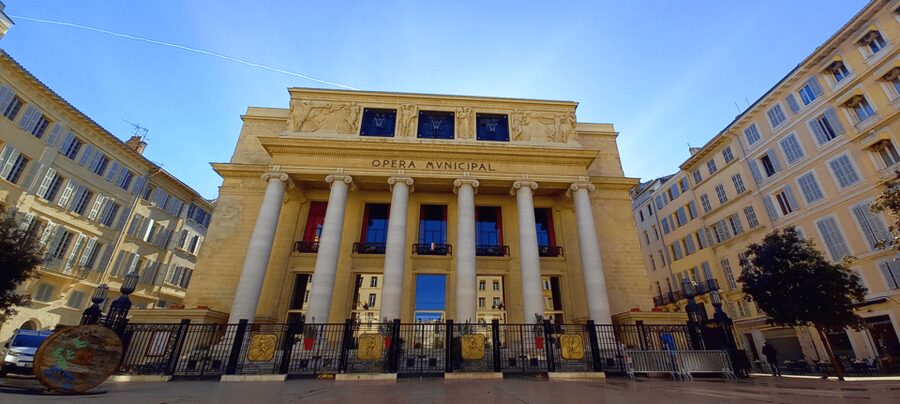
- Finish at Le Pharo: Take in the Palais du Pharo, its terraces, and broad views over the Mediterranean.
- Count on a personal feel: French and English tours are limited to eight people, and Charles is known for humor, patience, and useful local advice.
Why this is a strong first look at Marseille
Marseille can feel confusing at first. It is not a single postcard district, but a city of sharp contrasts. A monumental cathedral gives way to narrow neighborhood streets. A modern waterfront opens onto old fortifications. A grand avenue leads toward cafés, workshops, and the sea.
This tour makes those changes easy to understand. Instead of seeing isolated sights, you walk through the connections between them. Charles explains how Marseille grew around its harbor and how each district reflects a different period of the city’s past.
I especially like this approach for a first visit. You get a broad orientation without spending your day on a bus. The route takes about two and a half hours, depending on the pace and stops, and gives you a useful map in your head for later exploring.
The small group format matters here. With no more than eight people, you can hear the guide in narrow streets and ask about places that catch your eye. Several people who joined alone or with just one companion described the walk as relaxed and personal. That is a useful advantage over a large group where the guide may need to rush from point to point.
More City Tours in Marseille
- Marseille: City Sightseeing Hop-On Hop-Off Bus Tour
★ 3.8 · 2,820 reviews - Marseille: City Highlights Guided Half-Day E-Bike Tour
★ 4.8 · 325 reviews - Marseille Shore Excursion: City Sightseeing Tour of Marseille
★ 4.0 · 321 reviews
Starting under La Major Cathedral
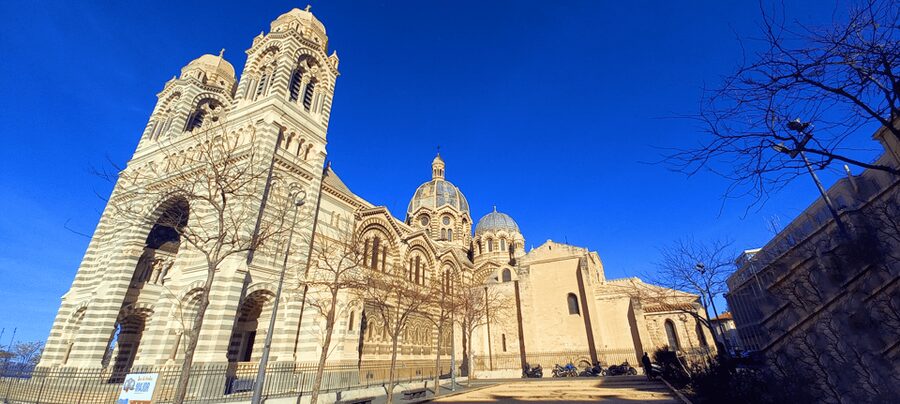
The meeting point is in front of Cathédrale Basilique Sainte-Marie-Majeure, usually called La Major. Find your guide in the cathedral’s shadow. Charles wears a white cap, which makes the meeting easier in a busy part of town.
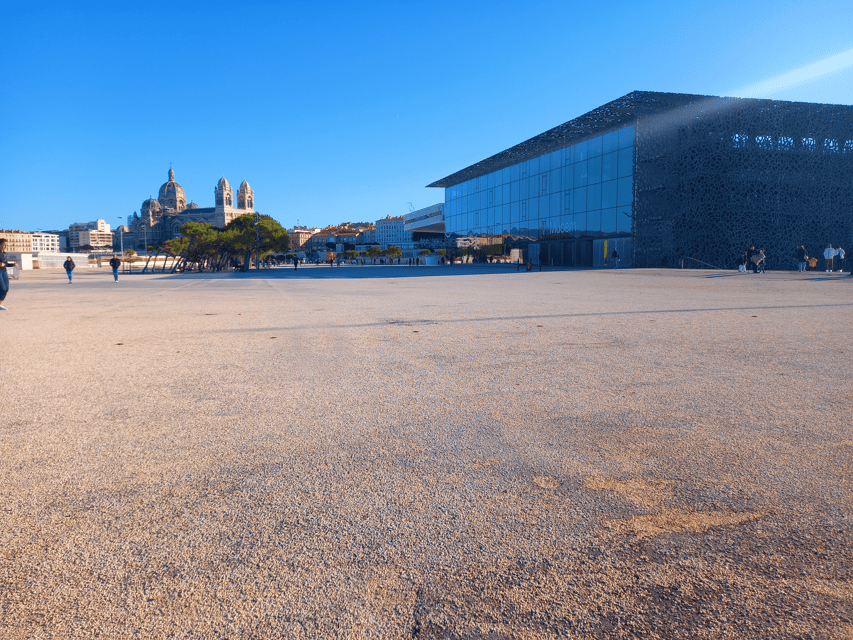
La Major is a fitting starting point because its scale immediately shows Marseille’s ambition as a Mediterranean port. Its Neo-Byzantine and Romanesque design feels imposing, with patterned stonework and a strong presence beside the waterfront.
The scheduled cathedral visit and introduction take about 10 minutes. You should expect a guided look and historical context rather than a long indoor visit. If you want plenty of time inside the cathedral, plan to return on your own after the tour.
From here, the walk begins to reveal Marseille’s age. The city traces its origins back roughly 2,600 years, and Charles uses monuments, old street patterns, photographs, and maps to explain how it changed. That visual aid is particularly useful when the modern city hides the shape of its earlier past.
Le Panier, where old Marseille feels close
The route then heads uphill into Le Panier, one of Marseille’s oldest districts. This is the part of the walk where you leave broad waterfront spaces behind and enter a tighter network of lanes, stairways, and small streets.
Le Panier has a bohemian, artistic character. Street-art murals add color to weathered walls, and the neighborhood rewards slow looking. You may pass small details that are easy to miss when walking alone, while Charles explains how the district fits into Marseille’s wider story.
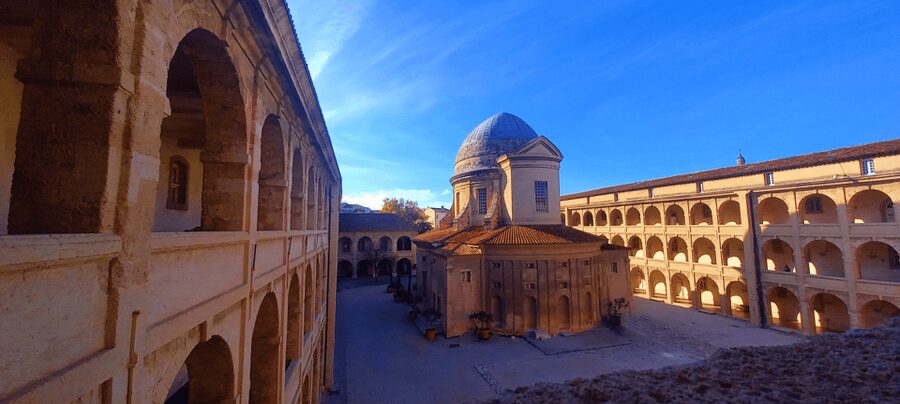
The Vieille Charité is one of the major stops. This former hospital complex is a powerful reminder of the city’s earlier civic life and architecture. It also gives the tour a more formal counterpoint to Le Panier’s informal streets.
Windmill Hill offers a quieter pause within the district. The name points to an older side of Marseille, and the stop helps you see Le Panier as more than a collection of photogenic lanes. It is a lived-in neighborhood with layers of work, religion, art, and daily life.
Allow for uneven ground and a gradual climb. The walk is not presented as strenuous, but the route covers several kilometers and includes hilly sections. Comfortable clothing, water, and good walking shoes are practical necessities, not optional extras.
Church of Accoules and Rue de la République
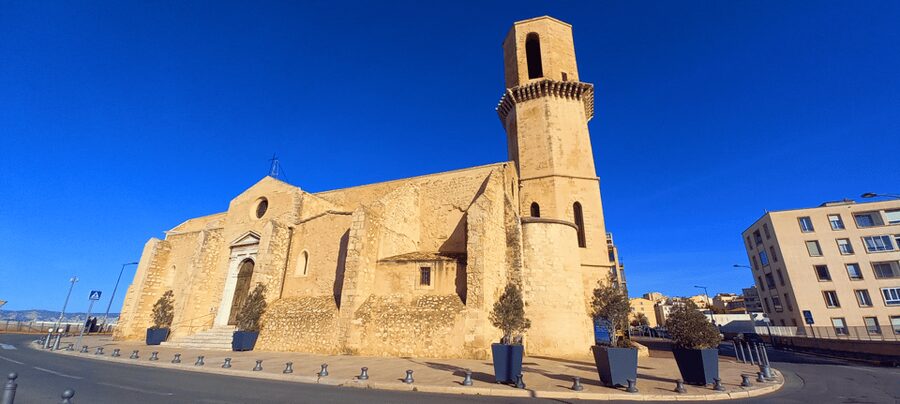
The Church of Accoules adds another historical marker to the route. The stop lasts about 10 minutes, enough for Charles to explain its place in the district and the city’s development.
The value here is the change of scale. Le Panier gives you intimate streets and local texture, while the church provides a clear architectural reference point. Charles’s style, according to the many detailed comments about the tour, combines dates and facts with stories, humor, and room for questions. That makes stops like this easier to remember than a string of bare names.
From there, the route reaches Rue de la République. This broad street feels different from Le Panier and helps show how Marseille expanded and modernized. The walk takes about 10 minutes here, with sightseeing and explanation rather than a long stop inside a particular building.
I like the way this section shows Marseille’s messy harmony. Old and newer parts do not always blend neatly, but that is part of the city’s character. You are not being led through a single preserved historic quarter. You are watching a port city change over time.
More Walking Tours in Marseille
- Marseille: Half-Day City Highlights Guided Walking Tour
★ 5.0 · 273 reviews - Boat walk in Sete on the singular island 1 hour
★ 4.8 · 212 reviews - Marseille: No-Diet Club Local Food Tasting and Walking Tour
★ 4.8 · 173 reviews - Marseille: Walking Food Tour with Full Meal
★ 4.7 · 137 reviews
The Old Port and its working identity
The Old Port is the heart of the walk. Marseille has been tied to this harbor since ancient times, and the water remains the main reference point for understanding the city.
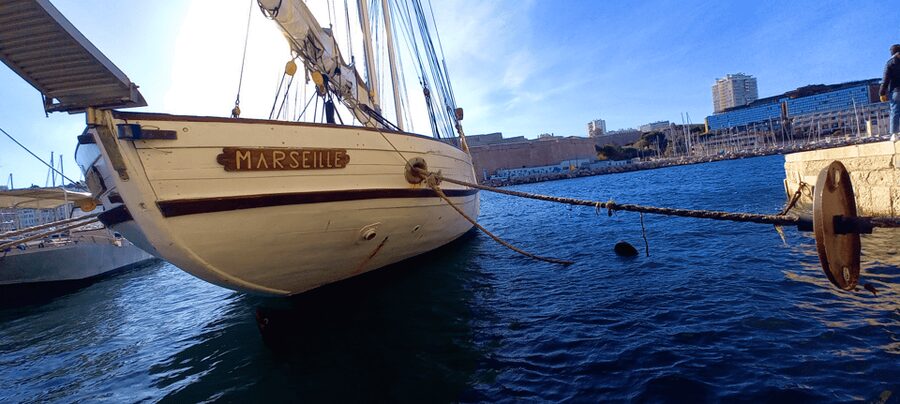
The route takes about 15 minutes through the port area. You pass boats and yachts, with Fort Saint-Jean and Fort Saint-Nicolas guarding opposite sides of the harbor. These fortifications give the waterfront a sense of defense and authority, while the boats keep it connected to everyday maritime life.
This is a good place to pause and orient yourself. From the Old Port, you can understand the shape of central Marseille more clearly. The port leads toward Le Panier on one side and toward Saint-Victor and Le Pharo on the other.
Charles also discusses the port’s darker chapters, including Marseille during World War II. That subject keeps the tour from becoming a simple parade of attractive views. The city’s past includes conflict, loss, and difficult decisions, and the guide places those events within the streets you are walking.
The harbor can be lively and exposed, so bring sunglasses and water. In warm weather, Charles has been attentive to shade and the comfort of the group, but you should still prepare for direct sun.
Cannebière and Cours Honoré d’Estienne d’Orves
The walk continues along the famous Cannebière street, one of Marseille’s main urban arteries. Here the mood shifts again. Galleries, workshops, boutiques, cafés, bistros, and restaurants line the route, giving you a chance to see the city as a place where people work and socialize, not only as a collection of monuments.
This is a useful stop for deciding where you want to return later. The tour does not include food or drinks, so you will need to arrange your own meal. Charles often provides restaurant suggestions after the walk, and several people found those recommendations helpful for planning the rest of their stay.
Cours Honoré d’Estienne d’Orves offers another change of setting, with about 10 minutes of guided sightseeing. The route’s strength is this steady movement between neighborhoods. You never spend too long in one kind of place, and the contrasts keep the walk interesting.
If you are visiting Marseille on a short port call or a brief city break, these connections are valuable. You get a quick sense of where to return for dinner, which streets deserve more time, and how the center fits together.
Saint-Victor, ancient faith and a useful pause
The next major stop is Abbaye Saint-Victor. The abbey brings the route back to Marseille’s religious and ancient foundations. Charles explains the site’s place in the city’s long development and connects it with the Roman influence that shaped Marseille.
The scheduled visit takes about 15 minutes, followed by a 20-minute break with scenic views along the way. That break is welcome. By this point, you have already crossed much of the center, and the pause gives you time to catch your breath, take photographs, and absorb the view without listening constantly.
The abbey is also a good reminder that Marseille’s oldest stories are not confined to a museum. They appear in the city’s churches, street plans, harbor edges, and hills. The tour’s ancient Greek and Roman material becomes more meaningful when you see how later buildings occupied the same strategic ground.
Bring a snack if you need one. Food and drinks are not included, though the tour information specifically advises carrying water and refreshments.
Le Pharo and the final sea views
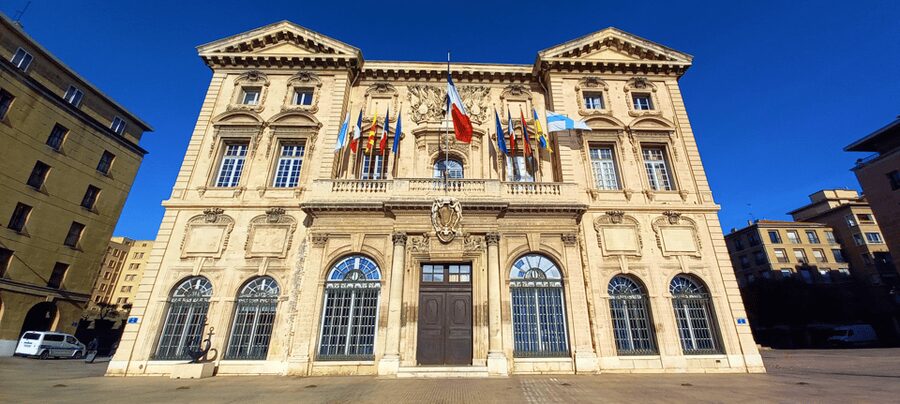
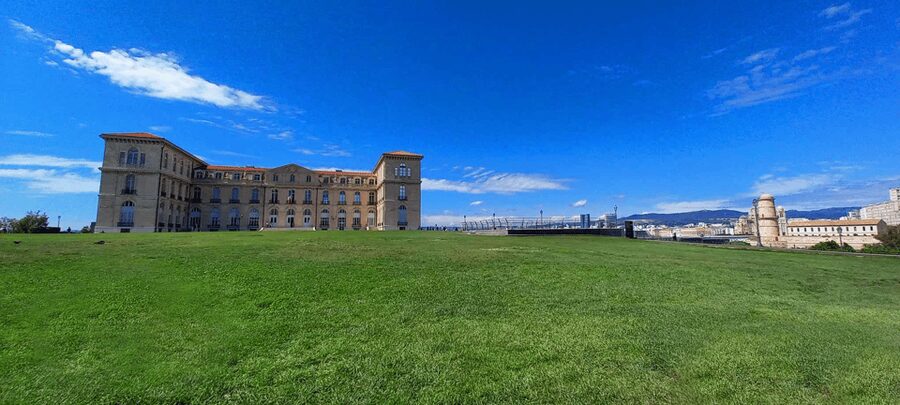
The final section leads toward Le Pharo and the Palais du Pharo. Built in the mid-19th century by Emperor Napoleon III for Empress Eugénie, the palace has an impressive setting above the water.
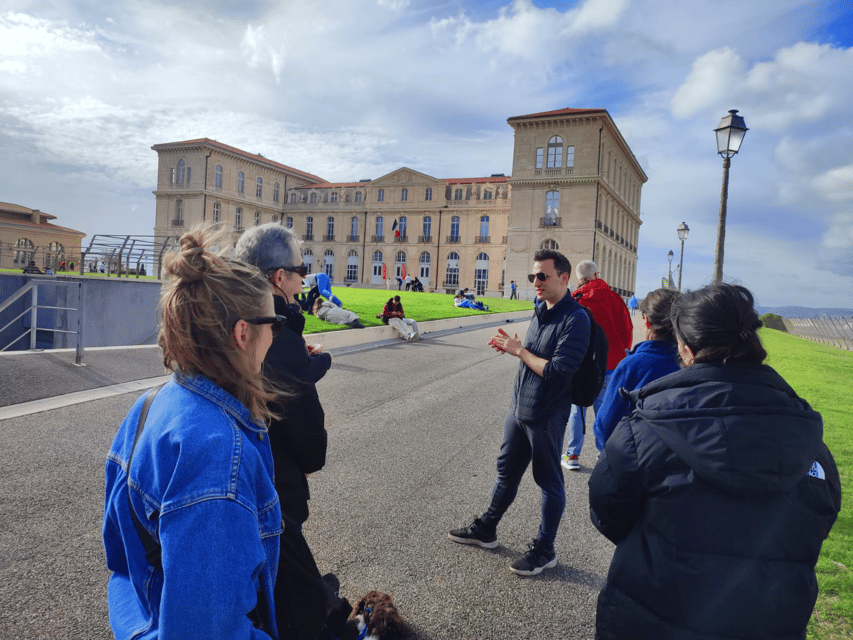
The scheduled visit lasts about 30 minutes, making it one of the longest sections of the route. You can admire the palace’s architecture and sweeping terraces while looking back toward Marseille and the sea.
This ending works well because it gives the tour a wide visual finish after the close streets of Le Panier. You have moved from city origins and neighborhood history to a grand imperial building with open views. The result is a clear sense of Marseille as both an ancient port and a later European capital with grand ambitions.
The route also passes the waterfront around Le Pharo, so you can continue exploring from here if your plans allow. The listed drop-off points are the Old Port and Palais du Pharo, which gives you a choice depending on where you are staying or what you want to do next.
Charles’s guiding style
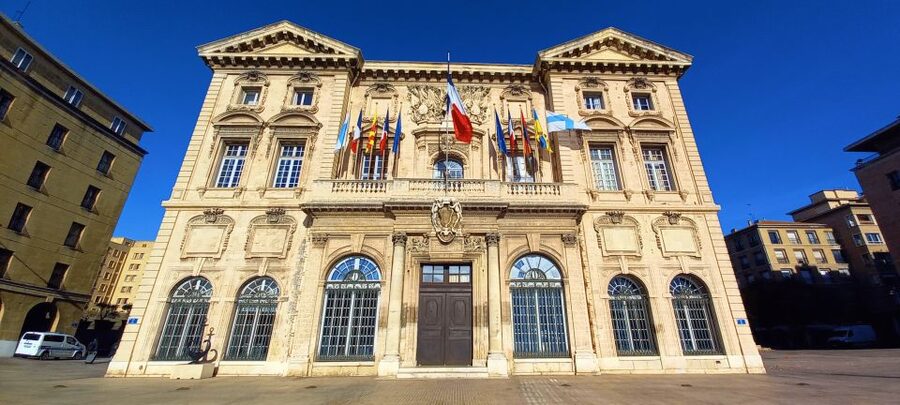
Charles is a bilingual French and English guide with a strong personal connection to Marseille. The most consistent strength of this experience is his delivery. He is described as friendly, funny, patient, and attentive, with a talent for making history understandable without flattening it.
He uses photographs and maps in some explanations. That is a real help in a city where streets and buildings have changed over centuries. You can see the difference between past and present instead of trying to imagine it from dates alone.
The tour also adapts to the group. If you ask about museums, restaurants, or other places to visit, Charles can shape the conversation around your interests. He has also been praised for checking that solo participants feel included and for adjusting stops when people need shade or a slower moment.
That personal approach is a major reason to choose this walk over a generic city overview. You are not just hearing a prepared speech at fixed points. You have a chance to ask questions and get practical suggestions for the rest of your time in Marseille.
Is $41 a fair price?
At $41 per person, this is not the cheapest way to walk around Marseille. You can see much of the Old Port and parts of Le Panier without paying for a guide.
The value comes from what you would otherwise miss: the links between the sights, the historical explanation, the smaller streets, the Roman and Greek background, the World War II context, and recommendations tailored to your plans. A small group of up to eight also gives the experience a more personal feel than a large scheduled walk.
For a first visit, I consider the price reasonable if you want context and a well-planned route. It is especially useful when you have only a day or two, because the walk covers several major areas in one outing.
The value is lower if you prefer to explore independently, dislike a set pace, or already know Marseille well. The tour does not include meals, interior admission beyond the guided visits described, or transport. You are paying for the guide and the walking experience, not a package of extras.
Practical advice before you go
Meet at La Major Cathedral, in front of the building, and look for the white cap. Wear shoes that can handle roughly 5 kilometers of city walking, including hills and uneven streets.
Carry water, sunglasses, and weather-appropriate clothing. Bring food or a snack if you tend to need one during a two-and-a-half-hour walk. There is a break near Saint-Victor, but food and drinks are not supplied.
The tour is offered in French and English. It is limited to eight people and is not suitable for wheelchair users because of the route and street conditions.
Free cancellation is available up to 24 hours before the activity for a full refund, and you can reserve now and pay later. Check the available start times before booking, since the schedule can affect how the walk fits with meals, museum visits, or a cruise stop.
Who should book this Marseille walk?
I would choose this for a first visit, especially if you want history but do not enjoy formal lectures. It suits solo visitors, couples, families with older children, and small groups who like asking questions as they go.
It is also a good choice for anyone arriving by cruise or spending a short time in the city. The route gives you a practical first look at the central districts and ends near places where you can continue sightseeing.
You may want a different plan if mobility is limited, if hills are difficult, or if you want a relaxed waterfront stroll with very little walking. This is an active city tour, not a gentle promenade.
Should you book it?
Book this tour if you want Marseille explained through its streets, harbor, churches, fortifications, and changing neighborhoods. Charles’s humor, visual aids, local advice, and care for each person make the experience more useful than a simple list of landmarks.
I would schedule it early in your stay. You can use the restaurant, museum, and sightseeing suggestions afterward, then return to the places that caught your attention. At $41, it offers solid value for a small-group introduction, provided you are ready for the full 5-kilometer route.
FAQ
Where does the Marseille walking tour start?
The tour starts in front of Cathédrale Basilique Sainte-Marie-Majeure, known as La Major Cathedral, in Marseille.
How will I recognize the guide?
Your guide, Charles, wears a white cap at the meeting point.
How long does the tour last?
The listed duration is 150 minutes, or two and a half hours. Some scheduled stops and breaks may make the actual outing run slightly beyond that time.
How far do you walk?
The tour covers a 5-kilometer route.
Which languages are available?
The live tour is available in French and English.
How large is the group?
The group is limited to eight participants.
Is food included?
No. Food and drinks are not included. You should bring water and may wish to carry a snack.
Is the tour suitable for wheelchair users?
No. The tour is not suitable for wheelchair users.
Can I cancel for a full refund?
Yes. You can cancel up to 24 hours in advance for a full refund. You can also reserve now and pay later.
More Walking Tours in Marseille & Provence
- An Aix-traordinary Walking City Tour of Aix-en-Provence
★ 5.0 · 101 reviews - Marseille: Foodie Walking Tour of the Cours Julien District
★ 4.8 · 97 reviews - Marseille: Guided Off-the-Beaten-Path Neighborhood Walk
★ 4.9 · 63 reviews - Provencal Market Walking Tour with Tastings
★ 4.6 · 50 reviews
Recently reviewed around Marseille & Provence
- Skip the Line: Museum of Romanity Ticket★ 4.5 · 45 reviews
- Guided tour Distillery of Lavender between Nîmes & Arles★ 5.0 · 84 reviews
- A Private Guided Historical and Cultural Tour in Nîmes★ 4.5 · 32 reviews
- Provence Hot-Air Balloon Ride from Forcalquier★ 4.5 · 75 reviews
- Horse ride in Haute Provence Luberon and Forcalquier★ 5.0 · 77 reviews
- Sailing day in the heart of the Calanques★ 4.5 · 61 reviews
- The Urban Hike of Marseille★ 5.0 · 35 reviews
- Sormiou Calanques National Park Electric Bike Tour from Marseille★ 5.0 · 60 reviews
Walking Tours, compared.

Paris Top Sights Half Day Walking Tour with a Fun Guide
Read our review →
Montmartre Hidden Gems and Scenic Highlights Walking Tour
Read our review →
Montmartre Hill French Gourmet Food and Wine Tasting Walking Tour
Read our review →
Paris Île de la Cité and Notre-Dame Walking Tour With Crypt
Read our review →
Montmartre Cheese, Wine & Pastry Guided Walking Tour
Read our review →
Paris in a Day: Louvre or Orsay, Eiffel Tower, City Walk & Cruise
Read our review →
Montmartre Highlights Walking Tour with a Local Guide
Read our review →
Browse the lists this tour appears in