
Reviewed · FOOD & DRINK
Pierre IBAIALDE: Guided Tour Ham Workshop, tasting
Bayonne’s ham tradition comes alive inside the last active salting room and ham dryer in town. In 45 minutes, you follow the work from the meat’s origin through salting, drying, and the steps that turn pork into the region’s famous cured ham. It is a small-scale food visit, not a grand museum tour, and that is part of its appeal.
I like two things right away: the tour takes place in a working artisan workshop, and the tasting gives you a useful chance to judge the finished products for yourself. The price is also remarkably low at about $5.81 per person. The main consideration is simple: the guide speaks French only, and the production rooms are on the second floor by stairs.
In This Review
- Key Points Before You Book
- Entering the Pierre Ibaialde Workshop in Bayonne
- The Salting Room: Where the Process Begins
- The Dryer and the Sight of Hundreds of Hams
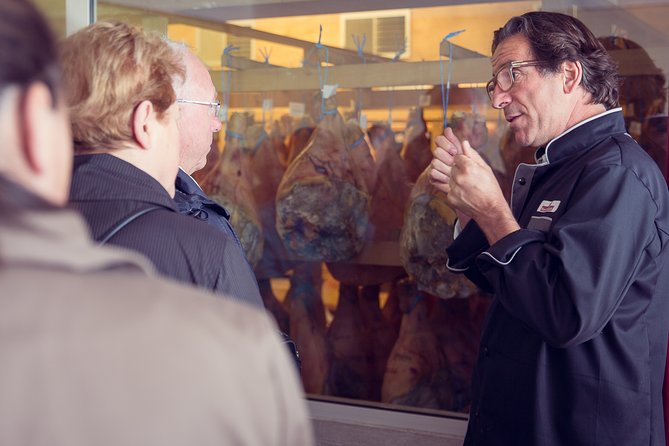
- The Guide’s Explanation, Entirely in French
- Tasting the Original House Products
- Why the Workshop Setting Matters
- Is $5.81 Good Value for 45 Minutes?
- Who Should Book This Bayonne Food Visit?
- Final Verdict: A Small, Tasty Stop Worth Planning
- FAQ
- Where does the Pierre Ibaialde ham workshop tour begin?
- Where does the activity end?
- How long does the guided ham workshop last?
- Is the tasting included in the price?
- Is hotel pickup or drop-off included?
- Is the tour available in English?
- Is the workshop accessible by elevator?
- What is the cancellation policy?
Key Points Before You Book
- Bayonne’s last active salting room: See a working place where ham is still prepared and dried.
- A clear 45-minute route: Learn the process from the origin of the meat through the finished ham.
- Tasting included: Sample original products made by the Pierre Ibaialde workshop.
- French guidance only: You will need enough French to follow the explanations.
- Family-friendly subject matter: Simple explanations have worked well for children and grandparents.
- Second-floor access: The salting room and dryer are reached by staircase, with no elevator.
Entering the Pierre Ibaialde Workshop in Bayonne
The visit begins at 41 Rue des Cordeliers in Bayonne, in the Petit Bayonne area. You meet at the workshop, and the experience ends at the same address, so you do not need to arrange a separate return transfer or find your way to another part of town.
This is a practical stop to add while you are exploring Bayonne on foot. Public transportation is nearby, and the meeting point is fixed and easy to use with a mobile ticket. Hotel pickup and drop-off are not included, but for a 45-minute visit in central Bayonne, that is hardly a serious omission.
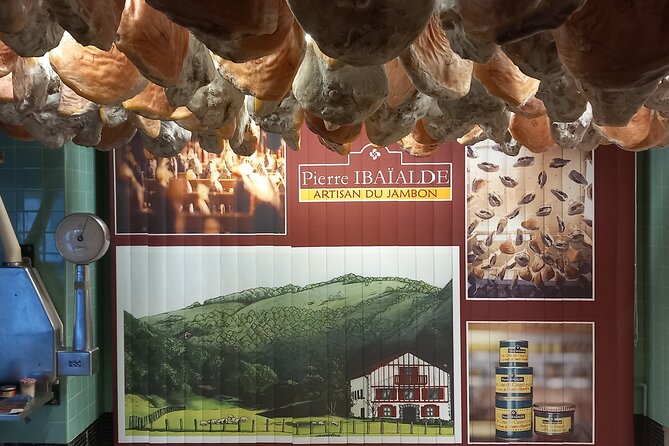
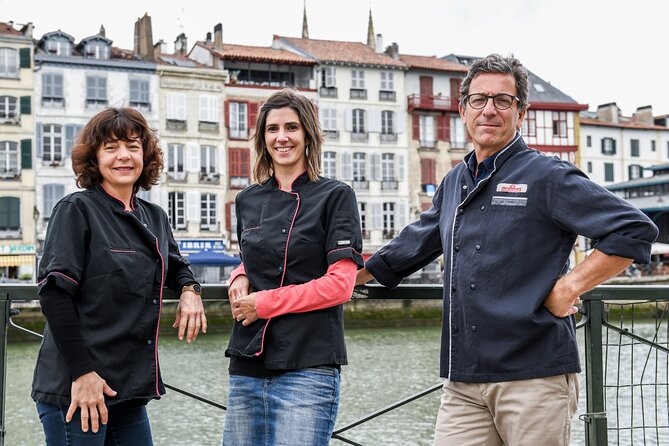
The workshop has the feel of a small family-style business rather than a large attraction. The company says its team is only about five or six people, which helps explain the personal tone of the visit. You are seeing a real food business with a limited staff, not walking through a staged replica built only for tourism.
That distinction matters. The most useful part of a food tour is often the connection between a local product and the people who still make it. Here, the setting lets you see where the work happens and gives the guide room to explain the craft in direct, simple terms.
More France food and drink outings:
- Paris: Seine Cruise & Crepe Tasting near the Eiffel Tower
★ 4.4 · 11,231 reviews - Authentic Parisian Gourmet Food Tour with 10 Local Dishes & Wines
★ 5.0 · 4,754 reviews - Bordeaux: Cité du Vin Entry Ticket and Wine Tasting
★ 4.6 · 3,885 reviews
The Salting Room: Where the Process Begins
The first major stop is the salting room. This is where the tour starts to answer the question most casual ham buyers never consider: how does a fresh piece of pork become a dry, seasoned product that can be sliced and served?
Your guide explains the process from the origin of the meat onward. The tour covers the operations needed to prepare the ham, with attention to the role of salt and the conditions required for the meat to cure properly. You are not simply shown a finished leg and told that it is traditional. You get the basic chain of work that makes the final texture and flavor possible.
The salting room is valuable because it shows the labor behind what can look like a very simple food. A slice of ham on a plate hides a long process, careful handling, and the need for the right conditions at each stage. The presentation also gives you a better eye for judging artisan products later in your trip.
This is not a cooking class, and you should not expect to prepare a ham yourself. The format is guided explanation, with the guide talking you through the steps. Still, the subject is concrete and easy to grasp, especially if you already enjoy local food and want more than a shop counter explanation.
Several comments about the visit point to clear explanations and language simple enough for children. That makes this a useful family stop. Younger children may not follow every technical detail, but they can see the scale of the operation and understand the basic idea of preserving meat with salt and time.
The Dryer and the Sight of Hundreds of Hams
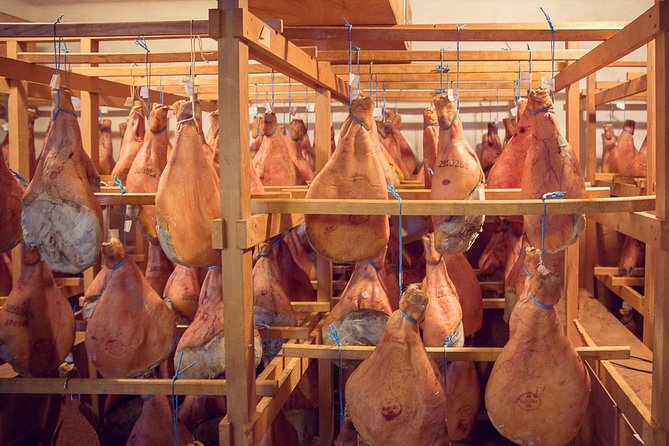
From the salting room, the visit continues to the ham dryer. This is where the work moves from preparation toward the long curing stage. The dryer is the visual highlight of the experience because it shows the quantity of product being handled at once.
At one point, the aging room held more than 800 hams. That number gives you a sense of the operation’s scale without making the place feel industrial. You see a substantial working stock, yet the business remains a small operation run by a team of roughly five or six people.
The dryer also helps explain why good cured ham cannot be rushed. The ham needs suitable conditions and time before it reaches the texture and flavor people expect. The guide connects the room to the earlier stages, so the tour feels like one process rather than two unrelated rooms.
I find this kind of stop more useful than a polished display of finished foods. You can see the product in an in-between state, before it reaches the table. That makes the final tasting more meaningful, since you have just seen the rooms and work involved in producing it.
There is one physical limitation to keep in mind. The salting room and dryer are on the second floor, and there is no elevator. You need to manage a staircase to take part in the central part of the tour. The general activity information says most people can participate, but the stairs are an important point for anyone with limited mobility.
The Guide’s Explanation, Entirely in French
The tour is guided only in French. This is the biggest practical issue for international visitors, and it should shape your decision more than the low price does.
If you understand conversational French, you should get much more from the experience. The subject has a clear sequence, and the guide’s explanations are described as precise, warm, and easy to understand. If you speak little or no French, you may still recognize the spaces and follow some of the demonstrations, but you should not expect translation into English.
The tone appears to be one of the workshop’s strengths. The guide is expected to explain the process clearly, answer questions, and make visitors feel comfortable. The staff’s enthusiasm for the craft comes through in the way the workshop presents its history and products.
That personal approach is especially useful in a small group. The maximum group size is 35 people, so the visit may be intimate or moderately busy depending on the booking. It is not an unlimited walk-in crowd, but you should not assume a private tour either.
The activity is booked, on average, about seven days in advance. That suggests you should reserve ahead if the timing matters to your Bayonne plans. Confirmation arrives when you book, and the mobile ticket makes it easy to carry the reservation on your phone.
More France trips worth a second look
- Fragonard Paris: Mini Perfume Workshop
★ 4.5 · 1,924 reviews - Paris Cooking Class and Lunch with Wine plus Market Visit Option
★ 5.0 · 1,024 reviews - Paris Croissant Small-Group Baking Class with a Chef
★ 5.0 · 910 reviews - Paris: Macaron Class at Galeries Lafayette
★ 4.3 · 905 reviews
Tasting the Original House Products
The tour ends with a tasting of original Pierre Ibaialde products. This is included in the ticket price, so you are not paying for the visit and then facing a separate tasting charge.
The tasting is more than a quick sample added as an afterthought. It is the point where the earlier explanation becomes practical. You have seen the salting room, the dryer, and the work involved. Now you can taste the result and connect the process with the flavor and texture in front of you.
The tasting also helps you decide if you want to buy something from the workshop shop. The products are available for purchase, and the low tour price does not include any additional food you choose to take home. That is worth remembering if you are trying to keep spending under control.
I would treat the tasting as a chance to compare your own preferences rather than as a full meal. The supplied information confirms a tasting of house products, but it does not specify the exact number of samples or whether drinks are included. Plan to eat beforehand if you need lunch or a substantial snack.
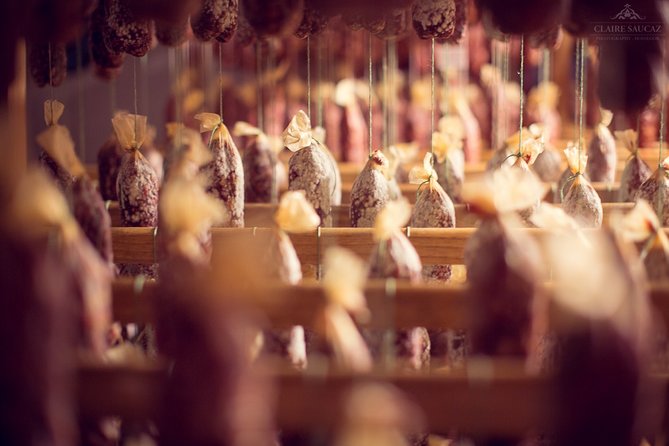
The workshop’s products include traditional ham and other original house items. The point is to introduce you to the producer’s range and the local food tradition, not to replace a market visit or a restaurant meal.
Why the Workshop Setting Matters
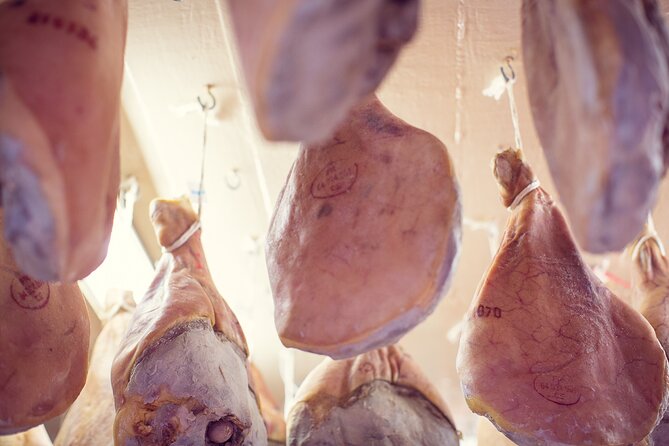
Bayonne ham is one of the area’s best-known food products, but a name alone does not explain how it is made. This visit gives the product a place, a sequence, and a human scale.
You see the rooms where the curing work takes place. You hear about the operations needed to prepare the ham. You meet the idea of artisan production in a concrete way, with a small team handling a large number of hams rather than an abstract story about tradition.
That is why I prefer this kind of stop to a generic food tasting. The tasting is enjoyable, but the rooms provide the context. You leave with a better understanding of why dry ham takes time and why production conditions matter.
The tour also has a useful connection to preservation. It shows how a traditional food depends on patience and controlled conditions, not just a recipe. Even if you do not buy anything, the visit can change the way you look at cured ham on a market stall or restaurant menu.
The business presents itself as committed to keeping local artisan work alive. You can take that as part of the character of the visit, but keep your expectations grounded. This is a short workshop tour, not a full account of every aspect of Basque food culture.
Is $5.81 Good Value for 45 Minutes?
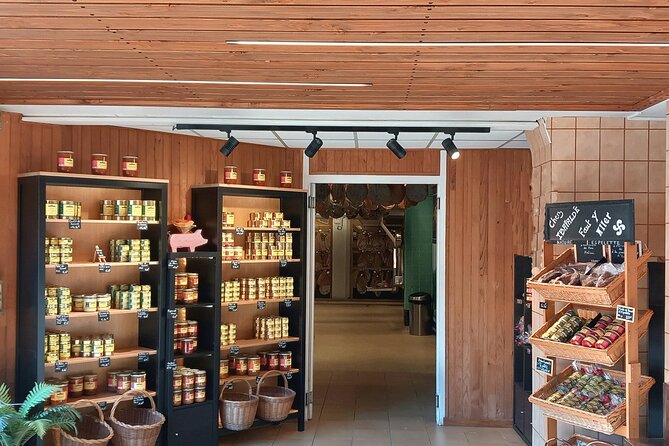
At about $5.81 per person, the price is unusually modest for a guided food experience that includes a tasting. You receive access to the workshop, an explanation of the production process, and original house products to sample.
The value is strongest if you already plan to be in Bayonne and can attend without paying for extra transport. Since the tour begins and ends at the same central address, it fits neatly into a walking day.
It is also a good value for families. The price keeps the cost manageable, and the explanations are reported to be clear enough for children. Older children who enjoy food, markets, or seeing how things are made may get more from it than from a formal museum display.
The value drops if you do not understand French. You are still paying for access to the rooms and tasting, but the guided explanation is a major part of the experience. I would not book it solely because the price is low unless you are comfortable accepting that limitation.
The overall score is 4.7 out of 5 from 148 ratings, with 96 percent recommending the activity. The strongest points are consistent: the guide’s friendliness, the clear explanation, the quality of the tasting, and the sense that the workshop is preserving a real craft.
Who Should Book This Bayonne Food Visit?
I would recommend this tour to several types of visitors:
- Food-focused visitors who want to understand a local specialty before buying it.
- French-speaking visitors who can follow a guided explanation without translation.
- Families looking for a short, reasonably priced activity with a tasting.
- First-time Bayonne visitors who want a local stop in Petit Bayonne.
- Shoppers for regional foods who may want to taste before purchasing.
- Anyone curious about artisan work and the effort behind cured meat.
It is less suitable if you need step-free access, require English guidance, or want a long, elaborate food workshop. The tour is short and focused. It does not include hotel transportation, a full meal, or hands-on ham preparation.
The group limit of 35 is another useful detail. If you dislike any chance of a group setting, this may not be the right format. If you are happy with a structured visit and a fixed meeting point, the limited capacity keeps the experience from becoming an uncontrolled crowd.
Free cancellation is available if you cancel at least 24 hours before the start time. A cancellation within 24 hours is not refundable, and changes in that period are not accepted. The cut-off follows Bayonne’s local time.
Final Verdict: A Small, Tasty Stop Worth Planning
I would book Pierre Ibaialde if you speak French, enjoy regional food, and want to see the work behind Bayonne ham rather than simply buy a packet in a shop. The combination of a working salting room, a dryer holding hundreds of hams, and a tasting makes good use of 45 minutes.
The low price is a real advantage, especially for families. The French-only guidance and second-floor stairs are the two points you need to settle before booking.
For the right visitor, this is an efficient and authentic Bayonne experience: short, local, practical, and tied to a product you can taste immediately. If you need English or step-free access, choose another activity. If those are not concerns, this workshop offers unusually good value in the heart of town.
FAQ
Where does the Pierre Ibaialde ham workshop tour begin?
The tour begins at 41 Rue des Cordeliers, 64100 Bayonne, France.
Where does the activity end?
The activity ends back at the meeting point on Rue des Cordeliers.
How long does the guided ham workshop last?
The visit lasts approximately 45 minutes.
Is the tasting included in the price?
Yes. The experience includes a tasting of original Pierre Ibaialde house products.
Is hotel pickup or drop-off included?
No. Hotel pickup and drop-off are not included.
Is the tour available in English?
No. The guide provides the tour in French only.
Is the workshop accessible by elevator?
No. The salting room and ham dryer are on the second floor and can only be reached by staircase.
What is the cancellation policy?
You can cancel for a full refund up to 24 hours before the experience start time. Cancellations or changes made less than 24 hours before the start time are not accepted for a refund.
Recently reviewed around France
- Louvre Private Tour – The Essentials and More with Expert Guide★ 5.0 · 227 reviews
- 2CV tour by night★ 5.0 · 55 reviews
- Eiffel Tower Second or Summit Floor Access by Elevator with Views★ 3.5 · 161 reviews
- The only Paris Wine Tasting experience you need to do – 2 hours★ 5.0 · 265 reviews
- 2 Hour Street-art Walk and Space Invaders Hunt in Paris★ 5.0 · 27 reviews
- 2 hour outdoor group activity in Paris: SAINT GERMAIN★ 5.0 · 48 reviews
- Sainte-Chapelle, Conciergerie & Palais de Justice Private Tour★ 5.0 · 72 reviews
- Private 2 – Hour Paris Landmarks Tour by Golf Cart Mini Moke★ 5.0 · 38 reviews
Food & Drink, compared.

Seine Cruise & Crepe Tasting near the Eiffel Tower
Read our review →
Authentic Parisian Gourmet Food Tour with 10 Local Dishes & Wines
Read our review →
Normandy D-Day Small-Group Day Trip with Omaha Beach, Cemetery & Cider Tasting
Read our review →
Illuminated Evening River Cruise & Waffle Tasting
Read our review →
Montmartre Hill French Gourmet Food and Wine Tasting Walking Tour
Read our review →

Loire Valley Castles Day Trip With Wine Tasting
Read our review →Browse the lists this tour appears in