
Reviewed · WALKING TOURS
Strasbourg: Guided Historical Neighborhoods Walking Tour
Strasbourg’s story is unusually easy to read in its streets. In 150 minutes, this walking tour takes you from the grand German-built Neustadt district to Place Kléber, through old Grand’Rue and Petite France, ending beneath the soaring façade of Notre Dame Cathedral. You get the city’s major sights, but also the reasons they look the way they do.
I like the small groups of no more than 10, which make it easier to ask questions and keep close to the guide. I also like the human touch: Davide, sometimes listed as David, mixes dates and political changes with jokes, coffee stops, and useful advice on where to eat after the tour.
The main drawback is the weather. You are outdoors for two and a half hours, and the tour includes plenty of standing. A cold morning can feel long, while a hot day calls for water, shade, and sensible clothing. Cathedral entry is not included, so plan a separate visit if you want to see the interior.
In This Review
- Key points at a glance
- Why this is a useful first look at Strasbourg
- Starting at Place de la République and entering Neustadt
- Place Broglie and the city’s formal side
- Place Kléber and the famous Christmas tree
- Grand’Rue and the walk into the old center
- Petite France, timber-framed houses, and a name with a story
- Notre Dame Cathedral and the Rayonnant Gothic exterior
- The guide’s approach: facts without a dry lecture
- How much walking, and how the weather affects it
- Is $35 good value?
- Who should book this walking tour?
- Should you book it?
- FAQ
- Where does the Strasbourg walking tour start?
- Where does the tour finish?
- How long does the tour last?
- What languages are available?
- Is entry to Notre Dame Cathedral included?
- How large is the group?
- Is the tour wheelchair accessible?
Key points at a glance
- A clear route through several sides of Strasbourg: Neustadt, Place Broglie, Place Kléber, Grand’Rue, Petite France, and the cathedral area.
- A guide-led history lesson with personality: Davide is known for lively explanations, humor, and practical food and sightseeing tips.
- Petite France is more than a photo stop: You hear how the quarter got its name and how its purpose changed over time.
- The tour finishes at the city’s great landmark: You see Notre Dame’s Rayonnant Gothic exterior, but entrance is separate.
- A compact group makes city walking easier: With up to 10 participants, it is simpler to hear, move through streets, and ask questions.
- Good value for a first look: At $35, the tour costs less than many private guides while covering the central sights in one organized walk.
Why this is a useful first look at Strasbourg
I see this tour as a city orientation with a strong history lesson attached. Strasbourg can feel like several cities placed side by side: a French medieval core, a grand nineteenth-century district shaped by German rule, and modern European influences layered over both.
That mixture is the point. You do not simply pass attractive squares and timbered houses. You learn why Strasbourg has moved between French and German control, how war shaped its identity, and how the city changed from its earliest settlement to modern times.
The route also gives you a practical sense of direction. By the end, you know where the main squares are, how Petite France connects with the old center, and where the cathedral sits in relation to Grand’Rue. That matters on a short stay, when a well-planned first walk can save time later.
The guide’s style is central to the experience. Davide is an Italian guide who leads tours in English and Italian. His approach is animated rather than academic. He uses humor to make difficult political and military subjects easier to follow, then adds recommendations for cafés, restaurants, bars, and other places to see.
Several visitors have found the tour moved quickly and passed sooner than expected. That is a good sign if you like an active introduction, though anyone hoping for long, quiet time at each monument may find the pace brisk.
More Walking Tours in Strasbourg
- Strasbourg: Walking Tour with a Local Guide
★ 4.3 · 607 reviews - Strasbourg: Walking Tour with Local Guide
★ 5.0 · 598 reviews - Strasbourg: Traditional Food Walking Tour with Tastings
★ 4.8 · 219 reviews
Starting at Place de la République and entering Neustadt
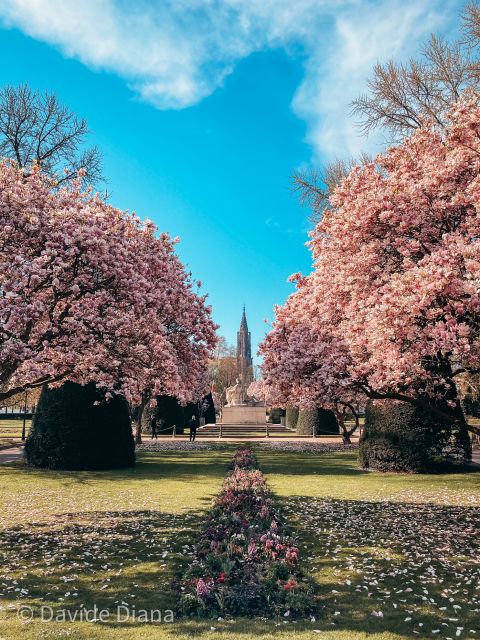
Meet your guide in the center of Place de la République, in front of the war memorial. This is a straightforward meeting point, but arrive with enough time to locate the monument and settle in before the group sets off.
The square opens into Strasbourg’s Neustadt district, the section largely developed during the period of German administration. It feels different from Petite France and the medieval center. Streets are broader, buildings are more formal, and the scale is grander.
The first half hour here gives the tour its political frame. You learn how Strasbourg developed from its early foundations through periods of conflict and changing national control. This is where the tour’s promise to cover the city from its beginnings to contemporary wars becomes useful. Instead of treating old buildings as decoration, the guide links them to the forces that shaped the city.
Expect to walk while listening, with some stops for explanation. That format helps in cold weather because you keep moving, though you may occasionally wish for more time to stand and study a façade. Wear comfortable shoes, since the route is a sustained walk rather than a series of short transfers.
Place Broglie and the city’s formal side
The tour continues to Place Broglie for about 10 minutes. It is a brief stop, but it helps you see how Strasbourg’s large public spaces relate to one another.
Do not expect a long visit here. The value is in the guide’s explanation and the changing view of the city around you. This section acts as a bridge between the Neustadt material and the livelier central squares that follow.
The guide may also point out details you could easily miss while walking alone. That is one of the strongest reasons to take a guided route in Strasbourg. Large buildings and open squares can look impressive, but without context you may not know which period they belong to or why they matter.
Place Kléber and the famous Christmas tree
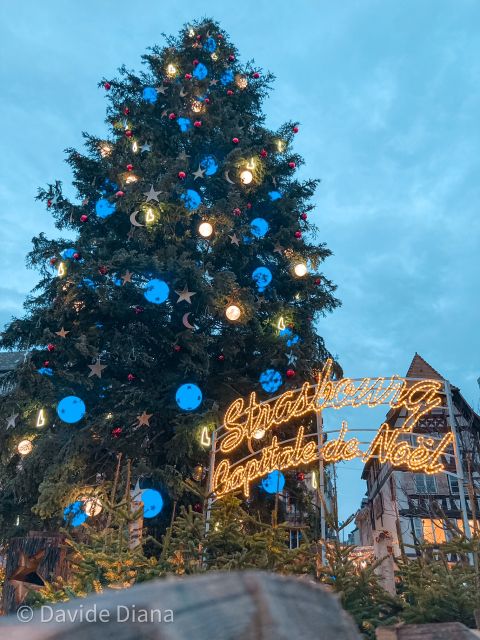
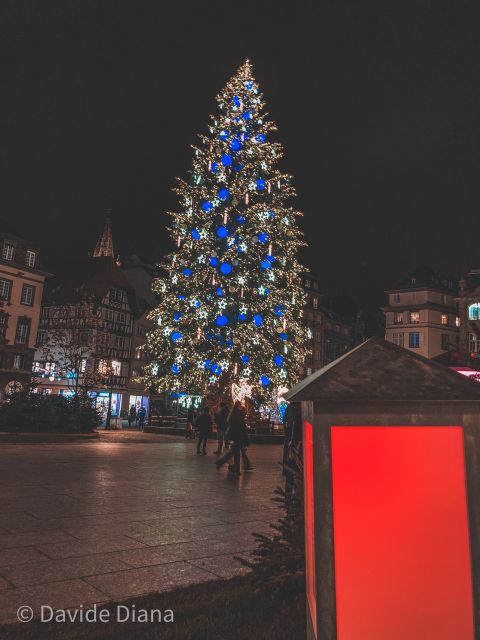
Place Kléber is the tour’s main central square and one of Strasbourg’s essential orientation points. The guided visit lasts about 20 minutes, giving you time to hear about the square, its role in city life, and its seasonal identity.
The Christmas tree tradition receives special attention. Strasbourg is strongly associated with its winter market, and Place Kléber is one of the key places connected with that season. If you visit outside December, the explanation helps you picture how the square changes in winter. If you visit during the Christmas period, you will already understand why the tree and market matter to the city’s public life.
This is also a useful place to note the difference between a quick sightseeing pass and a proper introduction. You are not just stopping to take a photograph. You get the story behind one of the city’s best-known gathering places, along with recommendations for nearby areas to explore later.
The Christmas market is popular, so do not assume this walking tour includes market access, tastings, or special entry. It is a history and sightseeing walk, not a food tour or a seasonal market tour.
More history-led days around Strasbourg & Alsace:
- From Strasbourg: Best Of Alsace Historical Day Trip
★ 4.7 · 633 reviews - Strasbourg: Private Walking Tour of the Historical Center
★ 4.2 · 107 reviews - Guided tour of Nancy, Great History and Little Anecdotes
★ 5.0 · 89 reviews - Strasbourg: Historic Center Walking Tour
★ 4.7 · 88 reviews
Grand’Rue and the walk into the old center
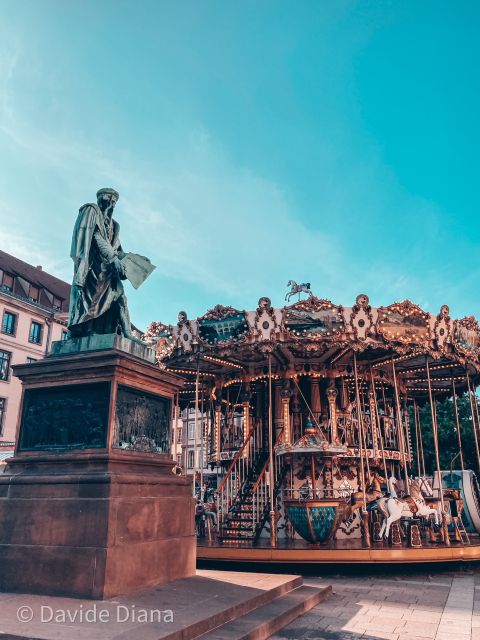
From Place Kléber, the route follows Grand’Rue for about 10 minutes. This section provides a gradual change in mood and architecture as the tour moves into the older parts of Strasbourg.
Grand’Rue is useful as a connecting street because it places the grand public squares in relation to the older neighborhood. Listen for the small details here. Guides often use these stretches to explain how daily life, trade, and urban change affected the city, rather than stopping only at famous monuments.
The walk is also when practical advice becomes especially helpful. Davide has recommended restaurants, bars, cafés, and further places to visit, including options away from the most obvious tourist streets. Write down suggestions as you go. You may not remember every name by the end, especially if the tour is full of dates and anecdotes.
Petite France, timber-framed houses, and a name with a story
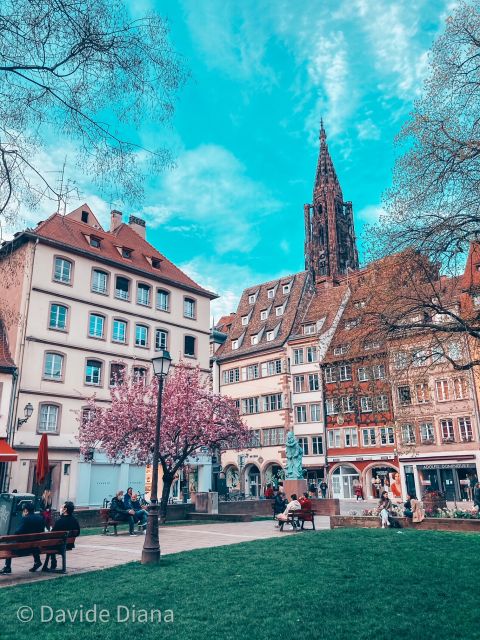
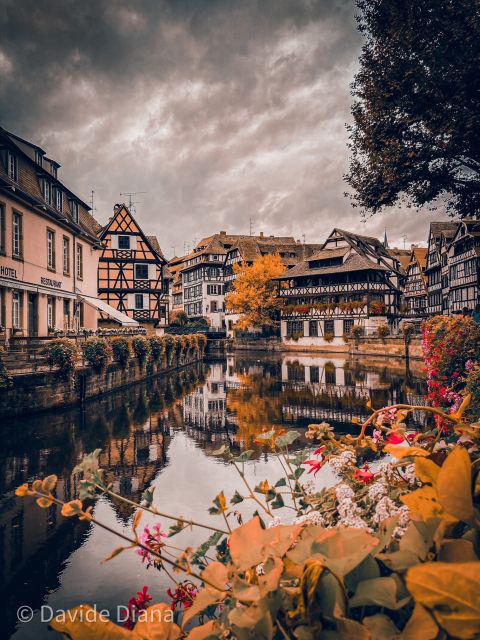
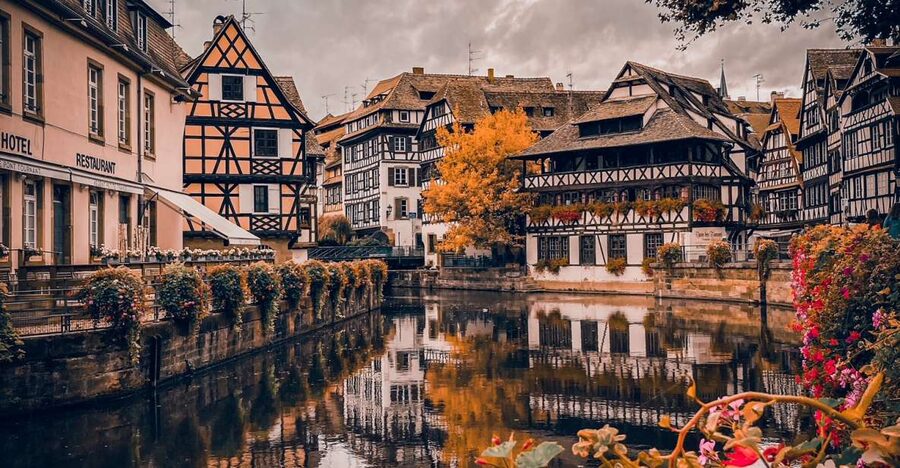
Petite France gets around 30 minutes, including sightseeing and a photo stop. This is the most picturesque part of the walk, with original half-timbered homes, waterways, and narrow streets that show Strasbourg at its most visually distinctive.
The quarter is famous for good reason, but the tour adds needed context. You hear where the name Petite France came from and how the area changed across the centuries. That explanation helps you look beyond the postcard view. The houses are attractive, yet the neighborhood’s story is tied to work, movement, and changing urban use.
This is likely to be one of the most memorable parts of the walk. You have time to take photographs, but the schedule still keeps the group moving. If you want detailed architectural study or quiet pictures without other people in the frame, return later on your own.
The half-timbered homes are a major visual reward, especially for first-time visitors. Still, the narrow streets can make it harder to hear if you drift behind the group. Stay near the guide and use the small group to your advantage. With no more than 10 people, you should not need to fight through a large crowd to keep up.
Petite France is also a good example of why a local guide adds value. The quarter’s name invites a quick explanation, and its appearance raises questions about who lived and worked there. A few well-timed stories turn a pretty walk into a place you can understand.
Notre Dame Cathedral and the Rayonnant Gothic exterior
The tour ends at Notre Dame Cathedral, with roughly 20 minutes devoted to a guided look and photo stop. This is Strasbourg’s landmark building and a fitting final chapter for a route that has moved through so many periods of the city’s past.
The exterior is the focus. You can study the Rayonnant Gothic design, the vertical lines, and the detailed stonework from Place de la Cathédrale while the guide explains the building’s place in Strasbourg’s story.
Cathedral entry is not included. That is not a hidden complication, but it does affect how you plan your time. The tour finishes outside, so you can decide afterward if you want to pay any applicable entrance fee or simply remain in the square and continue exploring.
Ending here works well for a first visit. The cathedral is easy to find, and you finish in one of the city’s most central areas. You can continue sightseeing, look for a café, or use the guide’s restaurant suggestions. The tour does not return you to Place de la République, so make sure you understand that the endpoint is Place de la Cathédrale.
The guide’s approach: facts without a dry lecture
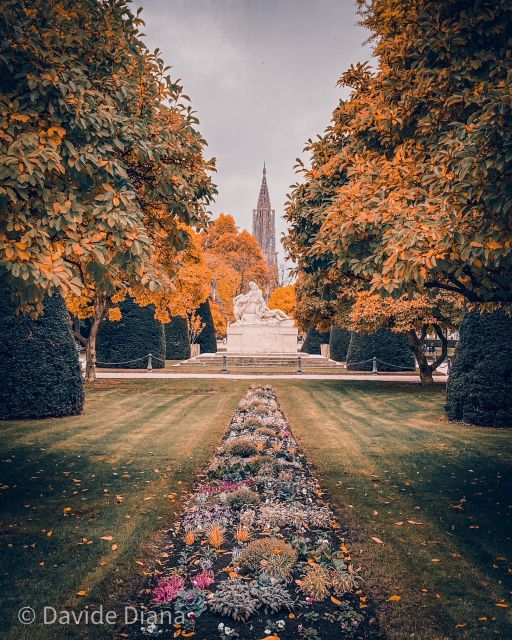
The most praised part of this experience is the guide’s delivery. Davide is repeatedly described as funny, energetic, clear, and easy to listen to. He presents the history in a logical order, which matters in a city shaped by repeated changes in power.
Humor is useful here, not just entertaining. Strasbourg’s past includes war, border changes, and political tension. A guide who can lighten the mood without turning serious subjects into a joke makes the material easier to absorb.
You should also expect a guide who keeps the group moving. One particularly useful detail from the feedback is that Davide sometimes builds in a short café or bathroom break. That is not presented as a guaranteed formal stop, so do not count on it, but it shows attention to the practical needs of a walking group.
The language options are English and Italian. If you need another language, this is not the right choice based on the available information.
How much walking, and how the weather affects it
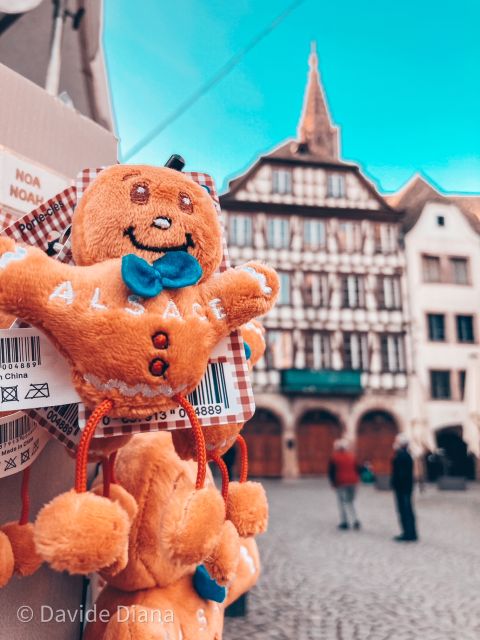
The listed duration is 150 minutes, and the itinerary adds up to a continuous route through central Strasbourg. Bring comfortable shoes and clothing suited to the forecast.
This is a city walk, not a ride with occasional exits. You will spend time outdoors at every major section, with a mix of walking, standing, listening, and photo stops. The route is wheelchair accessible, which is an important advantage, though the practical ease of a given day can still depend on weather and street conditions.
Cold weather deserves special attention. The guide can keep you engaged, but a lively presentation does not replace warm layers. On hot days, carry water and use the pauses sensibly. Pregnant women are specifically listed as unsuitable for this activity, so choose another way to see the city if that applies to you.
Is $35 good value?
At $35 per person, I consider this a fair price for a 150-minute guided introduction, particularly because the group is capped at 10. You are paying for a structured route, a live guide, historical explanation, and local suggestions rather than transportation or paid admissions.
The value is strongest if you are new to Strasbourg and want to cover the main central areas without planning the route yourself. The tour connects sights that you might otherwise visit separately, and the guide supplies the historical links between them.
It is less suitable if you want interior visits, a food tasting, or an in-depth tour of one building. Cathedral admission is extra, and no entrance fees are included. You should also remember that a small-group tour is not the same as a private tour. You will still follow the guide’s timing and route.
Free cancellation up to 24 hours before the start gives you some flexibility, and the reserve-now, pay-later option can help if your plans are still shifting. These policies are useful, but the core value comes from the route and the guide’s presentation.
Who should book this walking tour?
I would choose it for a first morning or afternoon in Strasbourg, especially if you want to get your bearings fast. It suits couples, families, solo visitors, and small groups who prefer an organized walk with plenty of context.
History and culture fans should find plenty to enjoy, but you do not need to be a specialist. The explanations are designed to be clear, and humor keeps the 2.5-hour route from feeling like a classroom.
It is also a good choice for anyone who values restaurant and café advice. Several people used the guide’s suggestions to shape the rest of their stay. That practical local knowledge can make a $35 tour more valuable than a route that only points out buildings.
I would hesitate if you dislike walking, have difficulty standing outdoors, or want substantial free time at each stop. I would also choose a cathedral-focused tour instead if your main goal is the interior and detailed religious art. This experience ends outside and gives you a broad city overview.
Should you book it?
Book this tour if you want Strasbourg’s main squares, Neustadt, Petite France, and Notre Dame connected by one clear story. The strongest reasons are the small group, the energetic English or Italian presentation, and Davide’s useful advice for eating and exploring after the walk.
Skip it if you prefer to wander alone, need long stops for photography, or want admission to the cathedral included. For most first-time visitors with comfortable shoes and weather-ready clothing, $35 is a sensible way to understand Strasbourg before exploring it on your own.
FAQ
Where does the Strasbourg walking tour start?
It starts at Place de la République. Your guide waits in the center of the square, in front of the war memorial.
Where does the tour finish?
The tour ends at Place de la Cathédrale, outside Notre Dame Cathedral.
How long does the tour last?
The walking tour lasts 150 minutes, or two and a half hours.
What languages are available?
The live tour guide operates in English and Italian.
Is entry to Notre Dame Cathedral included?
No. The tour includes a guided visit and photo stop outside the cathedral, but entrance fees are not included.
How large is the group?
The tour is limited to 10 participants, making it a small-group experience.
Is the tour wheelchair accessible?
Yes, the activity is listed as wheelchair accessible. Comfortable shoes and weather-appropriate clothing are recommended.
More Walking Tours in Strasbourg & Alsace
- Colmar: Highlights Walking Tour and Wine Tasting
★ 4.9 · 209 reviews - Colmar: Unusual Walking Tour with a local guide
★ 4.9 · 194 reviews - Strasbourg: Guided Walking Tour
★ 4.7 · 127 reviews - Strasbourg : European District Walking Tour
★ 5.0 · 95 reviews
Recently reviewed around Strasbourg & Alsace
- Guided tour of Nancy, Great History and Little Anecdotes★ 5.0 · 89 reviews
- Guided Tour “Unusual Nancy”★ 5.0 · 36 reviews
- Alsace villages half day tour from Colmar★ 5.0 · 186 reviews
- The Emblematic: visit of villages, Haut-Koenigsbourg, Wine tasting★ 5.0 · 81 reviews
- Segway Tours 2h in Colmar★ 5.0 · 116 reviews
- Alsace’s Gems Small Group Day Tour from Colmar★ 5.0 · 84 reviews
- Alsace 4 Wonders Small-Group Day Trip from Colmar★ 5.0 · 380 reviews
- Private and customizable: Alsace Wine Route HIGHLIGHTS in 3 hours★ 5.0 · 63 reviews
Walking Tours, compared.
Paris Top Sights Half Day Walking Tour with a Fun Guide
Read our review →
Montmartre Hidden Gems and Scenic Highlights Walking Tour
Read our review →
Montmartre Hill French Gourmet Food and Wine Tasting Walking Tour
Read our review →
Paris Île de la Cité and Notre-Dame Walking Tour With Crypt
Read our review →
Montmartre Cheese, Wine & Pastry Guided Walking Tour
Read our review →
Paris in a Day: Louvre or Orsay, Eiffel Tower, City Walk & Cruise
Read our review →
Montmartre Highlights Walking Tour with a Local Guide
Read our review →
Browse the lists this tour appears in