
Reviewed · LOUVRE MUSEUM TOURS
Louvre Museum: Skip-the-Line Guided Tour
The Louvre can swallow an entire day before you find the Mona Lisa. This two-hour guided tour gives you a clear route through its famous rooms, with fast-track entry and an English-speaking guide to explain what you are seeing. You can then stay inside and continue on your own.
I like the practical focus: you see the Mona Lisa, Venus de Milo, and Nike of Samothrace, rather than spending your precious Paris time hunting for them. I also like the small-group and private options, since a crowded museum is much easier to handle when your guide can keep the pace and answer questions.
The drawback is price. At $146 per person, this costs far more than entering the Louvre alone, and two hours can only cover a small portion of the museum. You are paying for direction, context, and time saved, not for a complete visit.
In This Review
- Key points at a glance
- Why a guided Louvre visit helps
- Fast-track entry and the meeting point
- The Louvre’s famous trio
- The Mona Lisa
- The Venus de Milo
- Nike of Samothrace
- Ancient Egypt and the Near East
- Greek, Etruscan, and Roman works
- Renaissance masters and French painting
- Crowds, pace, and group size
- What happens when the guided part ends
- Is $146 per person good value?
- Who should book this tour?
- Final verdict: a smart first look at the Louvre
- FAQ
- How long does the Louvre guided tour last?
- What is included in the price?
- Does the tour include food or drinks?
- Is the guide available in English?
- Can I book a private tour?
- Which Louvre artworks will I see?
- Can I stay in the museum after the tour?
- What should I bring?
- Can I bring a large bag or suitcase?
Key points at a glance
- Fast-track museum entry: Avoid the regular ticket line and get inside with less waiting.
- Three essential masterpieces: The route includes the Mona Lisa, Venus de Milo, and Nike of Samothrace.
- Ancient collections included: You will see Egyptian, Near Eastern, Greek, Etruscan, and Roman works.
- English-speaking guidance: Guides such as Julie, Anne, Emmanuel, Olivia, and Olivier have led engaging tours, though your assigned guide may differ.
- Small groups or private tours: A smaller group can make it easier to hear explanations and ask questions.
- Free time afterward: Once the guided portion ends, you may continue exploring the Louvre independently.
Why a guided Louvre visit helps
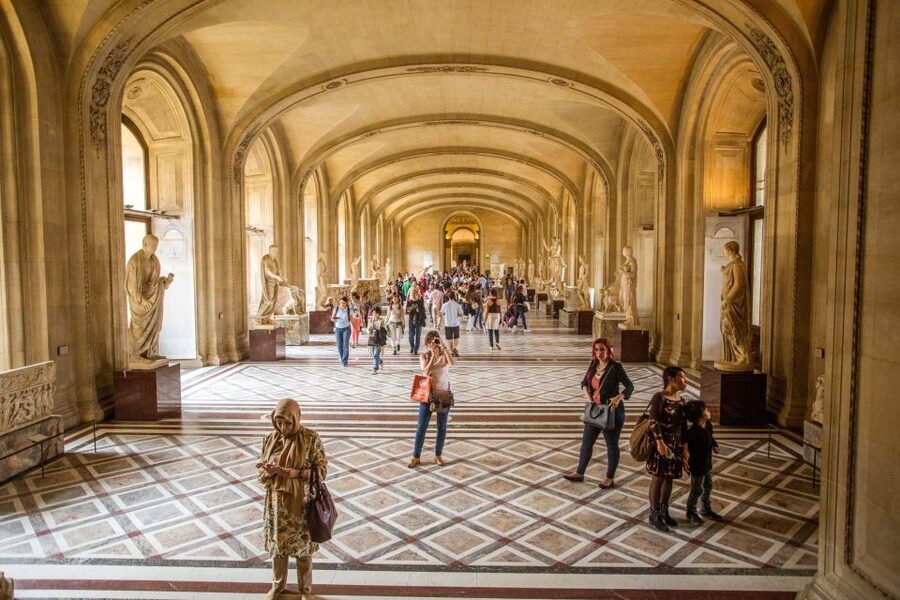
The Louvre is not simply a large museum. It is a former royal palace, built around a fortress from the 12th century and opened as a public museum in 1793. Its collection covers thousands of years and includes more than 6,000 paintings, along with sculpture, decorative art, and ancient objects.
That scale creates a problem. If you enter without a plan, you may spend much of your visit checking maps, following signs, and trying to locate the works you came to see. A guide gives your visit a backbone.
I especially value this approach if you have only a few days in Paris, are visiting with children, or do not usually spend hours in art museums. You get the major sights, a dose of history, and a chance to understand why certain works matter.
The tour is not designed to show you everything. No two-hour visit could do that. It works best as an introduction, not as a complete study of the Louvre.
More Louvre Museum museums and collections:
- Paris: Louvre Museum Timed-Entrance Ticket
★ 4.6 · 71,977 reviews - Louvre Museum Masterpieces Guided Tour with Access
★ 4.5 · 12,023 reviews - Paris: Louvre Museum Entry Ticket With Host and River Cruise
★ 4.6 · 9,926 reviews
Fast-track entry and the meeting point
Fast-track entry is one of the clearest practical benefits. The museum can attract long ticket lines, so avoiding that queue may save meaningful time, especially during busy periods.
Your meeting point can change depending on the option you book. Read the instructions carefully and allow enough time to find the guide. This is not a good tour to approach casually after a rushed metro ride, since the meeting details are part of making the fast entry work.
Bring a passport or ID card. The museum does not permit luggage or large bags, and any item larger than 55 by 35 by 20 centimeters is not allowed. Pack lightly. A small day bag is a much safer choice than arriving with a suitcase or oversized backpack.
The tour includes the Louvre entrance fee, a licensed guide, and fast-track access. Food, drinks, and transport away from the museum are not included.
The Louvre’s famous trio
Most people book this experience for three works, and the tour makes room for all of them.
The Mona Lisa
Leonardo da Vinci’s Mona Lisa is the Louvre’s biggest draw. The painting itself is smaller than many first-time visitors expect, and the room can be crowded. Your guide helps place it in the wider story of Renaissance art rather than leaving you to stare briefly over a wall of phones.
You should expect a busy viewing area. Fast-track entry gets you into the museum more quickly, but it does not make the Mona Lisa room private or quiet. The value here comes from reaching the painting efficiently and learning what to look for before moving on.
More Louvre Museum trips worth a second look
- Louvre Museum: Skip-the-Line Small Group Guided Tour
★ 4.6 · 3,960 reviews - Paris: Skip-the-Line Louvre Highlights Tour with Mona Lisa
★ 4.7 · 908 reviews - Louvre Museum Skip the Line Entry with Introduction to Mona Lisa
★ 3.0 · 576 reviews - Paris: Skip-the-Line Louvre Highlights Guided Tour
★ 4.8 · 121 reviews
The Venus de Milo
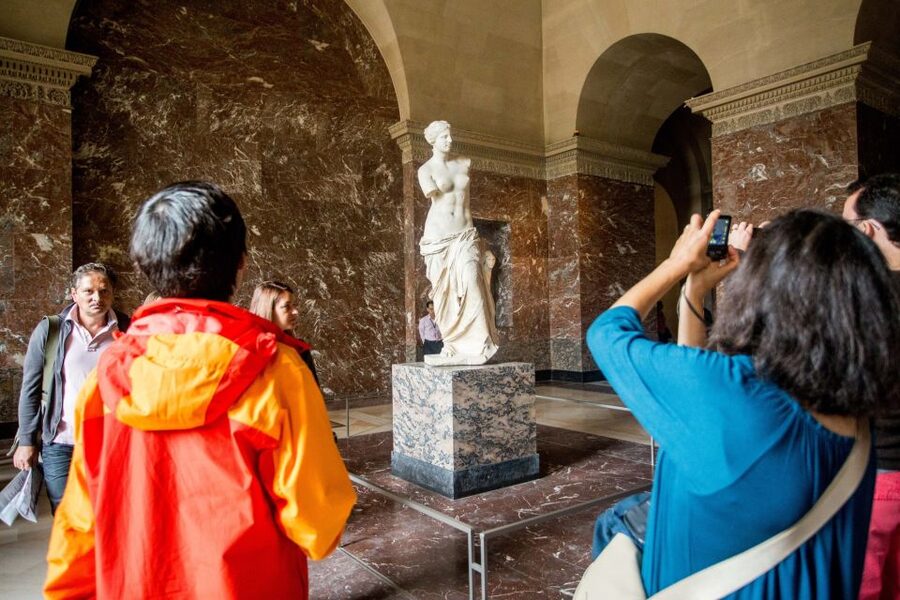
The Venus de Milo is one of the museum’s best-known Greek sculptures. Its missing arms have helped make it famous, but the work deserves more than a quick photograph. Your guide can help you notice its pose, balance, and idealized form.
This stop also gives you a break from paintings. The Louvre’s collection can feel heavily focused on framed art when you first imagine it, but its ancient sculpture rooms are among the most memorable parts of the visit.
Nike of Samothrace
The winged Nike of Samothrace is displayed at the top of a grand staircase. Its setting is part of the experience. From below, the sculpture appears to move forward through wind, with its wings and clothing creating a strong sense of motion.
This is a useful example of why a guide adds value. You are not only looking at a famous statue. You are seeing how placement, scale, and surrounding architecture shape the way it feels.
Ancient Egypt and the Near East
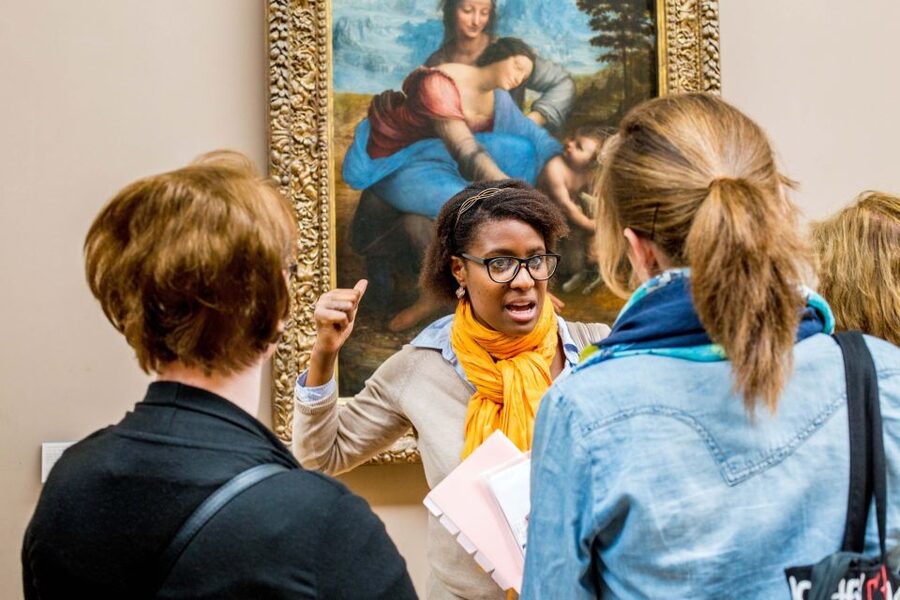
The Louvre’s ancient collections take you much further back than the Renaissance. Egyptian and Near Eastern objects date as far back as 4000 BC, giving the tour a long historical range in a short time.
You might see objects connected to everyday life, religion, government, burial customs, or royal power. The important point is variety. These are not simply isolated old objects behind glass. Together, they show how people recorded beliefs, organized societies, and represented authority.
The Near Eastern galleries add another layer to the visit. If you mainly came for Leonardo and Greek sculpture, these rooms can broaden your idea of what the Louvre holds. They also make the tour more useful for anyone interested in archaeology, ancient civilizations, or museum history.
Because the tour lasts only two hours, the guide will need to select highlights. Do not expect a full survey of Egypt or the Near East. Instead, expect a few carefully chosen stops that help you understand the age and range of the collection.
Greek, Etruscan, and Roman works
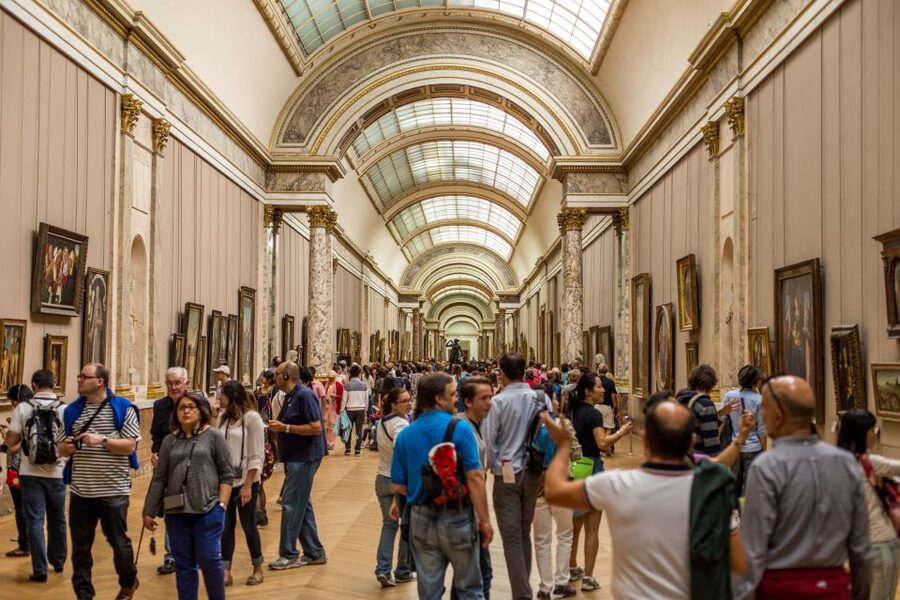
The ancient Mediterranean collection includes Greek, Etruscan, and Roman relics. The Venus de Milo and Nike of Samothrace are the headline pieces, but the surrounding works help explain the artistic traditions they belong to.
I find this part of the route valuable because it links familiar names to a larger story. You can see how later European artists looked back to ancient forms, ideal proportions, and mythological subjects. The tour also gives you a chance to compare different cultures rather than treating each object as a separate attraction.
The Louvre is famous for paintings, but the sculpture galleries often offer more room to pause and look. They also help vary the pace of a visit that might otherwise become a succession of crowded painting rooms.
Renaissance masters and French painting
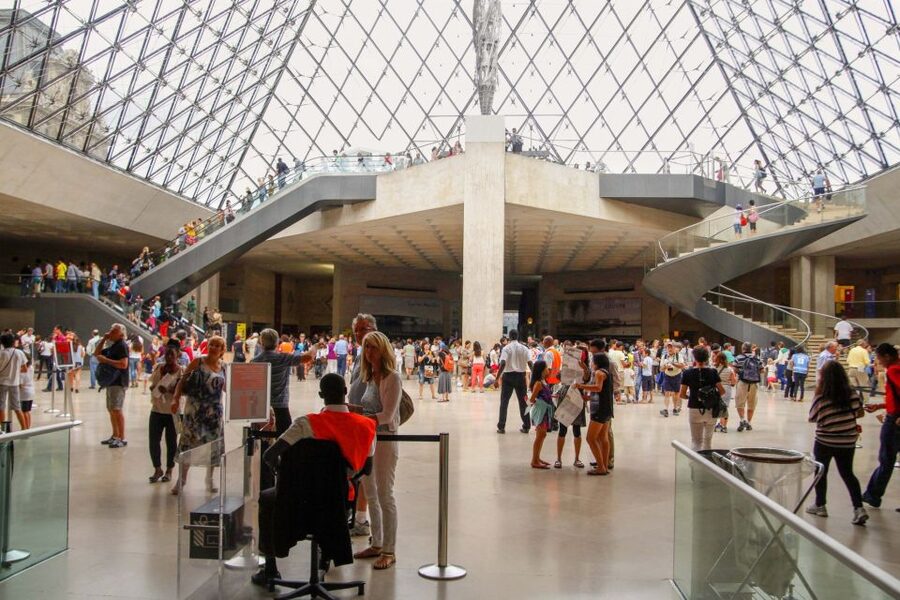
The guided route includes works associated with Leonardo da Vinci, Raphael, and Michelangelo, as well as French and Italian art. You should think of this as a selected introduction, not a complete art-history lesson.
Leonardo is naturally central because of the Mona Lisa and the museum’s connection to The Da Vinci Code. The film brought extra attention to the Louvre, but the museum’s appeal does not depend on movie fame. Its real strength is the chance to see major works in the same institution as ancient sculpture and archaeological collections.
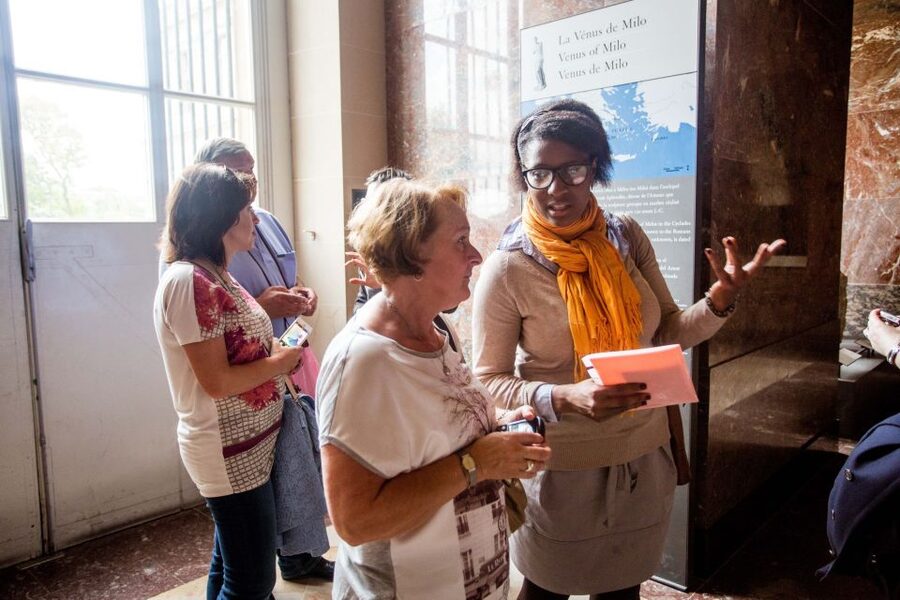
The guide’s role is to help you look with purpose. A strong explanation can point out a gesture, composition, symbol, or change in artistic style that you might otherwise miss. Guides including Julie, Anne, Emmanuel, Olivia, and Olivier have been praised for clear explanations, warm personalities, and well-organized routes. The guide assigned to your tour may be someone else, but the English-language format is consistent.
Some guides use headsets, which can be especially helpful when the galleries are noisy. One family found that the audio worked well and made it easy to follow the guide through crowded rooms. That matters more than it sounds. Losing your guide in a packed gallery can turn a smooth tour into a scavenger hunt.
Crowds, pace, and group size
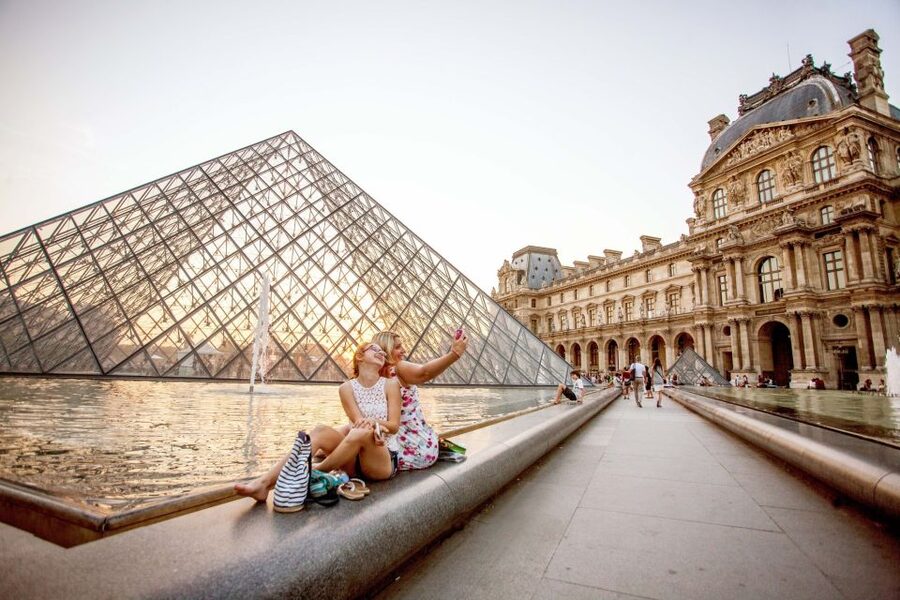
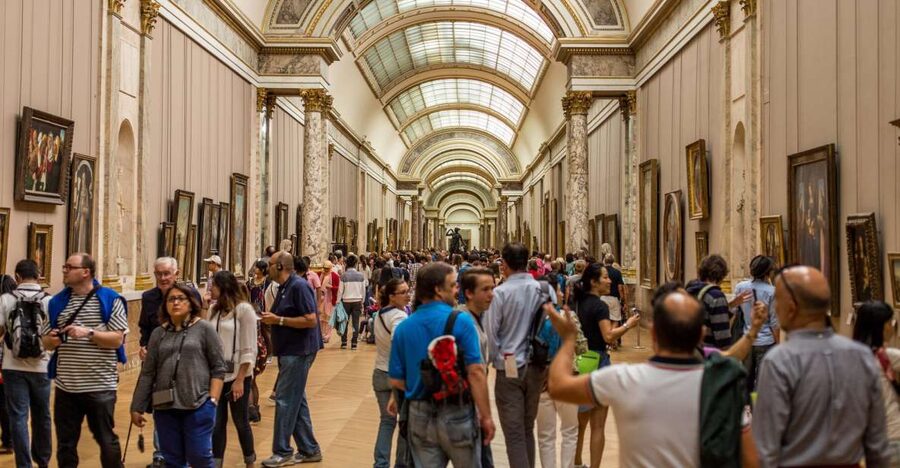
Crowds are the main weakness of any Louvre visit, and this tour cannot remove them. The museum may still feel packed around the Mona Lisa, major staircases, and the most famous sculpture rooms.
What the tour can do is reduce wasted time. A guide who knows the route can move you from one important work to the next without constant map checks. A small group also makes it easier to stay together.
Private tours are particularly useful for families or groups with different walking speeds. One family had a child with an injured foot, and the guide adjusted the pace. Another family traveling with a nine-year-old found that the guide kept the child involved rather than speaking only to adults.
That flexibility is a real reason to choose the private option, if the higher cost fits your budget. A standard small group may suit adults who want a focused introduction. A private tour gives you more control over questions, pace, and the balance between painting, sculpture, and ancient objects.
The usual advertised duration is two hours, though one small group spent close to three hours with the guide. Do not count on that extra time. Plan your day around two hours, then treat any additional time as a bonus.
What happens when the guided part ends
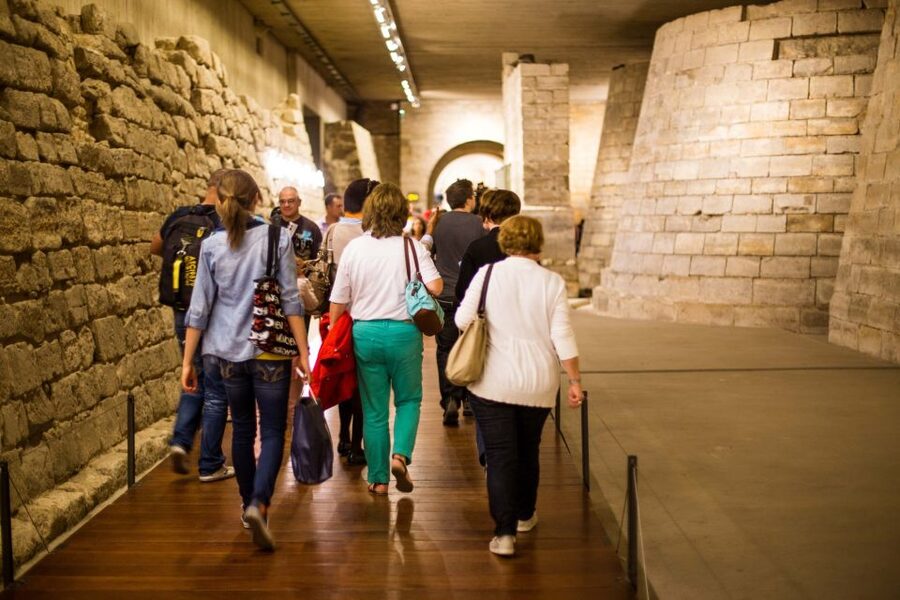
The tour does not force you out of the Louvre at the end. You can continue exploring on your own, which makes the two-hour format more useful than it first appears.
I suggest treating the guided portion as your orientation. Listen closely to the route, then return to one or two areas that caught your interest. You may want more time with the ancient collections, another look at a favorite painting, or a quieter wander through rooms the group did not cover.
This arrangement also helps if you are not a committed art fan. Two hours is long enough to see the essential works without reaching museum fatigue. Afterward, you can leave, shop for a souvenir, or continue at your own pace.
The Louvre has limited toilets, so use one when you have the chance. The guided portion may finish near restroom facilities, but you should not rely on that as a fixed part of every route.
Is $146 per person good value?
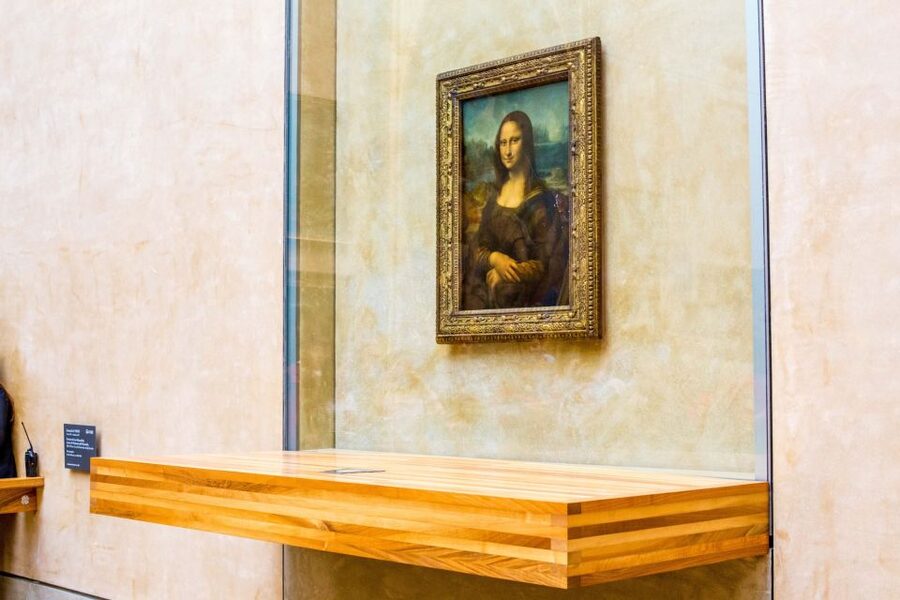
At $146 per person, this is a premium museum visit. The cost is well above the price of entering independently, so you should be clear about what you are buying.
You are paying for three things:
- Faster access through the ticket line
- A licensed English-speaking guide
- A planned route through a very large museum
If you already know the Louvre, enjoy reading labels, and have plenty of time, independent entry will likely offer better value. You can move slowly, choose your own rooms, and return to favorites without following a schedule.
If this is your first visit, the calculation changes. The Louvre’s size can make independent sightseeing inefficient, particularly when you want to see the Mona Lisa, Venus de Milo, and Nike of Samothrace in one visit. The tour helps you get those priorities done, then leaves you free to stay.
The private option makes the most sense for families, groups with mobility concerns that do not require wheelchair access, or anyone who values personal attention. For a solo visitor or budget-conscious couple, a small group offers a better balance.
Who should book this tour?
I would choose this tour if you want the Louvre’s essential works without spending half your visit finding them. It suits first-time visitors, short Paris stays, families, and people who want art explained in plain English.
It also suits visitors who are not especially focused on art. A well-paced two-hour route can keep the museum from becoming tiring, while the ancient objects and famous sculptures add variety.
You may want to skip it if you prefer complete freedom, plan to spend an entire day inside, or are comfortable building your own route. The price is hard to justify if fast entry and expert orientation do not matter to you.
Wheelchair users should not book this experience because it is listed as unsuitable for wheelchair users. Anyone with oversized luggage should make other arrangements before arriving.
Final verdict: a smart first look at the Louvre
Book this guided Louvre tour if you want a focused first visit, quick access, and useful explanations from an English-speaking guide. The Mona Lisa, Venus de Milo, Nike of Samothrace, and ancient collections give you a strong introduction to the museum’s range.
I would not call it a bargain. At $146, it asks you to value saved time and a guided route. For many first-time visitors, that trade can be worthwhile, especially in a crowded museum where getting lost costs more than you expect.
Choose a small group for better value, or a private tour if your family needs a flexible pace. After two hours, stay inside and explore further if you still have energy. That extra freedom is what makes this short tour more than a quick checklist.
FAQ
How long does the Louvre guided tour last?
The advertised duration is two hours. You can explore the museum independently after the guided portion ends.
What is included in the price?
The price includes the Louvre entrance fee, a licensed guide, and fast-track entrance.
Does the tour include food or drinks?
No. Food and drinks are not included.
Is the guide available in English?
Yes. The live tour guide language is English.
Can I book a private tour?
Yes. Private and small-group options are available, depending on the option you choose.
Which Louvre artworks will I see?
The tour highlights the Mona Lisa, Venus de Milo, and Nike of Samothrace. It also includes selected Egyptian, Near Eastern, Greek, Etruscan, Roman, French, and Italian works.
Can I stay in the museum after the tour?
Yes. You can continue exploring the Louvre on your own after the guided tour ends.
What should I bring?
Bring a passport or ID card.
Can I bring a large bag or suitcase?
No. Luggage and large bags are not allowed, and items over 55 by 35 by 20 centimeters cannot enter the museum.
Recently reviewed around Louvre Museum
- Louvre Private Tour – The Essentials and More with Expert Guide★ 5.0 · 227 reviews
- 1h30 – Louvre Highlights optional ‘families with kids’ – Eng/Esp★ 5.0 · 32 reviews
- Paris: Skip-the-Line Louvre Highlights Guided Tour★ 4.8 · 121 reviews
- Paris: Louvre Museum Highlights Small-Group Guided Tour★ 4.8 · 157 reviews
- Private Guided Tour, The Louvre by night !★ 4.2 · 30 reviews
- Paris: Private Photoshoot Outside the Louvre Museum★ 4.8 · 139 reviews
- Paris: Montmartre, Notre-Dame, & Louvre Tour with Cruise★ 4.5 · 70 reviews
- Louvre & Mona Lisa Small Group Tour with Reserved Entry★ 4.4 · 145 reviews
Louvre Museum Tours, compared.


Louvre Guided Tour with Reserved Access & Boat Cruise
Read our review →
Louvre Museum Masterpieces Guided Tour with Access
Read our review →
Louvre Museum Entry Ticket With Host and River Cruise
Read our review →
Priority Access Louvre with Host -Direct to Mona Lisa
Read our review →
Mona Lisa & Louvre Masterpieces Tour with Reserved Access
Read our review →
Louvre Museum – Exclusive Guided Tour (Entry Included)
Read our review →
Louvre Reserved Ticket and River Cruise Combo
Read our review →Browse the lists this tour appears in