
Reviewed · COOKING CLASSES
Paris: French Macaron Culinary Class with a Chef
The hardest part of making a macaron is getting that crisp shell and soft center just right. This Paris class breaks the job into manageable steps, from whipping the meringue to preparing the ganache, with a chef nearby to correct small mistakes before they become pastry disasters.
I like the small class size and the fact that you make the macarons yourself rather than simply watching a demonstration. I also like the friendly, family-ready teaching style: chefs such as Alice, Amélie, Delphine, Matthieu, and Christian have helped complete beginners and children produce good-looking results. The main consideration is timing. The stated duration is 150 minutes, but one participant finished in about 1 hour 45 minutes, so do not book it if you need a precisely timed two-and-a-half-hour activity.
In This Review
- Key points at a glance
- What this macaron class actually teaches
- Starting with the meringue
- Learning ganache and choosing flavors
- Piping shells and getting the texture right
- A friendly kitchen atmosphere
- How long the 150-minute schedule feels
- Taking your macarons home
- Value for couples, families, and solo visitors
- Price, flexibility, and practical value
- Small details that make the difference
- Should you book the Maison Fleuret macaron class?
- FAQ
- Where does the macaron class meet?
- How long does the class last?
- Is the class taught in English?
- How many people are in the group?
- Do I take macarons home?
- Is the class suitable for children and wheelchair users?
Key points at a glance
- Small-group instruction: The advertised maximum is six people, giving the chef time to help with individual techniques.
- A real pastry lesson: You work through meringue, ganache, shell texture, color, and flavor instead of only decorating ready-made cookies.
- Good for families: Children as young as five and six have taken part successfully, with chefs adjusting the lesson to keep them involved.
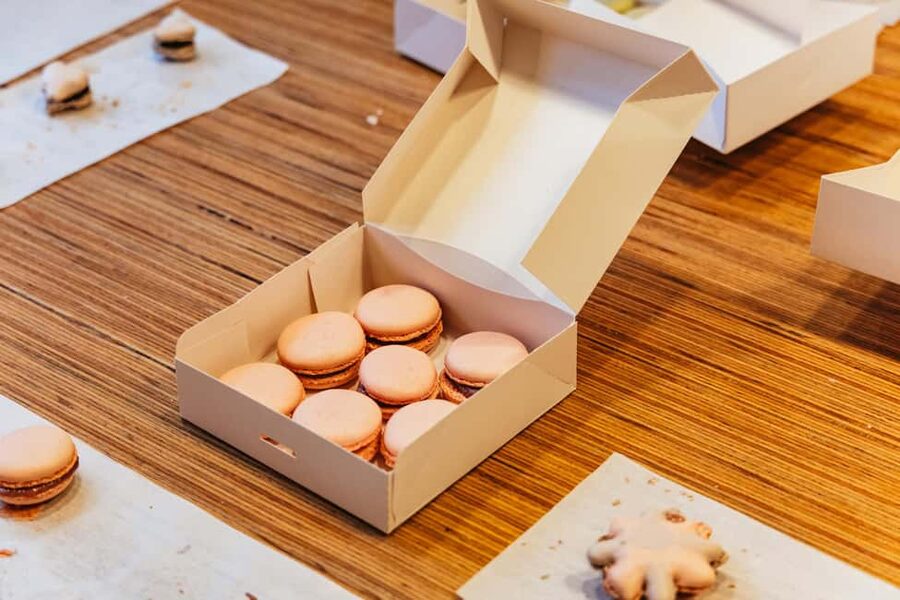
- Take-home reward: You leave with a box of macarons made during the class, enough to share or enjoy over the next few days.
- Central meeting point: Find the Maison Fleuret School and look for the grey door, since there may be little or no signage outside.
- English instruction: The class is conducted in English, and some chefs may also speak French.
What this macaron class actually teaches
French macarons look simple, but they are fussy little pastries. A smooth, even shell depends on several steps working together. The egg-white mixture must be whipped properly, the dry ingredients must be folded in with care, and the batter must reach the right consistency before it is piped.
This class focuses on those points rather than treating the macaron as a quick decorating project. You learn how to make the meringue, how to handle the ganache, and how to aim for the familiar combination of a lightly crisp exterior and a tender center.
That matters if you want to repeat the recipe at home. A recipe card alone may tell you what to do, but it cannot show you what the mixture should look like at each stage. Here, the chef can demonstrate the texture and offer small corrections as you work.
The class is led in English and takes place at Maison Fleuret School in the Ile-de-France region. The meeting instructions are simple: arrive at the reserved time and meet the team in front of the grey door. There may not be a large sign outside, so keep the meeting point details handy rather than wandering around looking for a pastry-school storefront.
More cooking and pastry classes in Paris:
- Paris Cooking Class and Lunch with Wine plus Market Visit Option
★ 5.0 · 1,024 reviews - Paris: Macaron Class at Galeries Lafayette
★ 4.3 · 905 reviews - Paris Cooking Class: Learn How to Make Macarons
★ 5.0 · 634 reviews
Starting with the meringue
The lesson begins with an introduction to the chef and the other people in your group. The exact chef can vary. Alice, Amélie, Delphine, Matthieu, Christian, Matteo, William, Felix, and others have led sessions, so the personality of the class depends partly on who is teaching that day.
The common thread is a practical demonstration followed by hands-on work. You learn how the meringue should be prepared before moving on to the next stage. This is the foundation of the macaron, and the chef’s guidance is especially useful if you have never made one before.
Several instructors have been praised for making the process feel calm and approachable. That is important because macarons have a reputation for being difficult. A beginner can easily overmix the batter, underwork it, or misjudge the consistency. Having a chef watch the process gives you a better chance of understanding what went wrong if the mixture is not behaving.
The class is not only for first-time bakers. One participant had tried macarons before and failed, then left feeling more confident about trying again at home. Another described the session as suitable for beginners and people with some baking experience. You should expect a solid introduction rather than an advanced professional pastry course.
Learning ganache and choosing flavors
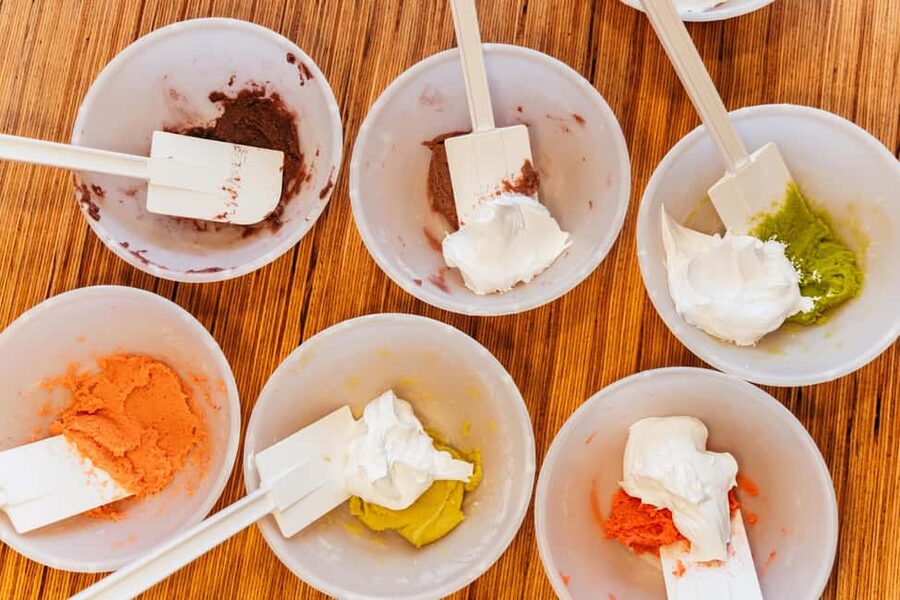
After the meringue work, the focus turns to ganache. This filling gives the macaron its soft, flavorful middle, and the lesson explains how to prepare it and use it between the shells.
You may get to choose colors and flavors for your macarons. One family also learned how to make multicolored macarons, adding a playful touch to the finished box. The available choices can vary by session, so I would not book this expecting a particular flavor unless it has been confirmed in advance.
The practical value here is that you are not simply following a rigid recipe. You get a sense of how the shell and filling work together. The outside should have a delicate bite, while the center should remain pleasant and soft. The chef’s advice helps connect the ingredients to the final texture.
Some of the ingredient measuring may be handled by the instructor, as one participant noted. That can be useful for a short class because it leaves more time for mixing, piping, and learning. It also means the experience is not exactly the same as making every part of a recipe from scratch at home.
If your main goal is to understand the technique and have fun, this is a sensible tradeoff. If you want a full pastry-school lesson covering weighing, preparation, baking science, and troubleshooting in great depth, you may find the format fairly introductory.
Piping shells and getting the texture right
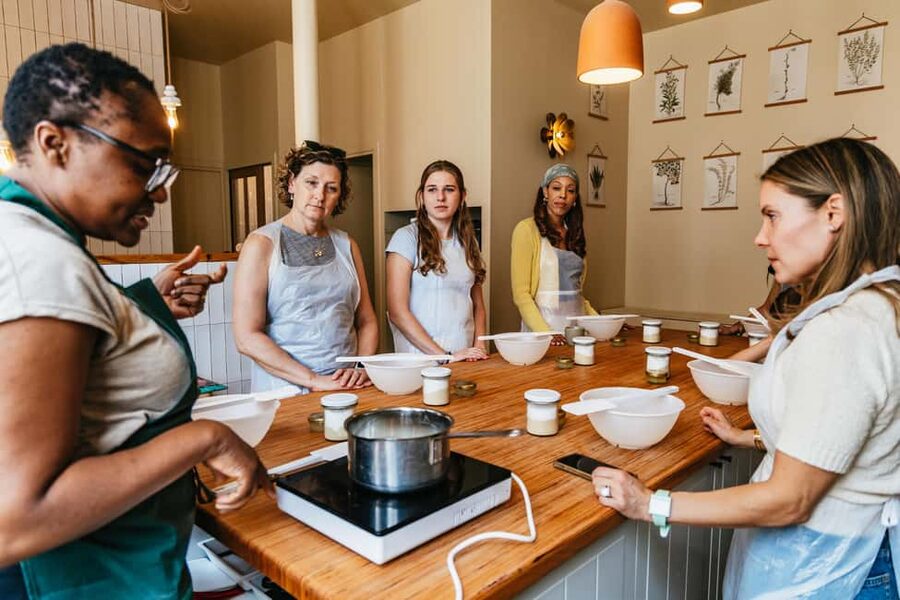
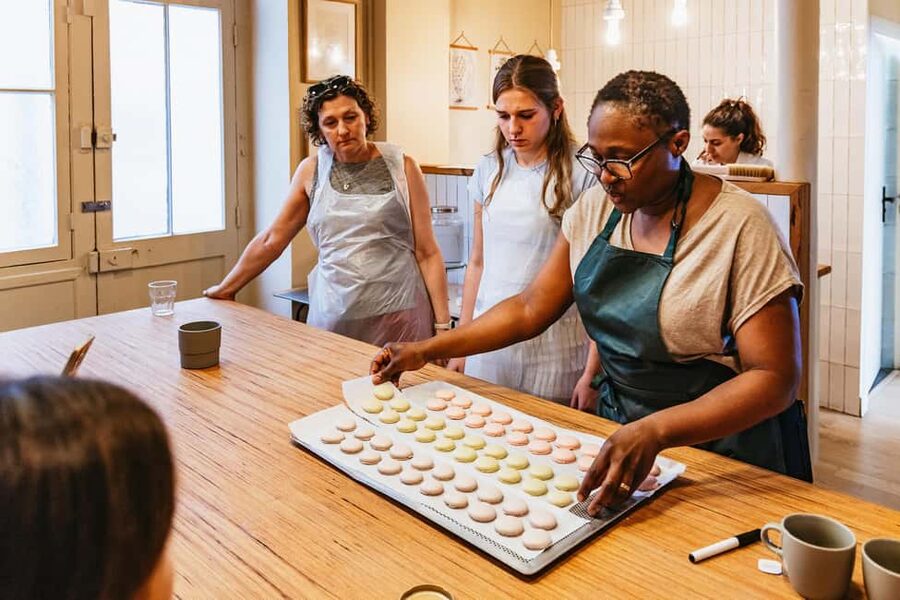
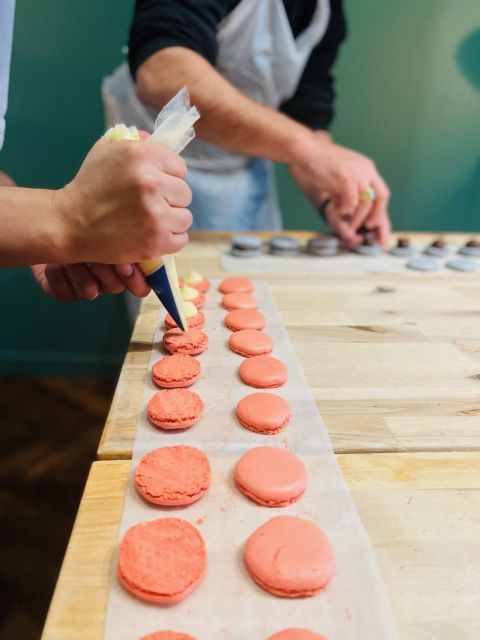
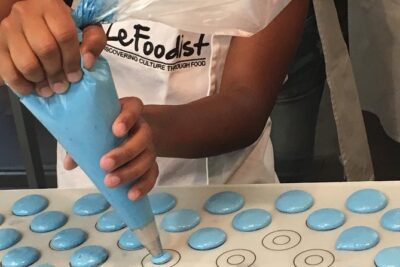
The most satisfying part is seeing the batter become recognizable macaron shells. You work toward an even shape and a smooth surface, then learn what helps create the crisp outside associated with a properly made macaron.
The chef demonstrates the process and steps in when needed. That personal help is one of the strongest reasons to choose a small group. With six people, the instructor has a fair chance of checking your technique instead of giving one general demonstration and leaving you to guess.
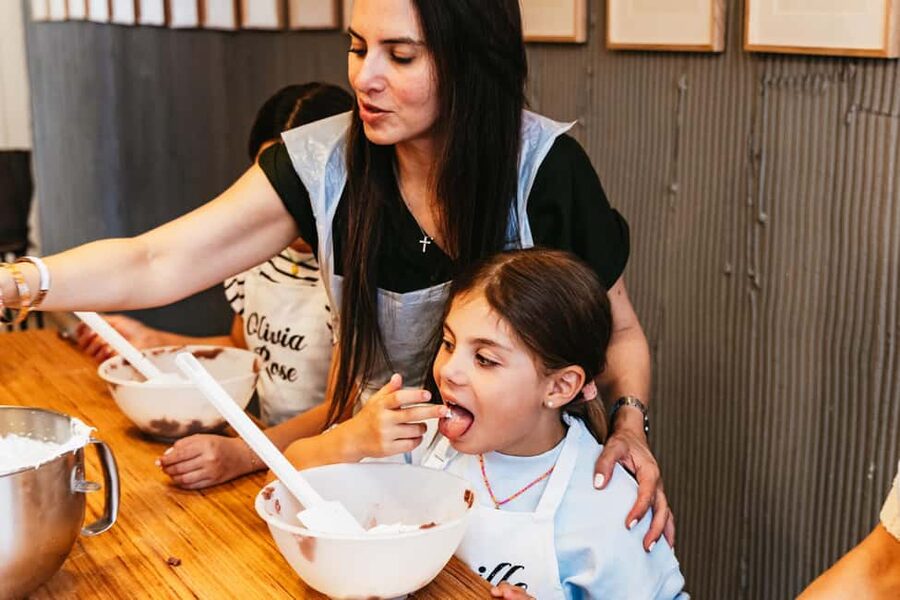
The class has worked well for children because the process is visual and hands-on. Families with children aged five, six, seven, eight, nine, eleven, thirteen, and fourteen have taken part, and several chefs were praised for bringing younger participants into the work. Children will still need adult support and attention, but the activity is accessible enough to suit a mixed-age family group.
Teenagers may enjoy it even more than younger children. They can follow the technical steps, make choices about color and flavor, and take part in a creative activity that feels more special than a standard baking session at home.
Do keep expectations realistic. The system and chef support make success more likely, but this is still a working kitchen activity. Your shells may not all look identical, and the class is more about learning and enjoying the process than producing a professional pastry-shop display.
More Paris trips worth a second look
- Fragonard Paris: Mini Perfume Workshop
★ 4.5 · 1,924 reviews - Paris Croissant Small-Group Baking Class with a Chef
★ 5.0 · 910 reviews - Paris: 2-Hour Perfume Creation Workshop
★ 4.8 · 731 reviews - Paris: French Croissant Baking Class with a Chef
★ 4.9 · 712 reviews
A friendly kitchen atmosphere
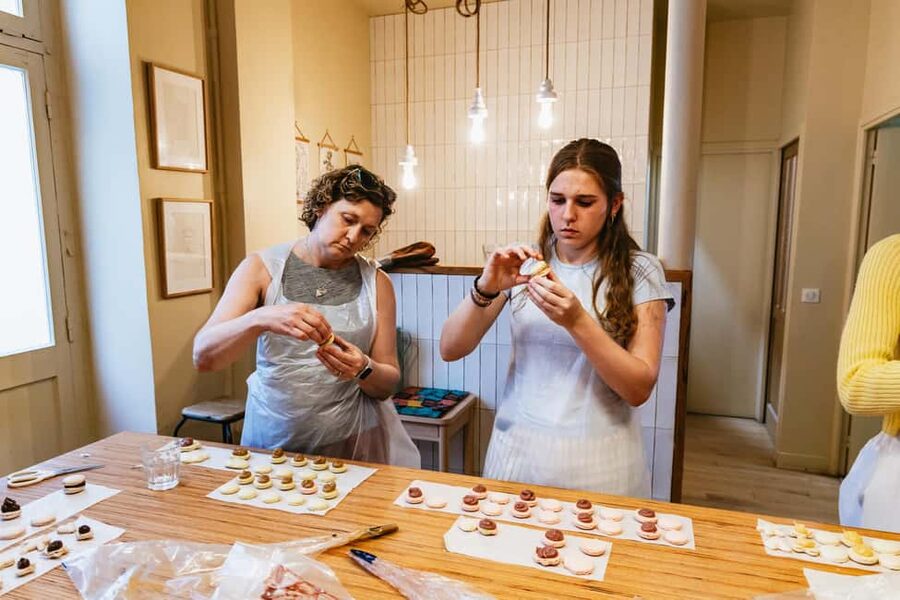
The social side of the class is part of its appeal. You work alongside other participants, compare results, and share the usual small triumphs and mistakes of baking. One participant even mentioned trading macarons with people making croissants nearby.
The setting has been described as a clean, attractive kitchen area, with other pastry classes taking place in rooms close by. You might see or hear activity connected with croissant or lemon-tart lessons, which gives the school a pleasant pastry-workshop feel.
The mood is generally relaxed rather than formal. Chefs such as Amélie have been praised for using humor and keeping the experience low pressure. Delphine has been noted for explaining steps in both French and English, while Matteo was praised for helping the group as a whole and then giving individual advice.
The class atmosphere can vary with the group. Most sessions appear to be social and easygoing, but one person found the last part too loud and wanted more advanced information. That is a fair warning. A lively group can add energy, but it may not suit you if you want a quiet, highly technical lesson.
How long the 150-minute schedule feels
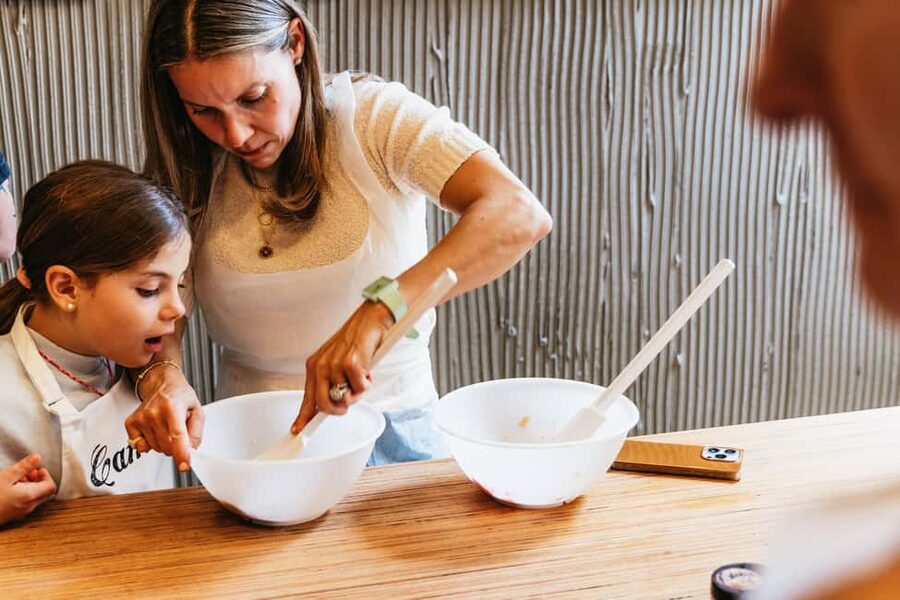
The advertised duration is 150 minutes. That gives enough time for instruction, preparation, assembly, and collecting your finished macarons without making the class feel like a rushed stop.
Still, allow some flexibility. One participant reported finishing after about 1 hour 45 minutes, rather than the two and a half hours shown in the description. The actual pace may depend on the group, the chef, and how much time is needed for each step.
I would schedule this as a stand-alone activity rather than placing an important timed reservation immediately afterward. You need time to find the grey-door meeting point, settle into the class, and leave with your box. The activity is not a hotel pickup excursion, so you are responsible for getting to and from the school.
The school is described as having a central location, though the supplied details do not give a street address or nearby transit stop. Check the current meeting instructions carefully before setting out. In a few cases, the time or location changed, and the provider sent updates clearly in advance.
Taking your macarons home
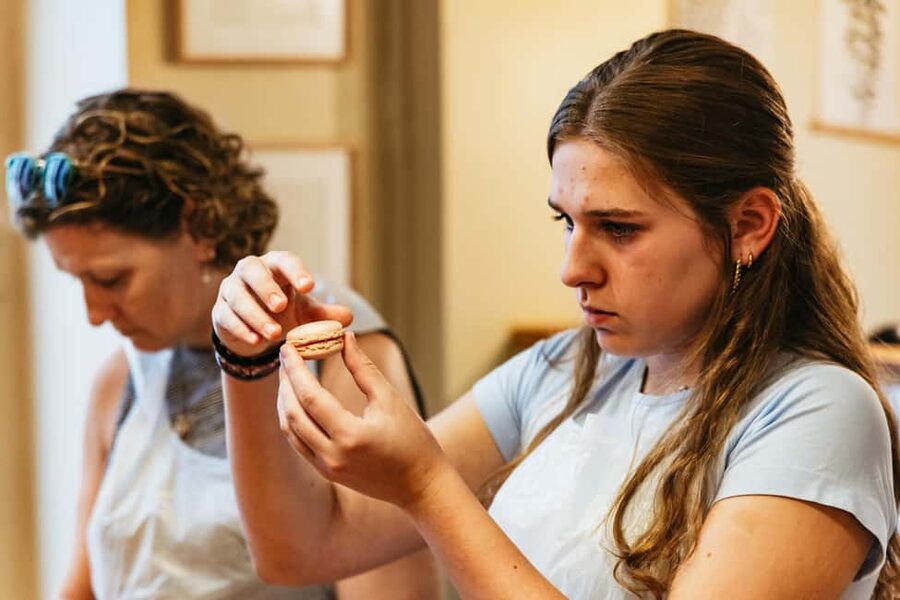
At the end, you receive a box of macarons made during the lesson. The exact quantity is not formally stated, but one participant said each person made about a dozen plus a few extra. That is a useful idea of the likely reward, though you should treat it as an example rather than a guarantee.
This take-home box adds real value. You get something edible to share with family or friends, plus a reminder of the Paris activity that is more personal than another souvenir from a shop. One family enjoyed having macarons available for the rest of the week, and another managed to carry them back to the United Kingdom without the box collapsing or the pastries melting.
For the best results, handle the box carefully and consider the weather. The activity information does not promise special transport packaging or temperature control, so hot conditions could affect the pastries. If you plan to take them on a long journey, ask the school for handling advice before leaving.
The macarons are also part of the learning result. You can see the shell texture, filling, colors, and shapes you produced. Even if some are less tidy than others, that first box gives you something concrete to compare with future attempts at home.
Value for couples, families, and solo visitors
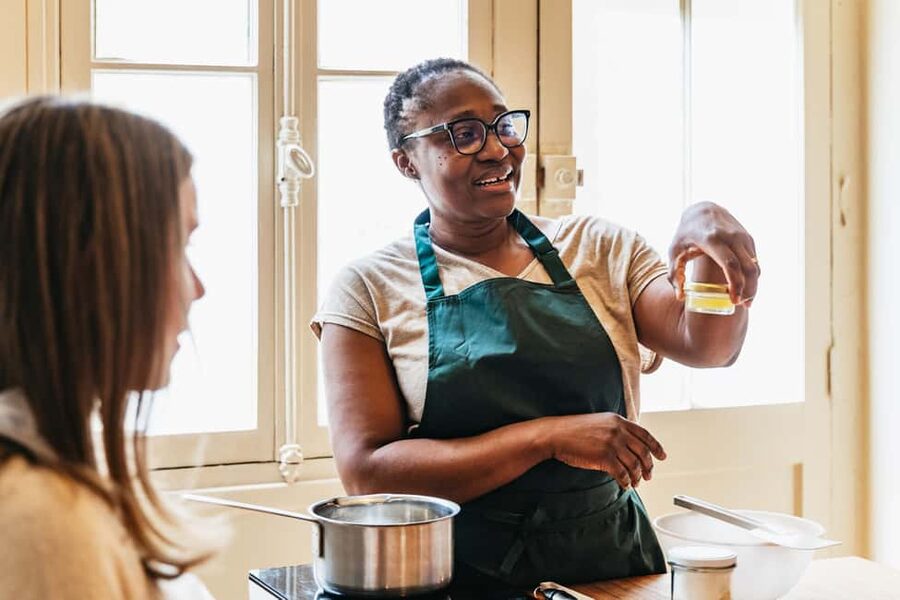
This is a good fit for couples who want an indoor Paris activity with a clear result. It also works well for families, especially those who enjoy food and want their children to take part in something rather than simply follow adults from one sight to another.
The small group helps families. Several children joined their parents and were able to participate, while chefs offered patience and encouragement. The activity can also suit a parent and teenager, since choosing colors and flavors gives older children more independence.
Solo visitors should not feel out of place. The group format gives you an easy way to meet other people, and the shared task creates conversation without forcing it. You will not be left to bake alone.
Food enthusiasts should note the level. The class teaches important basics and useful home-baking tips, but it is not designed as an advanced masterclass. If you already make macarons successfully, you may want to confirm how technical the session will be before booking. One participant specifically found the information insufficient for a more advanced level.
There is also no hotel pickup or drop-off. That is normal for a city cooking class, but it means you need to plan your route and arrive on time.
Price, flexibility, and practical value
A price is not provided in the activity details, so I cannot judge the exact cost against other Paris cooking classes. The value comes from several included elements: a chef instructor, hands-on macaron preparation, a small group, and a box of finished pastries to take away.
Compare the fare with what you would pay for a standard pastry demonstration. Here, you are paying for instruction and participation, not only for a tasting. The small group is especially important because personal help is what turns a recipe into a usable skill.
The booking terms also reduce some of the risk. You can cancel up to 24 hours before the class for a full refund, and the reserve-now, pay-later option lets you hold a place without paying immediately. These terms are useful when your Paris schedule is still changing.
The experience is wheelchair accessible according to the supplied information. The class language is English. Group size is advertised as limited to six, although one participant described a class of no more than eight, so confirm the current capacity if a very small group is essential to you.
Small details that make the difference
Bring the meeting instructions with you. The grey door is the key landmark, and the outside may have little signage. If the provider sends a location or time update, read it carefully, since at least some sessions have moved.
Plan to eat lightly beforehand if you want to sample your work, but do not expect the class to replace a meal. The included food is macarons, and the focus is pastry technique.
Keep your schedule loose after the class. The official time is 150 minutes, but the pace can be shorter or perhaps vary with the group. You will enjoy it more if you are not watching the clock.
If you are booking for children, check their ages and interests before reserving. The activity has worked for young children, but it still involves following instructions and handling a baking mixture. Children who enjoy making things will get more from it than children who only want to eat the finished pastries.
Should you book the Maison Fleuret macaron class?
I would book this if you want a hands-on Paris food experience that is friendly, compact, and suitable for families. The strongest features are the small group, personal chef help, approachable teaching, and the box of macarons you make yourself.
You should think twice if you are looking for advanced pastry theory, a guaranteed 150-minute schedule, or a particular flavor menu. The class is built for a broad range of abilities, so an experienced macaron baker may find it too basic.
For most visitors, though, it offers a good balance of learning and fun. You leave with practical tips, a better sense of why macarons succeed or fail, and a sweet souvenir that you can share back at your hotel or carry home. That is a pleasant way to spend part of a Paris day, especially when the weather is poor or your family needs a break from museums and monuments.
FAQ
Where does the macaron class meet?
The class meets at Maison Fleuret School. Arrive at the reserved time and look for the grey door. The meeting details note that there may not be prominent signage outside.
How long does the class last?
The stated duration is 150 minutes. One participant reported finishing in about 1 hour 45 minutes, so the actual timing can vary.
Is the class taught in English?
Yes. The instructor language is English. Some chefs may also speak French, and Delphine has taught in both French and English.
How many people are in the group?
The activity is advertised as a small group limited to six participants. One participant described a group of no more than eight, so confirm the current capacity if group size is important to you.
Do I take macarons home?
Yes. A box of macarons made during the lesson is included. One participant reported making about a dozen per person plus a few extra, but the exact quantity is not guaranteed in the activity details.
Is the class suitable for children and wheelchair users?
The activity is listed as wheelchair accessible. Children have taken part successfully, including children aged five and six, though the class still requires following the chef’s instructions.
Recently reviewed around Paris
- Louvre Private Tour – The Essentials and More with Expert Guide★ 5.0 · 227 reviews
- 2CV tour by night★ 5.0 · 55 reviews
- Eiffel Tower Second or Summit Floor Access by Elevator with Views★ 3.5 · 161 reviews
- The only Paris Wine Tasting experience you need to do – 2 hours★ 5.0 · 265 reviews
- 2 Hour Street-art Walk and Space Invaders Hunt in Paris★ 5.0 · 27 reviews
- 2 hour outdoor group activity in Paris: SAINT GERMAIN★ 5.0 · 48 reviews
- Sainte-Chapelle, Conciergerie & Palais de Justice Private Tour★ 5.0 · 72 reviews
- Private 2 – Hour Paris Landmarks Tour by Golf Cart Mini Moke★ 5.0 · 38 reviews
Cooking Classes, compared.
Paris Cooking Class and Lunch with Wine plus Market Visit Option
Read our review →
Paris Cooking Class: Learn How to Make Macarons
Read our review →
Paris Evening Cooking Class French Dinner and Market Visit Option
Read our review →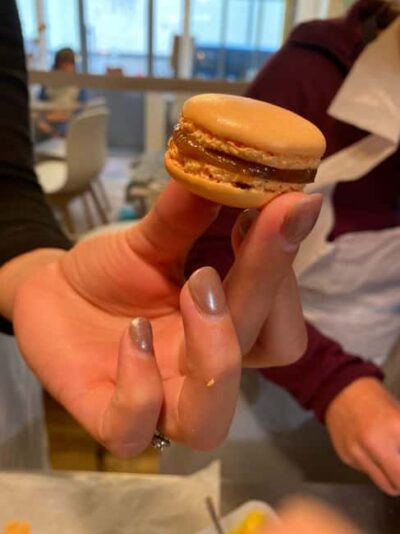
Seine Cruise and Macaron Tasting by the Eiffel Tower
Read our review →
Viator Exclusive: Local Cooking Class & Dinner with View of Nice
Read our review →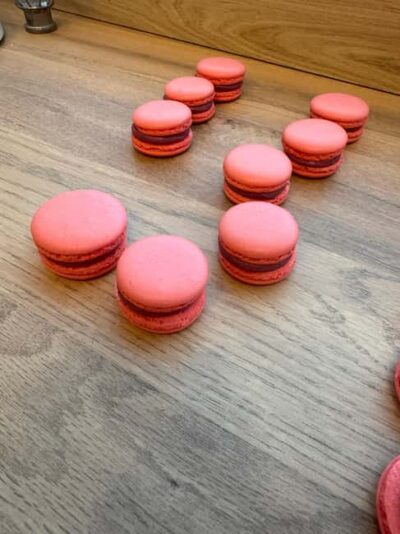
Browse the lists this tour appears in