
Reviewed · COOKING CLASSES
Paris: Macaron Baking Class for Families and Kids
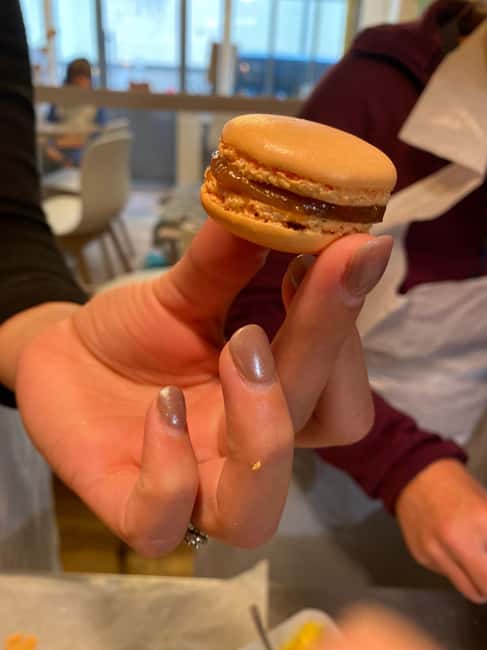
Paris sightseeing can ask a lot of children: long walks, grand buildings, and plenty of looking without touching. This two-hour macaron class changes the rhythm. You mix, pipe, garnish, and leave with a box of French pastries you helped make. Children as young as five can take part, and the work is adjusted so adults and young bakers stay involved.
I like two things in particular. The hands-on format gives children real jobs instead of making them watch a chef work. I also like the small group limit of eight, which gives instructors such as Nadia, Nelly, Jade, Caroline, and Clementine time to help each family. The main consideration is that the class makes one shared batch, so the number of macarons you take home can vary with the group size and oven space.
In This Review
- Key points to know before booking
- Why this class works for a family day in Paris
- Arriving at Baked in Paris on rue Buffon
- The first steps: prepared measurements and a short introduction
- Mixing, piping, and the parts children enjoy most
- Fillings, colors, and finishing touches
- What you take home, and how much you may receive
- Is $112 per person good value?
- The practical limits for young children
- Who will enjoy this most?
- Booking details that matter
- Should you book the Paris macaron class?
- FAQ
- How long does the macaron baking class last?
- Where does the class meet?
- Is the class taught in English?
- How many people can join the class?
- Can children take part?
- Does an adult need to participate?
- Are ingredients provided?
- Do you take macarons home?
- What allergens are in the macarons?
Key points to know before booking
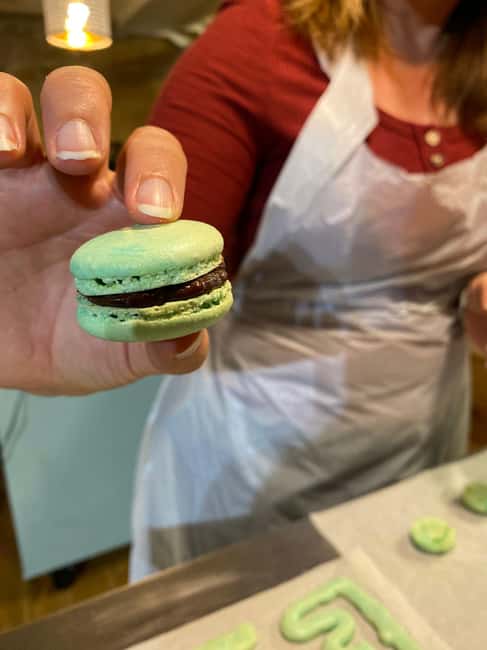
- A proper hands-on pastry lesson: You mix ingredients, pipe shells with a pastry bag, and add garnishes rather than simply watching a demonstration.
- Designed for mixed ages: Children and adults can work together, with younger children given age-appropriate tasks.
- English instruction throughout: Instructors explain the process in English and offer practical baking tips.
- A small group of up to eight: The limited size helps the chef give individual support.
- Fresh macarons to take away: Your finished production is packed in a box at the end of class.
- A central Paris workshop setting: The Baked in Paris atelier is at 31 rue Buffon, with a large kitchen and two bathrooms.
Why this class works for a family day in Paris
Macaron baking looks simple when you see a neat row of colorful shells in a pastry shop window. It is not quite so simple in the kitchen. The shells need the right texture, the batter must be handled carefully, and piping takes a steady hand. That makes this class a good choice if you want a French food activity with a little more substance than a tasting stop.
The format is especially useful for families. The chef prepares the measurements before you arrive, so you do not spend the whole session weighing ingredients while children lose interest. You still mix the ingredients, pipe the macarons, and decorate them. The preparation saves time while keeping the satisfying parts in your hands.
I like that the class is built around shared work. A parent can help steady a pastry bag, a child can pipe shells, and older children can pay closer attention to the technical tips. The result is not just a box of sweets. It is a small project your family completes together.
The class also gives you a break from Paris’s major sights without taking you far outside the city routine. You are still doing something strongly connected to French food, but the pace is quieter and more personal than a busy pastry counter.
More cooking and pastry classes in Paris:
- Paris Cooking Class and Lunch with Wine plus Market Visit Option
★ 5.0 · 1,024 reviews - Paris: Macaron Class at Galeries Lafayette
★ 4.3 · 905 reviews - Paris Cooking Class: Learn How to Make Macarons
★ 5.0 · 634 reviews
Arriving at Baked in Paris on rue Buffon
The meeting point is the Baked in Paris atelier at 31 rue Buffon in the Ile-de-France region. Look for the large blue door. The workshop is on the left, where the glass is frosted. Go inside and ask for the pastry chef.
The directions are specific, which matters because a cooking workshop can be easy to miss if you are watching street numbers instead of looking for the entrance. I would arrive early enough to find the blue door without rushing. A delay of more than 20 minutes can seriously affect the class because the schedule is shared with other families and the guide.
Inside, you can expect a newly arranged cooking space with a large work area, a modern kitchen, and two bathrooms. One practical point is worth noting: one parent or adult from each family must have a ticket and take part. An unticketed family member cannot remain in the atelier simply to watch.
Free aprons are provided. Souvenir aprons are also available for purchase, with payment made in cash or through Venmo. You do not need to bring baking equipment.
The first steps: prepared measurements and a short introduction
The chef has the ingredients measured before the working portion begins. This is a smart choice for a family class because it removes one of the slower technical jobs while preserving the parts that teach you how macarons are made.
Your instructor explains the process in English and may give some background on macarons. One class included enough history to add interest without losing the children’s attention. That balance matters. Young children do not need a lecture on French pastry, but a little context helps the cookies feel tied to Paris rather than just another cooking project.
The early part of the class is also where the chef can explain the small details that affect the final result. You learn what makes a successful macaron, how to work with the mixture, and how to avoid common mistakes. One child needed help after the sugar was not added properly to the egg whites, and the instructor was able to correct the problem without turning it into a failure.
That is one reason beginners fit this class well. You are not expected to arrive with pastry skills. The chef guides the group through each step and helps rescue small errors along the way.
Mixing, piping, and the parts children enjoy most
Once the ingredients are ready, you get to mix the batter. The work is simple enough for children to join, but it still teaches useful technique. The chef demonstrates first, then lets the group try.
The most visual part is piping the macaron shells with a pastry bag. Children usually enjoy this because the result appears right away on the tray. It also gives the instructor a chance to help with pressure, shape, and spacing. Younger children may need an adult nearby, but they can still take part.
The class welcomes all ages, though children under five must be watched by an adult. The information does not set out a strict minimum age for participation, and the classes have included toddlers with a parent, five-year-olds, children around six to ten, teenagers, grandparents, and adults in their eighties.
That wide age range is a real strength. The chef can keep a seven-year-old busy with clear, simple tasks while still offering more baking detail to an older child or an adult who wants to repeat the recipe at home. Families with children aged four and eight have found age-appropriate jobs for both, and families with teenagers have also found enough detail to keep the activity worthwhile.
The class is not a free-for-all, though. You work as part of one group and produce one batch of batter together. That shared format encourages cooperation, but it also means you may not have complete control over every shell or every step.
More Paris trips worth a second look
- Fragonard Paris: Mini Perfume Workshop
★ 4.5 · 1,924 reviews - Paris Croissant Small-Group Baking Class with a Chef
★ 5.0 · 910 reviews - Paris: 2-Hour Perfume Creation Workshop
★ 4.8 · 731 reviews - Paris: French Croissant Baking Class with a Chef
★ 4.9 · 712 reviews
Fillings, colors, and finishing touches
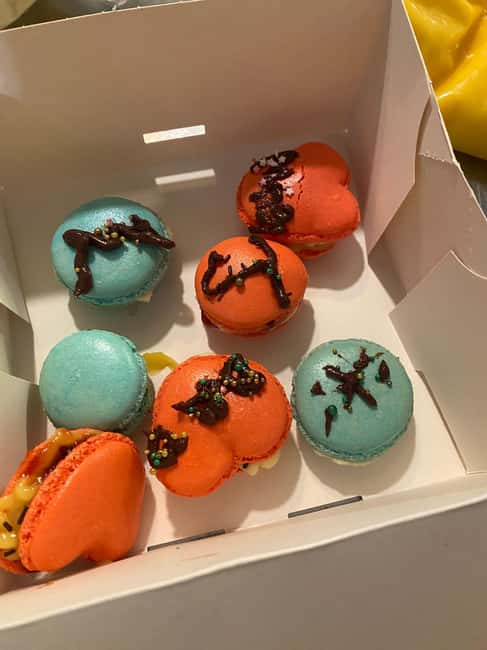
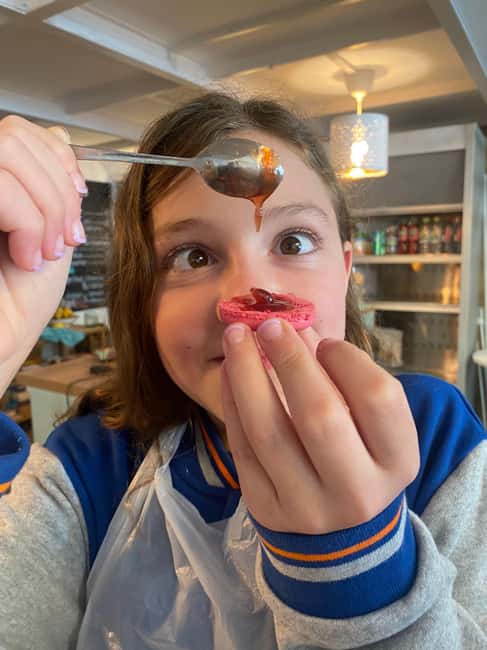
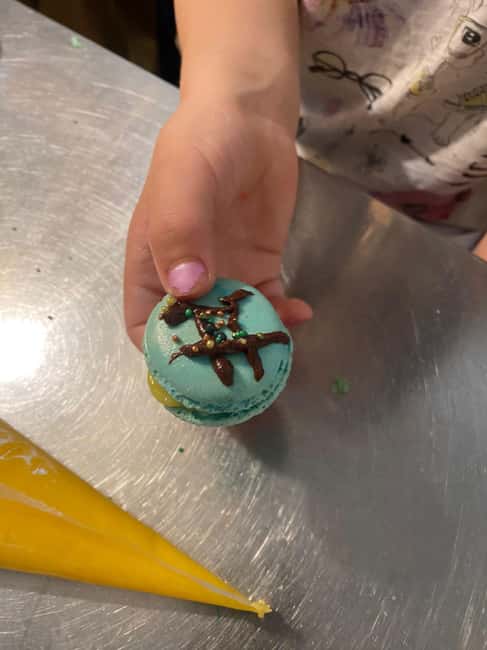
After the shells are shaped, you garnish the macarons. Depending on the pace of your group, the chef may also show you how to prepare a ganache, custard cream, or another garnish.
The class can include a choice of fillings, with one family selecting from seven options. That choice adds a creative part to the lesson, especially for children who enjoy deciding on flavors and colors. You are not simply following a fixed demonstration from start to finish. You get a chance to make the final pastries feel like your family’s batch.
The instructor continues to demonstrate and assist as the work moves along. Several teachers, including Nelly, Yasmine, Nadia, Clementine, and Tanishq, have been singled out for patience and clear explanations. Names and instructors may vary by session, but the teaching style is clearly a major part of what makes the class work.
The chefs also give advice for baking macarons at home. Some families leave feeling ready to try the recipe again, and recipe guidance may be provided at the end. You should still expect home baking to require practice. The class gives you a useful foundation, but macarons remain a fussy pastry.
What you take home, and how much you may receive
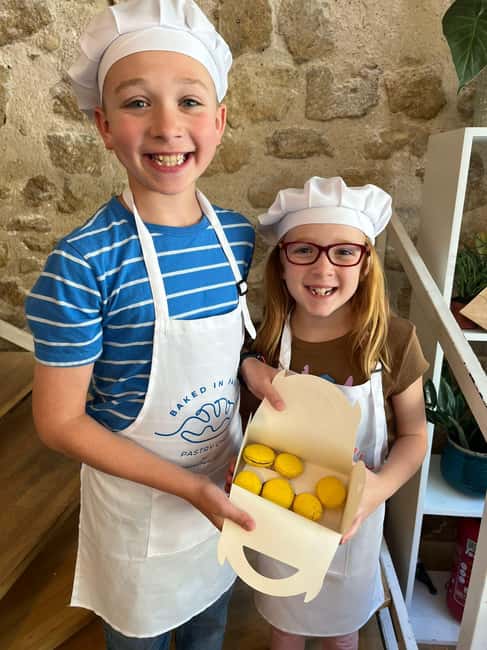
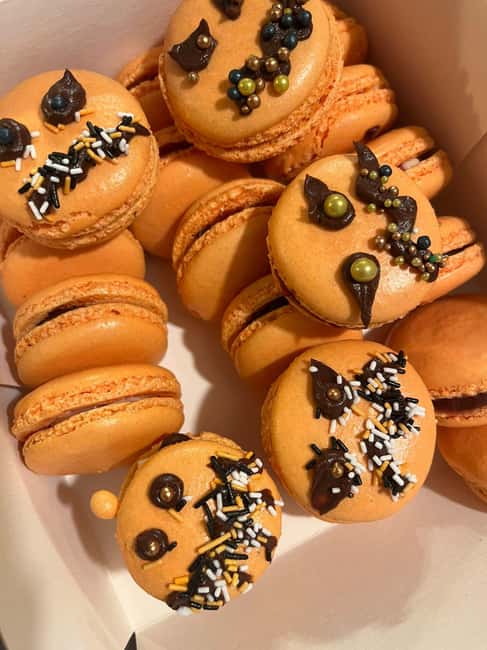
At the end of the two hours, your production is packed in a box to go. The macarons are fresh, edible, and in many cases attractive enough to look like proper pastry-shop treats. You can enjoy them with your family, share them with people back home, or save them as a sweet reminder of the afternoon.
The amount can depend on the group. One important detail is that the group makes a single batch of batter, which is divided among the participants. The oven holds four trays, and one family felt that its share was smaller than expected because the macarons were divided among the group rather than made as separate family batches.
That does not make the class poor value, but it is worth understanding before you pay. You are buying a lesson, guided participation, and a take-home box, not a private production line. If the number of macarons matters greatly to you, ask the chef how the finished batch is divided at the beginning.
The sweets themselves are one of the strongest parts of the activity. Families have described them as plentiful and delicious, with children proud to bring them back to parents and siblings. Still, the lesson and the shared memory are the main reasons to book. If you only want a large box of macarons, a pastry shop will be quicker and possibly cheaper.
Is $112 per person good value?
At $112 per person, this is not an inexpensive snack stop. It makes more sense when you compare it with other guided activities in Paris rather than with the price of buying macarons from a bakery.
The fee includes an English-speaking pastry chef, two hours of instruction, use of the workshop, aprons during the class, and the finished macarons. For a family that wants an activity with a clear beginning, middle, and end, that package can be good value. You are also paying for the chef’s preparation and the chance to take part in a pastry that can be difficult to make at home.
The value is strongest for families with children who enjoy making things. A child who would be bored by a long food tour may stay interested because every stage involves action. The class also gives parents a chance to learn a real French baking technique instead of simply supervising.
For a family of four, the total cost is substantial. I would book it for the quality of the shared activity, not because it is the cheapest way to get macarons. The small group limit helps justify the price, though the shared batch means you should not expect each person to leave with a full bakery box.
The practical limits for young children
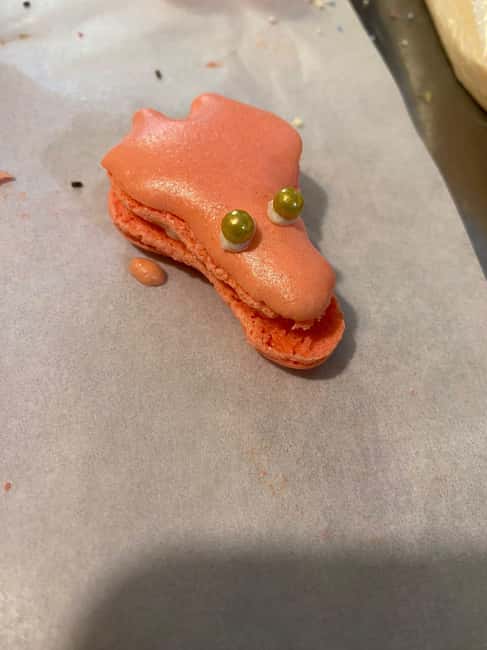
The activity is family-friendly, but that does not mean every child can work independently. Children under five must be watched by an adult, and every family needs at least one participating adult with a ticket.
Toddlers can attend with a parent, but their role will naturally be more limited. A five-year-old can take part in meaningful ways, while children around six to ten are likely to get the most from the mixing, piping, and decorating. Teenagers and adults who already bake can focus more on technique.
You also need to arrive on time. After 20 minutes, the class may be compromised because the guide and other families are working to a fixed schedule. This is not the sort of appointment to pair with a last-minute museum visit across town.
Macarons contain almonds and eggs. Tell the chef about allergies before the class starts. The supplied information does not promise substitutions, so you should not assume the recipe can be changed.
One person found the room a little chilly. That is a minor point, but a light extra layer may be useful, especially in cooler weather or for children who sit still during demonstrations.
Who will enjoy this most?
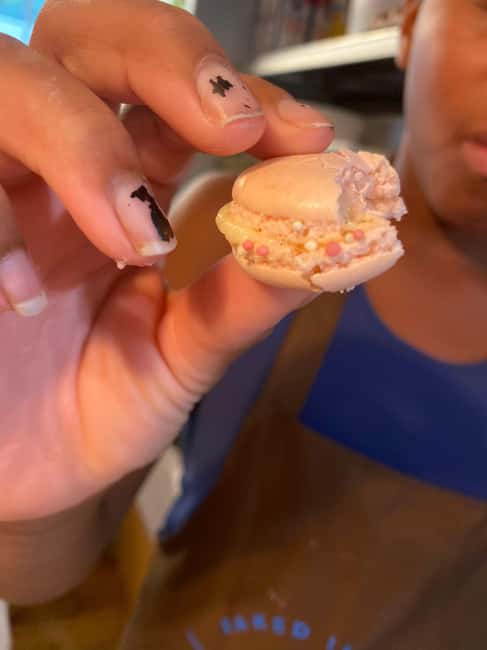
I would choose this class for families who want a break from monuments and museums, especially if the children like cooking, crafts, or hands-on projects. It also suits grandparents traveling with grandchildren because the pace allows different generations to work side by side.
It is a particularly good fit for:
- Families with children roughly five and older
- Adults who want to learn a pastry technique in English
- Macaron fans who would like to try making them at home
- Families seeking a quiet indoor activity in Paris
- Groups that value shared work more than a large quantity of food
I would think twice if your child dislikes following instructions, has a serious almond or egg allergy, or expects to make a separate full batch alone. The class is cooperative, structured, and shared.
Booking details that matter
The class lasts two hours and is taught in English. Groups are limited to eight participants, so the setting should feel more personal than a large demonstration.
You can reserve now and pay later, which helps if your Paris schedule is still changing. Cancellation is free up to 24 hours before the class for a full refund. Check the available start times before booking, then plan extra time to reach rue Buffon.
The provider is VOYAGES LLC. The class is held at the Baked in Paris atelier, not described as a sightseeing tour, so arrange your own way to the meeting point and allow time to locate the frosted-glass entrance.
Should you book the Paris macaron class?
Book it if you want your family to make something together in Paris. The strongest parts are the patient English-speaking chefs, the small group, the useful hands-on work, and the proud moment when children carry home a box of macarons they helped pipe and decorate.
Do not book it only for the food quantity. The batch is shared, and your portion may vary with the group. At $112 per person, the class earns its price through instruction and family time, not through the number of pastries alone.
For most families with children who enjoy being involved, this is a smart two-hour addition to a Paris itinerary. It gives you a break from sightseeing, introduces a classic French sweet, and leaves you with a skill you can try again at home.
FAQ
How long does the macaron baking class last?
The class lasts two hours.
Where does the class meet?
It meets at Baked in Paris, 31 rue Buffon. The atelier is on the left of the large blue door, near the frosted glass. Go inside and ask for the pastry chef.
Is the class taught in English?
Yes. The instructor and pastry chef teach in English.
How many people can join the class?
The group is limited to eight participants.
Can children take part?
Yes. The class is designed for families and children of all ages. Children under five must be watched by an adult.
Does an adult need to participate?
Yes. At least one adult from each family must participate and have a ticket. Family members without tickets cannot stay to watch the class.
Are ingredients provided?
Yes. The chef prepares the measurements for the class. Participants mix the ingredients, pipe the macarons, and add garnishes.
Do you take macarons home?
Yes. You leave with the macarons made during the class in a box to go.
What allergens are in the macarons?
Macarons contain almonds and eggs. Tell the chef about any allergies before the class starts.
Recently reviewed around Paris
- Louvre Private Tour – The Essentials and More with Expert Guide★ 5.0 · 227 reviews
- 2CV tour by night★ 5.0 · 55 reviews
- Eiffel Tower Second or Summit Floor Access by Elevator with Views★ 3.5 · 161 reviews
- The only Paris Wine Tasting experience you need to do – 2 hours★ 5.0 · 265 reviews
- 2 Hour Street-art Walk and Space Invaders Hunt in Paris★ 5.0 · 27 reviews
- 2 hour outdoor group activity in Paris: SAINT GERMAIN★ 5.0 · 48 reviews
- Sainte-Chapelle, Conciergerie & Palais de Justice Private Tour★ 5.0 · 72 reviews
- Private 2 – Hour Paris Landmarks Tour by Golf Cart Mini Moke★ 5.0 · 38 reviews
Cooking Classes, compared.
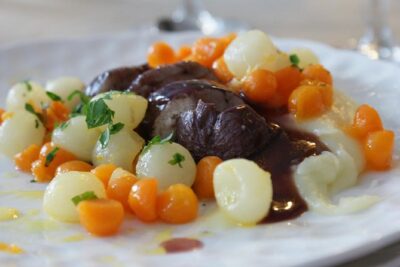
Paris Cooking Class and Lunch with Wine plus Market Visit Option
Read our review →
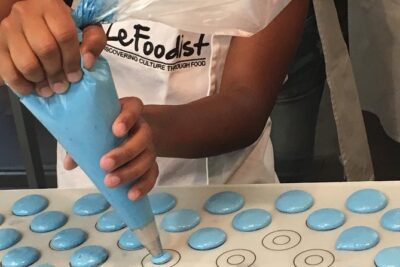
Paris Cooking Class: Learn How to Make Macarons
Read our review →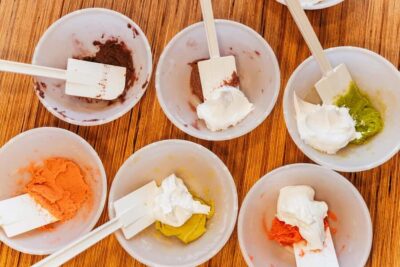
Paris Evening Cooking Class French Dinner and Market Visit Option
Read our review →
Seine Cruise and Macaron Tasting by the Eiffel Tower
Read our review →
Viator Exclusive: Local Cooking Class & Dinner with View of Nice
Read our review →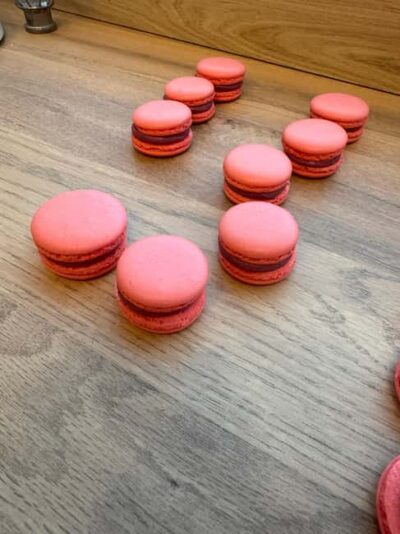
Browse the lists this tour appears in