
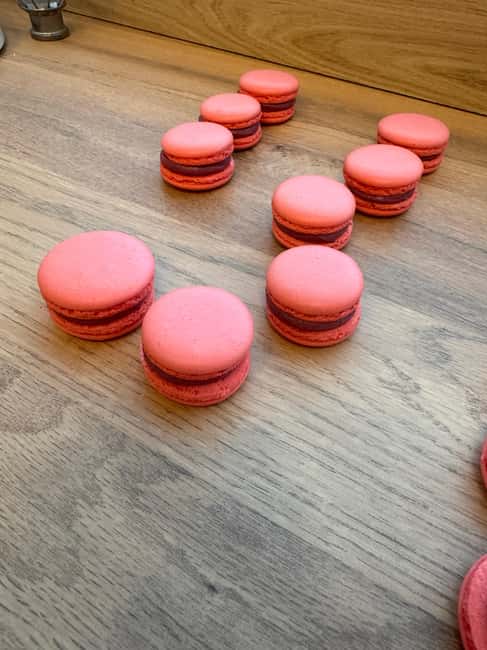
Reviewed · COOKING CLASSES
Paris: Macaron Baking Class in Central Paris
Making macarons is less about stirring sugar and more about control. In this 150-minute central Paris class, you learn how mixing, piping, baking, and weather all affect that crisp shell and soft center. I like the hands-on format and the chance to leave with both macarons and a usable recipe. The main catch is that macarons contain nuts, and the class is not suitable for vegans or children under 12.
I also like the small group of up to 10, which gives Chef Leo or Maria time to correct your technique. The class costs $122 per person, so it is not a cheap snack stop, but it delivers instruction, ingredients, equipment, tasting, and take-home baking in one sitting.
In This Review
- Key points at a glance
- Why macarons make a good Paris activity
- Arriving at Studio Pâtisserie
- The opening lesson: a little culture, then useful science
- Mixing and piping the macaron shells
- Fillings, flavors, and the baking wait
- Tasting what you made
- What the $122 price buys you
- Who should book this class
- Practical tips for getting the most from it
- Should you book the macaron class?
- FAQ
- How long does the Paris macaron class last?
- How much does the macaron baking class cost?
- Is the class taught in English?
- Who teaches the class?
- How many people are in the group?
- What is included in the booking?
- Can children or people with dietary restrictions attend?
Key points at a glance
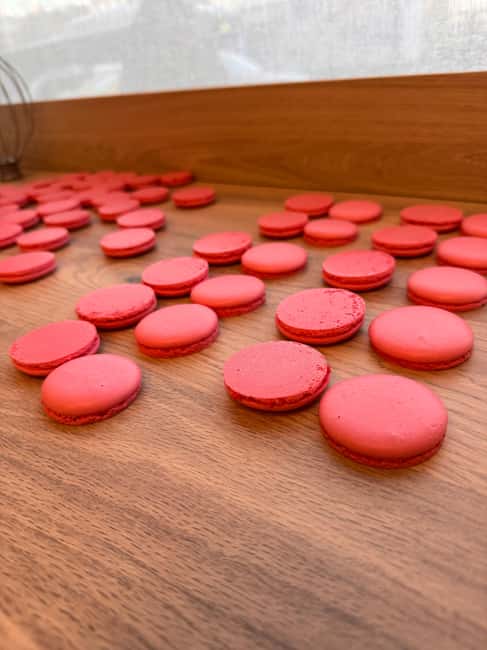
- You make the macarons from start to finish: The class covers shells, fillings, piping, baking, and tasting.
- Chef Leo and Maria teach in English: Both instructors are praised for clear explanations, patience, humor, and practical help.
- Small groups keep the lesson personal: The maximum is 10 people, with some sessions running at eight or nine.
- The class explains the science: You learn why technique matters, not just which ingredients to add.
- You take home more than a memory: A recipe is included, along with the macarons you make during the session.
- Dietary limits matter: Macarons contain nuts, and the class is not suitable for vegans or children under 12.
Why macarons make a good Paris activity
Paris offers plenty of ways to eat a macaron. This class gives you a reason to slow down and understand one.
The treat has a French identity today, even though its older story reaches beyond modern France. The opening lesson places the macaron in its cultural setting, then turns to the ingredients and methods behind the polished pastries you see in Paris shops. That short introduction adds useful context without making the class feel like a lecture.
I find the format especially good for visitors who want a food activity with a clear result. You are not simply watching a chef pipe perfect rounds. You handle the mixture, work on your own technique, and see how small choices affect the finished shells.
It also gives you a practical souvenir. A box of purchased macarons may be easier to carry, but a recipe and a new skill last longer. Several people have successfully used the recipe at home, including one beginner who was surprised by how well the batch turned out.
More cooking and pastry classes in Paris:
- Paris Cooking Class and Lunch with Wine plus Market Visit Option
★ 5.0 · 1,024 reviews - Paris: Macaron Class at Galeries Lafayette
★ 4.3 · 905 reviews - Paris Cooking Class: Learn How to Make Macarons
★ 5.0 · 634 reviews
Arriving at Studio Pâtisserie
The meeting point is a grey-colored storefront on the main road. Look for that frontage rather than relying only on a broad map pin, and allow enough time to arrive without rushing. The class has a fixed 150-minute schedule, so arriving late could mean missing the early explanations and setup.
Inside, you settle in at the baking space and meet the other participants. The studio is described as clean, organized, and prepared before the class begins. Ingredients and tools are ready for use, which keeps the session moving and leaves you more time for the parts that require your attention.
Wear comfortable clothes and shoes. This is not a formal pastry demonstration where you sit back in your best dinner outfit. You will be working at a station, handling mixtures, piping batter, and following the chef through several stages.
The group limit is 10, though some sessions have had eight or nine people. That is a useful size. You get the friendly feel of a shared activity without being lost in a large crowd. If you come alone, the format also makes it easy to work alongside couples, families, and other solo participants.
The opening lesson: a little culture, then useful science
The class begins with the story and artistry of macarons. You learn about their origins, their place in French pastry, and the ingredients that give them their color, texture, and flavor.
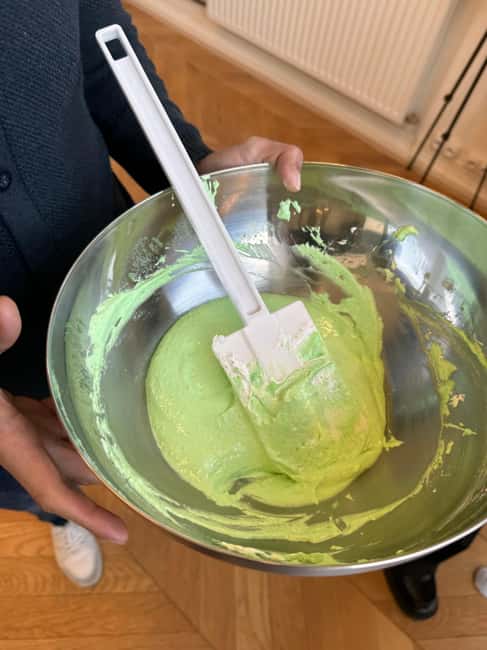
The more valuable part for most home bakers is the explanation of why each step matters. Macarons can look simple, but the batter is sensitive. Mixing too little or too much can change the shape and texture. Piping pressure affects size. Baking conditions affect the shell and the interior.
Chef Leo is often described as clear and patient, with a cheerful manner and a talent for explaining the reasons behind the method. Maria receives similar praise for her encouragement, humor, and straightforward teaching. The instructor for your session may be either one, so the tone can vary slightly, but the focus remains practical and interactive.
This is the right kind of instruction for a first attempt. You do not need prior macaron experience. At the same time, an experienced home baker should find enough technical detail to make the class worthwhile.
Mixing and piping the macaron shells
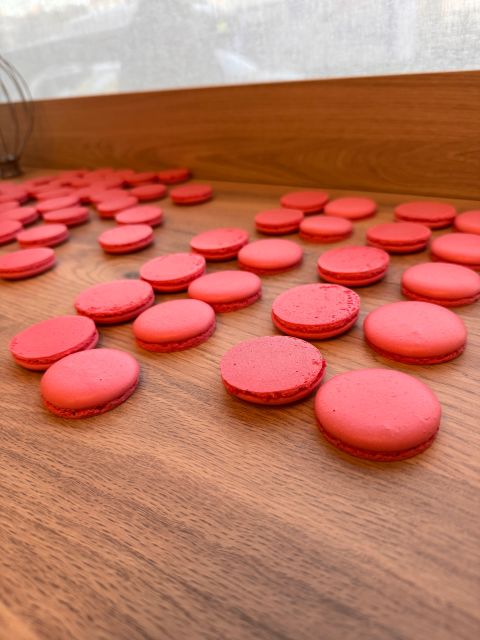
The hands-on portion starts with the shells. You follow the chef through the process, rather than watching prepared batter being turned into finished pastries.
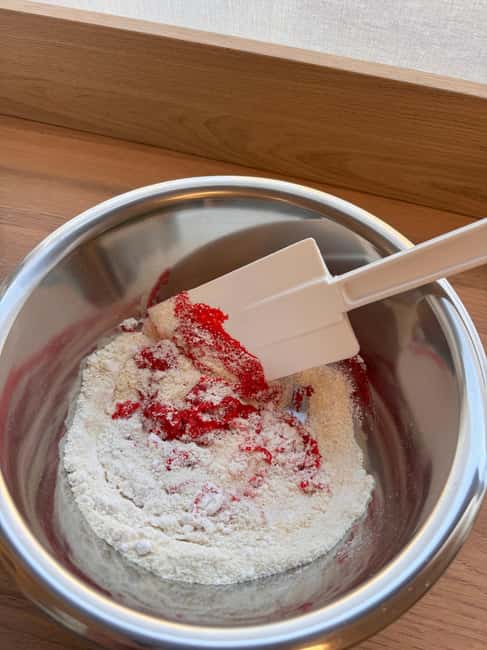
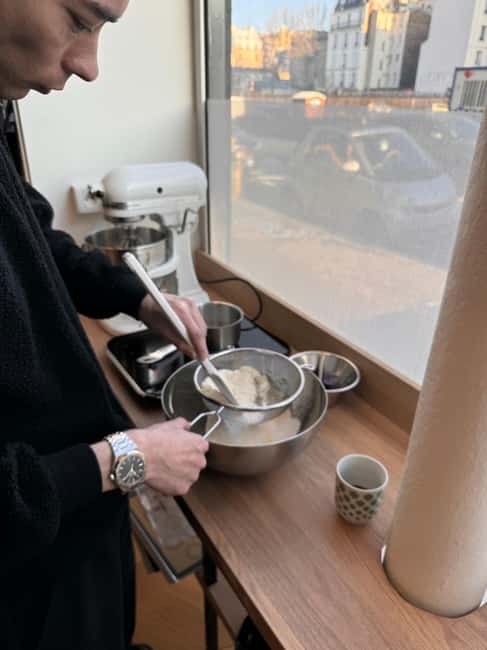
Mixing is the point where patience matters most. The texture needs to be right before you pipe. The chefs demonstrate the technique and watch the group as you work, stepping in with corrections when needed. That direct help is one of the strongest reasons to choose a class instead of learning from a recipe alone.
Piping brings another challenge. The goal is a consistent size and shape, with enough control to produce neat rounds. You practice under supervision, and the chef can point out problems before the tray reaches the oven.
Several sessions have produced about 15 macarons per person, while a two-person booking resulted in around 30 handmade macarons. The exact amount may vary with the class, but you should expect a generous share rather than one or two samples.
The process is rewarding because the result is visible at every stage. A tray of piped shells may look uneven at first, but the chef’s tips help you understand how to improve. You leave with more than a set of pretty pastries. You know what your hands need to do next time.
More Paris trips worth a second look
- Fragonard Paris: Mini Perfume Workshop
★ 4.5 · 1,924 reviews - Paris Croissant Small-Group Baking Class with a Chef
★ 5.0 · 910 reviews - Paris: 2-Hour Perfume Creation Workshop
★ 4.8 · 731 reviews - Paris: French Croissant Baking Class with a Chef
★ 4.9 · 712 reviews
Fillings, flavors, and the baking wait
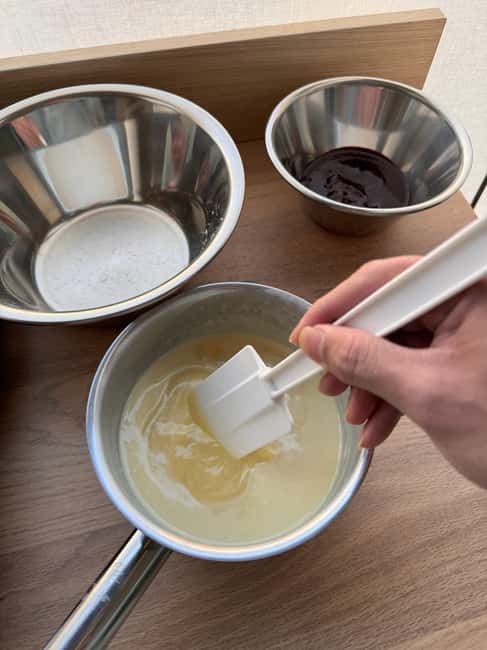
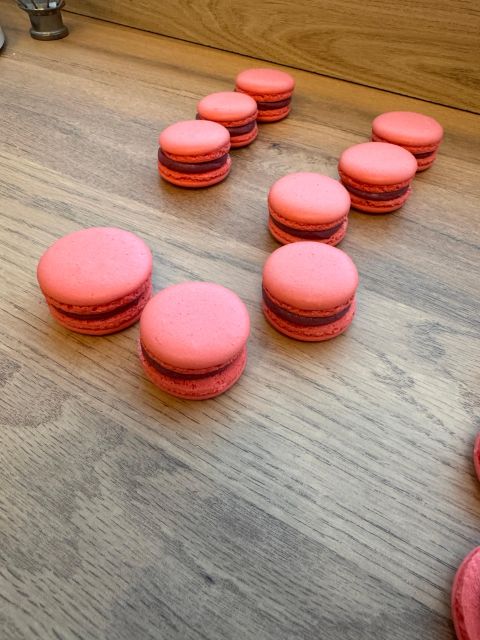
The class also covers the fillings that turn baked shells into finished macarons. Once the shells and fillings come together, you can see how texture matters: a good macaron should have a delicate outside and a softer middle.
Flavor choices may be set by the chef rather than selected individually. One session used chocolate, black currant, and passionfruit. That gives you variety and lets you try flavors beyond the familiar vanilla or pistachio, but it can disappoint if you have your heart set on a particular flavor.
This is worth knowing before you book. If you strongly prefer traditional flavors, ask about the current selection when checking availability. The available information does not promise a choice of flavors for each participant.
While the macarons bake, you may have a short pause. One class included a refreshing drink while the group waited. The break gives the chef time to answer questions and lets you compare notes with the people at your table.
Weather can matter when you repeat the recipe at home. The chef explains that conditions in your home country may require adjustments, an especially useful point if you live somewhere warmer, cooler, or more humid than Paris. Macarons are famously sensitive to their surroundings, so this advice adds real value to the take-home recipe.
Tasting what you made
The tasting is the payoff, but it works best because you have done the difficult parts yourself.
You sample the finished macarons after the baking and filling stages. The result is meant to show you what the correct texture and flavor should be, not simply provide a sugar break. You can compare the final pastry with the steps you just practiced.
The class produces enough to take home as well. People have reported leaving with a box of macarons, and one couple made 15 each. That makes the experience feel more substantial than a short tasting session.
Do not expect every shell to look bakery-perfect. That is part of the point. The chef helps you aim for a reliable result, but your first batch may show small differences in shape or finish. You still get the pleasure of eating something you made in Paris, plus a better chance of repeating the process at home.
The macarons are also a fragile souvenir. Carry them carefully, and remember that the class does not promise special luggage packaging or long-term storage advice. The practical benefit is that they can be enjoyed soon after the activity.
What the $122 price buys you
At $122 per person, this class is an investment. It costs far more than buying a box of macarons at a pastry shop, so you should choose it for the instruction and activity, not just the food.
The fee includes the English-speaking instructor, the baking class, ingredients and tools used during the session, tasting, a take-home recipe, and the macarons you make. You also receive direct guidance in a small group, which is hard to replicate from a cookbook.
I consider the price reasonable for someone who already enjoys cooking, wants a Paris food memory with some substance, or plans to bake macarons at home. The value drops if you dislike kitchen activities or only want to taste famous French pastries.
There is another small advantage: the chefs may share Paris food recommendations during the class. If you schedule this near the start of your stay, that advice can help shape the rest of your eating plans. It is not a formal food tour, so do not book it expecting a citywide tasting route. Think of those suggestions as a helpful extra.
Flexible booking also reduces the risk. You can cancel up to 24 hours before the activity for a full refund, and the reserve-now, pay-later option lets you hold a place without paying immediately. Starting times depend on availability.
Who should book this class
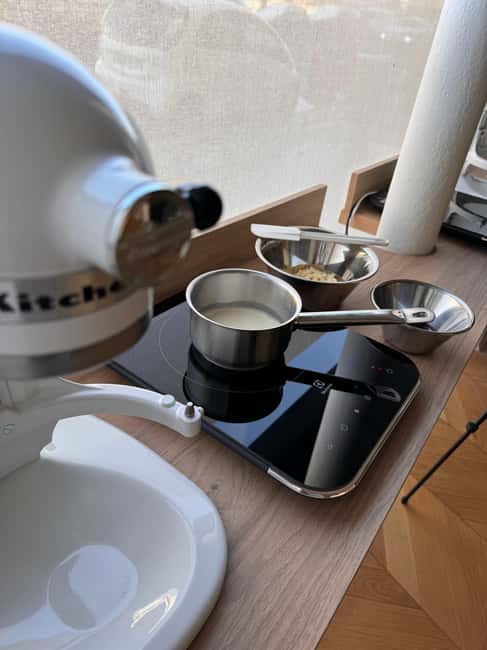
I would choose this for couples, families with teenagers, solo visitors, and small groups of friends. Children must be at least 12, and teenagers aged 13 and 15 have enjoyed the class with their family.
It suits you particularly well if:
- You want to learn a French pastry rather than only eat one.
- You appreciate clear, step-by-step teaching.
- You like practical souvenirs you can use at home.
- You are happy working in a shared group.
- You want an indoor activity that fits into a two-and-a-half-hour Paris day.
It is less suitable for vegans and anyone with a nut allergy. Macarons rely on nut-based ingredients, and the activity does not offer a vegan option. You should also reconsider it if you dislike sweet foods, have limited time, or want a fully private lesson.
The class can work well for a birthday or a rainy afternoon, but it is not limited to special occasions. The schedule is long enough to feel like a proper activity without taking an entire day away from museums or sightseeing.
Practical tips for getting the most from it
Book this early in your Paris stay if you can. The chef may suggest restaurants, bakeries, and other food stops, and you can use those ideas during the rest of your visit.
Pay close attention during the mixing and piping stages. The recipe matters, but technique matters just as much. If you are hoping to bake at home, take notes on texture, pressure, timing, and the signs that the batter is ready.
Ask questions as you go. The small group gives you a better chance to get help with your own tray rather than waiting for a general demonstration.
Wear clothes you can work comfortably in, and choose practical shoes. No special equipment is required because the needed tools and ingredients are provided.
If flavor is important to you, check the current menu before booking. The class may use an interesting mix such as chocolate, black currant, and passionfruit, but you may not be able to request vanilla, lemon, or pistachio.
Should you book the macaron class?
Book it if you want to understand why macarons succeed or fail, not just take home a pretty box. The small group, hands-on method, friendly instruction from chefs such as Leo and Maria, and generous take-home results make this a strong choice for a food-focused Paris afternoon.
At $122, it is not the best deal for a simple tasting. It is good value for a guided lesson that includes ingredients, equipment, tasting, a recipe, and your own handmade pastries. Skip it if you have a nut allergy, need a vegan activity, or prefer sightseeing that keeps you on the move.
For everyone else, this is a practical way to meet French pastry on its own terms: precise, a little fussy, occasionally messy, and very satisfying when the shells come out right.
FAQ
How long does the Paris macaron class last?
The class lasts 150 minutes, or two and a half hours.
How much does the macaron baking class cost?
The listed price is $122 per person.
Is the class taught in English?
Yes. The instructor language is English.
Who teaches the class?
Sessions may be taught by Chef Leo or Maria at Studio Pâtisserie.
How many people are in the group?
The group is limited to 10 participants. Some sessions have had eight or nine people.
What is included in the booking?
The booking includes the instructor, baking class, tasting, and a recipe to take home. Ingredients and baking tools are provided for the class.
Can children or people with dietary restrictions attend?
Children under 12 cannot attend. The class is not suitable for vegans or people with nut allergies.
Recently reviewed around Paris
- Louvre Private Tour – The Essentials and More with Expert Guide★ 5.0 · 227 reviews
- 2CV tour by night★ 5.0 · 55 reviews
- Eiffel Tower Second or Summit Floor Access by Elevator with Views★ 3.5 · 161 reviews
- The only Paris Wine Tasting experience you need to do – 2 hours★ 5.0 · 265 reviews
- 2 Hour Street-art Walk and Space Invaders Hunt in Paris★ 5.0 · 27 reviews
- 2 hour outdoor group activity in Paris: SAINT GERMAIN★ 5.0 · 48 reviews
- Sainte-Chapelle, Conciergerie & Palais de Justice Private Tour★ 5.0 · 72 reviews
- Private 2 – Hour Paris Landmarks Tour by Golf Cart Mini Moke★ 5.0 · 38 reviews
Cooking Classes, compared.
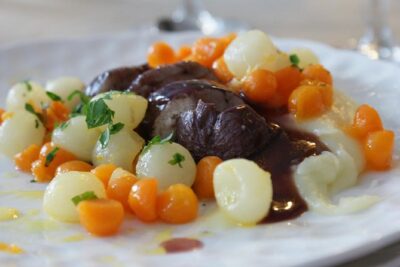
Paris Cooking Class and Lunch with Wine plus Market Visit Option
Read our review →
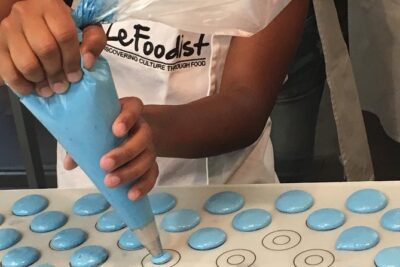
Paris Cooking Class: Learn How to Make Macarons
Read our review →
Paris Evening Cooking Class French Dinner and Market Visit Option
Read our review →
Seine Cruise and Macaron Tasting by the Eiffel Tower
Read our review →
Viator Exclusive: Local Cooking Class & Dinner with View of Nice
Read our review →Browse the lists this tour appears in