
Reviewed · COOKING CLASSES
Paris: Macarons Cooking Class with Pâtisserie Chef Noémie
Parisian macarons look delicate, but the real trick is in the weighing, mixing, piping, and baking. At Chef Noémie’s small atelier, you make two kinds of macarons from scratch, with clear guidance from a pastry chef trained at the Lenôtre Culinary Institute. I like the hands-on format and the chance to choose classic fillings such as lemon, pistachio, coffee, chocolate, and salted butter caramel.
I also like the friendly scale. The group is limited to eight, and Noémie makes a point of involving children and adults alike. The main consideration is that you share the work rather than each making a completely separate batch. If you want your own private station and ingredients from start to finish, this may feel less hands-on than expected.
In This Review
- Key points at a glance
- Inside Noémie’s ground-floor Paris atelier
- Why macarons require more than a pretty shell
- The 150-minute class, step by step
- A class that works for children and first-time bakers
- Flavor choices from lemon to salted butter caramel
- Tea, coffee, and a chance to talk pastry
- What the $141 price really buys
- Who should book this Paris macaron class?
- Should you book it?
- FAQ
- Where does the macaron class take place?
- How long does the experience last?
- Is the class taught in English?
- How many people can join the class?
- What flavors of macarons can I make?
- What is included in the price?
- Is the class suitable for children?
- Can I cancel the booking?
Key points at a glance
- Make two macaron varieties: Prepare shells and fillings from the beginning, then taste the results fresh.
- Learn from Chef Noémie: Her training at the Lenôtre Culinary Institute gives the class a professional foundation.
- Work in a small atelier: The class is limited to eight people, making questions and personal help easier.
- Choose familiar French flavors: Options include chocolate, lemon, salted butter caramel, coffee, pistachio, and walnuts.
- Take useful material home: You receive English recipes and practical tips for repeating the process in your own kitchen.
- Plan around 150 minutes: Leave room afterward for tea or coffee, conversation, and carrying home your macarons.
Inside Noémie’s ground-floor Paris atelier
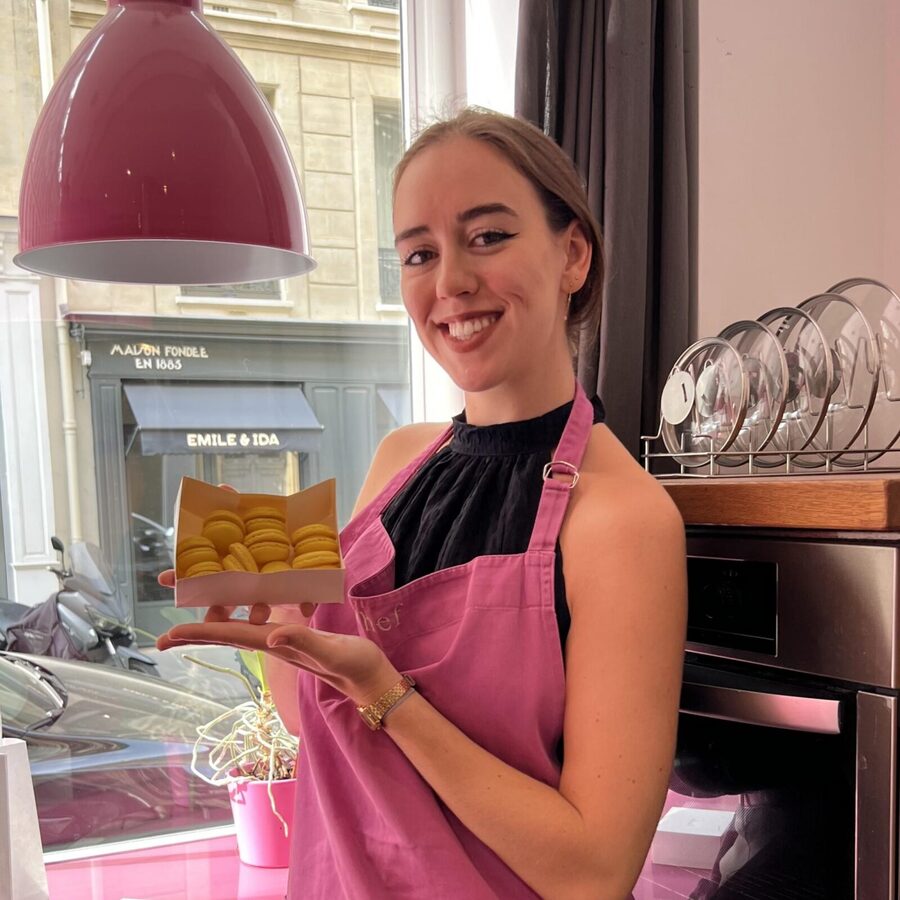
The class takes place at 92 Rue Nollet, in a ground-floor atelier. You do not need to enter the building. The entrance is on the left side of the main entrance, a small detail worth noting since it saves you from searching for a separate shopfront.
The setting is intimate rather than grand. The work area has been described as bright, clean, and neatly arranged, with a stainless-steel and pink kitchen setup. That matters in a baking class. You can see the tools, ingredients, and finished stages without the commotion of a large school.
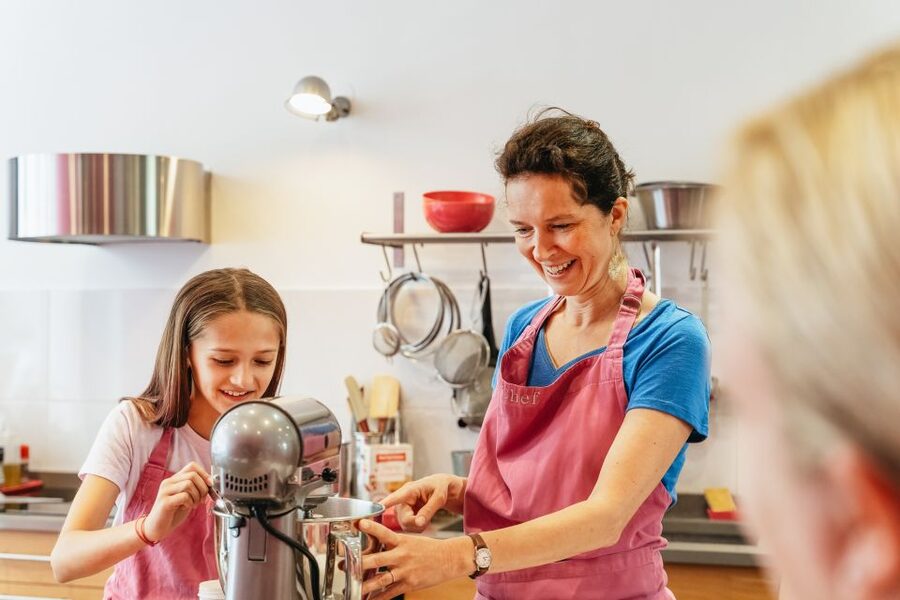
The group limit is eight. In practice, that gives the session a more personal feel than a large demonstration class. Noémie can watch how you handle the mixture, answer questions, and correct small errors before they become large ones. One particularly useful part of this format is that even young participants can take part instead of sitting at the edge and watching.
You should expect an English-language class. The atmosphere is professional but informal, with room for humor and conversation. Noémie’s teaching style is a major part of the experience. She explains each stage plainly and keeps the mood relaxed, which is helpful because macarons have a reputation for being fussy.
More cooking and pastry classes in Paris:
- Paris Cooking Class and Lunch with Wine plus Market Visit Option
★ 5.0 · 1,024 reviews - Paris: Macaron Class at Galeries Lafayette
★ 4.3 · 905 reviews - Paris Cooking Class: Learn How to Make Macarons
★ 5.0 · 634 reviews
Why macarons require more than a pretty shell
A macaron is not simply a sweet cookie. The smooth, crisp shell and soft center depend on details that are hard to judge from a recipe alone. The consistency of the mixture, the way you work with a pastry bag, the size of each piped round, and the handling of the ingredients all affect the final result.
That is where a class earns its keep. A printed recipe can tell you what to add, but it cannot always show you what the mixture should look like at the right moment. Noémie demonstrates the visual and practical cues, then lets you work through the steps yourself.
You will also learn about the French place of the macaron and its role in the country’s pâtisserie culture. The class is not just a recipe session. It gives you context for the colorful sweets you see in Paris pastry windows, while keeping the focus on making them rather than listening to a long lecture.
The most useful lessons are likely to be the small ones: how to judge consistency, how to use the piping bag, and how to avoid common mistakes. One former participant specifically noted that Noémie’s tips made it easier to recreate the macarons at home. That is an important test of value. The best souvenir here is not only the box you carry away, but the confidence to try again.
The 150-minute class, step by step
The exact order can vary as the mixture rests or bakes, but you should expect a guided progression through the main stages of macaron making.
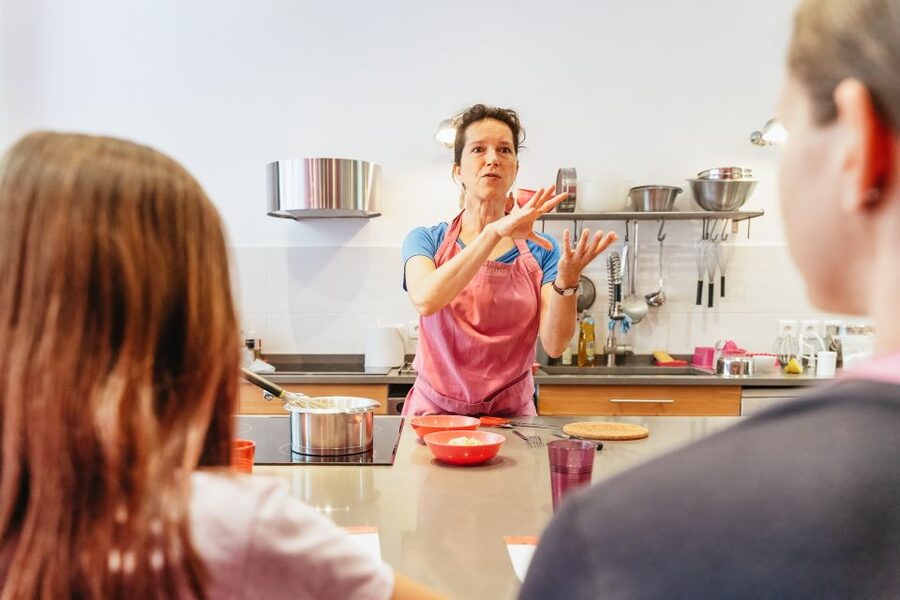
First, Noémie introduces the process and the ingredients. You work with the tools and ingredients provided, and an apron is included. Since the recipes are supplied in English, you do not have to translate technical instructions while trying to measure and mix.
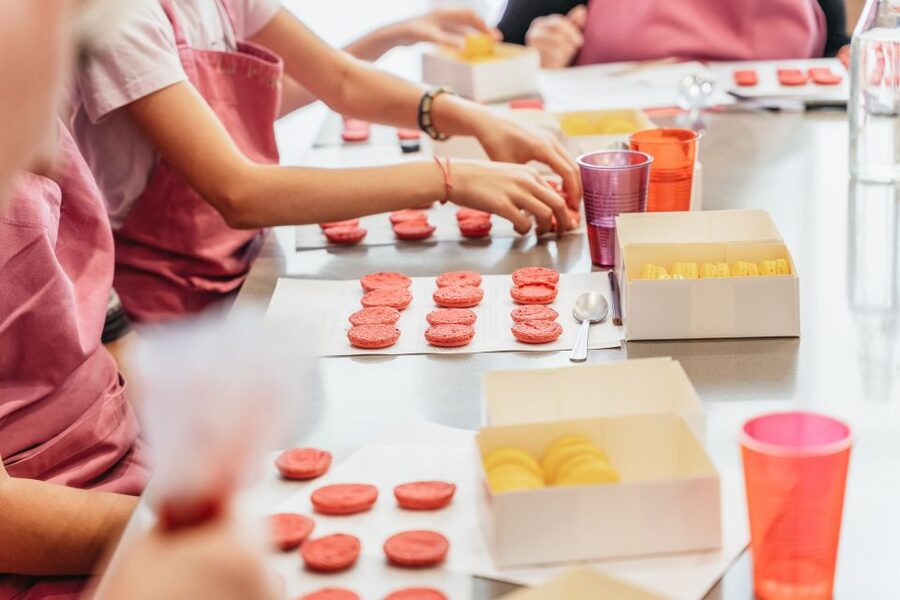
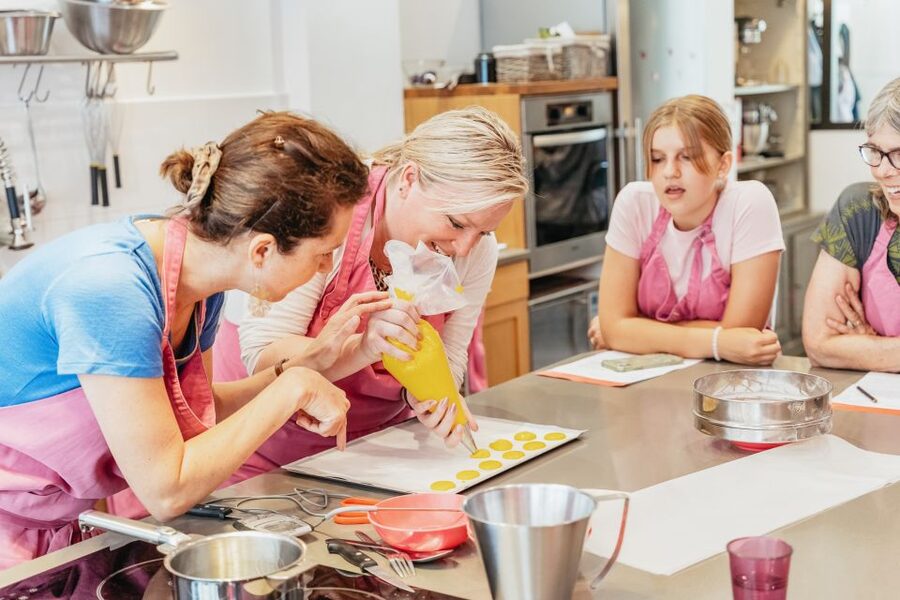
Next comes the preparation of the shells. This is the part where precision matters most. You help with the mixture, learn how the texture changes, and practice handling the pastry bag. Piping may look simple when a professional does it, but getting even rounds takes control. A small class lets you receive help without slowing the entire session.
The macarons are made in two different varieties. The available flavor choices include chocolate, lemon, salted butter caramel, coffee, pistachio, and walnuts. Past sessions have included combinations such as lemon and pistachio, though your exact choices depend on the class arrangement.
You then prepare the fillings. This gives you a useful contrast between the shell and the center, and it makes the finished macarons feel less like a single standardized recipe. Classic flavors are a good choice for a first attempt because they show how different fillings change the finished sweet.
As the shells and fillings come together, Noémie shares technique tips and helps you spot the details that affect the result. Some participants have left feeling ready to repeat the recipe at home, while one person noted that the written recipe could use an update to reflect changes in technique. I would treat the handout as a solid guide, but write down any newer adjustment Noémie gives you during class.
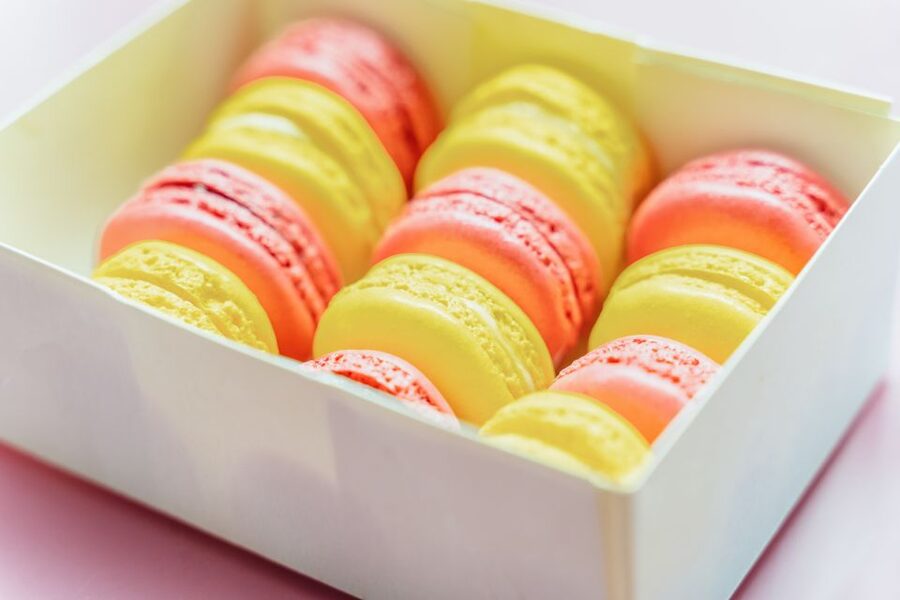
Finally, the macarons are ready to taste and take home. The exact quantity can vary, but past participants have left with a full box, including 12 macarons in one family class and more than 20 in another small group. That makes the experience feel generous, especially if you want to share the results later.
A class that works for children and first-time bakers
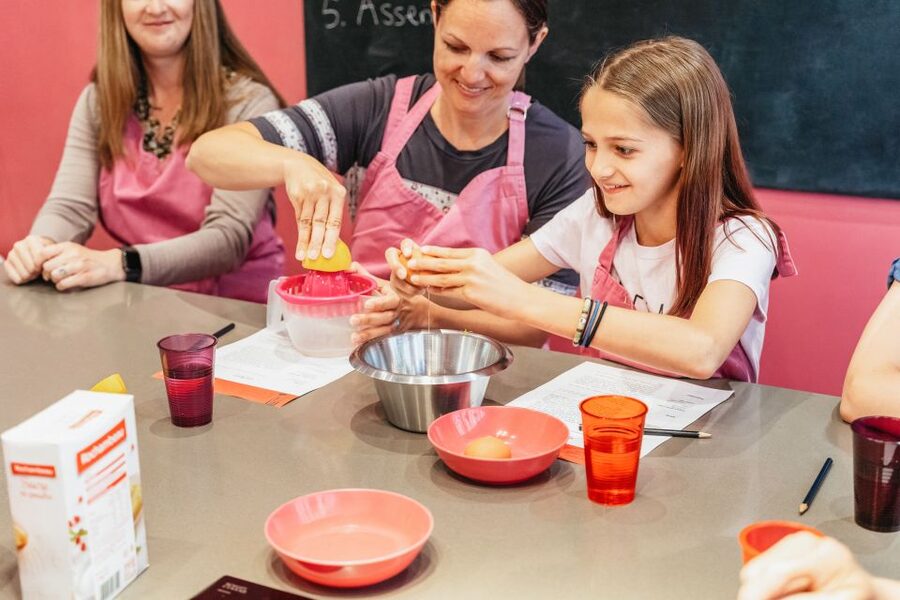
You do not need advanced pastry skills. The class is designed for all levels, and the teaching approach is patient enough for beginners. Several families have brought children and teenagers, including a 12-year-old and younger children around 11 or 12. They were able to take part in the process rather than simply observe.
That makes this a good choice for a parent-child activity, a family morning, or a group of friends looking for something beyond the usual sightseeing route. You can expect to measure, mix, pipe, and handle the ingredients, with Noémie dividing tasks so everyone participates.
There is one important distinction: this is a shared workshop, not a separate bake-at-your-own-station lesson. Each person may handle part of the process rather than producing an entirely independent batch. One participant found this disappointing, while still enjoying the class and the finished macarons.
If you want a full individual production line, ask yourself how much that matters before booking. If your priority is learning the method, working with a skilled teacher, and enjoying a social activity, the shared format is likely to suit you well.
More Paris trips worth a second look
- Fragonard Paris: Mini Perfume Workshop
★ 4.5 · 1,924 reviews - Paris Croissant Small-Group Baking Class with a Chef
★ 5.0 · 910 reviews - Paris: 2-Hour Perfume Creation Workshop
★ 4.8 · 731 reviews - Paris: French Croissant Baking Class with a Chef
★ 4.9 · 712 reviews
Flavor choices from lemon to salted butter caramel
The flavor list gives the class a useful French pastry feel without becoming too experimental. Chocolate is a familiar choice, while lemon brings a sharper contrast. Pistachio and walnut offer a nutty profile, and coffee gives the filling a deeper taste. Salted butter caramel is the most distinctly indulgent option.
If you have a food allergy, raise it before or at the start of the class. One family had a participant with a pistachio allergy, and Noémie changed that portion to vanilla macarons. The supplied information does not promise a full allergy-free kitchen or a set policy for every dietary restriction, so you should not assume every substitution is possible.
The finished macarons are meant to be enjoyed at home as well as in the atelier. Bring a little care into how you carry them afterward. They are delicate pastries, and a box of colorful shells is not the best item to squeeze into an overfilled day bag.
Tea, coffee, and a chance to talk pastry
After the practical work, you sit down with tea or coffee. This closing moment gives you time to taste the results, compare flavors, and speak with Noémie outside the rush of measuring and piping.
It also gives you a chance to ask the questions that occur only after you have made the macarons yourself. You can clarify a step, discuss how to repeat the recipe, or ask about French pastry habits and techniques. The recipes are provided in English, so you leave with something more useful than a few photos.
I like this ending because it keeps the activity from feeling like a quick production line. You have time to enjoy the social side of the class and to talk with the person teaching you. The session remains focused, but it has a pleasant finish.
What the $141 price really buys
At $141 per person, this is not a bargain snack stop. You are paying for a 150-minute guided workshop, ingredients, equipment, an apron, tea or coffee, an English recipe copy, and the chance to take home the macarons you make.
The value depends on how you use the instruction. If you only want to eat a few macarons, a pastry shop will cost far less. If you want a polished kitchen demonstration with little participation, other classes may offer that format. Here, the price makes more sense if you care about learning a technique you can repeat.
The small group is also part of the calculation. Eight people or fewer means you are not lost in a crowd, and the teacher can pay attention to the way you work. Families and couples may also value the shared activity more than a simple tasting.
Flexible booking adds a practical benefit. You can reserve now and pay later, and cancellation is free up to 24 hours before the class for a full refund. Starting times vary, so check availability before building this into a tightly timed day.
Who should book this Paris macaron class?
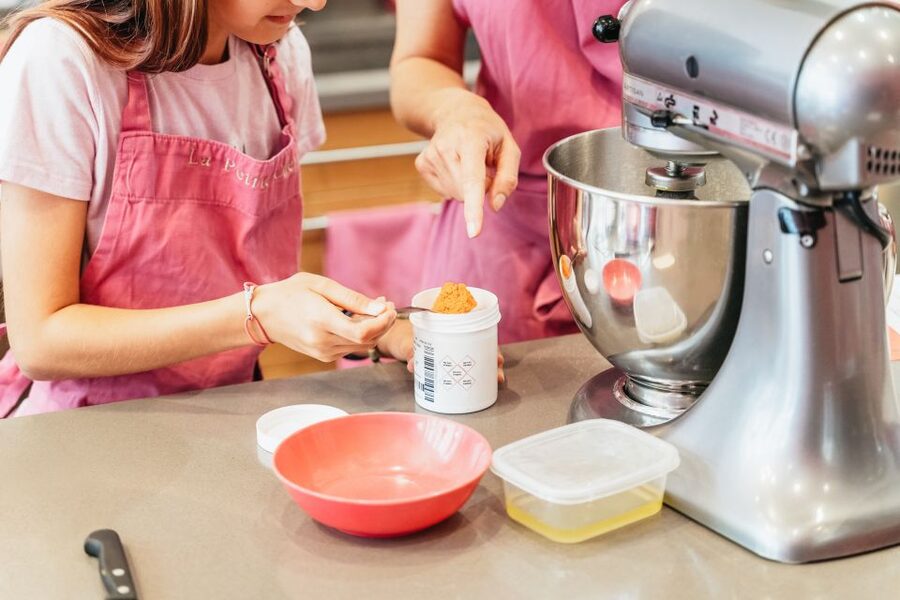
I would choose this for first-time bakers, families with older children, couples, and friends who want an activity with a real result. It is also a good fit if you have already tried macarons at home and want help with the technical parts that recipes often explain poorly.
The class is especially appealing to anyone who values personal teaching over a large culinary school. Noémie’s training is serious, but her manner is warm and light. That mix helps beginners relax when the piping is uneven or the weighing goes wrong.
You may want to skip it if your schedule cannot spare two and a half hours, if you dislike shared tasks, or if you need firm guarantees about a particular allergy or dietary restriction. Pets and smoking are not allowed.
The location on Rue Nollet also means you should plan the class as one part of your Paris day, not as a quick stop between major monuments. The activity is focused on the atelier, the baking, and the conversation. Its reward is the skill and the box of macarons, not a sightseeing route.
Should you book it?
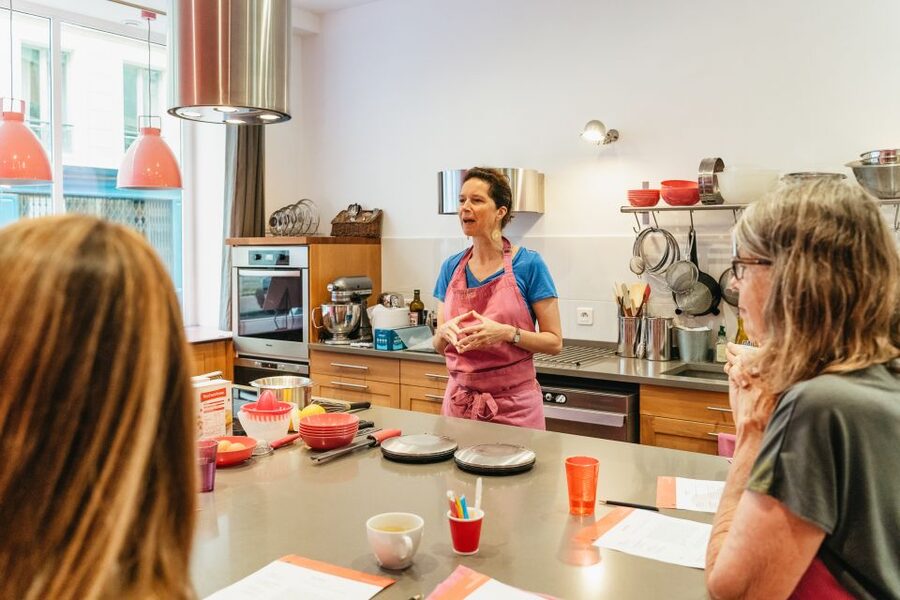
Book this class if you want to do more than buy a macaron in Paris. Chef Noémie offers patient instruction, a small working group, familiar French flavors, and recipes you can use after your holiday. The class suits mixed ages and skill levels, and the finished box gives you an edible souvenir to share.
Think twice if you expect every participant to make a fully separate batch. The shared format is the main limitation, and the recipe handout may not reflect every technique adjustment discussed in person. Still, for a hands-on pastry lesson with a friendly teacher and a clear connection to French food culture, the $141 cost can be worthwhile.
FAQ
Where does the macaron class take place?
The class takes place at Noémie’s atelier at 92 Rue Nollet in Paris, in the Ile-de-France region. The atelier is on the ground floor, and the entrance is on the left side of the main entrance.
How long does the experience last?
The workshop lasts 150 minutes, or two and a half hours. This includes the guided baking session and time afterward for tea or coffee.
Is the class taught in English?
Yes. The live tour guide language is English, and an English-language copy of the recipes is included.
How many people can join the class?
The class is limited to eight participants. It is listed as a small-group experience.
What flavors of macarons can I make?
The available filling choices include chocolate, lemon, salted butter caramel, coffee, pistachio, and walnuts. The exact combination depends on the class.
What is included in the price?
The price includes the chef, cooking utensils, apron, ingredients, tea or coffee, and an English copy of the recipes. You also take home the macarons made during the session.
Is the class suitable for children?
Yes. The activity is suitable for all skill levels, and children and teenagers have taken part in past classes. The information provided does not state a minimum age.
Can I cancel the booking?
You can cancel up to 24 hours in advance for a full refund. You can also reserve now and pay later, which keeps your plans flexible.
Recently reviewed around Paris
- Louvre Private Tour – The Essentials and More with Expert Guide★ 5.0 · 227 reviews
- 2CV tour by night★ 5.0 · 55 reviews
- Eiffel Tower Second or Summit Floor Access by Elevator with Views★ 3.5 · 161 reviews
- The only Paris Wine Tasting experience you need to do – 2 hours★ 5.0 · 265 reviews
- 2 Hour Street-art Walk and Space Invaders Hunt in Paris★ 5.0 · 27 reviews
- 2 hour outdoor group activity in Paris: SAINT GERMAIN★ 5.0 · 48 reviews
- Sainte-Chapelle, Conciergerie & Palais de Justice Private Tour★ 5.0 · 72 reviews
- Private 2 – Hour Paris Landmarks Tour by Golf Cart Mini Moke★ 5.0 · 38 reviews
Cooking Classes, compared.
Paris Cooking Class and Lunch with Wine plus Market Visit Option
Read our review →
Paris Cooking Class: Learn How to Make Macarons
Read our review →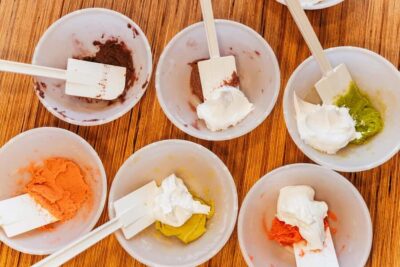
Paris Evening Cooking Class French Dinner and Market Visit Option
Read our review →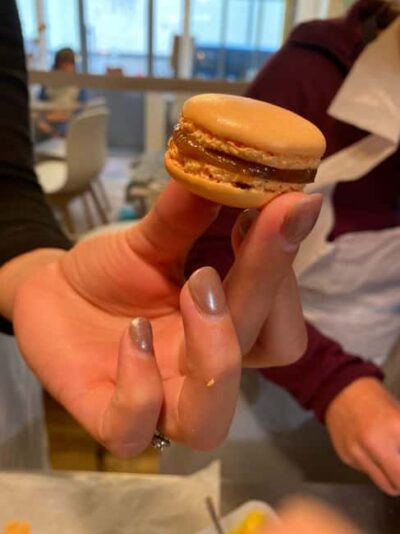
Seine Cruise and Macaron Tasting by the Eiffel Tower
Read our review →
Viator Exclusive: Local Cooking Class & Dinner with View of Nice
Read our review →Browse the lists this tour appears in